
Reviewed · COMMUNISM TOURS
Prague: World War II and Communist History Tour
Prague’s prettiest streets conceal some of Europe’s hardest modern history. This 2.5-hour walk connects the Nazi occupation, Czech resistance, Communist rule, the crushed Prague Spring, and the Velvet Revolution of 1989. The most gripping thread is the assassination of the Nazi head of the security services and the terrible retaliation that followed.
I like the story-led approach, which turns separate streets and buildings into one clear account. I also like the English-speaking guides, including Adam, Tony, Zach, and Analisa, who have been praised for making difficult subjects understandable, lively, and human.
The main drawback is that this is not a stop-at-every-site museum tour. Much of the experience comes through the guide’s explanation, with only a few locations offering visible signs of the events. You will also walk for two and a half hours, and the history can be grim.
Key points to know before booking
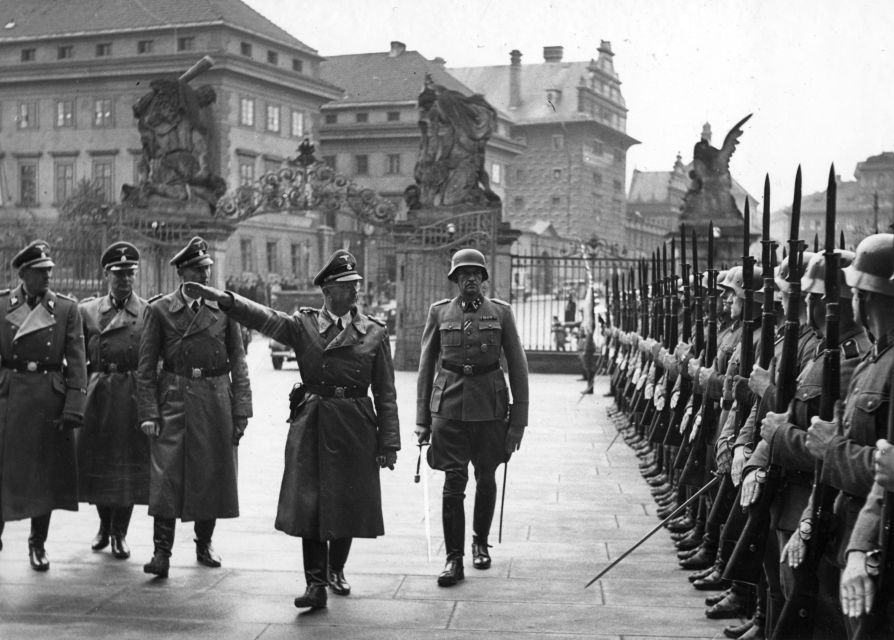
- The tour links two dark periods: Nazi occupation during World War II and the Communist decades that followed.
- Operation Anthropoid is a major highlight: You learn about the Czech plot to kill a senior Nazi security official and the resistance fighters who later hid in a church crypt.
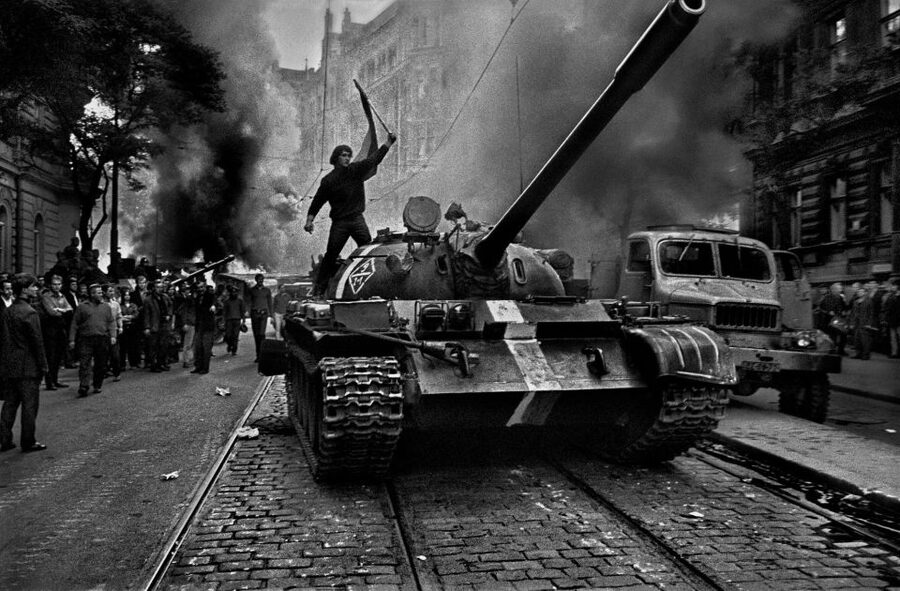
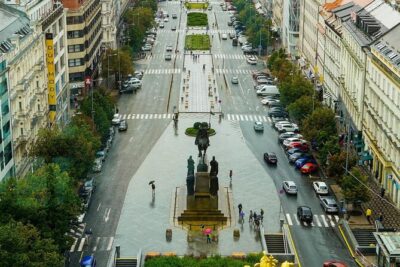
- Wenceslas Square carries several stories: The square helps explain the Communist coup, the Prague Spring, the Warsaw Pact invasion, and the Velvet Revolution.
- The guide matters here: Adam, Tony, Zach, Sean, Kevin, Amanda, and Analisa have all been praised for clear storytelling, humor, and strong command of the subject.
- The route reaches beyond the Old Town core: You visit or pass the Municipal House, Jewish Quarter, Dancing House, and other central Prague locations.
- At $34, the price is sensible: You receive 150 minutes with a live English-speaking guide, making this a useful history-focused addition to a general city tour.
Prague’s 20th century, told from the pavement
I like this tour because it gives Prague’s recent past a beginning, middle, and end. You start with the Nazi occupation, move through resistance and postwar upheaval, then follow the country into Communist rule, reform, repression, and the peaceful revolution that brought Václav Havel and other dissidents to power.
That structure matters. A general sightseeing walk can show you the Astronomical Clock, Charles Bridge, and castle skyline, but it may leave Prague’s modern political story in disconnected pieces. Here, the city becomes the setting for a single unfolding account.
Your guide explains how Czechoslovakia, once one of Europe’s most progressive and industrialized states, was turned into a place of fear under Nazi rule. The subject then shifts to the Czech uprising, the Communist coup, and the disappointment that followed when postwar hopes did not produce the freedom many people expected.
The tour is not a light stroll with a few historical dates added on. It deals with occupation, executions, resistance, censorship, political persecution, and the pressure of living under a one-party state. Still, the guides are known for using humor and personal detail, which keeps the presentation from becoming a long lecture.
More wartime history days near Prague:
- Prague: WWII Guided Tour & The Crypt of Operation Anthropoid
★ 4.7 · 1,030 reviews - WWII in Prague Tour & The Crypt of Operation Anthropoid
★ 5.0 · 817 reviews - Small-Group World War 2 & Operation Anthropoid Tour in Prague
★ 5.0 · 231 reviews
Municipal House and the road into occupation
The Municipal House helps place you in Prague’s political and cultural center. It is one of the major locations included on the route, and your guide uses the surrounding area to introduce the atmosphere of prewar Czechoslovakia and the shock of Nazi control.
You should not expect a long interior visit or a formal museum presentation here. The value comes from hearing how the city’s public life changed when occupation replaced independence. The guide gives you the political background needed to understand why resistance developed and why ordinary decisions became dangerous.
This opening section is useful if you know little about Czech history. It also works if you already recognize names and dates but want to connect them to places you can see. I would pay close attention to the way the guide explains the gap between the country’s modern, confident prewar identity and the terror of occupation.
The Jewish Quarter and the human cost of Nazi rule
The route skirts Prague’s old Jewish area. The Jewish Quarter is already one of the city’s most visited districts, but this tour approaches it from the perspective of wartime persecution and the wider Nazi system.
The focus is not simply on buildings or monuments. Your guide connects the area to the people who lived through the occupation and to the destruction carried out across Nazi-controlled Europe. This gives the neighborhood a different weight from the usual architectural tour.
You may find that the Jewish Quarter section is more about explanation than a series of dramatic physical stops. That is one of the tour’s limits. Some events happened inside institutions, apartments, offices, or streets that look ordinary today. Without the guide’s narrative, you might walk past without realizing what the location represents.
For that reason, I would choose this tour for its storytelling rather than for a long list of admission tickets. The guide supplies the missing context.
Operation Anthropoid and the assassination plot
The most compelling World War II section concerns the Czech resistance plan to assassinate the Nazi head of the security services. The tour explains how Czech agents carried out the plot and what happened after the attack.
This is commonly associated with Operation Anthropoid, the code name used for the mission against Reinhard Heydrich. The supplied tour information identifies the target as the head of the Nazi security services, while the tour material and past guide discussions connect the story to the Czech resistance and its aftermath.
The subject becomes especially powerful when the route reaches the church and crypt linked to the resistance fighters. A church visit is specifically mentioned in the tour experiences, and one guide was praised for taking the group to the church where Czech resistance soldiers hid. The setting gives the story a physical point of focus that some other stops lack.
You should expect a sober moment here. The story includes bravery, betrayal, and Nazi retaliation. It is not treated as a tidy adventure tale. The strongest version of the experience shows both the courage of the resistance and the terrible price paid by civilians and fighters after the assassination.
If Operation Anthropoid interests you, you might want to watch a related film after the tour. One participant followed up with Anthropoid and Munich. That is a useful tip because the tour gives you the basic setting and stakes, while a film can help you picture the operation in greater detail.
More communist era tours in Prague:
- Prague: Communism History and Nuclear Bunker Guided Tour
★ 4.7 · 2,417 reviews - Prague Communism History and Nuclear Bunker Tour
★ 5.0 · 1,742 reviews - Communism & Nuclear Bunker Tour + 70s Canteen Lunch (own expense)
★ 5.0 · 1,036 reviews - Prague: Communism and Bunker Tour with 70s Canteen Lunch
★ 4.8 · 250 reviews
The Communist coup and the long years of control
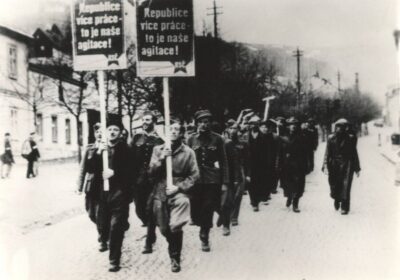
After World War II, the tour moves into the political changes that brought Communist rule. You learn about the Communist coup and the letdown that followed, rather than treating 1948 as an isolated date in a textbook.
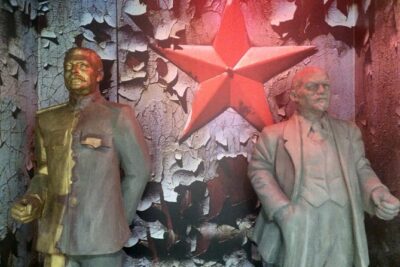
This part helps explain why the end of Nazi occupation did not mean a simple return to normal life. The country entered another period of political control, censorship, and fear. Your guide also discusses daily life under Communism, allowing you to see the era as more than a series of government announcements.
The subject includes the years of Normalization, the period after the failed reform movement when the state tightened control again. You also hear about the persecution of the Plastic People of the Universe, an underground Czech band whose treatment became a symbol of the regime’s hostility toward independent culture.
That detail is one of the tour’s most useful touches. Political history can feel distant when it focuses only on leaders and treaties. Music, art, and ordinary cultural choices show you how control reached into everyday life.
The tour also covers Charta 77, the dissident declaration that challenged the Communist government over its failure to respect basic rights. This leads naturally to Václav Havel and the circle of dissidents who were swept into power during the Velvet Revolution.
Wenceslas Square and the Prague Spring
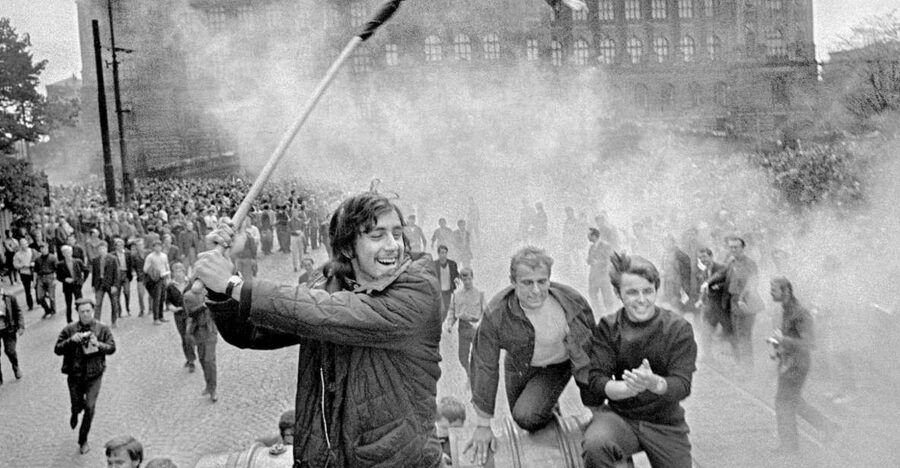
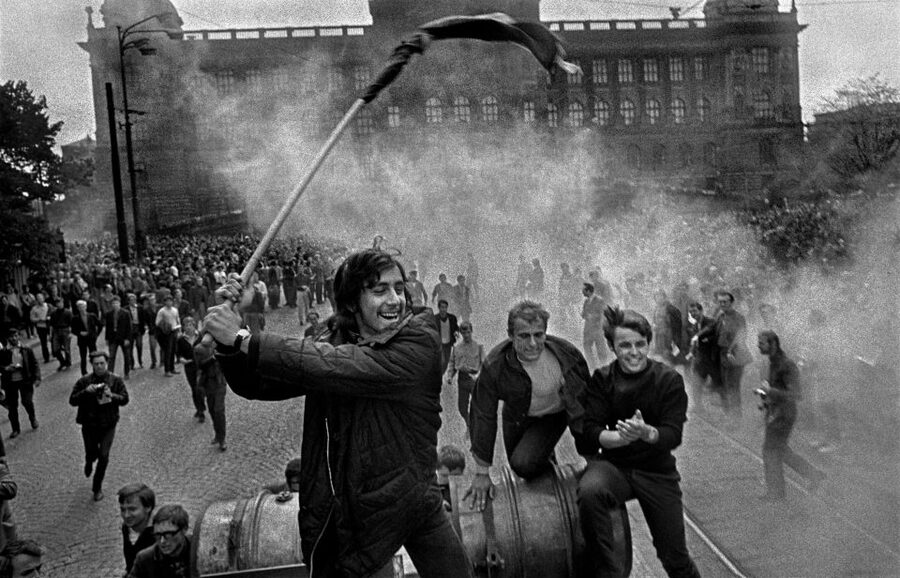
Wenceslas Square is one of the key locations on the route, and it carries several layers of modern Czech history. Here, your guide explains the euphoria of the Prague Spring and the trauma of the Warsaw Pact invasion that ended it.
The Prague Spring represented an attempt to reform Communism and create a more open society. The invasion crushed that effort and led to the years of Normalization discussed later in the tour. Standing in the square helps connect those political events to the public spaces where people gathered, demonstrated, celebrated, and confronted authority.
Wenceslas Square also sets up the final part of the story. The same broad urban setting became central to the Velvet Revolution in 1989, when mass demonstrations helped bring down Communist rule.
I like this location because it shows how one place can carry different emotions across decades. The square was connected to hope, invasion, protest, fear, and finally change. Your guide’s job is to make those shifts clear, and the strongest guides have been praised for doing exactly that.
The Velvet Revolution and Václav Havel
The final political movement covered by the tour is the Velvet Revolution. You learn how Václav Havel and an eclectic group of dissidents moved from opposition into government as Communist rule collapsed.
This is a satisfying endpoint because it brings together the earlier subjects: occupation, state violence, cultural repression, dissident writing, public protest, and the desire for a more open society. The story is not presented as an overnight miracle. It follows years of pressure and resistance.
A good guide also avoids making the period too neat. The tour has been praised for not whitewashing the choices of politicians or sanitizing the realities of the Nazi and Communist eras. That matters when you are trying to understand how people behaved under pressure, not simply memorize who won.
If you are interested in politics, recent European history, or the way ordinary people respond to authoritarian rule, this section will likely be one of the tour’s strongest points.
Dancing House and the walk between old and new Prague
The Dancing House is another named location on the route. It helps move the walk beyond the most crowded Old Town streets and into Prague’s newer central districts.
The building itself is not the main subject. Instead, it provides a modern landmark within a route that crosses several periods of Czech history. You see how the city changes as the tour moves away from the oldest core, while the guide continues the political story.
One advantage of the route is that it does not trap you in a single postcard district. The walk takes you through different parts of central Prague, including the edge of the Jewish area and the newer town. That variety keeps the experience from feeling like a history lecture in one square.
The trade-off is simple: you should be comfortable walking. One past experience ran longer than the advertised time, so do not schedule a train, meal reservation, or another timed activity immediately afterward. The normal duration is 150 minutes, but a guide may continue slightly longer when questions are flowing.
Guide quality makes or breaks this experience
This tour depends heavily on the person leading it. There are few formal exhibits, and several locations do not carry obvious signs explaining their wartime or Communist-era role. The guide’s ability to build a clear story is therefore central to the value.
Names praised across different dates include Adam, Tony, Zach, Sean, Kevin, Amanda, and Analisa. The recurring strengths are clear speech, strong preparation, enthusiasm, humor, and the ability to answer questions without losing the thread of the tour.
Adam has been praised for combining a huge amount of information with an engaging delivery. Tony is described as patient, friendly, and good at answering questions. Zach is repeatedly associated with vivid storytelling and a sense of humor. Analisa was praised for presenting facts as a connected story instead of scattering them into unrelated details.
You should keep in mind that guides change by date. You cannot book a particular personality unless the schedule specifically says so. Still, the consistent focus on storytelling is a good sign for a tour built around difficult material.
Small groups can make a major difference. One past participant especially liked having enough room to ask questions and feeling almost as if the walk were private. Group size is not specified as a fixed feature, so I would not book on the assumption that every departure will be small.
Timing, walking, weather, and value at $34
The tour lasts 2.5 hours and costs $34 per person. I consider that fair value if you want a guided explanation of Prague’s 20th-century history rather than another general introduction to the city.
You are paying for time, structure, and interpretation. The route covers a large span of history and several central districts, and the guide turns those places into a connected story. At $34, the cost is also lower than some comparable history walks noted in the tour experiences.
The experience is conducted in English with a live guide. A past departure included a tram ticket to save walking time, and another included entry into a museum, but those details are not listed as standard inclusions. Treat them as possible additions, not promises.
Plan for outdoor conditions. A past group completed the walk in pouring rain, and another took it on a hot, oppressive day. Winter can be cold, too. Wear shoes suited to a long city walk and check the forecast before leaving.
Free cancellation is available up to 24 hours in advance for a full refund, and you can reserve now and pay later. Those terms are useful if your Prague schedule is still shifting.
Who should book this Prague history walk?
I would choose this tour if you want to understand the forces that shaped modern Prague. It suits history students, political-history fans, visitors interested in World War II resistance, and anyone who feels that a standard Old Town tour leaves out too much of the 20th century.
It is also a strong second-day activity. Start with a general walk through Old Prague and the castle district, then use this tour to put the streets, squares, and neighborhoods into a political context. If you plan to visit the Jewish Quarter independently, this walk can add a different perspective rather than simply repeating an architectural tour.
I would be more cautious if you want a tour built around frequent indoor entries, displays, or long periods at visible monuments. Some stops may look ordinary, and the guide’s words do much of the work.
Should you book it?
Book this tour if you want Prague’s modern story told clearly and with feeling. The combination of Nazi occupation, Operation Anthropoid, Communist control, the Prague Spring, Charta 77, and the Velvet Revolution gives you far more than a narrow World War II walk.
Skip it if you dislike serious political history or do not want two and a half hours on foot. For everyone else, $34 is a reasonable price for a well-structured English-language introduction to the events that shaped present-day Czechia.
FAQ
How long does the Prague World War II and Communist History Tour last?
The tour lasts 150 minutes, or 2.5 hours.
What language is the tour conducted in?
The tour is conducted in English with a live English-speaking guide.
Where does the tour meet?
The meeting point is Týnská 639/4 in Staré Město, Prague 1.
How much does the tour cost?
The listed price is $34 per person.
Which Prague locations are included?
The route includes important locations connected with the Municipal House, Jewish Quarter, Dancing House, and Wenceslas Square. The tour also covers the church and crypt associated with the Czech resistance in the Operation Anthropoid story.
Does the tour cover Operation Anthropoid?
Yes. The tour explains the Czech resistance plot to assassinate the Nazi head of the security services and the events that followed.
Does the tour discuss the Prague Spring and Velvet Revolution?
Yes. It covers the Prague Spring, the Warsaw Pact invasion, the years of Normalization, Charta 77, and the Velvet Revolution that brought Václav Havel and other dissidents to power.
Can I cancel for a full refund?
You can cancel up to 24 hours in advance for a full refund.
Can I reserve the tour and pay later?
Yes. The reserve-now-and-pay-later option lets you book without paying on the day of reservation.
More History Walks in Prague
- Prague: Oldtown, Medieval Underground & Dungeon History Tour
★ 4.2 · 8,244 reviews - Prague Old Town, Medieval Underground and Dungeon Historical Tour
★ 4.5 · 3,227 reviews - Prague: Historic City Center Bus Tour with Top Sights
★ 4.4 · 2,360 reviews - Prague Historic Pub Tour with Drinks Included
★ 5.0 · 2,084 reviews
Just added around Prague
- WWII and Communism History in Prague’s Old Town Private Tour★ 5.0 · 4 reviews
- World War II 4WD Tour from Prague with Lunch★ 4.4 · 3 reviews
- Wroclaw to Prague: 2-in-1 (Private Transfer + Country Tour)★ 5.0 · 4 reviews
- Prague: Historical Walking Tour with Focus on World War 2★ 4.3 · 12 reviews
- Walking tour of Prague in french: Old Town & Charles Bridge★ 4.9 · 62 reviews
- Ultimate Unlimited Beer Pong with Czech Beer★ 4.6 · 5 reviews
- Walking tour of Prague in French : Nové Město★ 4.9 · 16 reviews
- Prague: Modern Private Spa with Jacuzzi and Sauna★ 4.8 · 62 reviews
Communism Tours, compared.
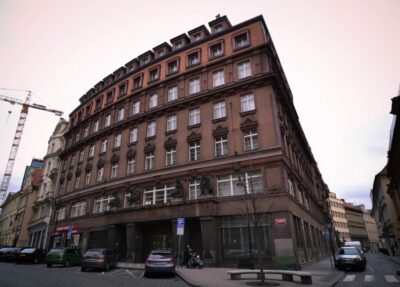
Communism History and Nuclear Bunker Guided Tour
Read our review →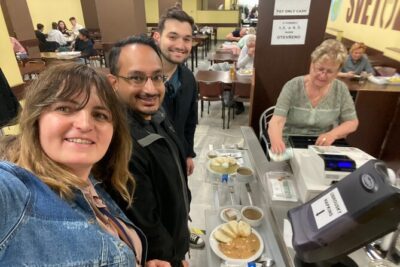
Communism & Nuclear Bunker Tour + 70s Canteen Lunch (own expense)
Read our review →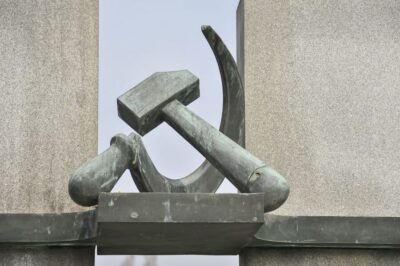
Second World War & Communism (Tip-based 3 hour tour)
Read our review →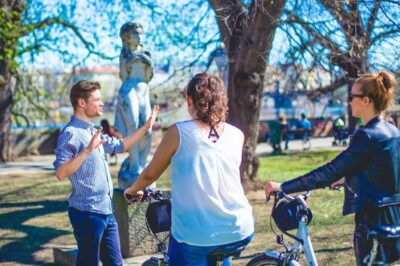
Prague Communism tour with visit of Communism museum
Read our review →Browse the lists this tour appears in