
Reviewed · WORLD WAR II TOURS
Small-Group World War 2 & Operation Anthropoid Tour in Prague
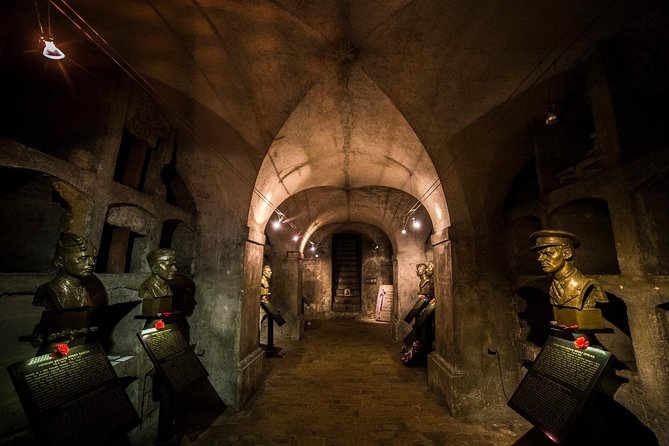
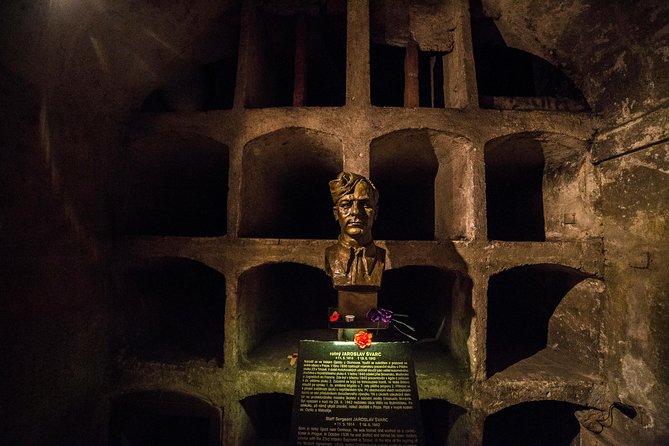
The most powerful part of this Prague tour comes at the end: the crypt of St. Cyril and St. Methodius Cathedral, where Czech paratroopers made their final stand after the 1942 assassination of Reinhard Heydrich. It is a small, solemn place, and it gives the story a human scale that no history book can match.
I like two things here: the real city locations that turn abstract events into something you can see, and the clear account of how Nazi rule affected ordinary Czechs. The main drawback is that much of the tour is spoken history in streets where little physical evidence remains, so you need to enjoy listening as much as looking.
Key points at a glance
- The crypt is the emotional high point: Visit the final hiding place of resistance fighters connected with Operation Anthropoid.
- The story begins before 1939: You learn how the Treaty of Versailles, economic crisis, nationalism, and the Munich Agreement shaped the road to war.
- Central Prague becomes a history lesson: Old Town streets, Wenceslas Square, Petschek Palace, and Karlovo náměstí all connect to the occupation.
- Guides make a major difference: Allen, Daniel, Dana, Martin, Richard, Robin, Pablo, and others have received praise for clear English and strong subject knowledge.
- Plan for three hours on foot: You will walk, stand, and listen at many stops before reaching the cathedral.
- At $33.88, it is strong value for history fans: The price includes the guide and church visit, but not food, drinks, or transport.
Why Operation Anthropoid gives this walk its focus
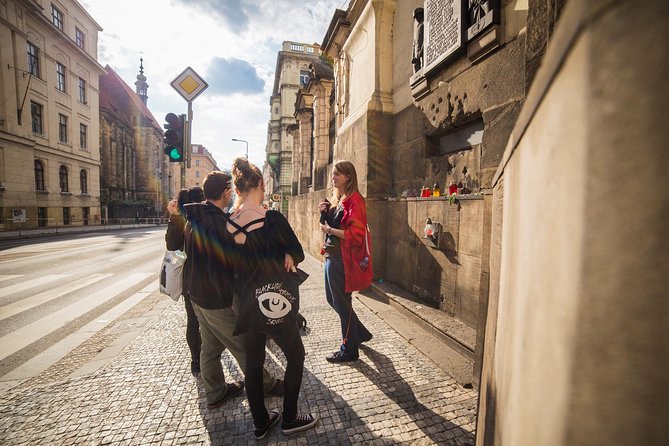
Many Prague tours concentrate on castles, royal families, or elegant Art Nouveau buildings. This one follows a darker thread. It explains how a modern European state was broken apart, occupied, controlled, and resisted.
Operation Anthropoid was the code name for the mission to kill Reinhard Heydrich, the senior Nazi official who became acting Protector of Bohemia and Moravia in 1941. The tour does not treat the assassination as an isolated thriller. You learn about the people who prepared it, the resistance network that supported it, and the brutal Nazi response.
That wider frame matters. You hear about safehouses, couriers, exiled leaders, ordinary families, and the risks of sheltering resistance fighters. By the time you reach the cathedral, the crypt is not simply an old religious space. It is the last chapter of a long chain of choices made under terrible pressure.
The tour also covers the 1945 Prague Uprising, so the story does not stop with Heydrich’s death or the end of the resistance group. Barricades, street fighting, and the damaged Old Town Hall help explain how the occupation finally ended.
More wartime history days near Prague:
- Prague: WWII Guided Tour & The Crypt of Operation Anthropoid
★ 4.7 · 1,030 reviews - WWII in Prague Tour & The Crypt of Operation Anthropoid
★ 5.0 · 817 reviews - Prague: World War 2 and Operation Anthropoid Walking Tour
★ 4.8 · 193 reviews
Starting near Týnská and the roots of the war
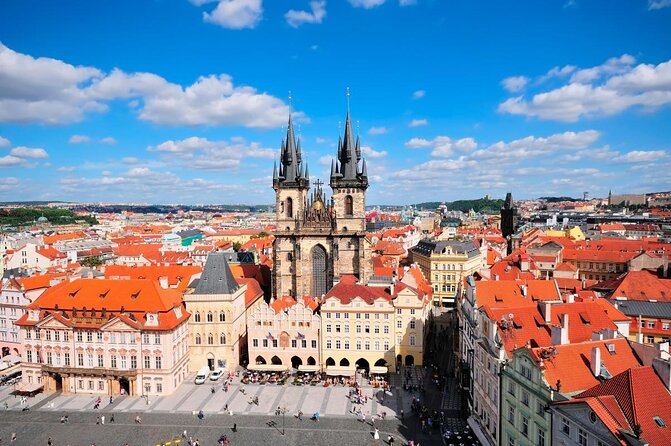
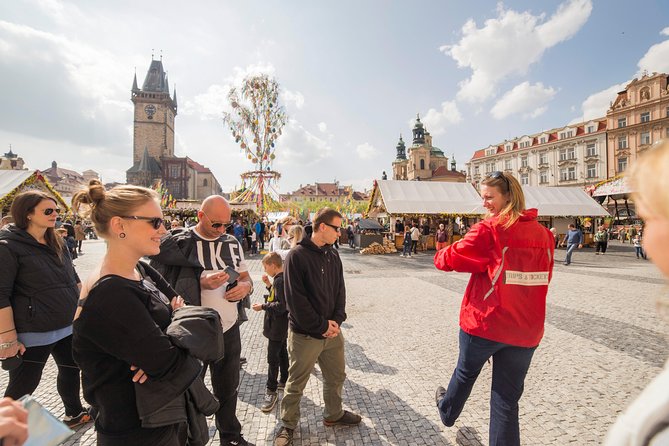
Meet your guide at Týnská 627/7 in central Prague, in front of McGee’s Trips & Tickets. The starting point is near Old Town Square, but make sure you use the exact address and arrive early. One unhappy experience came from a late arrival and confusion over the meeting place, and the guide cannot wait indefinitely.
The first stop, U Budovce, places World War II in a wider European setting. You hear about the Treaty of Versailles, the creation of new countries such as Poland, Austria, and Czechoslovakia, runaway inflation, the Great Depression, and the growth of nationalism.
This opening is useful if you know the war mainly through military events. The guide explains why democratic systems were strained and how Adolf Hitler’s popularity grew. It also gives you a better sense of Czechoslovakia’s position before the occupation.
Expect a spoken presentation rather than a museum display. You will likely be standing outdoors while the guide builds the story from dates, names, and political events. If your interest begins only with the resistance, this part may feel slow. If you want the causes explained clearly, it gives the rest of the tour a firm base.
The Munich Agreement and the loss of Czechoslovakia
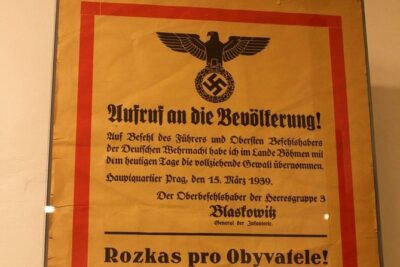
At the Stone Bell House, the focus moves to the Sudeten German Party, the Munich Agreement, and the creation of the Protectorate of Bohemia and Moravia.
This is one of the most important points in the walk because it shows how occupation developed through political pressure before German troops took full control. The tour explains the role of the Sudeten German population, the concessions made at Munich, and the dismantling of Czechoslovakia.
You also pause near the Gothic church that dominates this part of Old Town. The church itself is not a major wartime site, but it helps keep you oriented in Prague’s historic center. The route uses familiar streets and buildings, then adds the wartime meaning that is easy to miss if you explore alone.
Old Town Hall and the Prague Uprising
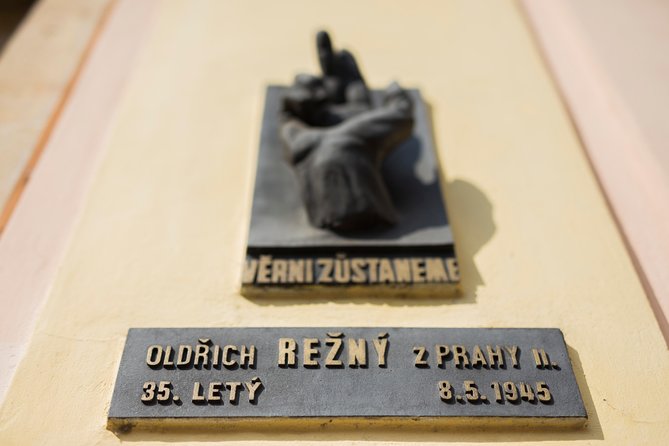
At Staroměstská radnice, you see the section of Old Town Hall damaged during the Prague Uprising in May 1945. The guide explains daily life under occupation and how the uprising helped bring the war in Prague to an end on May 8.
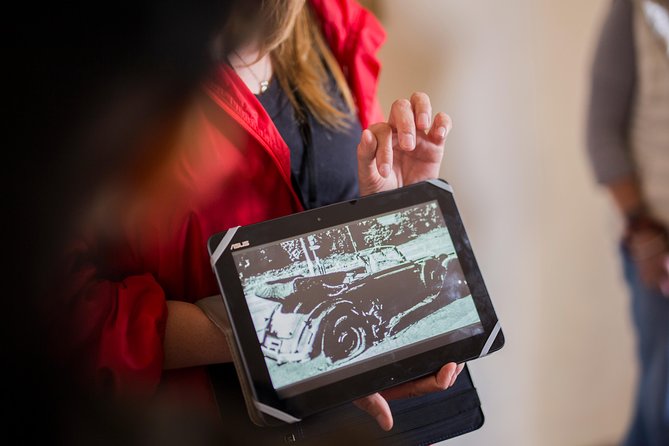
This stop is a good reminder that the city’s wartime story was not only about secret missions. Food, fear, restrictions, propaganda, arrests, and uncertainty shaped ordinary life. The guide’s photographs are useful here because some events are not obvious from the present-day street scene.
One practical point: you will not find a preserved battlefield at every stop. Prague avoided the kind of widespread destruction seen in cities such as Warsaw, and many locations now look perfectly normal. The value comes from connecting the current building or street to an event that happened there.
A few more Prague half-days worth weighing up
- Prague: 50-Minute Sightseeing Evening Cruise
★ 4.2 · 33,780 reviews - Prague: Medieval Dinner with Unlimited Drinks
★ 4.4 · 19,847 reviews - Prague: Skip-the-line Castle Ticket and Optional AudioGuide
★ 4.3 · 11,121 reviews - Prague: Castle Tour with Local Guide and Entry Ticket
★ 4.6 · 10,422 reviews
Celetná Street and the tightening Nazi grip
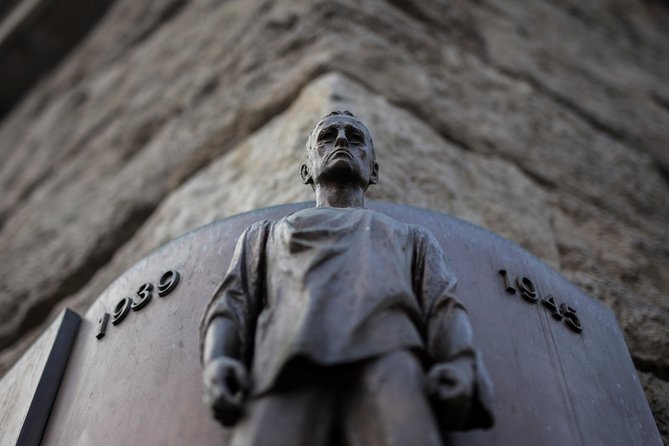
Celetná Street brings the story to November 17, 1939, when Czech students were executed and Czech universities were closed. You also hear about Konstantin von Neurath, the early head of the Protectorate, and Reinhard Heydrich’s appointment on September 27, 1941.
This shift is important. Heydrich’s arrival marks a harder phase of Nazi control and leads directly toward Operation Anthropoid. The guide explains why his position mattered and why the Czechoslovak government in exile decided that an attack was worth the enormous danger.
The stop also shows why a guided walk helps. There may be no dramatic sign pointing to the event. Without context, Celetná is simply one of Prague’s attractive old streets. With context, it becomes part of a story about repression, resistance, and calculated political violence.
Resistance safehouses around Melantrichova
At Melantrichova, you learn about the exiled government in London and covert missions known as Operation Benjamin, Silver A, and Silver B. The guide points out the building connected with the apartment of Josef and Marie Svatoš, which served as an important resistance hideout.
This is among the most personal sections of the tour. Safehouses were not movie sets. They were homes where people hid, planned, carried messages, and waited for news while knowing that discovery could mean torture or death for everyone involved.
Photographs help here, since the building is part of the modern city rather than a preserved wartime exhibit. Several people have especially praised guides who bring old images into the current streets. Allen, Daniel, Richard, and Dana are among the guides singled out for strong explanations, fluent English, and an ability to answer questions.
The assassination story at Baťa
Near the Baťa department store, the guide explains the assassination of Heydrich. The store was used to display objects recovered from the scene, giving the stop a direct link to the attack.
The tour does not present the assassination as a simple action sequence. You learn about the planning, the paratroopers flown into the country, the support network on the ground, and the consequences that followed.
This is also where the guide’s storytelling style matters most. A good guide helps you follow several people, code names, locations, and operations without losing the main thread. The best accounts use photographs and clear sequencing instead of firing dates at you without explanation.
Wenceslas Square and the destruction of Lidice
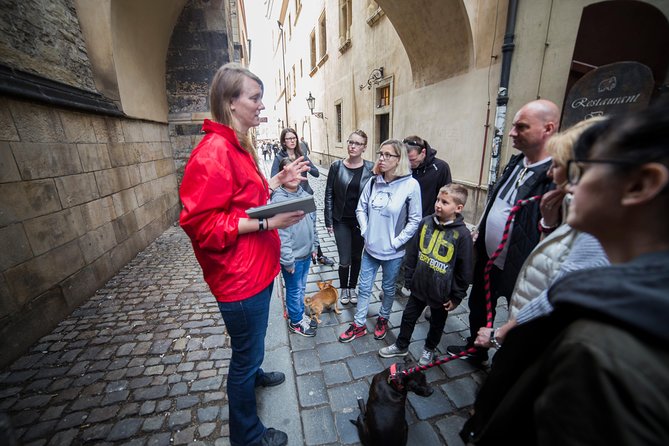
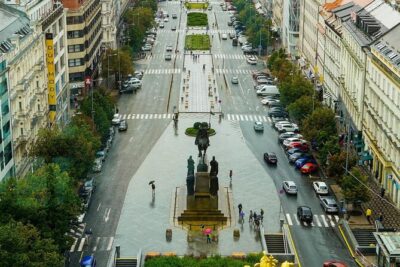
At Wenceslas Square, the focus turns to Lidice. On June 10, 1942, the village’s men were executed, while the women were sent to concentration camps. Lidice was destroyed as Nazi retaliation connected with the search for Heydrich’s assassins.
This is one of the tour’s hardest sections. It makes clear that the assassination had consequences far beyond the men who carried out the attack. The story of Lidice is a reminder that resistance and reprisal affected entire communities.
Wenceslas Square is also a busy part of central Prague, so the contrast can be unsettling. You may be surrounded by shops, traffic, and everyday city life while hearing about an event of extreme cruelty. That contrast is part of what makes the stop effective, though it can also feel less intimate than the cathedral and crypt later in the route.
Hotels, Gestapo headquarters, and betrayal
At the Esplanade Hotel, you hear how the building became a favorite hotel of Nazi officials during the occupation. The stop is brief, but it adds another piece to the picture of how the occupying power used Prague’s existing institutions and public spaces.
The route then reaches Petschek Palace, once a Gestapo headquarters. Czechoslovaks were interrogated, tortured, and killed there in large numbers. The guide also explains how Karel Čurda entered the building on June 16, 1942, and betrayed members of the resistance.
Petschek Palace is a serious stop because it shifts attention from planning and action to imprisonment and interrogation. It also introduces the moral complexity of the story. Resistance networks depended on courage, but they were made up of people under unbearable fear. Betrayal could destroy an entire group.
The National Museum appears along the route, though the tour does not include museum admission. You mainly pass the building while hearing about nearby events. If you want a museum visit, treat it as a separate activity.
New Town, failed operations, and the bombing of Prague
On Vodičkova, the guide discusses two unsuccessful covert operations, Tin and Bioscop. These names help show that Operation Anthropoid was not the only attempt to organize resistance or bring trained operatives into the country.
At Karlovo náměstí, the subject changes to the bombing of Prague in 1945. This is a useful correction to the idea that the city escaped all wartime damage. Prague did not experience the same level of destruction as some European capitals, but it was not untouched.
The walking route crosses several parts of central Prague, so comfortable shoes matter. You will also spend plenty of time standing while the guide talks. The experience is suitable for people with moderate physical fitness, but it is not a vehicle tour or a quick series of photo stops.
St. Cyril and St. Methodius Cathedral
The tour’s included visit to St. Cyril and St. Methodius Cathedral is the point where the narrative becomes most concrete. The church is tied directly to the resistance fighters who sheltered there after the assassination of Heydrich.
The guide takes you inside and explains what happened in the church and its crypt. The final memorial, the National Memorial to the Heroes of the Heydrich Terror, marks the place where the paratroopers paid the ultimate price.
The crypt is atmospheric and sobering. It is not large, and that is part of its force. You are not looking at a grand military monument. You are seeing the confined place where exhausted men hid, fought, and died.
Allow yourself time to look closely and listen. Several people have described the crypt as the strongest part of the experience, and I understand why. It gathers together the earlier stops: the safehouses, the betrayal, the reprisals, and the difficult decision to attack Heydrich.
The tour ends here on Resslova in Prague’s New Town. You are not returned to the original meeting point, so check your plans before booking an activity immediately afterward.
Guide style, group size, and the pace of the walk
The tour is offered in English and allows up to 30 people. In practice, group size can vary. Bad weather has occasionally produced a very small group, which can make it easier to ask questions and adjust the pace.
Guide quality is a major part of the experience. Allen and Daniel have received repeated praise for their clear explanations and strong command of the subject. Dana is described as friendly, patient, and able to keep the information moving. Richard’s background as a history student in Prague was appreciated for both subject knowledge and English. Robin, Pablo, Martin, and Rafek have also been praised for enthusiasm, storytelling, and care with the subject.
That said, presentation style can vary. One person found the opening too long and monotone and left early, while most of the available feedback gives the guides very high marks. The practical lesson is simple: this is a serious history walk, not an action-packed sightseeing tour. You need to be comfortable listening for three hours.
Is $33.88 a fair price?
At $33.88 per person, the tour offers good value if you want a guided account of Prague’s World War II history. The price includes the local guide, the cathedral visit, and the memorial and crypt stop. You do not pay separately for each location on the route.
You are also paying for the connections between sites. You could visit the cathedral and crypt independently, but building the full sequence from the Munich Agreement to Heydrich’s assassination, Lidice, the Gestapo, and the Prague Uprising would take careful research.
The value is lower if you want a tour with many preserved interiors or large museum collections. Most stops are viewed from the street, and the guide supplies much of the substance through explanation and photographs. For a history-minded visitor, that is a fair trade. For someone who prefers visual exhibits and short talks, the three-hour format may feel long.
Who should book this Prague history tour?
I would choose this tour if you are interested in World War II, resistance movements, modern Czech history, or the moral choices faced by people living under occupation. It suits adults and older children who can handle serious material, but it is not recommended for small children.
It also works well early in a Prague visit because the route covers familiar central areas while giving them added meaning. You will likely pass several of these streets again and see them differently.
I would skip it if your main goal is a relaxed stroll through beautiful architecture, or if you dislike long explanations at outdoor stops. You should also avoid stacking it too closely with another Prague history tour, since some background about the war and the city may overlap.
Should you book it?
Book it if you want the real locations behind Operation Anthropoid and are willing to spend three hours walking and listening. The cathedral crypt gives the experience a powerful ending, while the earlier stops explain how Prague reached that moment.
The best way to enjoy it is to arrive early at Týnská 627/7, wear comfortable shoes, bring water, and keep an open mind about what a wartime site looks like. Prague’s World War II story is often hidden behind ordinary façades. This tour helps you notice it.
FAQ
Where does the tour begin?
It begins in front of the building at Týnská 627/7 in Prague 1, near McGee’s Trips & Tickets.
Where does the tour end?
The tour ends at the Orthodox Cathedral of Saints Cyril and Methodius on Resslova 9a in Prague’s New Town.
How long does the tour last?
The tour lasts approximately three hours.
What time does the tour start?
The stated start time is 1:30 pm.
Is the tour offered in English?
Yes. The tour is offered in English and includes an English-speaking local guide.
Is admission to St. Cyril and St. Methodius Cathedral included?
Yes. The tour includes a visit to the cathedral and the National Memorial to the Heroes of the Heydrich Terror.
Is the tour suitable for young children?
The tour is not recommended for small children because it covers serious World War II history. Children up to six years old are free, and children must be accompanied by an adult.
What happens if I need to cancel?
You can cancel up to 24 hours before the start time for a full refund. Cancellations or changes made less than 24 hours before the start time are not refunded or accepted.
Just added around Prague
- WWII and Communism History in Prague’s Old Town Private Tour★ 5.0 · 4 reviews
- World War II 4WD Tour from Prague with Lunch★ 4.4 · 3 reviews
- Wroclaw to Prague: 2-in-1 (Private Transfer + Country Tour)★ 5.0 · 4 reviews
- Prague: Historical Walking Tour with Focus on World War 2★ 4.3 · 12 reviews
- Walking tour of Prague in french: Old Town & Charles Bridge★ 4.9 · 62 reviews
- Ultimate Unlimited Beer Pong with Czech Beer★ 4.6 · 5 reviews
- Walking tour of Prague in French : Nové Město★ 4.9 · 16 reviews
- Prague: Modern Private Spa with Jacuzzi and Sauna★ 4.8 · 62 reviews
World War II Tours, compared.
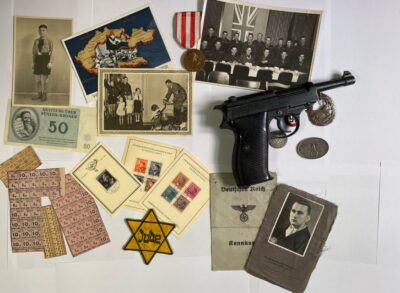
WWII Guided Tour & The Crypt of Operation Anthropoid
Read our review →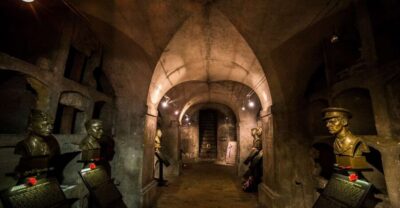
World War 2 and Operation Anthropoid Walking Tour
Read our review →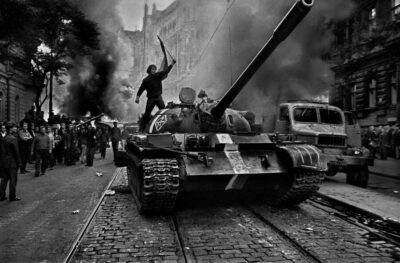
Second World War & Communism (Tip-based 3 hour tour)
Read our review →
Browse the lists this tour appears in