
Reviewed · COMMUNISM TOURS
Second World War & Communism (Tip-based 3 hour tour)
Prague’s grand squares tell only part of its story. This three-hour walking tour moves from the Second World War through Communist rule and the Velvet Revolution, ending at the Orthodox Cathedral of Saints Cyril and Methodius, where Operation Anthropoid resistance fighters made their last stand.
I like the clear timeline and the included entry to the Museum of Anthropoid Operation. I also like the human focus: guides such as Kamil, Vaclav, Katerina, and Kuba explain how political decisions affected ordinary Czech families. The main caution is the walking: roughly 5 kilometers, with a group size that may be larger than expected.
Key points to know before booking
- Starts with two resistance monuments at Klárov: You get the political background before the route reaches Prague’s more famous central sights.
- Covers Jews, Nazis, Communists, and dissidents: This is a modern Czech history tour, not just a military history walk.
- Ends in the Anthropoid crypt: The final stop is the emotional high point and includes free museum entry.
- Several guides receive especially strong praise: Kamil, Vaclav, Katerina, and Kuba are noted for clear storytelling, personal accounts, and strong subject knowledge.
- The $3.60 price is only the starting point: This is a tip-based experience, so you decide what the three hours were worth.
- Expect steady walking between stops: The route uses Prague streets and squares, with limited suitability for anyone with mobility problems.
Prague history told as one connected story
This tour works best because it links events that are often taught separately. You begin with the creation of Czechoslovakia after the First World War, then move through Nazi occupation, Jewish persecution, the Prague Uprising, Communist rule, the 1968 invasion, Jan Palach, the Velvet Revolution, and the final resistance story of 1942.
That order matters. You see how the collapse of one political system helped create the next. The end of Nazi rule did not bring simple freedom. Soviet influence soon shaped the new government, and the Communist takeover changed daily life for decades.
The guides also seem to make the past personal. Katerina has shared first-hand accounts of life under Communism, while Kamil is praised for adding personal experience and passion to the historical narrative. Vaclav is noted for presenting the material in a clear, linear way and for keeping a large group together in city streets.
You should come ready to listen, walk, and think. This is not a tour built around entering many grand interiors. Much of the value comes from standing at ordinary streets and public places while the guide explains what happened there.
More wartime history days near Prague:
- Prague: WWII Guided Tour & The Crypt of Operation Anthropoid
★ 4.7 · 1,030 reviews - WWII in Prague Tour & The Crypt of Operation Anthropoid
★ 5.0 · 817 reviews - Small-Group World War 2 & Operation Anthropoid Tour in Prague
★ 5.0 · 231 reviews
Klárov and the first Czechoslovak resistance
The meeting point is Metrocafe Klárov 51 in Malá Strana. The opening section takes about 20 minutes and introduces two memorials: the Memorial to the Second Resistance and the Winged Lion Memorial.
This is a smart place to begin. Before the tour reaches the Jewish Quarter or Old Town, you get the political setting. The guide explains how Czechoslovakia gained independence after the First World War, why Hitler occupied it early, and what happened to Czechoslovak soldiers during the Second World War.
That opening helps correct a common misunderstanding. Czechoslovakia was not simply a passive country caught between larger powers. Its people, soldiers, exiles, and resistance groups made difficult choices under pressure from Nazi Germany and the Soviet Union.
The monuments also give the guide a physical point of reference. You are not only hearing a long list of dates. You are looking at places created to remember resistance and national sacrifice.
Pinkas Synagogue and the fate of Czech Jews
The stop at Pinkas Synagogue lasts about 15 minutes and focuses on the fate of Czech Jewish communities during the war. You hear how many people managed to emigrate and what happened to those who remained.
This section is brief, so do not expect a full museum visit or an extended examination of Jewish Prague. Its value is in placing Jewish experience inside the wider wartime story. The synagogue is one of the most serious stops on the route, and the subject deserves quiet attention.
If you want a detailed study of Prague’s Jewish history, you will need additional time elsewhere. Here, the guide gives you a concise account of persecution, emigration, and loss before the route moves into the political upheaval at the end of the war.
Old Town Square and the Prague Uprising
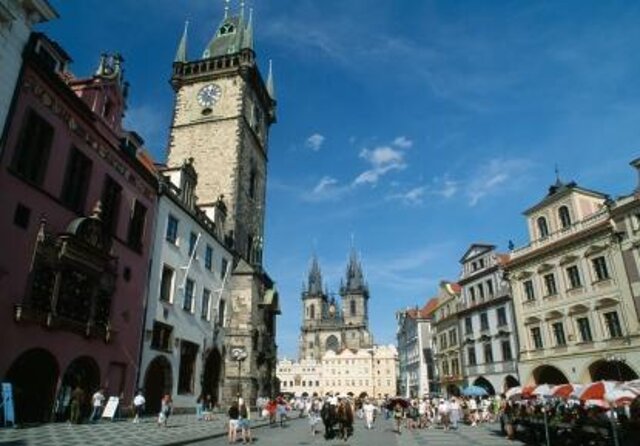
At Staroměstské náměstí, beside the Old Town Hall, the guide explains the Prague Uprising and the final days of the Second World War. This section takes about 20 minutes.
Old Town Square can feel like the postcard center of Prague, filled with architecture and crowds. The tour asks you to look past the medieval façades and consider the violence and uncertainty of 1945. The Prague Uprising was not a simple, tidy liberation story. The guide uses the location to explain how Prague’s people acted as German power weakened and how the war’s end shaped the country’s next political chapter.
This is also where the tour makes its main connection between the Second World War and Communism. The end of the war did not restore the prewar political order. Soviet influence grew, and Czechoslovakia moved toward Communist rule.
That connection is one of the tour’s strongest features. You are not simply jumping from Nazi occupation to a new subject. You are shown how one crisis opened the door to another system.
More communist era tours in Prague:
- Prague: Communism History and Nuclear Bunker Guided Tour
★ 4.7 · 2,417 reviews - Prague Communism History and Nuclear Bunker Tour
★ 5.0 · 1,742 reviews - Communism & Nuclear Bunker Tour + 70s Canteen Lunch (own expense)
★ 5.0 · 1,036 reviews - Prague: Communism and Bunker Tour with 70s Canteen Lunch
★ 4.8 · 250 reviews
Wenceslas Square, 1968, and Jan Palach
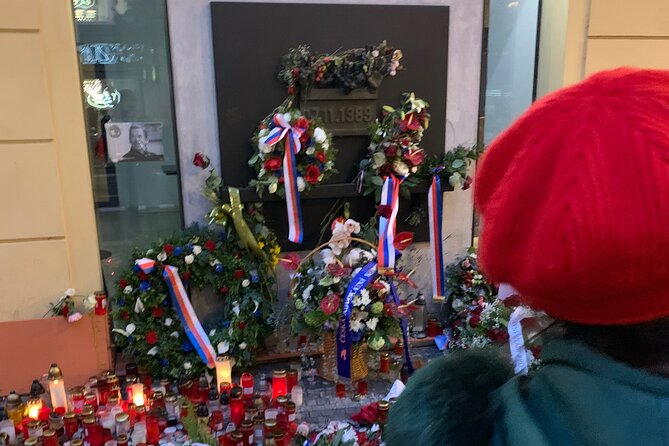
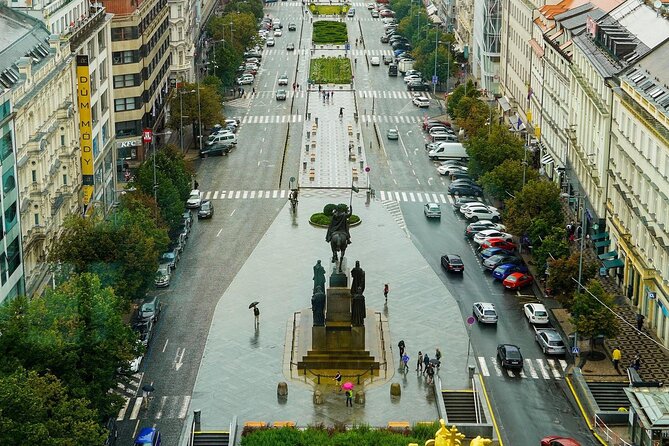
Wenceslas Square receives about 20 minutes. Here, the guide explains what happened after Communism began, why Warsaw Pact armies invaded Czechoslovakia in 1968, and where Jan Palach set himself on fire.
The square is a natural place for this part of the story. It has long been tied to public demonstrations, political speeches, and national events. The guide’s task is to explain the tension between reform and Soviet control without reducing the period to a few slogans.
You learn about the 1968 invasion and the limits placed on Czechoslovakia’s attempt to change its Communist system. Jan Palach’s self-immolation then brings the period down to one person and one terrible act of protest.
For me, this is likely to be one of the most useful stops for anyone who knows the broad outline of the Cold War but not the Czech experience. The tour gives you a local setting for events that can otherwise seem distant and abstract.
Kafka’s rotating head and art under Communism
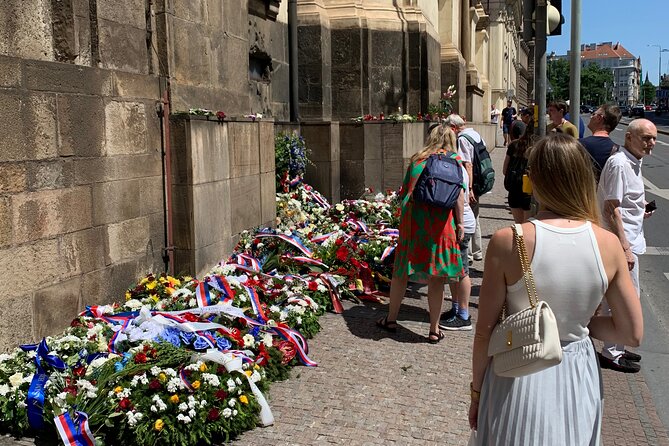
At OC Quadrio, the group pauses for about 15 minutes to see the Rotating Head of Kafka and discuss art during Communism.
This stop changes the pace. After war, occupation, invasion, and protest, the guide turns to culture and expression. Art under an authoritarian system was never just decoration. What artists could show, say, or imply was shaped by political limits, censorship, and the need to work around official expectations.
The Kafka sculpture also gives the guide a modern visual object to discuss. You are not only looking backward. The stop asks how Prague remembers and represents its writers and its recent past today.
The timing is short, so expect an introduction rather than a full lecture on Czech art. Still, it adds range to the tour. You see that Communist history affected not just government and protest, but also public culture.
Národní třída and the Velvet Revolution
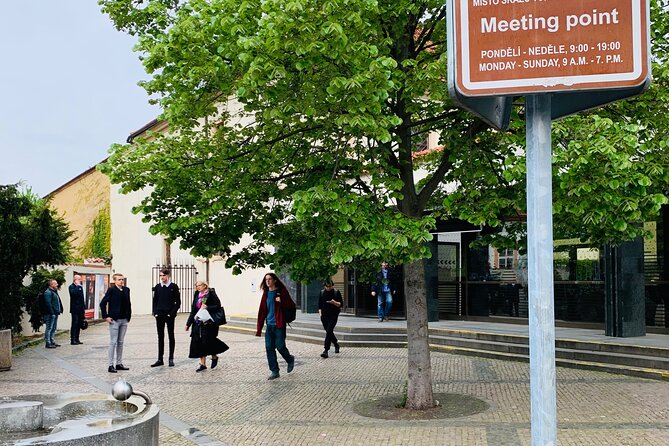
The next stop is a wall sculpture of hands reaching out on Národní třída. The guide explains the Velvet Revolution and the fall of Communism, with about 15 minutes at the location.
Národní třída is important because the Velvet Revolution was not only a change of government announced from above. It grew through public action, student involvement, civic pressure, and the growing refusal to accept the existing system.
The hands on the wall provide a simple image for a complicated movement. They suggest people reaching toward one another and toward change. Your guide connects the physical place with the political events that ended Communist rule.
This is also where Vaclav Havel enters the story. The tour does not treat him only as a famous president. It explains his role as a dissident and one of the leading figures in the Velvet Revolution.
The National Theater and Vaclav Havel
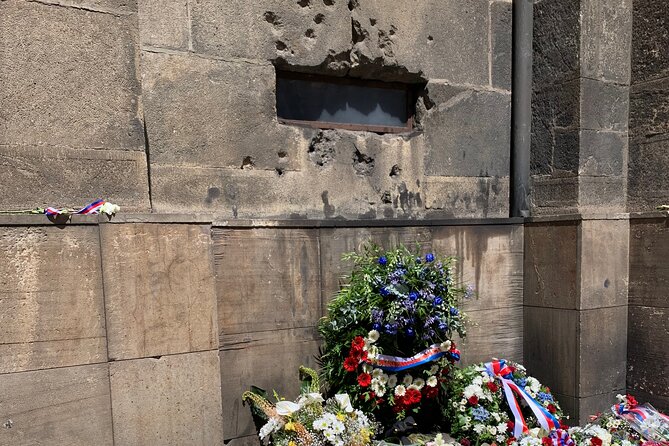
The National Theater stop lasts about 10 minutes. The guide introduces Vaclav Havel, who became the first president of Czechoslovakia after the fall of Communism, and explains his role during the revolution.
The shorter timing is appropriate. Havel’s story has already begun at Národní třída, so this stop adds a political and cultural landmark rather than repeating the whole account.
You may find this part especially useful if you have heard Havel’s name but know little about how he moved from dissident writer to head of state. His presence helps show that the Velvet Revolution involved ideas, public courage, and leadership, not only economic or international pressure.
Dancing House and the Valentine’s Day bombing
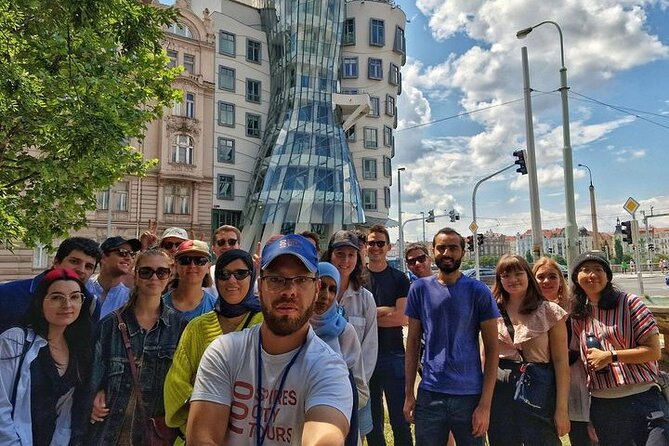
The tour then reaches the Dancing House for about 10 minutes. Here, the guide shows the building and tells the story of the Valentine’s Day bombing.
This is the shortest stop, and its role is different from the others. It brings the story closer to the present and reminds you that Prague’s difficult twentieth-century history did not end with the fall of Communism.
The Dancing House itself is a striking modern landmark, so the stop gives you a change of architecture as well as another piece of recent history. Do not expect a long architectural visit. The building serves as a setting for the story, not as the main subject.
Operation Anthropoid and the cathedral crypt
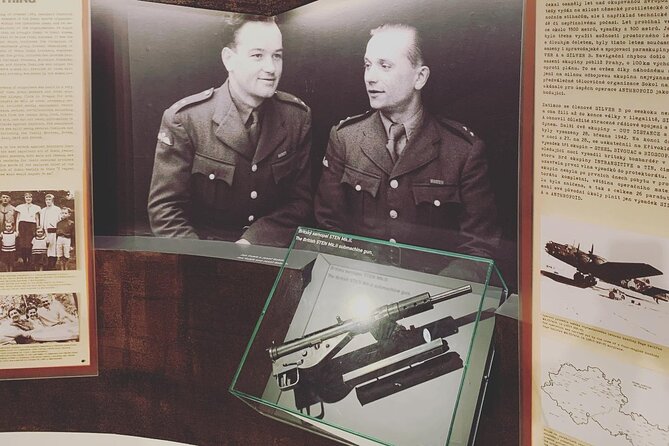
The final stop is the Orthodox Cathedral of Saints Cyril and Methodius, on Resslova Street. The tour ends in the crypt, the hiding place of soldiers involved in Operation Anthropoid, and includes free entry to the Museum of Anthropoid Operation.
This is the emotional center of the experience. Operation Anthropoid was the most important achievement of the Czechoslovak resistance during the Second World War. Ending here gives the entire route a strong sense of purpose.
The crypt is only a short walk from the Dancing House or Charles Square, but the experience changes once you go below the church. The space is tied directly to the resistance fighters’ final refuge, making the story far more immediate than a standard monument viewed from the pavement.
The war memorial does not allow animals inside, although service animals are generally allowed on the tour. That distinction matters if you are planning to bring one.
What the tip-based price really means
The advertised price is $3.60 per person, but this is a tip-based tour. You pay the small booking amount first, then decide what the experience was worth at the end.
That structure can be a good deal if you want to keep your upfront cost low. It also means the final amount is not truly fixed. One person specifically appreciated being able to pay more after finding the tour worthwhile, and chose to give more than for similar three-hour walks.
I would think of the $3.60 as an entry point, not the full value of the tour. The route covers three hours, nine stops, an English-speaking guide, and entry to the Anthropoid museum. If the storytelling works for you, the tip should reflect the time and effort involved.
The value is strongest for someone who would otherwise pay for a separate modern-history walk and a museum visit. If you only want a cheap way to see Prague’s streets, you may not feel the same benefit.
Walking, group size, and practical comfort
The tour lasts about three hours and covers approximately 5 kilometers. You will be on city streets for most of the route, moving from Klárov through the Old Town and New Town to Resslova Street.
A moderate level of physical fitness is recommended. The experience is not suitable for people with mobility problems, and you should wear comfortable shoes. There are several short stops, but the route still requires steady movement through central Prague.
The experience is described as private, with only your group participating. At the same time, one booking account reported a group of 24 and expected no more than eight people. Because that is a meaningful difference in comfort and guide access, I would confirm the expected group size before booking.
A larger group can make city walking slower and make questions harder to ask. A smaller group usually gives you more room to interact with the guide, especially at serious stops such as Pinkas Synagogue and the Anthropoid crypt.
The tour is offered in English and is near public transportation. Confirmation is provided at booking. It is booked, on average, 19 days ahead, so reserving early makes sense if your Prague dates are fixed.
Which guides bring the history to life
The strongest part of this experience is the guide’s ability to hold together a large amount of difficult material.
Kamil is praised for his clear presentation, strong familiarity with the subject, and personal connection to the story. His approach seems especially suited to people who want more than dates and political labels.
Vaclav is noted for explaining events in a linear way, building suspense, and managing a fairly large group in Prague’s streets. That can be useful on a route with many stops and frequent movement.
Katerina is described as entertaining and well informed, with especially valuable first-hand accounts of life under Communism. Kuba is also praised for presenting the material in an engaging and informative way.
Because guides can vary, you should expect the same route and themes but perhaps a different tone. The common strength is the focus on storytelling rather than simply pointing out buildings.
Who should book this Prague history walk?
I would choose this tour if you want to understand Prague beyond the castle, Charles Bridge, and Old Town architecture. It is a strong fit for World War II and Cold War history fans, but it also works for anyone interested in how ordinary people responded to occupation, dictatorship, invasion, and political change.
You will get the most from it if you already know a little about the Second World War or the Cold War. That background is not required, but it will help you connect the events more quickly.
Families with older children and teenagers may find the route useful because the stories are tied to real places. The subjects are serious, including persecution, war, suicide, and repression, so it may not suit younger children.
I would skip it if you want a relaxed sightseeing stroll with little political discussion. I would also think twice if 5 kilometers of walking is difficult for you or if you need a reliably small group.
Free cancellation is available up to 24 hours before the start time. Changes made less than 24 hours before the start are not accepted, and a minimum number of participants is required for the experience to operate.
Should you book it?
Book this tour if you want Prague’s last century explained as one connected human story. The route is well chosen, the final crypt visit gives it a powerful finish, and the tip-based format keeps the initial cost low.
Before booking, confirm the expected group size and be realistic about the walking. If those points work for you, this is a useful way to see the city’s modern past, especially with guides such as Kamil, Vaclav, Katerina, or Kuba leading the story.
FAQ
How long is the Second World War and Communism tour?
The tour lasts approximately three hours.
What language is the tour offered in?
The tour is offered in English with an in-person certified guide.
Where does the tour start?
It starts at Metrocafe Klárov 51, 118 00 Praha 1, Malá Strana, Czechia.
Where does the tour end?
It ends at the Orthodox Cathedral of Saints Cyril and Methodius, Resslova 9a, in the crypt that was used as a hiding place by soldiers from Operation Anthropoid.
Is museum entry included?
Yes. Entry to the Museum of Anthropoid Operation is included.
How much walking is involved?
The route covers about 5 kilometers and requires a moderate level of physical fitness.
Is the tour suitable for people with mobility problems?
No. The experience is not recommended for people with mobility problems.
What is the cancellation policy?
You can cancel up to 24 hours before the start time for a full refund. Cancellations or changes made less than 24 hours before the start are not accepted.
More 3-Hour Experiences in Prague
- Prague: 3-Hour Walking Tour of Old Town & Prague Castle
★ 4.7 · 5,696 reviews - Prague: 3-Hour Old Town and Prague Castle Tour in German
★ 4.8 · 5,671 reviews - 3-hour Complete Prague Bike Tour
★ 5.0 · 3,674 reviews - Prague 3-hour Afternoon Walking Tour including Prague Castle
★ 5.0 · 1,899 reviews
Just added around Prague
- WWII and Communism History in Prague’s Old Town Private Tour★ 5.0 · 4 reviews
- World War II 4WD Tour from Prague with Lunch★ 4.4 · 3 reviews
- Wroclaw to Prague: 2-in-1 (Private Transfer + Country Tour)★ 5.0 · 4 reviews
- Prague: Historical Walking Tour with Focus on World War 2★ 4.3 · 12 reviews
- Walking tour of Prague in french: Old Town & Charles Bridge★ 4.9 · 62 reviews
- Ultimate Unlimited Beer Pong with Czech Beer★ 4.6 · 5 reviews
- Walking tour of Prague in French : Nové Město★ 4.9 · 16 reviews
- Prague: Modern Private Spa with Jacuzzi and Sauna★ 4.8 · 62 reviews
Communism Tours, compared.
Communism History and Nuclear Bunker Guided Tour
Read our review →
Communism & Nuclear Bunker Tour + 70s Canteen Lunch (own expense)
Read our review →
Prague Communism tour with visit of Communism museum
Read our review →Browse the lists this tour appears in