
Reviewed · WALKING TOURS
Walking tour of Prague in French : Nové Město
Prague’s Nové Město is not simply a newer version of the Old Town. It is a carefully planned 14th-century district built around markets, grand squares, political change, and the river. I like that this walk connects Charles IV’s urban plan with later Czech identity, from the National Theatre to the Prague Spring.
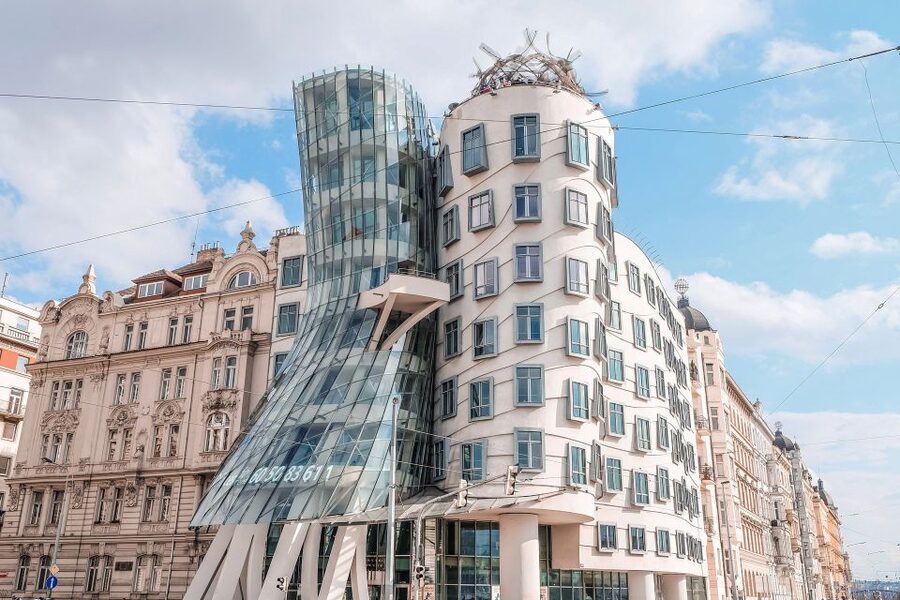
I also like the architectural range. In one walk you may see Gothic towers, Baroque details, Art Nouveau decoration, Cubist design, and the modern Dancing House. The route along the Vltava and Archer’s Island adds open views and good photo stops, rather than keeping you among city streets the whole time.
The main drawback is pace. Nineteen stops in about two and a half hours means most visits are explanations from outside, not long interior visits. You will also walk in rain, snow, or sunshine, so sturdy shoes and a weather plan matter.
Key points to know before you book
- Charles IV’s planned New Town: Learn how Nové Město was organized around a cattle market, horse market, and hay market.
- A broad architectural mix: See Gothic, Baroque, Art Nouveau, Cubist, and modern buildings in a compact area.
- French-language guiding: The live tour is conducted in French by a licensed Czech tourism guide.
- A route that reaches the river: Walk from central squares to the National Theatre, Legion Bridge, and Park Legií.
- A useful city orientation: The guide adds local addresses and practical advice for the rest of your stay.
- A weather-proof outing: The walk runs in rain, snow, or sunshine, so dress for the forecast.
Why Nové Město gives you a different Prague
Many first visits to Prague focus on the Old Town, Charles Bridge, and Prague Castle. This tour takes you into the district that Charles IV founded in 1348, giving you a clearer sense of how Prague expanded beyond its medieval core.
The name Nové Město means New Town, but the district is nearly seven centuries old. Its original plan grouped daily trade around three major spaces. Charles Square served as the cattle market, Wenceslas Square as the horse market, and Senovážné Square as the hay market.
That arrangement tells you something useful about medieval city planning. These were not decorative plazas added after the fact. They were working spaces, placed at the center of a growing district. As you walk between them, the guide can show how markets, civic buildings, theatres, churches, and transport routes changed the area over time.
I find this approach more rewarding than a simple parade of famous buildings. You are not only looking at facades. You are seeing how Prague’s economy, national identity, and public life took shape in the same streets.
The tour costs $27 per person. For a 2.5-hour French-language walk with a licensed guide, that is a sensible price if you want context rather than only a map and a list of buildings. The value is strongest for first-time visitors, French speakers, and anyone who wants help making sense of Prague’s many architectural periods.
More Walking Tours in Prague:
- Prague: 3-Hour Walking Tour of Old Town & Prague Castle
★ 4.7 · 5,696 reviews - Prague: Ghost Walking Tour Where Legends Come To Life
★ 4.4 · 5,253 reviews - Prague: Jewish Quarter Walking Tour with Admission Tickets
★ 4.7 · 3,729 reviews
Starting at Jindřišská Tower and Senovážné Square
The walk begins in front of Jindřišská Tower, a clear central meeting point near Jindřišská station. Tram lines 3, 5, 6, 9, 14, and 24 serve the area, which makes the start practical from several parts of Prague.
Jindřišská Tower introduces you to the city’s older religious and civic fabric before the route moves into the planned New Town. From there, the first guided stop is Senovážné náměstí, the former hay market.
You get about ten minutes of explanation here. That is enough to understand the square’s place in the original plan, though not enough for an extended architectural study. Use this opening section to get your bearings and listen for the larger story of how Charles IV structured the district.
Na Příkopě and the Republic Square buildings
The route continues to Na Příkopě, one of central Prague’s major streets. The ten-minute stop helps connect the New Town to the old fortification line and the commercial heart of the city.
Next comes Náměstí Republiky, with about fifteen minutes of guiding. This is one of the strongest architectural sections of the walk because the nearby buildings show how Prague moved from medieval power to modern civic confidence.
Look for the Powder Tower, a famous Gothic gateway, and the Municipal House, one of the city’s grand Art Nouveau landmarks. Their contrast is the point. The dark, medieval verticality of the tower sits near the ornate curves and decorative detail of the Municipal House.
This is also where the House of the Black Madonna enters the story. Its Cubist design is a reminder that Prague’s architecture did not stop with Gothic churches and Baroque palaces. The city also became an important place for modern experiments in form.
You should not expect entry into every building. The emphasis is on the street view and the guide’s explanation, which keeps the walk moving but limits time for interiors.
Ovocný trh, the Estates Theatre, and Wenceslas Square
At Ovocný trh, the route turns toward the Estates Theatre. The stop lasts roughly ten minutes. This area helps explain Prague’s cultural life and the role of theatres in the city’s changing public identity.
The Estates Theatre is one of the emblematic buildings connected with Prague’s performance tradition. From here, the walk moves toward Václavské náměstí, or Wenceslas Square, where you spend another ten minutes.
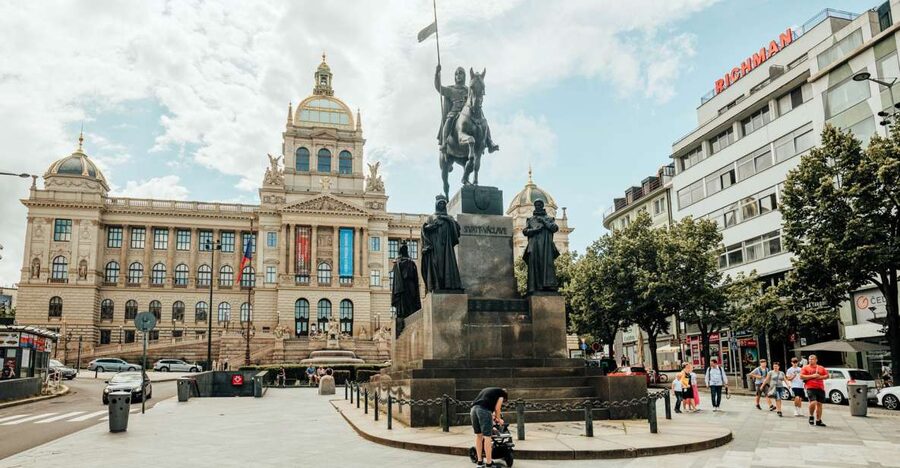
Wenceslas Square began as the horse market in Charles IV’s plan. Today, it is also one of Prague’s key public spaces, linked with political gatherings and major national events. The square gives the guide room to discuss more recent Czech history, including the Prague Spring.
That context adds real value. You may recognize Wenceslas Square from photographs, but a guide can explain why it matters beyond its size and central location. This is a place where urban space and national memory meet.
The route includes another Wenceslas Square stop at Václavské náměstí 826. That may sound repetitive on paper, but the two points allow the guide to cover different parts of the long square and its surrounding buildings.
A few more Prague half-days worth weighing up
- Prague: 50-Minute Sightseeing Evening Cruise
★ 4.2 · 33,780 reviews - Prague: Medieval Dinner with Unlimited Drinks
★ 4.4 · 19,847 reviews - Prague: Skip-the-line Castle Ticket and Optional AudioGuide
★ 4.3 · 11,121 reviews - Prague: Castle Tour with Local Guide and Entry Ticket
★ 4.6 · 10,422 reviews
Jungmann Square and the Franciscan Gardens
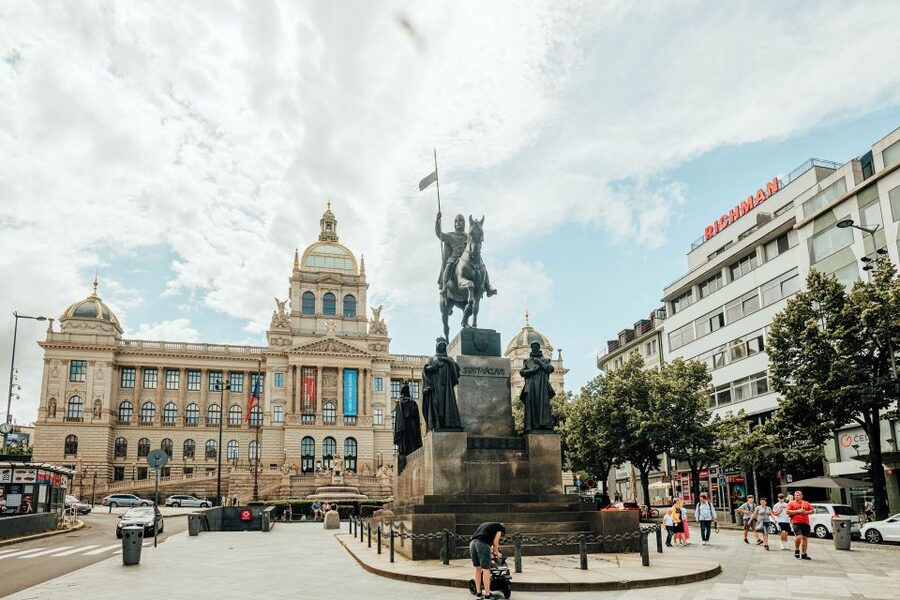
After Wenceslas Square, you reach Jungmann Square for about ten minutes. This section continues the discussion of Prague’s cultural and national revival.
The Czech National Renaissance was not only an artistic movement. It helped strengthen Czech language, culture, and identity during a period when national self-definition mattered greatly. The National Museum and National Theatre are especially important symbols of that effort, and this walk gives you the background to understand why.
Franciscan Gardens provide a quieter change of pace. You spend about ten minutes here, moving away from the larger avenues into a smaller green space. It is a useful pause in a route with many buildings and historical dates.
A stop at a David Černý sculpture follows, with about five minutes of explanation. The tour does not treat Prague as a city frozen in the past. This modern artwork adds a contemporary note and shows how the city continues to use public space for visual commentary.
Because the sculpture stop is short, you will get a quick introduction rather than a long discussion of the artist or the work. If contemporary art is your main interest, you may want extra time in Prague for it after the tour.
Charles Square and the story of Czech identity
The route then passes Sokolská and Na Rybníčku before reaching Charles Square. Each of these brief stops lasts around five minutes, while Charles Square receives about ten minutes.
Charles Square was the cattle market in the original New Town plan. It is also one of the clearest places to understand the scale of Charles IV’s idea. The district was laid out with unusually large public spaces for its time, giving the expanding city room for trade and public activity.
The square offers a useful contrast with Wenceslas Square. Wenceslas feels tied to modern national events and commercial movement, while Charles Square reflects the older structure of the district. A French-language guide can make those connections without forcing you to decode Czech names and historical terms as you walk.
This part of the route may feel less instantly dramatic than the Powder Tower or National Theatre. Its value is interpretive. You are learning to read the city plan, not simply collecting postcard views.
Resslova and the walk toward the river
At Resslova, the guide spends about ten minutes discussing another important part of Nové Město. The supplied route does not promise an interior visit, so expect an outdoor explanation tied to the surrounding streets and the district’s later history.
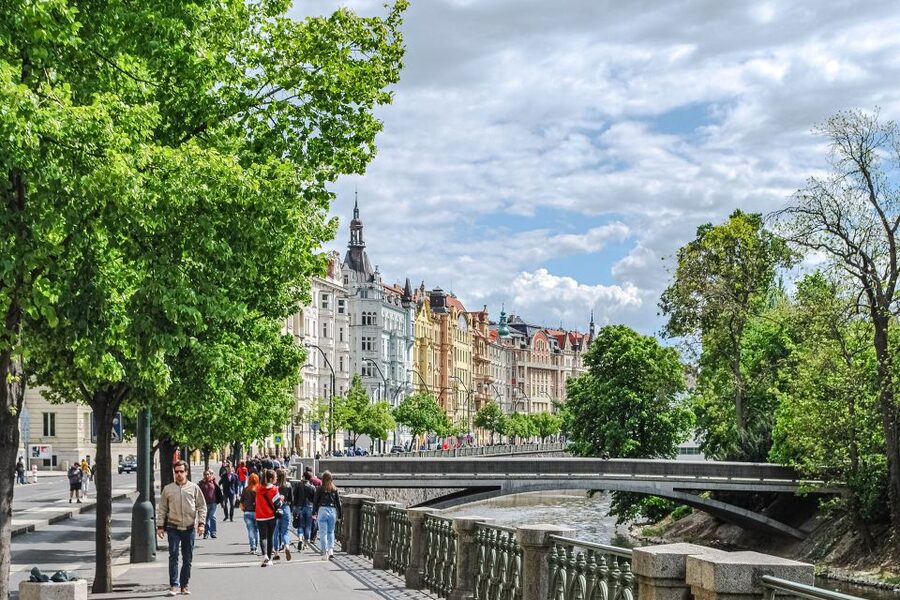
From there, the route heads to Masarykovo nábřeží, the riverfront. This is where the walk opens up. After several dense city streets and formal squares, the Vltava gives you broader views and a chance to pause for photographs.
The river is not just a scenic ending. It helps explain Prague’s shape. The Vltava has long connected neighborhoods, influenced bridges and quays, and provided a natural edge to the city’s development. The guide can tie the riverfront to the buildings you have already seen inland.
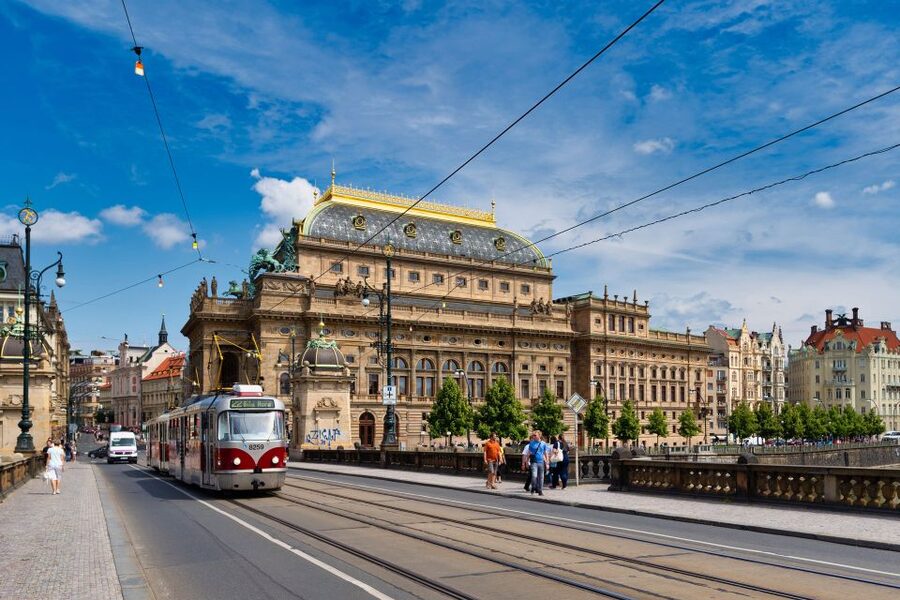
The National Theatre is one of the major highlights here. It is closely associated with the Czech National Renaissance and with the development of Czech cultural identity. Its position near the river makes it one of Prague’s most recognizable urban compositions.
You receive about ten minutes at the theatre. That is enough for a focused exterior explanation and photographs, but not a full building visit.
Legion Bridge, Archer’s Island, and Park Legií
The final stretch crosses toward Legion Bridge, where the guided explanation lasts about five minutes. The bridge offers a change in viewpoint, letting you look back toward Prague’s riverfront buildings and the water itself.
The route continues into Park Legií, also known as the park on Archer’s Island. The park receives about ten minutes and serves as the final stop. This is one of the tour’s best features for photography because the river setting gives you a different angle on the city than the central squares do.
I like that the walk ends outdoors rather than at another crowded monument. You have spent the first part learning the city’s plan and political history, then finish with space, water, and views.
There is a small practical point to clarify before booking. The detailed route finishes at Park Legií, while the meeting information says the activity ends back at the meeting point. Ask the provider to confirm the exact end location for your date. Either way, the route clearly reaches Park Legií and the Vltava before the activity ends.
What the French-language format adds
A live French guide makes this tour especially useful if you prefer history and architecture in French. Names such as Senovážné náměstí, Na Rybníčku, and Masarykovo nábřeží can be difficult to follow while walking, and a French explanation lets you focus on the city rather than translating every detail.
The guide is described as licensed by the Czech Ministry of Tourism. The experience also includes practical addresses and advice for the rest of your stay, which can be more useful than another long list of dates.
Alexandre is the guide associated with the strongest praise in the available comments. If he is leading your departure, expect lively explanations and an engaging presentation. Since guide assignments can vary, ask when reserving if meeting Alexandre is important to you.
The walk is conducted in French, and no other language is specified. If you need interpretation in English or another language, confirm before paying.
The walking demands and what to bring
This is a 2.5-hour walking tour with nineteen listed points, so you should expect a steady pace. The route covers squares, streets, gardens, riverfront quays, a bridge, and an island park.
Wear comfortable shoes. The tour does not include transport tickets, hotel pickup, food, or drinks. Bring water, especially if the weather is warm, since the price covers the guided walk rather than refreshments.
The tour runs in rain, snow, or sunshine. That policy makes it a useful fixed plan in uncertain weather, but it also means you should not treat poor conditions as a reason to arrive unprepared. A raincoat, warm layer, or compact umbrella can make the difference between enjoying the river section and rushing through it.
You may want to schedule indoor sightseeing before or after the walk. The route passes major buildings such as the National Museum, National Theatre, Municipal House, and Estates Theatre, but the activity is built around outdoor explanations.
Who will get the most from this tour
I would choose this walk if you are staying in Prague for the first time and want a clear introduction to Nové Město beyond the usual Old Town circuit.
It also suits you if:
- You speak French and want a live explanation rather than a written guide.
- You care about architecture across several periods.
- You want to understand Prague’s Czech national identity and modern political history.
- You enjoy city walks that end beside a river.
- You want local addresses and practical advice for the rest of your stay.
You may want something else if you dislike walking in uncertain weather, prefer small groups with long stops, or mainly want museum interiors. The route covers a lot of ground and many stops, so the experience favors range and context over detailed examination of one building.
Is the $27 price fair?
At $27, the tour offers a solid amount of guided time for the price. You get a licensed local guide, French commentary, explanations of Prague’s history and culture, and practical suggestions for the area.
The price is less attractive if you plan to skip the explanations and only take photographs. You can walk through much of Nové Město independently, but you will miss the connections between the three medieval markets, the Czech National Renaissance, the Prague Spring, and the modern architecture near the river.
Free cancellation up to 24 hours before the start gives you some room to adjust your plans. You can also reserve and pay later, which helps if your schedule is still changing. These policies do not replace checking the starting time and exact end point, but they reduce the risk of committing too early.
Should you book this French walking tour?
Book it if you want Prague explained as a living city, not just a set of famous facades. The strongest reasons are the French-language guidance, the clear focus on Nové Město, the range from Gothic to Cubist and contemporary design, and the river walk through Park Legií.
I would especially recommend it near the start of your stay. The route can help you understand where Wenceslas Square, Charles Square, the National Theatre, and the central shopping streets fit together.
Skip it if you want long museum visits, hotel pickup, or a relaxed stroll with only three or four stops. But if $27 fits your budget and you are ready for two and a half hours on foot, this is a practical way to see a less predictable side of Prague. Ask whether Alexandre is guiding, dress for the weather, and confirm the end point before you go.
FAQ
What language is the tour conducted in?
The live guided tour is conducted in French.
How long does the walking tour last?
The tour lasts approximately 2.5 hours.
How much does the tour cost?
The listed price is $27 per person.
Where does the tour start?
Meet in front of the entrance to Jindřišská Tower. The nearest named transit access is Jindřišská station, served by trams 3, 5, 6, 9, 14, and 24.
Where does the tour finish?
The detailed route finishes at Park Legií. The meeting information also says the activity ends back at the meeting point, so confirm the exact end location when booking.
What is included in the price?
The price includes a licensed local guide, approximately 2.5 hours of French guiding, explanations of Prague’s sites, history, and culture, plus local addresses and advice for your stay.
Does the tour run in bad weather?
Yes. The tour takes place in rain, snow, or sunshine, so dress appropriately for the forecast.
Just added around Prague
- WWII and Communism History in Prague’s Old Town Private Tour★ 5.0 · 4 reviews
- World War II 4WD Tour from Prague with Lunch★ 4.4 · 3 reviews
- Wroclaw to Prague: 2-in-1 (Private Transfer + Country Tour)★ 5.0 · 4 reviews
- Prague: Historical Walking Tour with Focus on World War 2★ 4.3 · 12 reviews
- Walking tour of Prague in french: Old Town & Charles Bridge★ 4.9 · 62 reviews
- Ultimate Unlimited Beer Pong with Czech Beer★ 4.6 · 5 reviews
- Unique salt cave in Prague★ 4.9 · 10 reviews
- Prague: Modern Private Spa with Jacuzzi and Sauna★ 4.8 · 62 reviews
Walking Tours, compared.
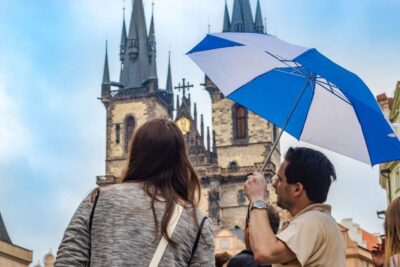
3-Hour Walking Tour of Old Town & Prague Castle
Read our review →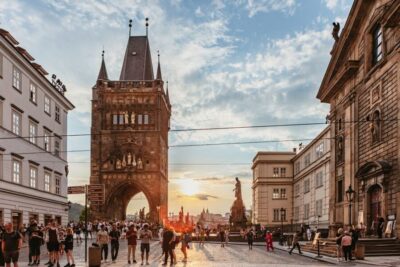
Ghost Walking Tour Where Legends Come To Life
Read our review →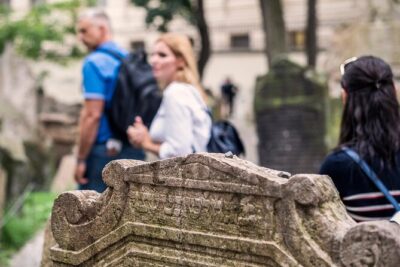
Jewish Quarter Walking Tour with Admission Tickets
Read our review →
Prague Guided Walking Tour and Cruise with Authentic Czech Lunch
Read our review →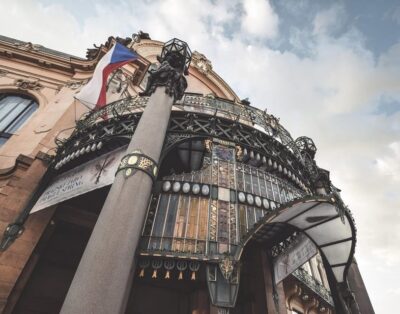
Old Town and Jewish Quarter Guided Walking Tour
Read our review →
Prague Ghost and Legend of Old Town Walking Tour
Read our review →
Prague 3-hour Afternoon Walking Tour including Prague Castle
Read our review →
Ghosts and Legends Nighttime Guided Walking Tour
Read our review →Browse the lists this tour appears in