
Reviewed · COMMUNISM TOURS
Private Prague Cold War Walking Tour
Prague’s Cold War story becomes most vivid at the places where politics collided with ordinary life: a locked nuclear-shelter entrance, a former communist leader’s mausoleum, protest graffiti at the John Lennon Wall, and Wenceslas Square, where tanks and revolutionaries once shared the same stage. This private tour links those sites into a clear three-hour walk.
I like the small private format, which gives you room to ask about everything from censorship to daily life. I also like the unusual stop at Klement Gottwald’s former mausoleum, including its old body-preservation equipment, plus the fine city view from Vitkov Hill.
The main consideration is the steep 20-minute climb to Vitkov. You can ask to skip that section if mobility is a concern, but doing so means missing one of the tour’s most distinctive Cold War sites and best views.
Key points to know before booking
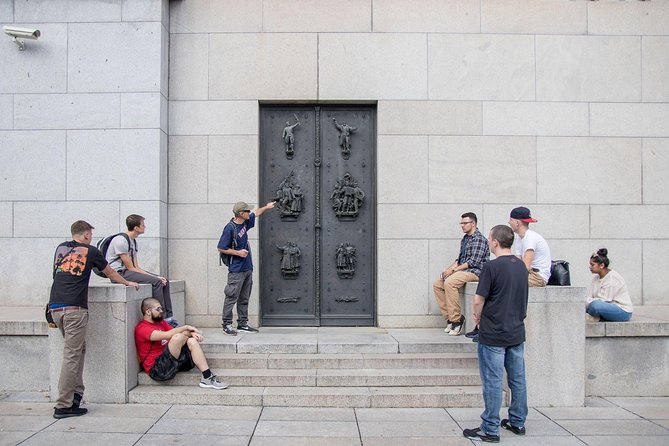
- See the former Gottwald mausoleum: Inspect the old laboratory and temperature-control center built to preserve the communist president’s embalmed body.
- Walk past Cold War shelter doors: The Karlin-Zizkov pedestrian tunnel offers a glimpse of nuclear-bunker corridors that remain locked and maintained.
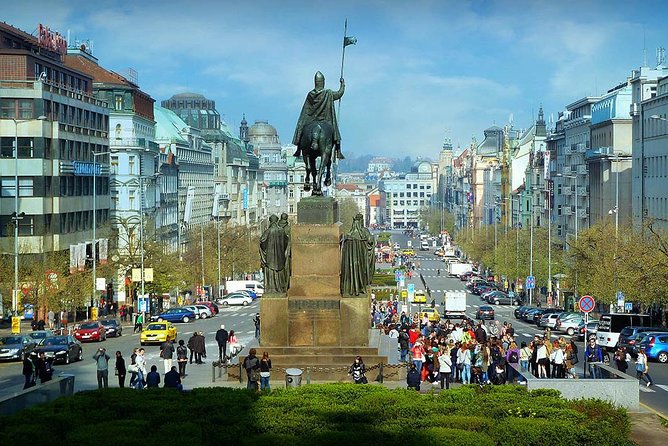
- Connect 1968 and 1989: Wenceslas Square explains both the crushing of the Prague Spring and the success of the Velvet Revolution.
- Expect a serious history lesson: Guides such as Vadim and Alzbeta use political context, questions, and personal family stories rather than simply naming buildings.
- Plan for hills and trams: The tour includes tram tickets and a steep climb, with the central meeting point at Náměstí Republiky.
- Good value for a group: At $390.37 per group, the cost makes more sense when shared by several people, though you should confirm the group-size pricing before booking.
Prague’s Cold War story in three focused hours
This is not a general city walk with a few communist-era comments added on. The route is built around Czechoslovakia under communist rule from 1948 to 1989, with attention to both state power and the way ordinary people lived under it.
You begin in central Prague with a private historian guide. The guide may be Vadim or Alzbeta, both of whom bring a strong interest in modern Czech history. Vadim’s approach, based on the tour’s description, includes asking questions and drawing connections between political events and the places around you. Alzbeta is known for tying buildings and events to family experiences. That sort of personal link can make an abstract subject easier to grasp.
You should expect plenty of explanation, not a rapid march from one photo stop to the next. The pace allows questions, and the private setting means your group can spend more time on subjects that catch your attention. If you want a lively overview of Prague’s communist past, this format works well. If you prefer a quick tour with little discussion, three hours may feel long.
More Private Tours in Prague
- Prague Old Town: Private Tour
★ 5.0 · 1,223 reviews - Prague Airport Private Arrival Transfer
★ 4.5 · 991 reviews - Prague Airport Private Departure Transfer
★ 4.5 · 780 reviews
The Karlin-Zizkov tunnel and its locked shelter doors
The first stop takes you through the pedestrian tunnel linking Karlin and Zizkov. Look closely at the locked doors along the route. Behind them are corridors connected with nuclear bomb shelters built during the Cold War.
You do not enter the shelter system, so this is not a bunker tour in the usual sense. The value lies in seeing how military planning sat beside daily urban life. People could walk through an ordinary pedestrian passage while Cold War defenses remained close by, maintained but out of sight.
Your guide can use this stop to explain the atmosphere of the period: the possibility of conflict was not only a matter for politicians and generals. It shaped public buildings, infrastructure, emergency plans, and the way citizens viewed the Soviet-led state.
The stop lasts about 10 minutes. It is easy physically and free, but the history depends heavily on the guide’s explanation. Without context, you would see only doors. With context, those doors become a small but memorable reminder of the fear built into public life.
Vitkov Hill and the former Gottwald mausoleum
The biggest physical challenge comes next. You climb Vitkov Hill for about 20 minutes, and the route requires moderate fitness. Wear comfortable shoes and expect the climb to affect the timing and energy of the rest of the walk.
At the National Monument, the tour shifts from Cold War defense to communist ceremony and political symbolism. The monument was created to honor Czech and Slovak warriors of World War I, but its later use gave it a prominent place in communist state ritual.
You see the Hall of the Soviet Soldier, with statues and decorative friezes honoring Red Army soldiers who died in Eastern Europe during World War II. The stop shows how public memorials can carry several layers of meaning. A site honoring national soldiers was also used to honor Soviet power and the alliance that shaped postwar Czechoslovakia.
The most unusual part is the former mausoleum of Klement Gottwald. Gottwald served as president from 1948 to 1953 and was also the general secretary and chairman of the Communist Party of Czechoslovakia. His embalmed body was once displayed here in the style of other communist leaders whose remains were used to project authority even after death.
You can look into the old laboratory and temperature-control center, where staff worked to preserve the body. It is a stark, practical detail. Instead of hearing only about ideology and party leaders, you see the machinery required to maintain the image of a permanent political order.
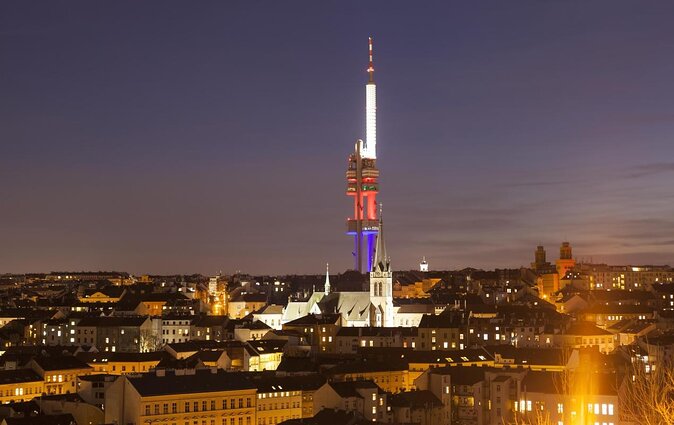
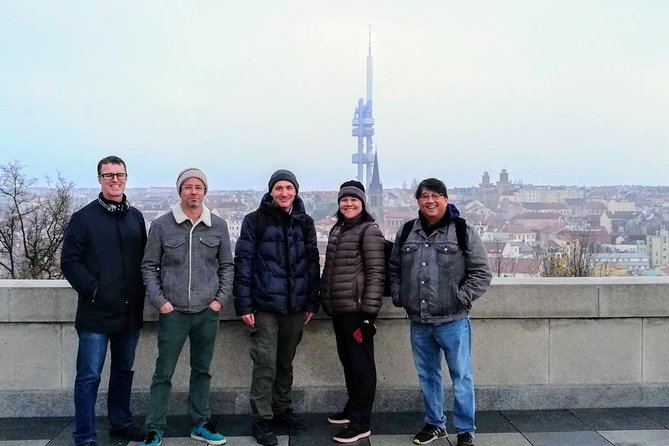
The monument also contains the equestrian statue of Jan Zizka, described as the third-largest bronze equestrian statue in the world. From the memorial area, you get sweeping views across Prague, including the Old Town and the Zizkov Television Tower.
This view is one of the tour’s rewards. It helps you understand Prague as a city divided into historic districts, hills, towers, and broad public spaces. If your tour takes place near sunset, the light can add another layer to the experience, but the exact timing depends on your departure time.
Admission to the National Monument is not included. The supplied tour information does not give the admission fee, so check the current arrangements when booking. If the monument’s interior access is limited on your date, the exterior setting, views, and mausoleum-related explanation still make Vitkov a major stop.
The Zizkov Television Tower from the best angle
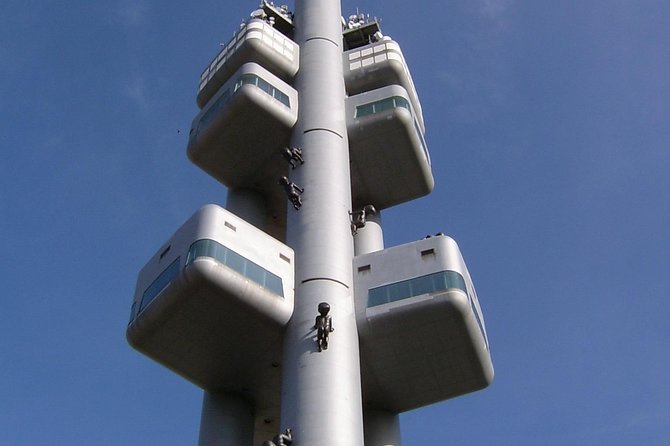
The next stop is brief, only about five minutes, and focuses on the Zizkov Television Tower. You do not need to enter the tower. Instead, you get a good view of its Brutalist design.
This is a useful visual pause after the memorial. The tower represents a different side of the communist-era city: heavy concrete forms, ambitious public infrastructure, and architecture that still divides opinion. Your guide can connect the building’s appearance to the broader design language of the period.
Do not expect a long architectural visit here. The stop is mainly about seeing the tower in context and using it as a reference point from the city below.
More communist era tours in Prague:
- Prague: Communism History and Nuclear Bunker Guided Tour
★ 4.7 · 2,417 reviews - Prague Communism History and Nuclear Bunker Tour
★ 5.0 · 1,742 reviews - Communism & Nuclear Bunker Tour + 70s Canteen Lunch (own expense)
★ 5.0 · 1,036 reviews - Prague: Communism and Bunker Tour with 70s Canteen Lunch
★ 4.8 · 250 reviews
Wenceslas Square, from Soviet tanks to velvet ribbons
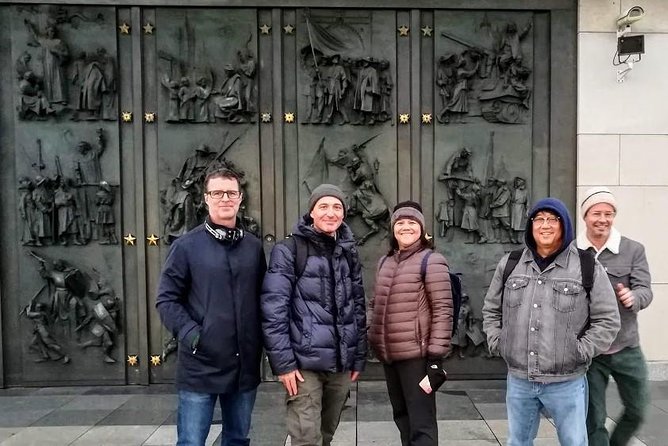
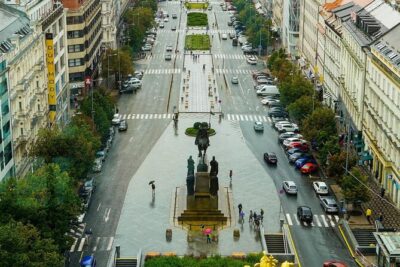
Wenceslas Square is the political heart of the tour. It is also where the city’s long story comes together, from its medieval origins to military parades, occupation, protest, and revolution.
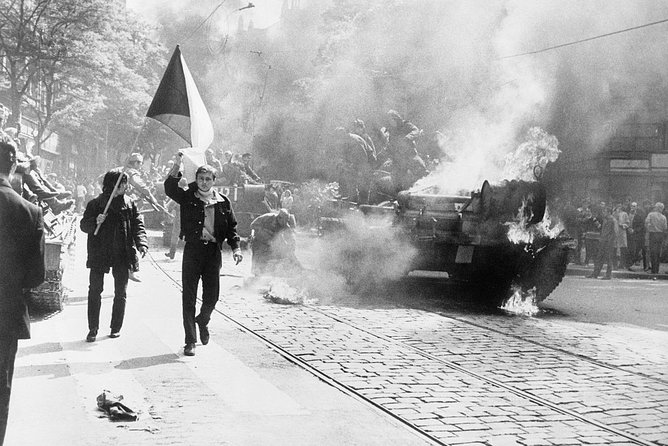
The square became one of the key places in the Prague Spring of 1968. For about eight months, reforms allowed greater freedom of speech and a more independent press. Warsaw Pact tanks then entered Czechoslovakia and ended that period of openness.
Your guide explains how the tanks converged on the square and how the occupation changed public life. This is where the tour moves beyond dates and leaders. You can picture a familiar city center transformed into a place of military control, public fear, and political resistance.
The square also played a central role in 1989, when demonstrations helped bring communist rule to an end. The Velvet Revolution was remarkably peaceful compared with many political upheavals, and Wenceslas Square became the setting for large gatherings, speeches, and public celebration.
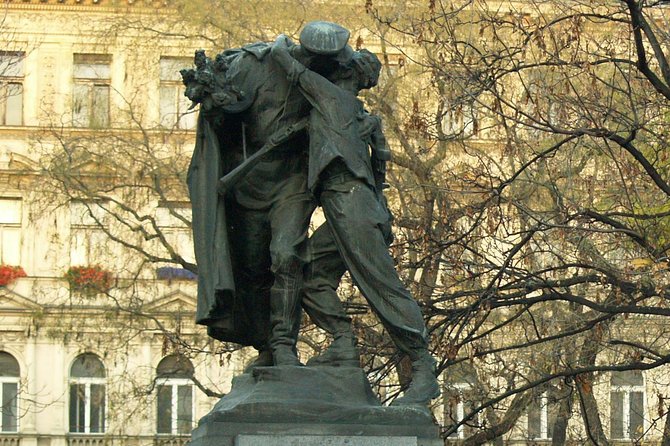
You will see monuments connected with brave Czech protestors and hear about the events that led to the collapse of the communist government. This is one of the strongest parts of the walk because the location remains part of everyday Prague. Shops, trams, traffic, and pedestrians continue around the same space where the country’s political future was fought over.
The stop lasts about 20 minutes, though a private guide may spend more time here if your group has questions. If you have already read about 1968 and 1989, this is where the facts gain a physical setting. If the subject is new to you, the guide’s explanations should give you a useful framework for understanding modern Czech politics.
A dead horse, an upside-down king, and modern Prague
The tour includes a short stop at the upside-down statue of King Wenceslas riding a dead horse. The sculpture is ironic and deliberately unsettling. It gives you a chance to consider how Central European artists continue to question political authority and national symbols.
The work is not a Cold War monument in the narrow sense, but it fits the tour’s wider theme. Prague’s political memory does not end in 1989. Public art still comments on power, leadership, national identity, and the uneasy relationship between history and the present.
The stop takes about five minutes. I would treat it as a quick interpretive moment rather than a major attraction. It works best after Wenceslas Square, when you already understand the symbolic weight of the king’s name and the square itself.
What happened to the John Lennon Wall and Letna Hill?
The tour description also includes Letna Hill and the John Lennon Wall as important Cold War locations. Letna once held one of the world’s largest statues of Josef Stalin, positioned to look down over Prague. The monument was later removed, but the site remains important for understanding the public display of Soviet power.
At the John Lennon Wall, people painted messages of hope, peace, and Western-style freedom. During the communist period, protest graffiti turned the wall into a place where young people could express ideas that official institutions restricted.
These locations are especially useful if you want to understand protest outside formal politics. Wenceslas Square shows mass demonstrations and national events. The Lennon Wall shows smaller, more personal acts of resistance. Letna shows how a city can be reshaped when a regime’s symbols fall out of favor.
The detailed stop schedule lists five main stops, while the broader route description includes Letna Hill and the Lennon Wall. Ask your guide exactly how these locations fit into your departure time and route. A three-hour tour has to balance several widely separated sites, so the precise order and length of each stop may change.
Price, group size, and what you receive
The advertised price is $390.37 per group, with the tour described as private for up to 10 people. The pricing information also refers to a group of six or fewer, so confirm the current group limit and rate before paying if you plan to bring more than six people.
For two people, this is an expensive walking tour. For a group of six, eight, or more, the per-person cost becomes easier to justify, especially because you receive undivided guide attention rather than joining a large public group.
The price includes a historian guide and tram tickets. It does not include food, drinks, or admission to the National Monument. Hotel pickup and drop-off are not included unless arranged separately, so the standard plan is to meet at the central starting point.
The meeting place is Kostel Svaty Josef at Náměstí Republiky 1077/2. Arrive 15 minutes early. The location is near public transportation, which makes it practical for a morning or afternoon start.
Who will get the most from this private walk?
I would choose this tour if you want political history tied to real streets and buildings. It suits first-time visitors who want a clear introduction to Czechoslovakia’s communist period, as well as people who have read about the Prague Spring and Velvet Revolution but want to understand where the events happened.
It also works well for university groups, families with older children, and friends who like to ask questions. The guide can adjust the conversation more easily in a private setting, and the reported guiding style includes discussion rather than one-way narration.
You should think twice if steep hills are difficult for you. The climb to Vitkov can be omitted if you tell the company about your mobility needs, allowing the guide to focus on other Cold War sites. That solves the physical problem, but it removes the mausoleum, Hall of the Soviet Soldier, Jan Zizka statue, and city view.
The tour is offered in English, with morning and afternoon departures. Since it lasts about three hours, you can fit it around another major Prague visit. I would avoid scheduling it immediately before a fixed-time activity if you want room for questions and possible delays.
My verdict on the Prague Cold War Walking Tour
Book this tour if you want more than a list of communist-era dates. Its best feature is the way it connects military occupation, political ceremony, shelter planning, protest art, public squares, and the final end of communist rule.
The former Gottwald mausoleum is the most unusual stop, while Wenceslas Square gives the clearest sense of national drama. The private format and guides such as Vadim and Alzbeta add value for anyone who wants personal stories, political context, and the freedom to ask direct questions.
Skip it if you want a flat, easy stroll or a broad introduction to Prague’s medieval sights. The climb is real, some stops are brief, and the monument admission is extra. For a group sharing the cost, though, this is a thoughtful and unusually focused way to understand the city between 1948 and 1989.
Free cancellation is available up to 24 hours before the start time. After that point, the payment is not refunded, and last-minute changes are not accepted.
FAQ
How long does the private Prague Cold War tour last?
The tour lasts approximately three hours.
Where does the tour begin?
Unless hotel pickup has been arranged, meet your guide at Kostel Svaty Josef, Náměstí Republiky 1077/2, Prague 1. You should arrive 15 minutes before the start time.
Is hotel pickup included?
Hotel pickup and drop-off are not included in the standard price. Pickup may be arranged separately.
What language is the tour offered in?
The tour is offered in English.
Is the tour private?
Yes. Only your group participates in the activity.
Does the tour include tram tickets?
Yes. Tram tickets are included.
Is the National Monument admission included?
No. Admission to the National Monument at Vitkov is not included.
Is the tour suitable for people with mobility issues?
The tour includes a steep climb of about 20 minutes up Vitkov Hill. If you have mobility concerns, tell the company in advance so the guide can leave out Vitkov Hill and focus on other Prague Cold War sites.
More Walking Tours in Prague
- Prague: 3-Hour Walking Tour of Old Town & Prague Castle
★ 4.7 · 5,696 reviews - Prague: Ghost Walking Tour Where Legends Come To Life
★ 4.4 · 5,253 reviews - Prague: Jewish Quarter Walking Tour with Admission Tickets
★ 4.7 · 3,729 reviews - Prague Guided Walking Tour and Cruise with Authentic Czech Lunch
★ 5.0 · 3,627 reviews
Just added around Prague
- WWII and Communism History in Prague’s Old Town Private Tour★ 5.0 · 4 reviews
- World War II 4WD Tour from Prague with Lunch★ 4.4 · 3 reviews
- Wroclaw to Prague: 2-in-1 (Private Transfer + Country Tour)★ 5.0 · 4 reviews
- Prague: Historical Walking Tour with Focus on World War 2★ 4.3 · 12 reviews
- Walking tour of Prague in french: Old Town & Charles Bridge★ 4.9 · 62 reviews
- Ultimate Unlimited Beer Pong with Czech Beer★ 4.6 · 5 reviews
- Walking tour of Prague in French : Nové Město★ 4.9 · 16 reviews
- Prague: Modern Private Spa with Jacuzzi and Sauna★ 4.8 · 62 reviews
Communism Tours, compared.
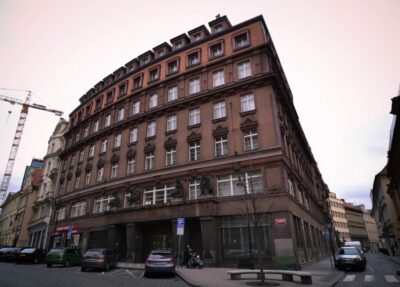
Communism History and Nuclear Bunker Guided Tour
Read our review →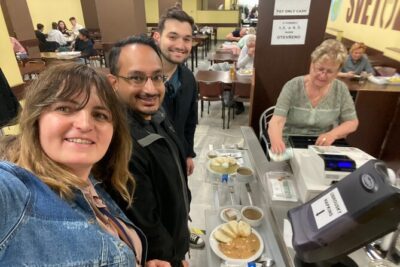
Communism & Nuclear Bunker Tour + 70s Canteen Lunch (own expense)
Read our review →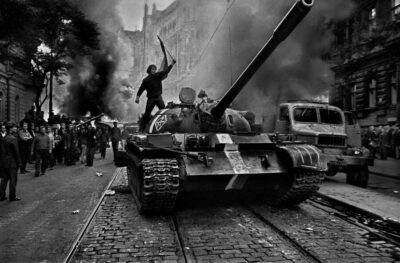
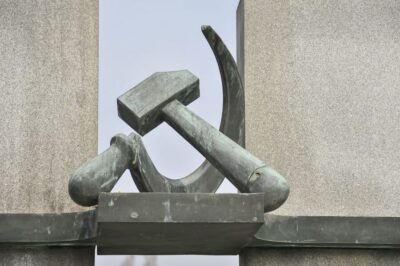
Second World War & Communism (Tip-based 3 hour tour)
Read our review →
Browse the lists this tour appears in