
Reviewed · COMMUNISM TOURS
Prague Cold War Walking Tour
Prague’s Communist past is easiest to understand when you connect buildings, statues, and public squares to the people who used them. This three-hour walk does exactly that, taking you from Cold War bomb-shelter corridors and Klement Gottwald’s former mausoleum to the sites of political protest and the Velvet Revolution.
I like the small group of eight or fewer, which gives a historian room to explain rather than simply point. I also like the route’s unusual stops, especially the embalming laboratory connected to Gottwald’s mausoleum and the enormous Jan Žižka statue on Vitkov Hill. The main drawback is the steep 20 to 30 minute climb to Vitkov, so this is not the best choice if hills are difficult for you.
Key points before you book
- Cold War Prague beyond the usual sights: See bomb-shelter entrances, Communist monuments, former government sites, and protest locations.
- A historian leads the walk: The tour is built around political context, propaganda, Czech nationalism, and daily life under Communist rule.
- Vitkov Hill is the physical challenge: Reaching the National Monument requires a sustained uphill climb.
- Small groups make the discussion personal: The maximum is eight people, a useful size for questions and conversation.
- A strong finish at Wenceslas Square: The route connects Communist power with the one-day explosion of the Velvet Revolution.
- Tram tickets are included: Food, drinks, and hotel transfers are not.
Why this tour gives Prague’s Cold War story shape
You can see Communist-era buildings on your own, but the meaning is easy to miss. A statue may look merely oversized. A square may feel like a pleasant urban space. A locked door may seem unimportant. With a historian tying these pieces together, the city becomes a record of power, fear, nationalism, and public resistance.
The focus is Czechoslovakia under Communist rule, not just Prague architecture. You learn how the Communist Party used ceremonies, monuments, parades, and public art to frame its version of the nation. You also see how those official messages were challenged by protest, satire, and finally mass action.
That makes this a good choice if you want political history with actual places attached to it. It is less suitable if you prefer a light sightseeing walk with only brief commentary. The subject is serious, and the best value comes from paying attention and asking questions.
The tour lasts about three hours. It is offered in English, with morning and afternoon departures, although the supplied schedule lists a 2 pm start. Confirm your selected departure when booking. The meeting information identifies Náměstí Republiky 1077/2 in Prague 1, while the tour description also refers to St. Joseph Church as the beginning point. Check the final confirmation carefully so you do not wait at the wrong place.
More communist era tours in Prague:
- Prague: Communism History and Nuclear Bunker Guided Tour
★ 4.7 · 2,417 reviews - Prague Communism History and Nuclear Bunker Tour
★ 5.0 · 1,742 reviews - Communism & Nuclear Bunker Tour + 70s Canteen Lunch (own expense)
★ 5.0 · 1,036 reviews
Through the Karlin-Zizkov tunnel and into the Cold War
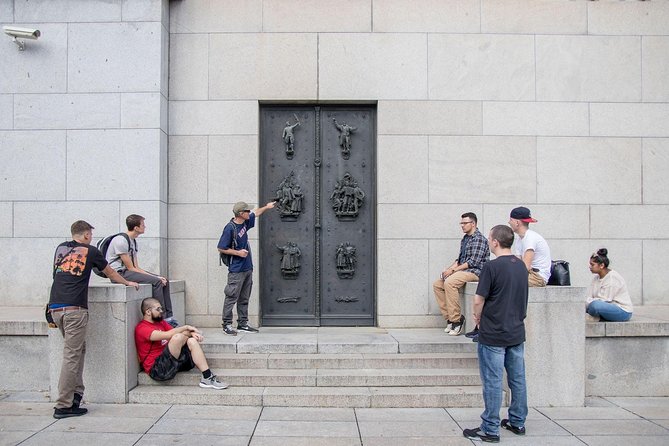
The first stop is the pedestrian tunnel linking Karlín and Žižkov. Its practical modern purpose is straightforward, but the important detail lies behind locked doors: corridors connected with nuclear bomb shelters built during the Cold War and still maintained.
You will not be touring the shelter interiors, and admission is free. Even so, this is a useful opening because it shifts the story from grand political events to the threat that shaped ordinary life. The Cold War was not only speeches and military blocs. It also meant preparing parts of the city for a possible nuclear attack.
Allow about ten minutes here. The stop is short, so you will not spend much time examining the doors or the tunnel itself. Its value comes from the explanation of what lies beyond them and why these spaces were kept ready.
Climbing Vitkov Hill to the National Monument
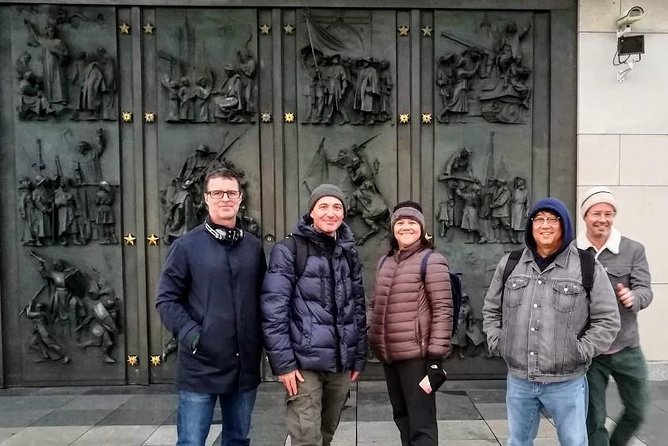
Vitkov Hill is the centerpiece of the walk, both for its history and its height. Expect 20 to 30 minutes of uphill walking before you reach the National Monument. Wear comfortable shoes, take the climb at your own pace, and think carefully about your fitness before booking.
At the top, the monument connects several layers of Czech and Slovak identity. It commemorates Czech and Slovak warriors of the First World War, then folds into the later Communist story through the Hall of the Soviet Soldier and the former mausoleum of Klement Gottwald.
Gottwald was the first chairman of the Communist Party of Czechoslovakia and later its general secretary and chairman. His mummified body was displayed here as part of the political culture surrounding Communist leaders. The adjoining laboratory, where his body was embalmed, gives the subject an unsettling physical detail that you will not get from a standard city tour.
This is where the historian’s role matters most. The goal is not simply to identify a former leader or point out a hall. You can consider how a government uses a dead political figure, a ceremonial building, and controlled public access to create authority. The monument’s purpose changed over time, but the building continued to carry the weight of official ideology.
The National Monument also gives you a strong lesson in Czech nationalism. Communist rule in Czechoslovakia did not erase national feeling. It had to work with it, reshape it, and present itself as part of the nation’s continuing story. That tension between international Communism and Czech identity is one of the most useful themes of the tour.
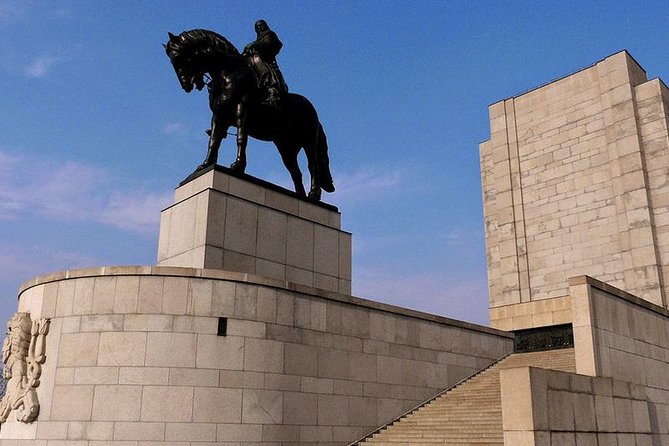
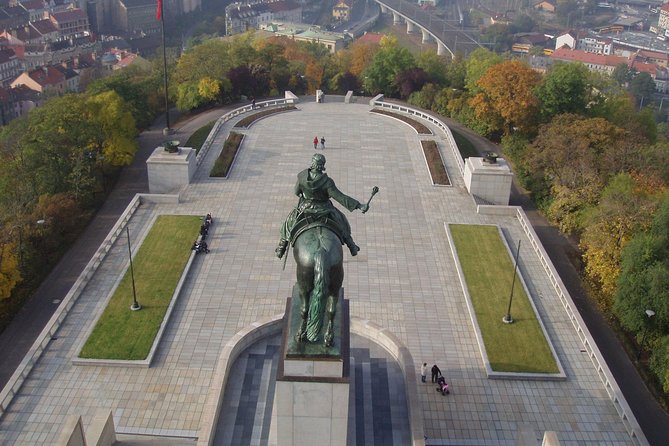
The bronze Jan Žižka statue nearby is another memorable sight. It is described as the third-largest bronze equestrian statue in the world, and its scale is hard to ignore. The guide uses it to explain the importance of Czech national heroes under Communist rule. Even if you are not normally interested in monuments, this one shows how a public figure can be turned into a political symbol.
Admission to the National Monument is not included, so check what portion of the visit is accessible as part of the walk and what may require a separate ticket. The listed tour information specifically marks admission as not included. The climb, rather than an entry fee, is the bigger practical issue for most people.
A quick look at the Zizkov Television Tower
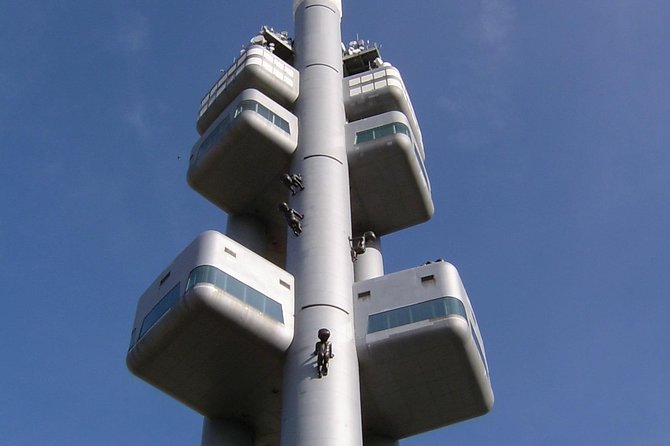
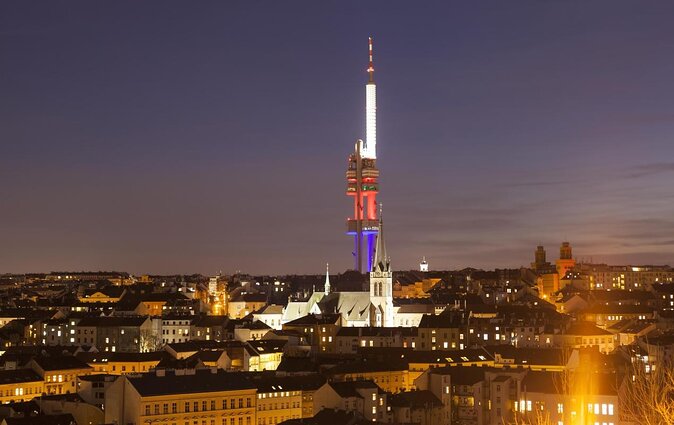
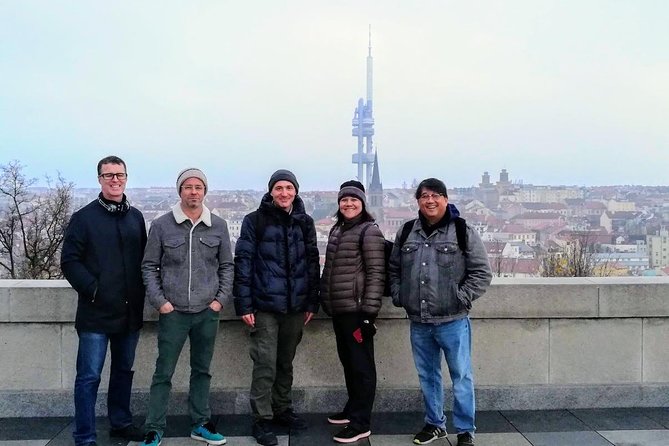
The route includes a short stop with a view toward the Žižkov Television Tower. Allow about five minutes. The tower is known for its Brutalist style, and here it functions as a visual reminder that Communist-era Prague was not made only of old churches, grand squares, and historic facades.
Because this is a brief viewing stop, do not expect an extended architectural visit or tower admission. You will see and discuss the structure from the route. It is a small part of the tour, but it helps widen the picture of Prague beyond monuments directly tied to political events.
More Walking Tours in Prague:
- Prague: 3-Hour Walking Tour of Old Town & Prague Castle
★ 4.7 · 5,696 reviews - Prague: Ghost Walking Tour Where Legends Come To Life
★ 4.4 · 5,253 reviews - Prague: Jewish Quarter Walking Tour with Admission Tickets
★ 4.7 · 3,729 reviews - Prague Guided Walking Tour and Cruise with Authentic Czech Lunch
★ 5.0 · 3,627 reviews
Letna Hill and the vanished Stalin monument
Letná is tied to one of the most striking examples of Communist public art in Prague: the former site of an enormous Stalin statue. The monument no longer dominates the hill, but the empty setting still carries the story of how quickly political symbols can lose their official meaning.
The tour also tells the tragic story of the sculptor. That personal angle keeps the stop from becoming a simple lesson in dates and ideology. Large public works involve artists, laborers, officials, and citizens, and the human cost can continue long after the statue itself is gone.
The site is valuable because it shows the scale of Communist propaganda. A huge statue was not meant to be a quiet work of art. It was designed to make authority feel permanent and physically unavoidable. Standing where it once stood, you can consider how public space was used to direct attention and reinforce political loyalty.
Letná also helps connect the Communist period to the wider city. You are not looking at a sealed museum display. You are moving through a functioning neighborhood and open hilltop, where traces of the past sit beside present-day Prague.
The Lennon Wall and protest in public space
The John Lennon Wall offers a different kind of political symbol. Instead of a state monument built from above, it represents protest expressed through writing, images, and public defiance. The stop gives the tour a needed change of tone after the official architecture of Vitkov and Letná.
The wall is important because it shows how opposition could appear in everyday places. Political protest was not limited to organized speeches or formal institutions. Messages on a wall could challenge censorship and state control, even when authorities tried to remove them.
Do not expect the same kind of Communist monument here. The meaning comes from the wall’s role as a protest site and from the guide’s explanation of its place in the story of late Communist Czechoslovakia. It is especially useful for understanding the contrast between government-controlled public messages and spontaneous expressions of dissent.
Passing the National Assembly and tracing official power
The route continues past the National Assembly building, once the seat of the Communist government. This is one of the quieter stops visually, but it matters because it locates political power in a real working building rather than leaving the subject at the level of slogans.
The guide can connect the building to the machinery of government and to the decisions that shaped daily life. That balance is helpful. The tour is not only about dramatic statues and protest sites. It also asks you to consider where laws were made, where official authority operated, and how the state presented itself as legitimate.
This is a good point to ask questions about the difference between Communist institutions and the public spaces where opposition later appeared. The small group format should make that easier than on a large coach tour.
Wenceslas Square and the one-day Velvet Revolution
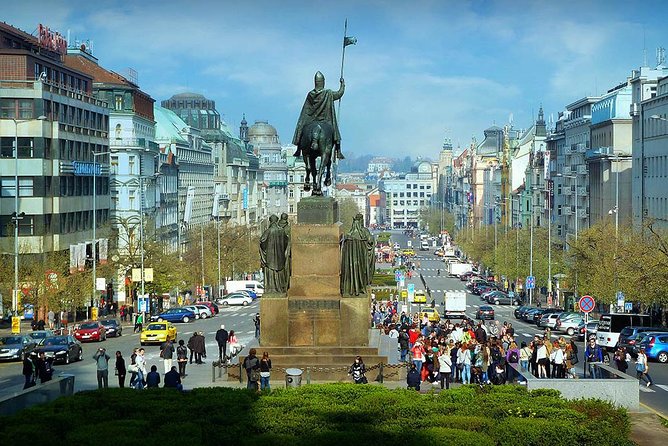
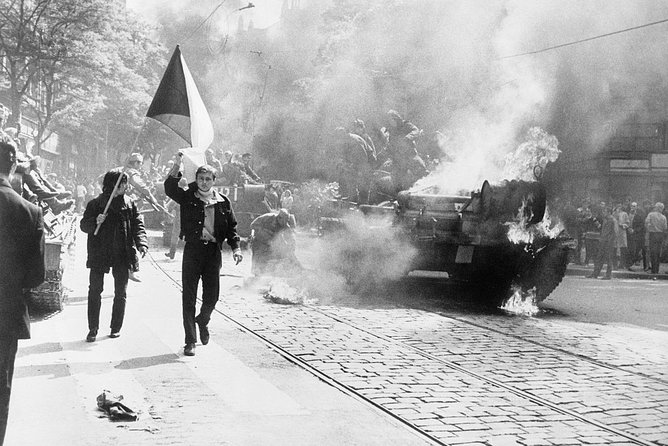
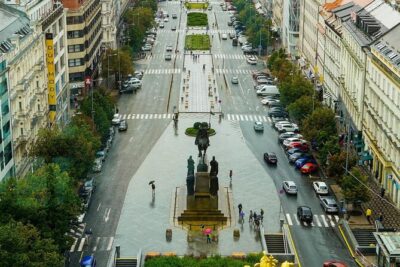
Wenceslas Square gives the tour its strongest political finish. The square has a long story, beginning with its creation in the fourteenth century, but its modern importance comes from military parades, occupying powers, the Prague Spring, and the Velvet Revolution.
Here, the route brings together the main ideas from the day. The square could serve as a stage for official power, but it could also become a gathering place for citizens who rejected that power. The Velvet Revolution ignited here in a single day, turning the square into a symbol of rapid political change.
The phrase one day matters. After years of Communist rule, public action could suddenly become impossible for the government to ignore. The tour does not treat the Velvet Revolution as an isolated happy ending. Instead, it places it beside earlier occupation, repression, propaganda, and protest, giving you a more balanced sense of how change gathered force.
Wenceslas Square is also an excellent final location because it leaves you in central Prague rather than at a remote attraction. You can continue exploring on your own after the walk. The official end point is listed as Prague, Czech Republic, so confirm the precise finishing location with your guide.
The upside-down Wenceslas statue
The final listed sight is the upside-down statue of King Wenceslas riding a dead horse. It is an ironic work, and the guide uses it to consider contemporary Central European politics.
This short stop, about five minutes, works as a postscript to the political story. The earlier monuments present official heroes in solemn forms. This sculpture turns that tradition on its head, using humor and discomfort to question national symbols and modern political life.
It is a useful reminder that Prague’s political art did not end with the Velvet Revolution. The city continues to argue with its own symbols, often through satire rather than speeches.
What $126.43 means in practical value
At $126.43 per person, this is not a cheap way to see Prague. You are paying for a three-hour specialist walk, a historian, a small group capped at eight, and included tram tickets. The value depends on how much you want interpretation rather than simple sightseeing.
I would not choose this tour solely to collect landmarks. Several stops are short, some sights are viewed from outside, and entry to the National Monument is not included. If you want a broad Prague introduction, a general city walk may cover more ground for less money.
I would consider the price fair if Communist-era history is a main reason for your visit. The route has unusual access points in the story, including the bomb-shelter corridors, Gottwald’s former mausoleum, the embalming laboratory, the Stalin statue site, and the political spaces around Wenceslas Square. A historian can also answer questions that a guidebook paragraph cannot.
The small group adds real value. With no more than eight people, you are less likely to lose the guide’s explanation and more likely to get time for questions. The guide named Vadim has been specifically praised for offering a sophisticated, intellectual discussion of Communism in the Czech lands. If he is leading your departure, expect a serious conversation rather than a fast list of facts.
Who should book this walk
I would choose this experience if you enjoy modern European politics, architecture, memorials, and the way public spaces reflect power. It is especially useful early in your Prague stay if you want context for monuments and squares you will see again during independent sightseeing.
You should also be comfortable walking for three hours and climbing Vitkov Hill. The moderate fitness requirement is not a formality. The hill is a real part of the route, and the tour provider recommends a private alternative that omits Vitkov for anyone who has difficulty with the ascent.
Families with older children may find the subject rewarding if they enjoy political history, but the tone is more serious than playful. The walk is also a good fit for solo visitors because the small group makes it easier to join a discussion.
You can choose a morning or afternoon departure, and tram tickets are included. Bring your own food and drinks, since neither is provided. Hotel pickup and drop-off are not included, so plan to reach the meeting point independently.
Free cancellation is available if you cancel at least 24 hours before the start time. Changes or cancellations made inside that window are not accepted for a refund.
Should you book the Prague Cold War Walking Tour?
Book it if you want to understand how Communist rule shaped Prague, not simply take photographs of old buildings. The route is thoughtful, specific, and unusually strong on monuments, political symbolism, and the path from official power to public protest.
Skip it if steep hills are a serious problem, if you want a relaxed architecture stroll, or if you need every major sight to include admission. For everyone else, the combination of a historian, a group of eight or fewer, and stops such as Gottwald’s mausoleum, the Stalin statue site, the Lennon Wall, and Wenceslas Square makes this one of the more focused ways to read Prague’s twentieth-century story.
FAQ
How long does the Prague Cold War Walking Tour last?
The tour lasts approximately three hours.
What language is the tour offered in?
The tour is offered in English.
How large is the group?
The group has a maximum of eight travelers.
Where does the tour meet?
The meeting information lists Náměstí Republiky 1077/2, Nové Město, 110 00 Praha 1, Czechia. The tour description also refers to St. Joseph Church as the starting point, so confirm the exact location in your booking confirmation.
Is the Vitkov Hill climb difficult?
The route includes a 20 to 30 minute uphill climb to the Vitkov Hill monument. A private alternative that leaves out Vitkov Hill is recommended for people who have difficulty climbing.
Are tram tickets included?
Yes. Tram tickets are included in the tour price.
What is not included in the price?
Food, drinks, hotel pickup, hotel drop-off, and admission to the National Monument are not included.
Just added around Prague
- WWII and Communism History in Prague’s Old Town Private Tour★ 5.0 · 4 reviews
- World War II 4WD Tour from Prague with Lunch★ 4.4 · 3 reviews
- Wroclaw to Prague: 2-in-1 (Private Transfer + Country Tour)★ 5.0 · 4 reviews
- Prague: Historical Walking Tour with Focus on World War 2★ 4.3 · 12 reviews
- Walking tour of Prague in french: Old Town & Charles Bridge★ 4.9 · 62 reviews
- Ultimate Unlimited Beer Pong with Czech Beer★ 4.6 · 5 reviews
- Walking tour of Prague in French : Nové Město★ 4.9 · 16 reviews
- Prague: Modern Private Spa with Jacuzzi and Sauna★ 4.8 · 62 reviews
Communism Tours, compared.
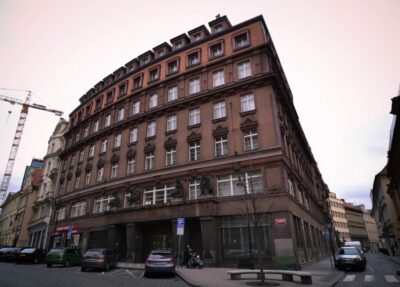
Communism History and Nuclear Bunker Guided Tour
Read our review →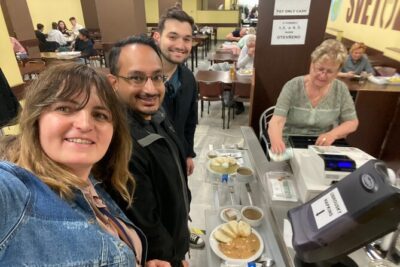
Communism & Nuclear Bunker Tour + 70s Canteen Lunch (own expense)
Read our review →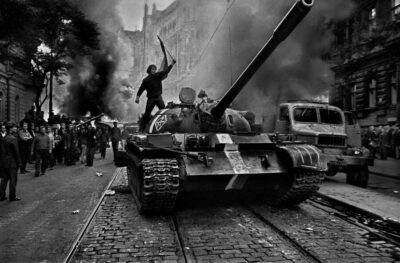
Second World War & Communism (Tip-based 3 hour tour)
Read our review →
Browse the lists this tour appears in