
Reviewed · COMMUNISM TOURS
Prague Communism History and Nuclear Bunker Tour
Prague’s communist past comes into sharp focus underground, inside a four-floor nuclear bunker built for a frightening Cold War future that never arrived. Before you descend, the tour connects that bunker to real streets, protest sites, a former secret police building, and the events of 1968 and 1989.
I like the way the tour ties major political events to places you could easily pass without noticing. I also like the personal angle: guides such as Stan, Pavel, Lada, and Ladislav have used their own memories of communist Czechoslovakia to explain what daily life felt like. The main caution is that the quality and pace depend heavily on the guide, and a long transport segment can leave less time for the actual museum.
Key points to know before booking
- The bunker is four floors underground: Expect stairs, ramps, confined rooms, and a serious Cold War atmosphere.
- The walk covers real political landmarks: You visit former StB holding cells, the Velvet Revolution Memorial, Národní třída, and Wenceslas Square.
- Personal stories are a major part of the tour: Guides may discuss growing up under communism, fleeing the country, or living through the 1968 invasion.
- Transport to the bunker is included: The ride can take a meaningful part of the roughly 2-hour-20-minute experience.
- The group can contain up to 26 people: Smaller groups may feel easier to hear and more personal.
- It is not a gentle sightseeing walk: Comfortable shoes are essential, and the tour is unsuitable for mobility limitations, serious claustrophobia, and some heart conditions.
Prague’s Cold War story begins in the Old Town
The meeting point is inside a passage at Malé Náměstí 459/11, about 20 meters to the right of Hotel U Prince. This puts you right in the center of Prague, near the Old Town Square, but the subject quickly shifts from medieval towers to the political struggles of the 20th century.
The guide starts with the broad setting before leading you through the city. You are not simply looking at old buildings. You are learning how Prague changed after the Second World War, how Soviet influence shaped Czechoslovakia, and how ordinary people responded to state control.
The tour is designed for a fixed language group. You need to speak the chosen language, and translation during the walk is not allowed. That rule may feel strict, but it helps the guide keep the group together and maintain a clear pace.
I would arrive early. Once the group leaves, joining late is not guaranteed, and the meeting point is inside a passage that may take a moment to find.
More communist era tours in Prague:
- Prague: Communism History and Nuclear Bunker Guided Tour
★ 4.7 · 2,417 reviews - Communism & Nuclear Bunker Tour + 70s Canteen Lunch (own expense)
★ 5.0 · 1,036 reviews - Prague: Communism and Bunker Tour with 70s Canteen Lunch
★ 4.8 · 250 reviews
Former StB holding cells and the story of Václav Havel
One of the first stops concerns the former StB holding cells. The StB was Czechoslovakia’s secret police, and this former building gives the political story a more human scale.
The stop also brings in Václav Havel, the playwright, dissident, and later president. His life helps explain the link between culture and politics in communist Czechoslovakia. Havel was not simply a political figure who appeared in 1989. He had spent years challenging the system, and his story gives the tour a recognizable human face.
You should not expect a long indoor visit here. The stop is listed at about 10 minutes, so the value comes from the guide’s explanation rather than an extended museum display. A strong guide can make a short stop memorable by explaining what the building represented and how state pressure worked.
This is also where the tour’s dependence on the guide becomes clear. Several guides have been praised for turning political facts into personal stories. Others have been criticized for repeating themselves or spending too much time on side topics. If you prefer a tightly structured history lesson, the experience may feel uneven.
The Velvet Revolution Memorial at Národní třída
The Velvet Revolution Memorial marks one of the most important sites in modern Czech history. In November 1989, a student demonstration on Národní třída was attacked by police. The event helped trigger the protests that brought communist rule to an end.
The stop is short, but it carries real weight because you are standing in the area where the movement grew. The tour explains the events of 1989 and the role played by figures such as Václav Havel. The word Velvet refers to the largely peaceful nature of the political transition, though the events themselves were tense and sometimes violent.
Národní třída also helps connect the memorial to present-day Prague. This is not an isolated monument in a museum hall. It is part of an active city street, which makes the story feel close to daily life rather than sealed away in the past.
I like this part of the tour because it asks you to notice the political meaning of ordinary urban spaces. You might walk along Národní třída on your own and see shops, trams, and cafés. With context, the street becomes one of the key locations in the fall of communism.
Wenceslas Square and the invasion of August 1968
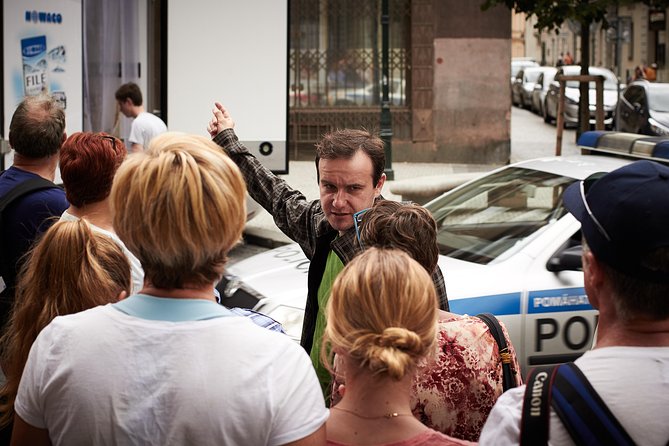
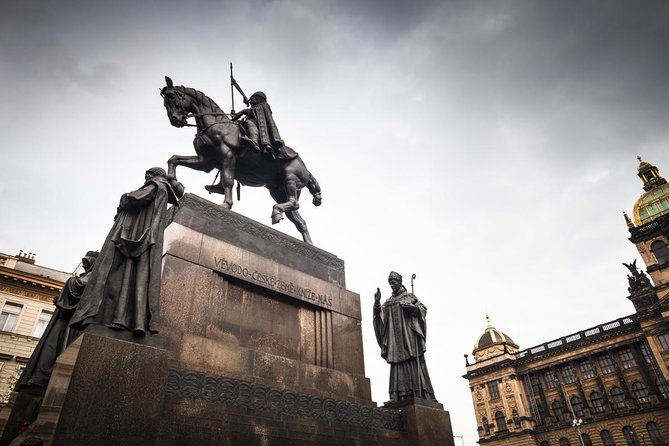
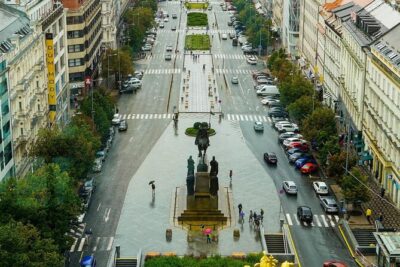
Wenceslas Square brings the tour back to 1968 and the Soviet-led invasion of Czechoslovakia. The square was central to the Prague Spring, the reform movement associated with Alexander Dubček, and it later became a major gathering place for public demonstrations.
The guide explains how Dubček attempted to create a more open form of socialism and how the Soviet invasion ended those reforms. This is an important part of the tour because it shows that the road to 1989 was not a single event. It included failed reforms, military occupation, public protest, disappointment, and years of political pressure.
A good guide will help you understand the difference between the Prague Spring and the Velvet Revolution. The first was an effort to reform the communist system from within. The second brought the system to an end. The square gives you a physical setting for both periods.
This stop is also a reminder that the tour deals with painful material. The history includes surveillance, censorship, invasion, imprisonment, and fear. The tone can be serious, though some guides use humor to keep the walk from becoming emotionally heavy.
More history walks in Prague:
- Prague: Oldtown, Medieval Underground & Dungeon History Tour
★ 4.2 · 8,244 reviews - Prague Old Town, Medieval Underground and Dungeon Historical Tour
★ 4.5 · 3,227 reviews - Prague: Historic City Center Bus Tour with Top Sights
★ 4.4 · 2,360 reviews - Prague Historic Pub Tour with Drinks Included
★ 5.0 · 2,084 reviews
Olšanské náměstí and Prague’s socialist architecture
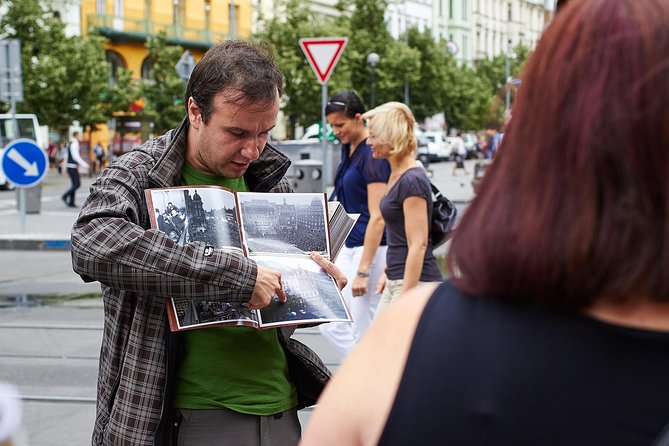
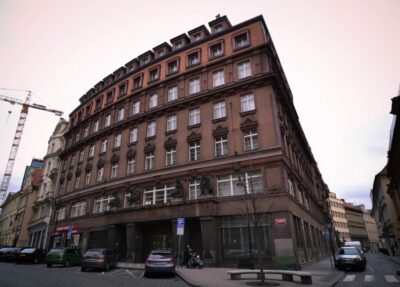
The tour then reaches Olšanské náměstí, in what was once a workers’ district. This part of Prague still shows socialist-era architecture, including original buildings from the concrete construction period of the 1970s.
For many people, this may be the most visually different stop. Central Prague is filled with Gothic, Baroque, and Art Nouveau architecture, so the broad concrete forms of the socialist period can seem like a sharp change. The buildings help show how the state shaped housing and urban planning during the communist era.
Do not expect Olšanské náměstí to provide a polished monument or formal exhibition. Its value is in seeing an ordinary district and learning how the period looked beyond famous political squares. You get a sense of the built environment that many people experienced every day.
The walk between stops also matters. The guide has time to explain recent Czech political history as the group moves through the city. That can be the best part of the tour if your guide tells clear stories. It can be less satisfying if the commentary wanders or repeats points.
The transport segment is part of the experience
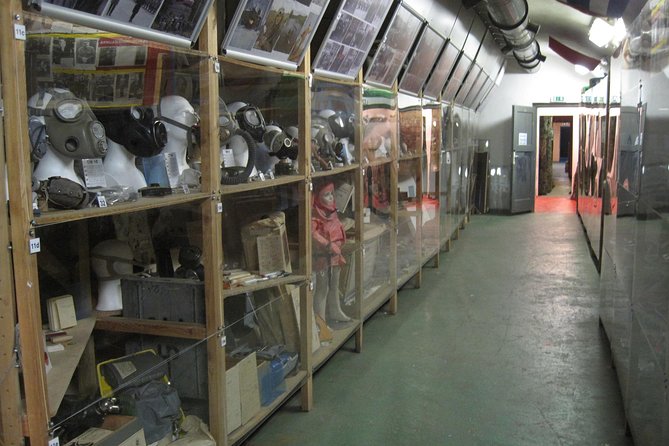
Transport to and from the bunker is included, and the journey may involve Prague public transport. Some guides have turned the tram ride into part of the outing, with the ticket covered and the city continuing around you while the subject shifts from public squares to underground shelters.
The practical issue is time. The experience is advertised at about 2 hours 20 minutes, but the ride can take a large portion of the schedule. One account described almost 45 minutes spent on the tram. That means the bunker visit and city walk may feel shorter than expected, especially if the group is large or the transport runs slowly.
I would not book this tour if you want two full hours inside the bunker. The transport is useful and authentic, but it is still travel time. Think of the tour as a combined city walk, public transport ride, and museum visit.
The group limit is 26 people. That is manageable, but you may want to stay close to the guide during street crossings and transport. A smaller group can make it easier to hear personal stories and ask questions.
Inside the four-floor nuclear bunker
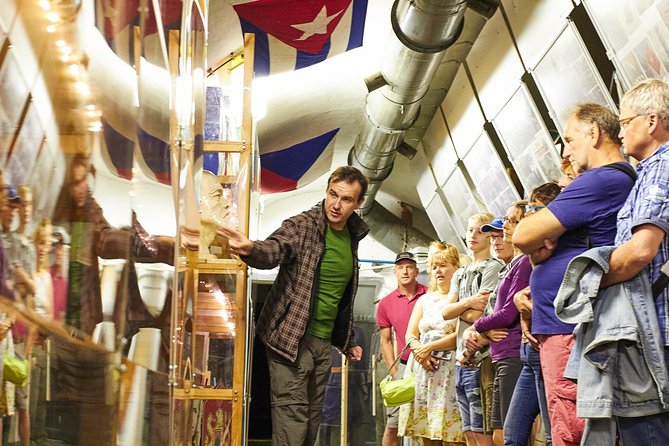
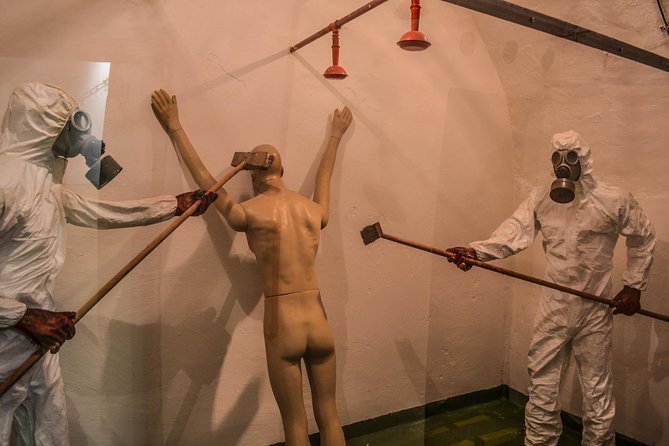
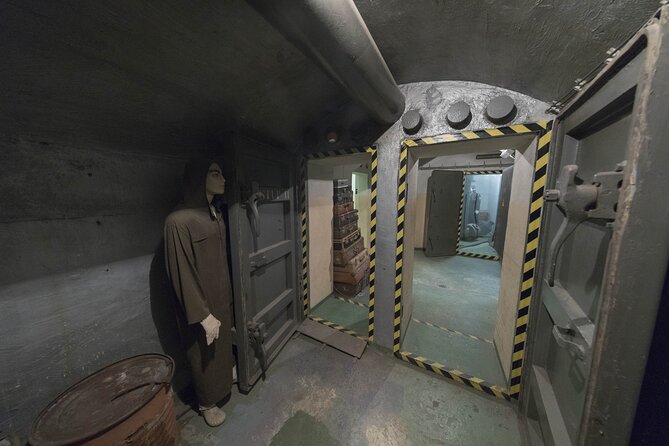
The bunker is the tour’s main physical attraction. Four floors underground, it presents the Cold War through a mix of rooms, displays, mannequins, equipment, and period objects.
The setting does much of the work. Going down several levels gives you a bodily sense of the fear behind nuclear defense planning. You are not just reading about shelters. You are moving through one, with concrete walls, ramps, stairs, and enclosed spaces around you.
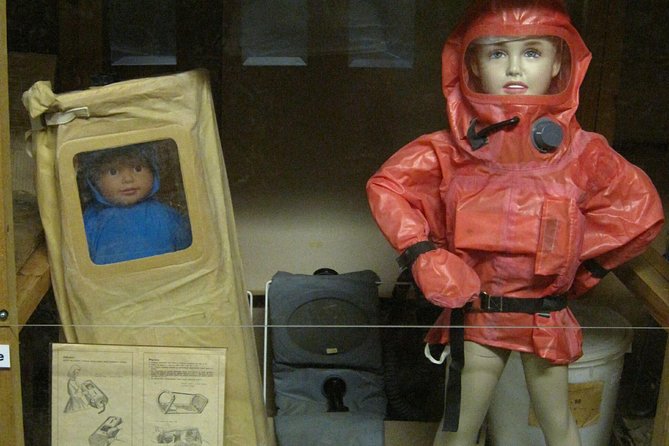
The museum is described as a communism and Cold War museum, but it is not a large, polished national institution. You might find displays that feel like a collection of old mannequins and 1980s memorabilia rather than a carefully arranged academic exhibition. Some objects may have only a loose connection to Czechoslovakia.
That can be a strength if you enjoy atmosphere and unusual places. It can be a weakness if you expect detailed labels, a large collection, or a precise explanation of every object. The guide’s commentary is essential because the displays alone may not provide enough context.
Allow about an hour for the bunker portion. The visit involves many stairs and ramps, so wear proper walking shoes. Photos are allowed, but video requires special permission.
The bunker is not suitable for people with claustrophobia, serious heart problems, or significant mobility limitations. The tour also is not intended for the smallest children under school age. If enclosed rooms make you uneasy, the underground setting may outweigh the historical interest.
Why the guides matter so much
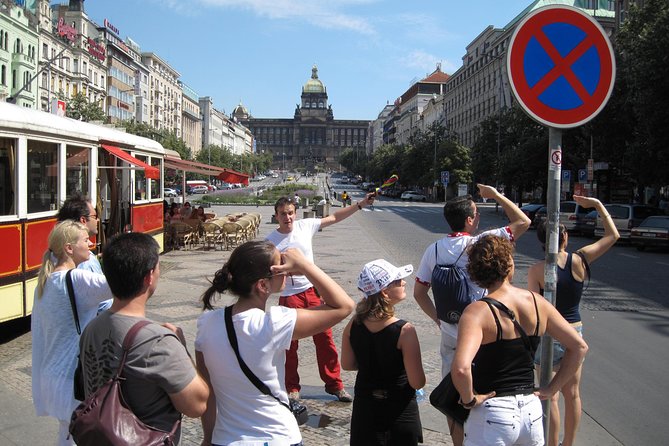
The guide can make this tour either personal and memorable or slow and frustrating. The strongest guide experiences have included Stan, Pavel, Lada, Ladislav, Tom, Maki, and Karl. Names and assignments can change, but the pattern is clear: guides who combine facts with lived experience receive the warmest response.
Several guides have spoken about growing up under communism or leaving the country during the Cold War. That first-person connection can explain small details that a textbook misses, such as how political pressure affected families, education, work, speech, and daily choices.
Stan has been praised for mixing personal stories, current events, humor, and a strong command of Cold War history. Lada has been described as energetic and authentic. Pavel has been noted for making Czech history approachable, while Ladislav has been praised for bringing his own story into the presentation.
Still, you should allow for variation. Some guides may focus heavily on the moral failure of communism without spending enough time on policy, social conditions, or the way ordinary people adapted. One poor experience described a confrontational guide, repeated commentary, and little historical context.
If you want a neutral university lecture with equal attention to every side, this may not be the right format. The tour is aimed at a clear anti-totalitarian interpretation, supported by personal memories and physical sites.
Does the $45.16 price make sense?
At about $45.16 per person, the price is fair if you value a guide-led walk, included transport, and entry to the bunker museum. You are paying for more than admission. You are also paying for the connections between the former secret police building, the 1968 invasion, the 1989 revolution, and the bunker.
The value drops if you mainly want a museum visit. The bunker itself is relatively no-frills, and the transport can consume a noticeable part of the schedule. You may also find similar Cold War themes at other sites in Czechia, though that does not give you the same combination of Prague landmarks and an underground shelter.
I see the price as reasonable for history enthusiasts, especially if your guide is one of the stronger storytellers. It is less convincing for someone with only a passing interest in communism or for anyone who dislikes group walks and public transport.
Who should book this Prague tour?
You should consider booking if you want to understand Prague beyond its medieval center. It suits adults and older children who can manage a serious subject, a fair amount of walking, and the physical demands of the bunker.
It is especially useful for:
- People interested in the Cold War, Soviet influence, or the fall of communism.
- Visitors who want to see political sites that are easy to miss alone.
- Anyone who values personal stories from guides who lived through the period.
- History enthusiasts who enjoy unusual museums and underground spaces.
- Visitors with enough time to accept that transport is part of the schedule.
You should think twice if you have mobility issues, claustrophobia, serious heart concerns, or limited walking ability. The operator also prohibits smoking, pets, disruptive behavior, alcohol or drug influence, bachelor parties, and costumed groups.
Book at least a day ahead if your plans are firm. Cancellation is free up to 24 hours before the start time, but cancellations within 24 hours are not refunded.
Should you book it?
Book this tour if the mix of political history and physical atmosphere appeals to you. The city stops give meaning to the bunker, while the bunker gives a concrete ending to stories about invasion, surveillance, protest, and nuclear fear.
I would choose it as a way to learn about Prague’s recent past, not as a perfectly edited museum tour. The strongest guides make the experience powerful by explaining what it meant to grow up under communism. The weakest part is the uneven pace, especially when transport takes a large share of the time.
For the best chance of a rewarding outing, wear comfortable shoes, arrive early at the passage on Malé Náměstí, stay close to the guide, and prepare for stairs. If you want a polished, object-heavy exhibition, choose another museum. If you want streets, stories, a tram ride, and a bunker that makes Cold War anxiety feel physical, this is a worthwhile choice.
FAQ
How long does the Prague Communism History and Nuclear Bunker Tour last?
The tour lasts approximately 2 hours and 20 minutes. The total time can vary by about 10 to 15 minutes depending on group size.
What is included in the tour price?
The price includes entry to the Nuclear Bunker Museum, an English live guide, transport to and from the bunker, a photo booklet, and a bunker survival guide.
Where does the tour start?
The tour starts at the ticket office inside the passage at Malé Náměstí 459/11 in Prague 1. The passage is about 20 meters to the right of Hotel U Prince.
Where does the tour end?
The tour ends at Malé Náměstí 459/11, the same general location as the starting point.
Will I visit a real nuclear bunker?
Yes. The tour includes a visit to a nuclear bunker located four floors underground and used as the Prague Communism and Cold War Museum.
How much walking is involved?
This is a walking tour with several outdoor stops and a bunker visit involving stairs and ramps. Comfortable walking shoes are recommended.
Is the tour suitable for people with mobility issues?
No. The tour is not possible for people with walking disabilities or mobility issues. It is also not recommended for people with serious heart conditions.
Is the tour suitable for someone with claustrophobia?
No. The operator specifically does not recommend the experience for people with claustrophobia because of the underground bunker setting.
Can young children join the tour?
The tour is not allowed for the smallest children under school age. The provided information does not specify a minimum age beyond that restriction.
Can I cancel for a full refund?
Yes, if you cancel at least 24 hours before the experience starts. Cancellations made less than 24 hours before the start time are not refunded, and changes within that period are not accepted.
Just added around Prague
- WWII and Communism History in Prague’s Old Town Private Tour★ 5.0 · 4 reviews
- World War II 4WD Tour from Prague with Lunch★ 4.4 · 3 reviews
- Wroclaw to Prague: 2-in-1 (Private Transfer + Country Tour)★ 5.0 · 4 reviews
- Prague: Historical Walking Tour with Focus on World War 2★ 4.3 · 12 reviews
- Walking tour of Prague in french: Old Town & Charles Bridge★ 4.9 · 62 reviews
- Ultimate Unlimited Beer Pong with Czech Beer★ 4.6 · 5 reviews
- Walking tour of Prague in French : Nové Město★ 4.9 · 16 reviews
- Prague: Modern Private Spa with Jacuzzi and Sauna★ 4.8 · 62 reviews
Communism Tours, compared.
Communism History and Nuclear Bunker Guided Tour
Read our review →
Communism & Nuclear Bunker Tour + 70s Canteen Lunch (own expense)
Read our review →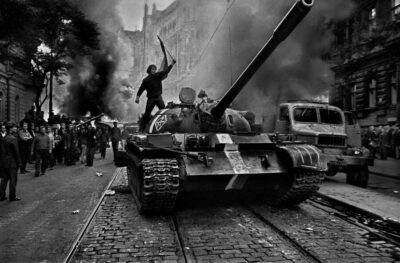
Second World War & Communism (Tip-based 3 hour tour)
Read our review →
Browse the lists this tour appears in