
Reviewed · COMMUNISM TOURS
Communism and its fall Prague private tour
The most unusual part of this Prague tour is the guide, Jana Neubergova. She took part in the November 1989 demonstrations and later worked in Vaclav Havel’s office, so the story is not just a list of dates and political names. You get a personal view of how communism felt, how the Velvet Revolution unfolded, and what changed afterward.
I like the private format, which keeps the pace and questions in your hands, and I like the route’s focus on real public places rather than a museum room. The main consideration is that this is a short walking tour, not a full survey of Czechoslovak history, and private transportation is not included.
Key points at a glance
- Jana Neubergova’s personal connection: She participated in the Velvet Revolution and later worked in Vaclav Havel’s office.
- A two-hour walking route: The tour links the National Theatre, Narodni Street, Lucerna Arcade, Wenceslas Square, and the Memorial to the Victims of Communism.
- Private attention: Only your group takes part, making it easier to ask direct questions and set the pace.
- A strong Prague setting: Wenceslas Square and Narodni Street remain important places for public demonstrations and civic life.
- Hotel pickup on foot: Pickup is offered from all Prague hotels, though no private vehicle is provided.
- Useful for history-minded visitors: The tour suits anyone who wants political context tied to the streets they are seeing.
Why Jana changes the feel of the tour
Many walking tours can explain communism in broad terms. This one has a more direct human connection through Jana. She was an active participant in the demonstrations against communist rule in November 1989, and she later had the honor of working for Czech president Vaclav Havel.
That background matters because the Velvet Revolution was not an abstract political event for her. She was present during the demonstrations and can add personal memories to the larger story. You should still expect a guide-led history walk, not a private political memoir, but those firsthand details give the stops more weight.
Jana also speaks English well, which is important on a tour dealing with difficult political ideas, names, and turning points. The subject includes repression, public protest, state power, and the hopes that followed the fall of communism. A clear guide helps you follow the story without getting lost in unfamiliar Czech terms.
The private setup is another strength. Your group is the only group taking part, so you can ask why a particular street mattered, pause over a question, or request more detail about Havel and the revolution. If you prefer a tour that moves at a fixed pace with a large crowd, this is not that kind of outing. If you want conversation, it is a better fit.
More Private Tours in Prague
- Prague Old Town: Private Tour
★ 5.0 · 1,223 reviews - Prague Airport Private Arrival Transfer
★ 4.5 · 991 reviews - Prague Airport Private Departure Transfer
★ 4.5 · 780 reviews
Starting with Prague’s intellectual meeting place
The walk begins at a meeting point associated with Czech intellectuals. The supplied details do not give the exact name of this opening location, so confirm the precise meeting instructions when you book.
This opening sets the tone. The tour is not simply about government buildings or military events. It looks at the writers, artists, students, and public voices who helped shape Czech opposition to communist rule. You will be connecting ideas to places in central Prague, with Jana providing the link between public space and political change.
Because the tour lasts about two hours, the opening discussion needs to stay focused. You should expect useful orientation rather than a long lecture on every decade of twentieth-century Czechoslovak history.
The National Theatre and the power of culture
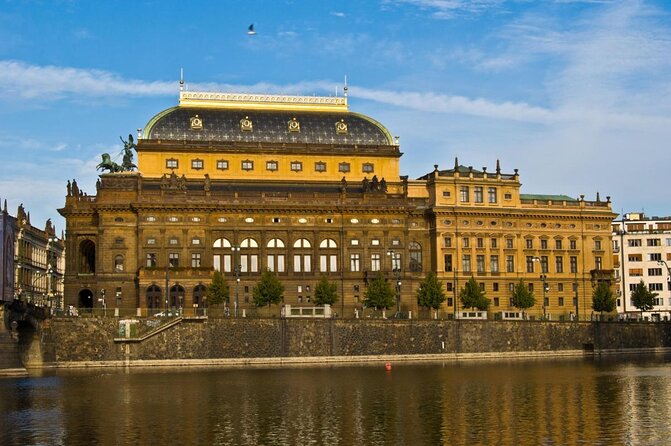
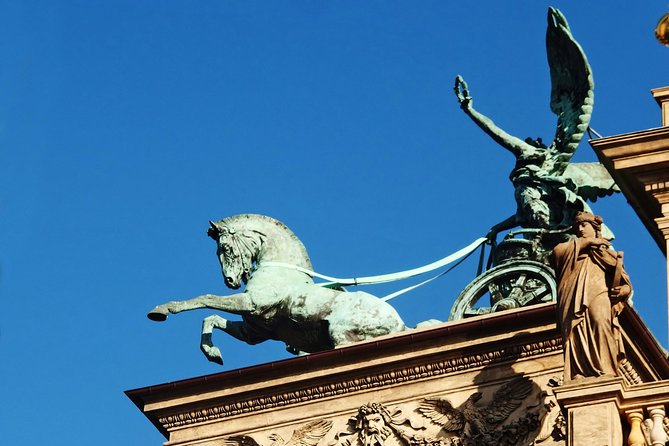
The first named stop is the National Theatre, where you spend about 10 minutes. The theatre played an important role in Czech history, and its inclusion shows that the tour treats culture as part of national politics.
That is a useful angle. Under communist rule, theatres and other cultural institutions could be places where national identity, public opinion, and artistic freedom met. The National Theatre also helps you see that political change was not limited to official speeches or party offices. Cultural life mattered.
Admission is not included, and the stop is part of the outdoor walking route rather than a promised theatre visit. If you hoped to tour the interior, treat that as a separate activity. The short time here is enough for context and orientation, but not for a full discussion of the building or its performances.
Narodni Street, where the revolution began
The walk then reaches Narodni Street for about 15 minutes. This is one of the most important stops because the Velvet Revolution began here.
A good guide can help you picture how a street in central Prague became a site of confrontation and protest. Jana’s presence is especially relevant at this point, since she participated in the demonstrations herself. You can expect the explanation to connect the physical street with the events of November 1989.
Narodni is also a good example of why this tour works better on foot than from a vehicle. You are standing in the setting where the events took place, rather than hearing about them while looking through a bus window. At the same time, this is a public city street, not a preserved historical site with a formal exhibit. The value comes from the guide’s explanation and the location’s meaning.
No admission ticket is included or needed for this street stop. The tour schedule allows about 15 minutes, so bring a question if you want to make the most of the visit.
More communist era tours in Prague:
- Prague: Communism History and Nuclear Bunker Guided Tour
★ 4.7 · 2,417 reviews - Prague Communism History and Nuclear Bunker Tour
★ 5.0 · 1,742 reviews - Communism & Nuclear Bunker Tour + 70s Canteen Lunch (own expense)
★ 5.0 · 1,036 reviews - Prague: Communism and Bunker Tour with 70s Canteen Lunch
★ 4.8 · 250 reviews
Lucerna Arcade and the Havel family connection
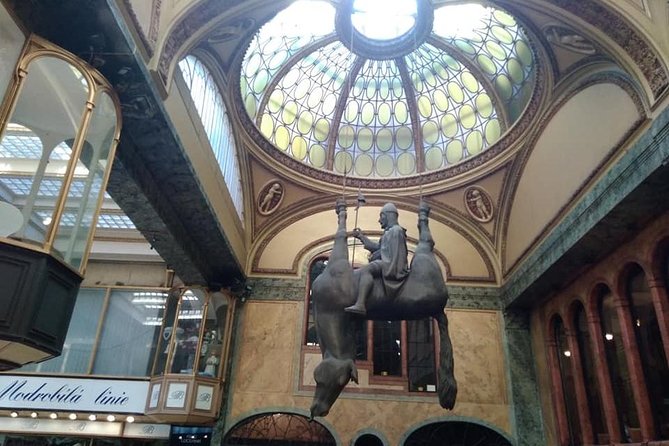
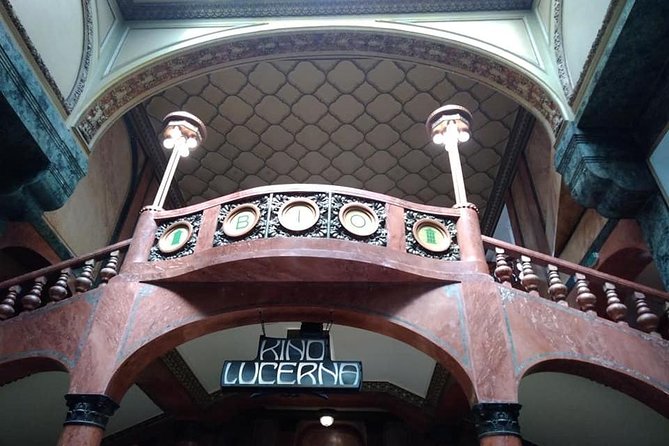
Lucerna Arcade receives about 10 minutes of the tour. This important cultural and social center was founded by Vaclav Havel’s family, adding a direct connection to one of the central figures in modern Czech history.
For me, this is one of the route’s more distinctive stops. Wenceslas Square and Narodni Street are obvious places to discuss protest. Lucerna adds a different layer: the social and cultural world linked to the Havel family.
It also gives Jana another natural opening to discuss Vaclav Havel. Her later work in his office means the stop is not just about a famous family name. It connects the pre-1989 public world, the revolution, and the early period after communist rule ended.
The stop lasts only about 10 minutes, so you should not expect an extended building tour. The details provided do not promise interior admission, and admission is not included. Think of Lucerna as a focused pause in the walking route, with the historical explanation doing most of the work.
Wenceslas Square, Prague’s public stage
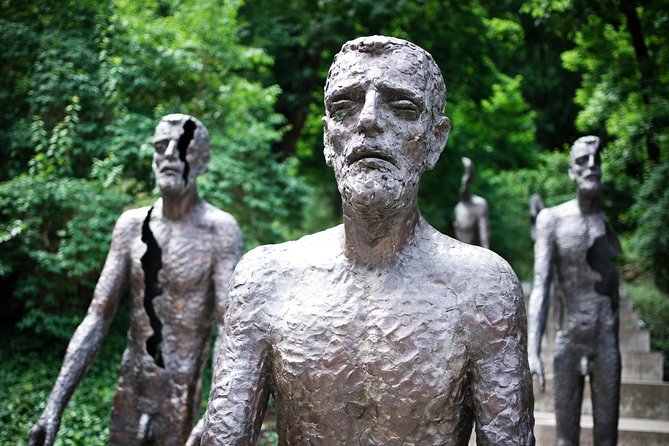
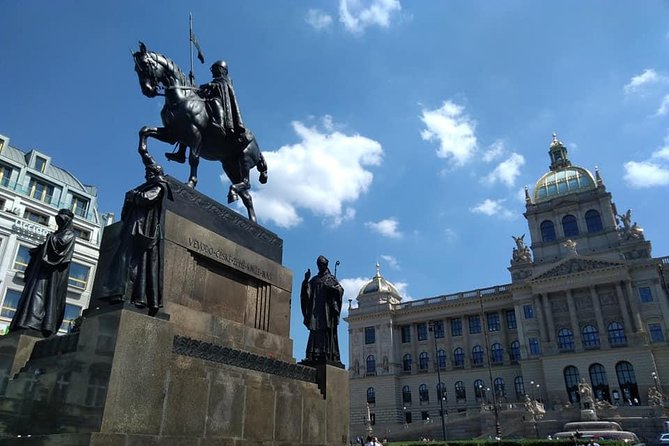
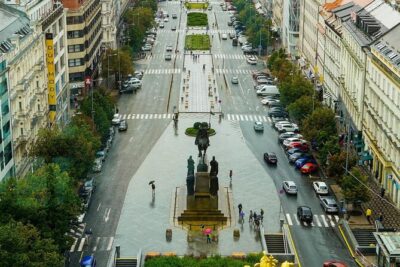
The tour spends about 20 minutes at the Wenceslas Monument, located in Wenceslas Square. This is the longest stop on the route, and it makes sense. The square is described as the very heart of Prague and remains a place where demonstrations are held.
The monument honors the Czech patron saint, Saint Wenceslas. Its location gives Jana a strong setting for explaining how national symbols and public gatherings overlap. The square has been used for major demonstrations, so it helps you understand the physical scale of public protest in Prague.
This is also the point where the tour can bring several threads together: Czech identity, the communist period, the November 1989 demonstrations, and the continuing role of public assembly. You may find that the square looks like an ordinary city center at first. The guide’s job is to show why it has carried such political weight.
The itinerary does not include admission to a monument or indoor attraction here. The visit is an outdoor stop, so practical comfort matters. Wear shoes suitable for walking and be ready for normal city conditions. The tour requires a moderate level of physical fitness, though the total duration is only about two hours.
Remembering the victims of communism
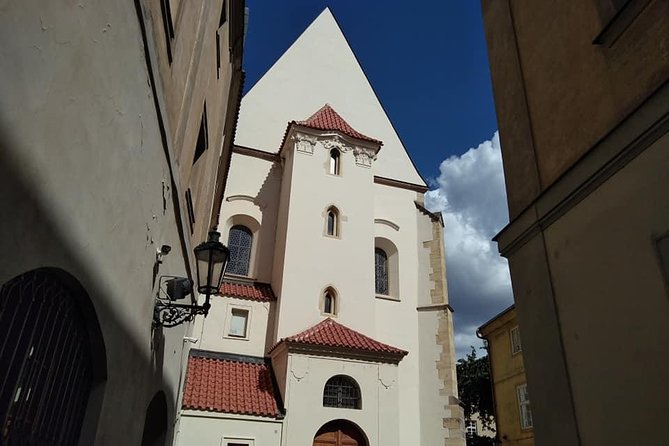
The final named stop is the Memorial to the Victims of Communism, with about 15 minutes allotted. The memorial was created by sculptor Olbram Zoubek, one of the most notable Czech artists.
This gives the tour a sober ending. Earlier stops focus on culture, protest, and political change. The memorial asks you to consider the human cost of communist rule. Its presence keeps the tour from becoming only a celebratory account of 1989.
Admission to the memorial is free. The supplied details do not say that the tour enters a museum or includes a formal indoor presentation, so expect an outdoor memorial visit with Jana’s explanation. Fifteen minutes is enough for a thoughtful stop, but you may want to return independently if you prefer more time for reflection.
What the $85 price means
At $85 per person, this tour costs more than a standard large-group walking tour. The reason is the private arrangement and the guide’s personal connection to the subject. Your group is not sharing the guide with strangers, and you are paying for a focused route rather than a broad city introduction.
The value depends on your interests. If you want an inexpensive overview of Prague’s main sights, this is not the best use of your money. The tour does not include major entrance tickets, private transportation, food, or a long list of attractions.
If communist-era Czechoslovakia, the Velvet Revolution, Vaclav Havel, and modern Czech civic life are central to your trip, the price is easier to justify. Jana’s experience gives the tour something that a printed guidebook cannot provide as directly. You are paying for interpretation and conversation, not admission fees.
A free map of Prague is included. That is a small extra, but it can be useful after the tour as you continue exploring the city on your own. The route also places you in central locations, making it easy to continue sightseeing afterward.
Timing, pickup, and walking conditions
The tour runs for approximately two hours and is offered in English. Pickup on foot is available from all Prague hotels, which can simplify the start of your day. Since pickup is on foot, do not read this as a hotel transfer. Private transportation is specifically not included.
The experience is available Monday through Sunday from 9:00 a.m. to 6:00 p.m. The operating dates provided run from July 11, 2023, through March 23, 2027. Confirm your selected time when booking, especially if your schedule is tight.
The route is best suited to someone comfortable walking through central Prague for two hours. Service animals are allowed, and the tour is near public transportation. A moderate level of physical fitness is required, but the details do not state a precise walking distance or the number of steps.
Because the itinerary is compact, punctuality matters. A late start could reduce time at one of the stops. If you want to ask questions, a private tour gives you room to do so, but the guide still has five locations to cover.
Who should book this private history walk
I would recommend this tour most strongly to adults and older students interested in twentieth-century European history. It is also a good choice if you have already seen Prague’s famous architecture and now want to understand the political forces that shaped the city.
It suits you particularly well if you:
- Want an English-speaking private guide
- Prefer a short walking tour with a clear theme
- Are interested in the Velvet Revolution
- Want personal memories connected to November 1989
- Have questions about Vaclav Havel and the years after communism
- Prefer a private group rather than a large scheduled outing
It may be less suitable if you need extensive indoor sightseeing, wheelchair-specific route information, or a tour focused on medieval and imperial Prague. The details confirm service animals and nearby public transportation, but they do not provide full accessibility information for every part of the route.
The tour also assumes that you want history explained in context. It is not designed as a theatrical performance or a quick list of photo stops. Give it your attention, and you will get more from the places.
Booking flexibility and practical value
Free cancellation is available if you cancel at least 24 hours before the start time. Cancellations made less than 24 hours before the experience are not refunded, and changes within that period are not accepted. The cut-off follows local Prague time.
Confirmation is normally received at booking. If you book within one day of the tour, confirmation arrives as soon as possible and remains subject to availability. That makes early booking sensible if you want a particular time during a short visit.
Since the price is per person, the value improves for a group that wants privacy and conversation. The experience is not a vehicle-based private tour, so you are paying for Jana’s time and the guided route rather than transport.
Should you book it?
Book this tour if you want Prague’s communist era and the Velvet Revolution explained by someone with a direct connection to the events. Jana Neubergova’s participation in the demonstrations and later work in Vaclav Havel’s office are the strongest reasons to choose it.
Skip it if you are looking for a low-cost general walking tour, major indoor admissions, or a complete survey of Czech history. For the right audience, the two-hour route offers a focused way to connect Narodni Street, Wenceslas Square, Lucerna, and the memorial to the political changes that shaped modern Prague.
FAQ
How long does the Communism and its Fall Prague tour last?
The tour lasts approximately two hours.
Is this a private tour?
Yes. Only your group participates in the activity.
Is the tour offered in English?
Yes. The tour is offered in English.
Who guides the tour?
The experience is provided by Jana Neubergova, a private tour guide. She participated in the Velvet Revolution and later worked in Vaclav Havel’s office.
Is hotel pickup available?
Yes. Pickup on foot is offered from all Prague hotels.
Is private transportation included?
No. Private transportation is not included.
What places does the tour visit?
The route includes a meeting point associated with Czech intellectuals, the National Theatre, Narodni Street, Lucerna Arcade, the Wenceslas Monument in Wenceslas Square, and the Memorial to the Victims of Communism.
Are admission tickets included?
Admission is not included for the National Theatre, Narodni Street, Lucerna Arcade, or the Wenceslas Monument. Admission to the Memorial to the Victims of Communism is free.
Is a map included?
Yes. A free map of Prague is included.
What is the cancellation policy?
You can cancel for a full refund up to 24 hours before the start time. Cancellations or changes made less than 24 hours before the start time are not accepted for a refund.
Just added around Prague
- WWII and Communism History in Prague’s Old Town Private Tour★ 5.0 · 4 reviews
- Wroclaw to Prague: 2-in-1 (Private Transfer + Country Tour)★ 5.0 · 4 reviews
- World War II 4WD Tour from Prague with Lunch★ 4.4 · 3 reviews
- Prague: Historical Walking Tour with Focus on World War 2★ 4.3 · 12 reviews
- Walking tour of Prague in french: Old Town & Charles Bridge★ 4.9 · 62 reviews
- Ultimate Unlimited Beer Pong with Czech Beer★ 4.6 · 5 reviews
- Walking tour of Prague in French : Nové Město★ 4.9 · 16 reviews
- Prague: Modern Private Spa with Jacuzzi and Sauna★ 4.8 · 62 reviews
Communism Tours, compared.
Communism History and Nuclear Bunker Guided Tour
Read our review →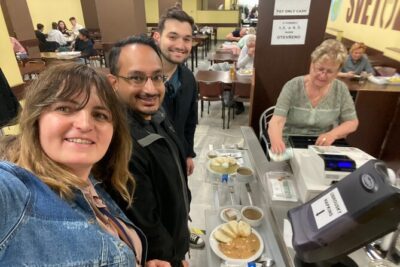
Communism & Nuclear Bunker Tour + 70s Canteen Lunch (own expense)
Read our review →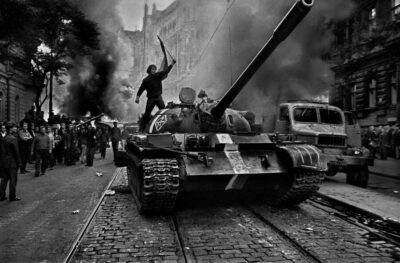
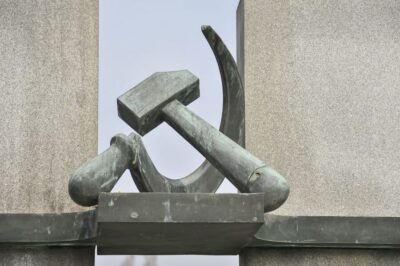
Second World War & Communism (Tip-based 3 hour tour)
Read our review →
Browse the lists this tour appears in