
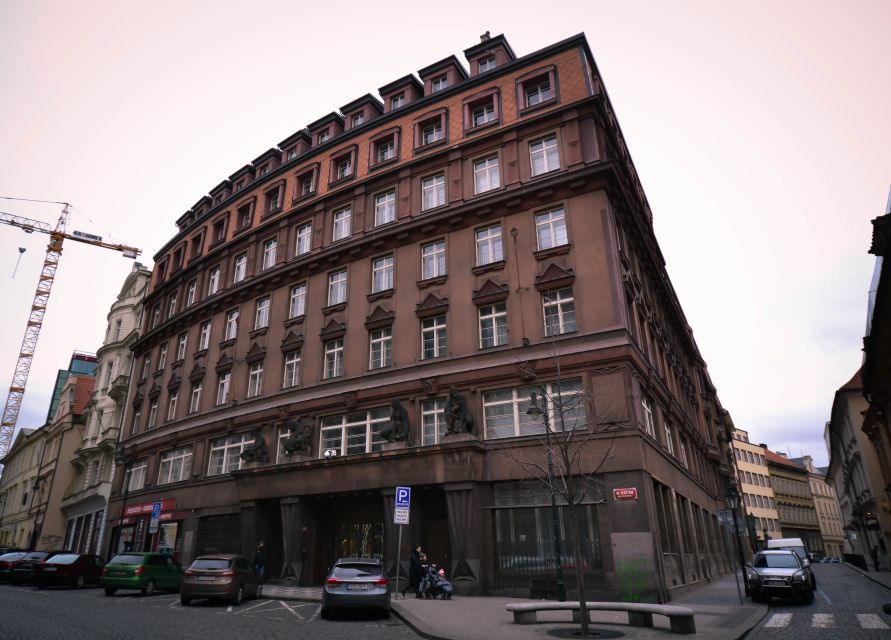
Reviewed · COMMUNISM TOURS
Prague: Communism History and Nuclear Bunker Guided Tour
Prague’s most striking Cold War experience is not a grand monument. It is a real nuclear bunker 50 feet underground, built in the 1950s for as many as 5,000 people. The visit puts an ordinary human scale on an era often reduced to dates and political slogans.
I like the way the tour combines central Prague landmarks with a suburban bunker, and I like the guides’ use of personal memories, family stories, and humor. The main drawback is physical: you walk, use public transport, and climb stairs in a dusty, enclosed museum with no toilets at the starting point.
Key points to know before you book
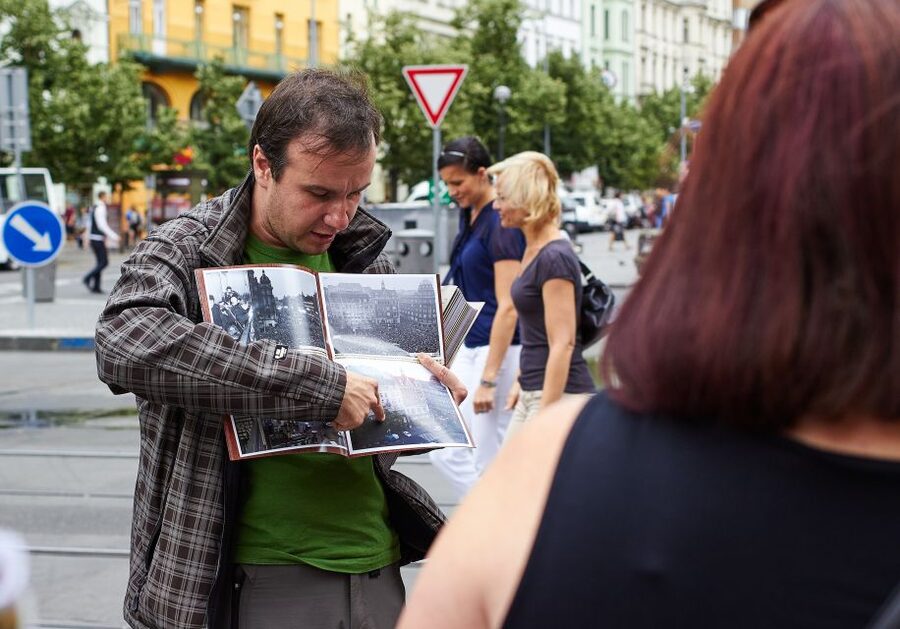
- A working Cold War setting: Enter a 1950s bunker with period equipment, photographs, exhibitions, and a gasmask workshop.
- History told through daily life: The guide explains how communism affected ordinary people, not just leaders and governments.
- Personal guide stories: Guides including Stan, Pavel, Ladislav, and L have drawn praise for firsthand memories and clear storytelling.
- A short tram journey adds context: You leave the historic center and see a more everyday part of Prague on the way to the bunker.
- Expect a brisk walking tour: The experience lasts about 150 minutes and includes walking, stairs, and public transportation.
- Best for serious history fans: It is not suited to wheelchair users, people with mobility issues, claustrophobia, or very young children.
Why the bunker gives Prague’s Cold War story weight
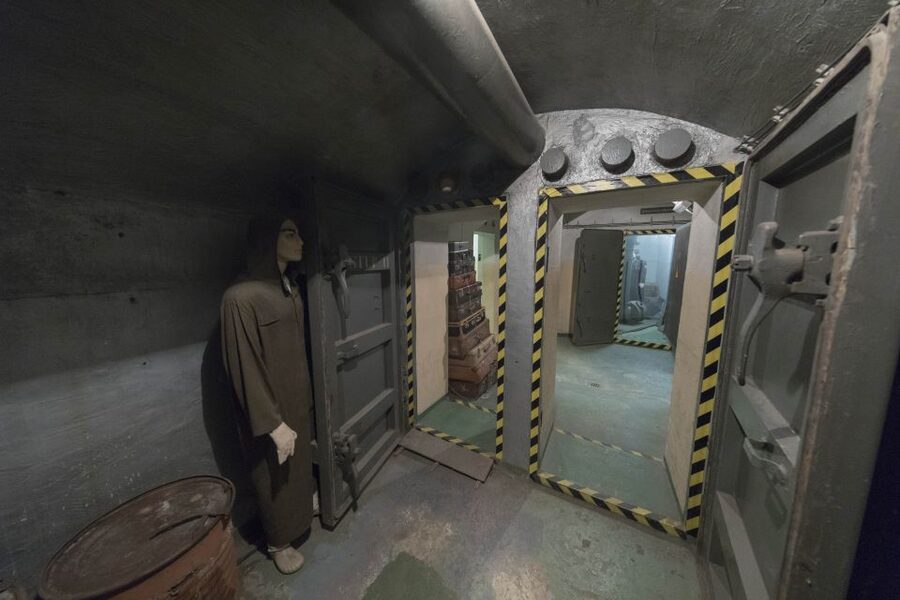
You can read about nuclear fear in a museum, but walking into a shelter designed for thousands of civilians makes the threat feel much more immediate. The low underground rooms, original equipment, and practical civil-defense displays show how much planning went into preparing for a disaster that many people hoped would never come.
This is not a polished palace or a grand public monument. You might find dust, aging displays, and equipment that looks its age. That roughness is part of the setting, but it also means the museum may feel less maintained than Prague’s major state-run attractions.
I think the strongest part of the experience is the contrast between the city above and the world below. You begin among busy streets and familiar landmarks, then descend into a place built around secrecy, fear, and survival. The physical change helps the history settle in.
More communist era tours in Prague:
- Prague Communism History and Nuclear Bunker Tour
★ 5.0 · 1,742 reviews - Communism & Nuclear Bunker Tour + 70s Canteen Lunch (own expense)
★ 5.0 · 1,036 reviews - Prague: Communism and Bunker Tour with 70s Canteen Lunch
★ 4.8 · 250 reviews
The opening walk through central Prague
The tour starts with a short guided walk in central Prague. The exact meeting point can vary with the option you book, so you need to check your confirmation carefully and arrive before the group leaves.
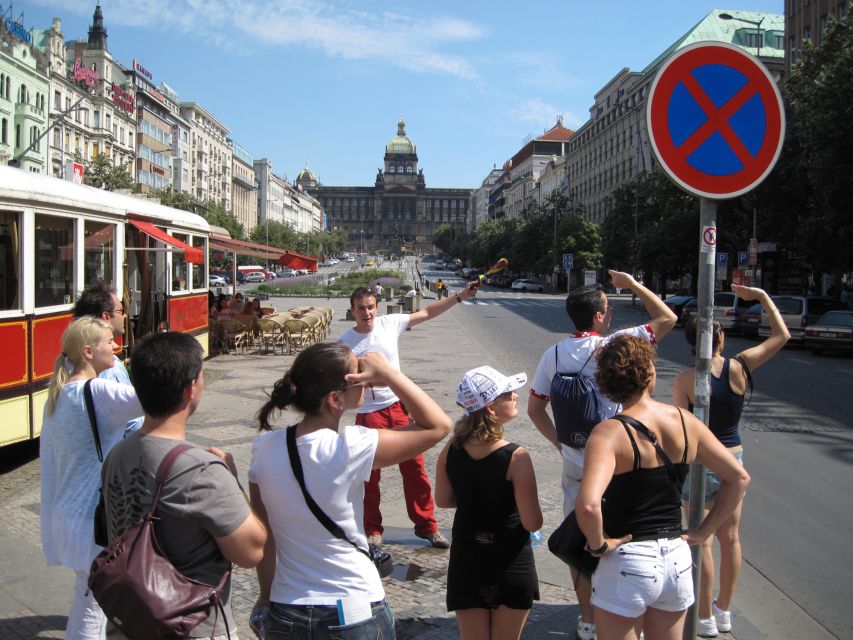
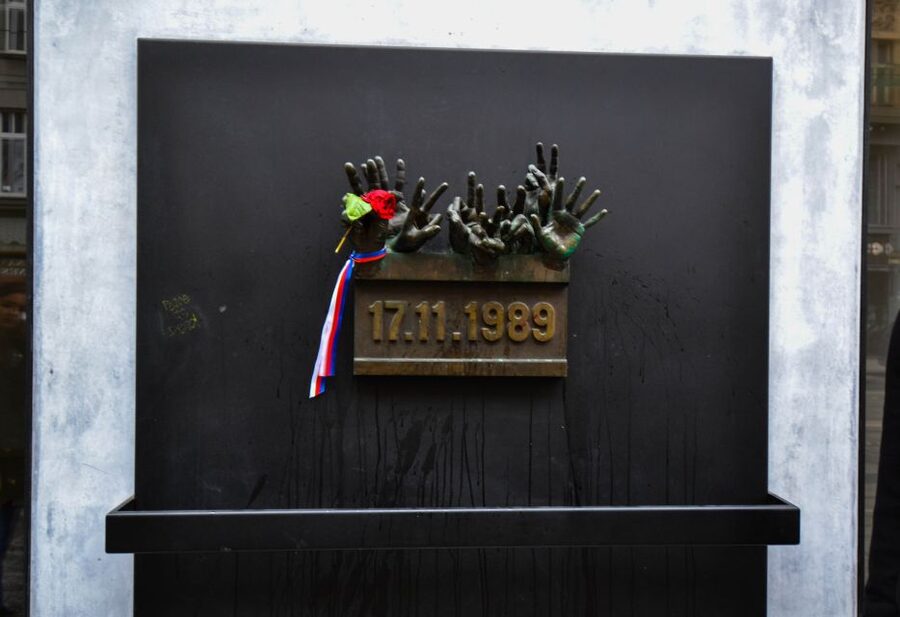
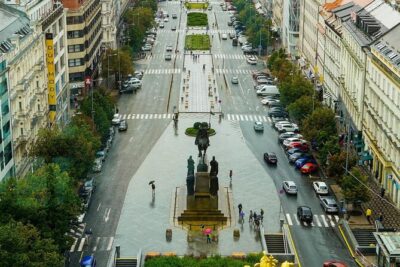
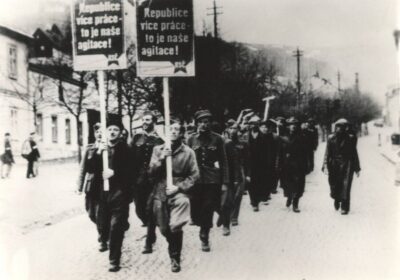
The first stops include the Velvet Revolution Memorial and Národní Street, where the guide sets the political scene for the events that brought communist rule to an end. You also spend time around Wenceslas Square, one of Prague’s key public spaces for political demonstrations and major national events.
The central walk lasts roughly 10 minutes at each listed stop. That is enough time for a focused explanation, but not enough for a long museum-style lecture at every location. I like this format because the tour keeps moving and uses the streets as evidence. You are not simply looking at a plaque. You are hearing how public places became tied to fear, protest, state control, and change.
The guide may discuss the former headquarters of the communist secret police, stories involving spies and political prisoners, and the enormous Stalin statue that once dominated Prague. The point is not to admire these sites as isolated curiosities. It is to show how power was made visible in the city and how ordinary people learned to live around it.
The subject matter can be grim. Accounts of surveillance, violence, political imprisonment, and fear are not softened into a light sightseeing story. At the same time, guides such as Pavel and L have been praised for using humor carefully, helping the group stay engaged without making the subject seem trivial.
How the Velvet Revolution fits into the walk
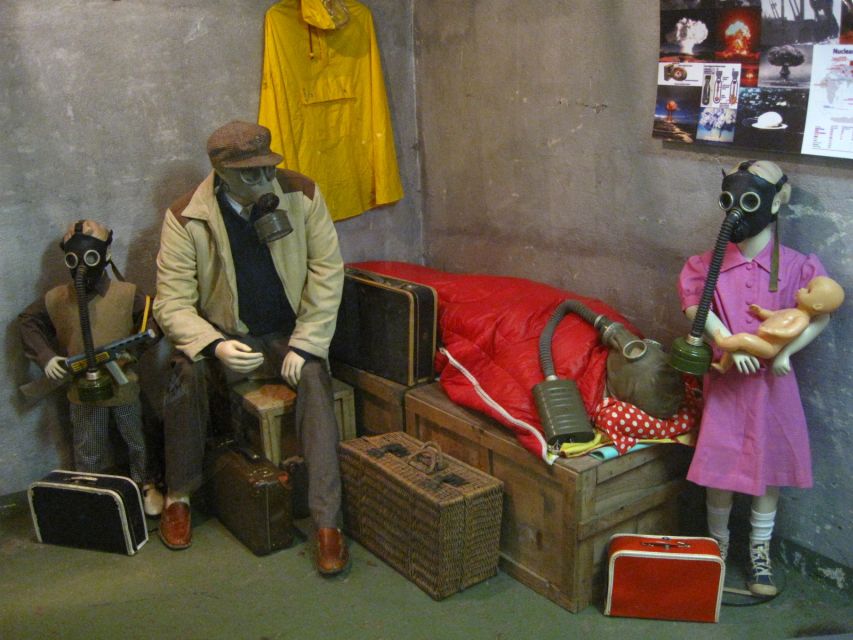
The Velvet Revolution Memorial gives the tour a clear human focus. Instead of treating the end of communism as a sudden political switch, the guide explains the pressure, protest, and public response behind it.
This is useful if you know little about modern Czech history. You get a basic framework before entering the bunker: the period after the Second World War, communist control, the Cold War atmosphere, the experience of ordinary citizens, and the eventual fall of the regime.
I especially like this part for first-time visitors to Prague. The city center can seem dominated by medieval towers and Baroque facades, yet its modern political story is close beneath the surface. The walking portion shows you that recent history happened in the same streets you are using for cafés, shopping, and sightseeing.
Do not expect a full political history course. The stops are brief, and the detail depends partly on the guide and the questions asked by the group. The value comes from the connection between place and story.
From Wenceslas Square to the bunker by tram
After the central section, the group uses public transportation to reach the bunker. The included tram journey takes about 10 minutes, though the total transfer can vary with the group and city conditions.
I like this part because it breaks the polished center of Prague. You see the city change as you ride away from the major tourist sights, and the journey gives you a feel for present-day Prague beyond the old town streets. It also helps you understand that Cold War history was not confined to official monuments.
You need to stay close to the guide during the transfer. One strong practical advantage of a live group tour is that the guide manages the route and helps keep everyone together, including during the tram ride. Pavel has been particularly praised for handling the group and making sure people reached the bunker safely.
The public transportation is included in the price. You do not need to arrange a separate ticket for this part of the activity, but you should still wear shoes that are comfortable for walking and standing.
More history walks in Prague:
- Prague: Oldtown, Medieval Underground & Dungeon History Tour
★ 4.2 · 8,244 reviews - Prague Old Town, Medieval Underground and Dungeon Historical Tour
★ 4.5 · 3,227 reviews - Prague: Historic City Center Bus Tour with Top Sights
★ 4.4 · 2,360 reviews - Prague Historic Pub Tour with Drinks Included
★ 5.0 · 2,084 reviews
Inside a 1950s bunker built for 5,000 people
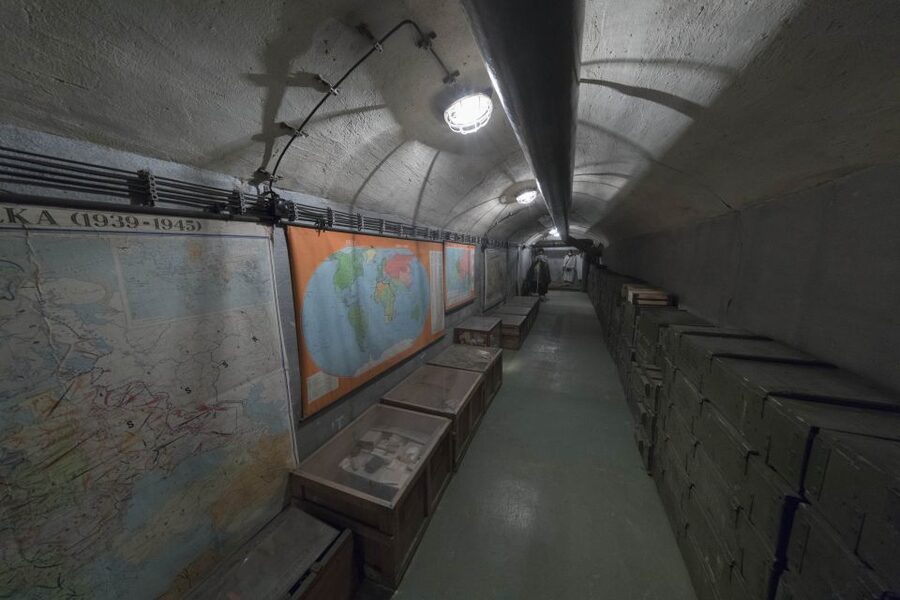
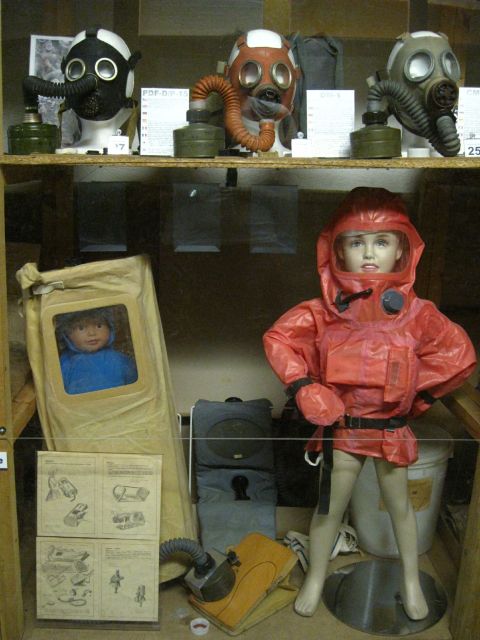
The bunker is the heart of the tour. Built in the 1950s, it was designed to shelter up to 5,000 people. That number is hard to picture until you see the underground scale and the systems intended to keep a large civilian population protected.
The visit lasts about 70 minutes, making it the longest part of the experience. Your guide leads you through the bunker museum and Cold War exhibitions, explaining the equipment, photographs, and rooms along the way.
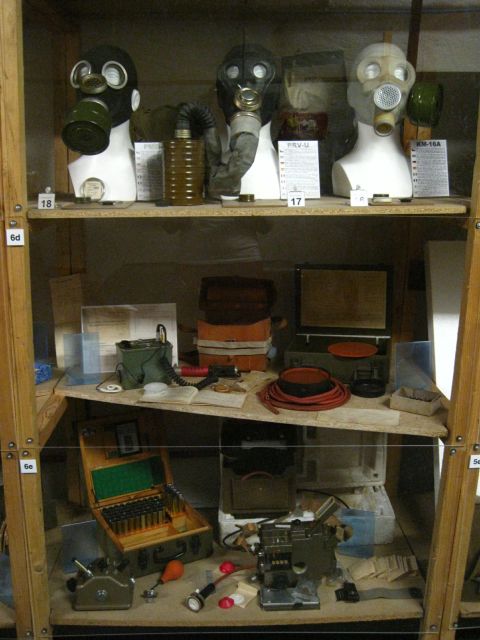
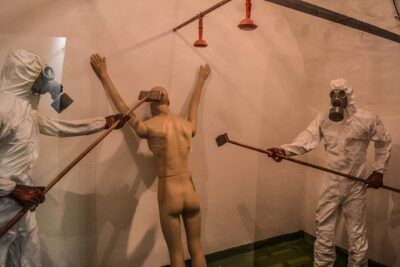
You can expect genuine period material rather than a theatrical attraction. Displays cover civil defense and the fear of nuclear attack, while the guide connects the objects to everyday life. The goal is to help you imagine what drills, warnings, secrecy, and uncertainty meant for people living under the communist system.
Some of the most effective details are practical ones. A bunker is designed around basic needs: protection, organization, communication, and survival. That turns an abstract discussion of nuclear policy into something you can see and physically move through.
The museum also includes a gasmask workshop. This is one of the more unusual parts of the visit and adds a hands-on element to an otherwise serious historical tour. Photos are allowed, but video recording requires extra permission.
The displays are not flawless. Some equipment and exhibits may look tired, and dust can be noticeable in the underground environment. If you have respiratory allergies, wearing a face mask may make the visit more comfortable. That is a sensible precaution, especially in a space that has the feel of an old working shelter rather than a freshly renovated gallery.
Stories about life under communist rule
The tour works best when the guide moves from political events to personal consequences. You hear about spies, dissidents, refugees from the Cold War, and political prisoners, but the focus also returns to ordinary citizens.
Several guides have personal connections to the period. Stan has spoken about growing up in Prague during communism and its collapse. Ladislav has shared memories from living through the communist era. Other guides, including Pavel, L, Katerina, Maki, and Susanna, have been praised for making the subject clear, lively, and approachable.
You should not expect one identical script every time. The guide’s personality shapes the experience, and personal stories can make the history feel far more immediate. A guide who remembers the 1980s as a child or teenager can explain the mood of the time in a way that a list of dates cannot.
That personal angle is especially useful if you come from a country where communist rule is unfamiliar. The guide can explain not only what happened, but how people adjusted their behavior, what they feared, and how public life differed from private life.
I also appreciate that the humor is used as a bridge, not as a replacement for serious content. The best guides keep the tone human while still discussing oppression, violence, and fear directly.
What the final walk adds
After the bunker, the tour returns toward New Town and finishes at Malé Náměstí. The final section is short, about 10 minutes, and gives you a chance to connect the underground visit with the city above.
This ending is less about a single major sight and more about orientation. You finish near central Prague rather than at an isolated suburban location, which makes it easier to continue sightseeing or return to your accommodation.
The full duration is listed as 150 minutes, with the possibility of about 10 to 15 minutes of variation depending on group size. Allow a little flexibility rather than scheduling a tight restaurant reservation immediately afterward.
Is $44 a fair price?
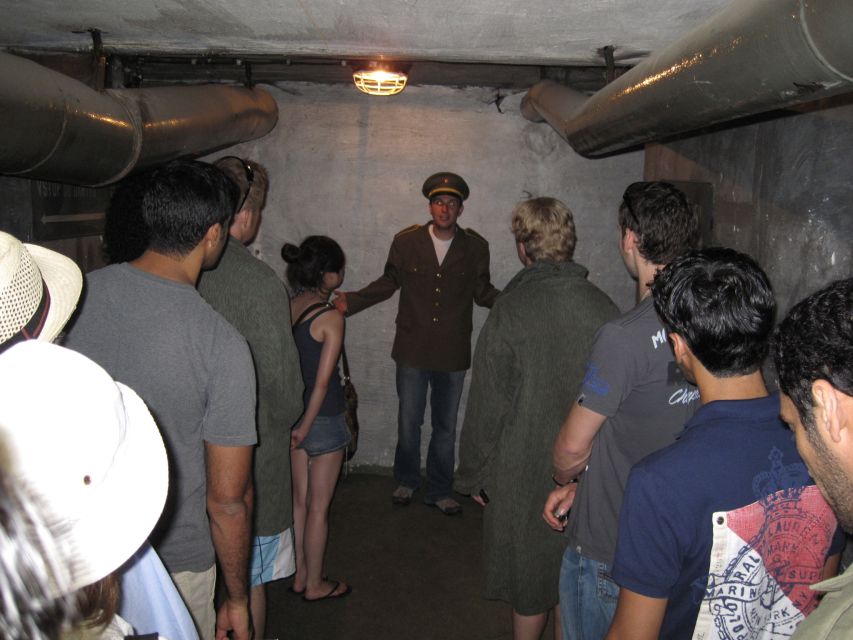
At $44 per person, I consider this a reasonable price for a guided experience lasting two and a half hours. The cost includes a live English or German-speaking guide, public transportation to and from the bunker, and entry to the bunker museum and exhibitions.
The value depends on what you want from a history tour. If you only want a quick look at a bunker, the price may seem high compared with visiting a museum independently. But the central walking route, tram transfer, historical explanation, and personal storytelling make this more than an admission ticket.
You are paying for interpretation. The bunker itself gives you the setting, but the guide explains why it was built, what it reveals about Cold War fears, and how the period affected Czech people. That context is the reason I would choose this over simply wandering through a display on your own.
The tour also avoids a common problem with modern-history sightseeing: focusing only on famous politicians. Here, the human stories of families, refugees, prisoners, spies, dissidents, and ordinary residents carry much of the weight.
Who should take this tour?
I would recommend it to adults and older school-age children who are comfortable with serious history and a fair amount of walking. It suits anyone interested in the Cold War, modern European politics, Prague’s recent past, or the daily impact of authoritarian rule.
It is also a good choice if you have already seen Prague’s main medieval and Baroque sights. The tour takes you away from the standard postcard route and gives you a more recent story of the city.
You should think twice if you dislike enclosed spaces, have claustrophobia, or find stairs and walking difficult. The experience is not suitable for wheelchair users, baby strollers, people with mobility impairments, or infants and very young children under school age.
You also need to understand the chosen tour language. The operator requires participants to speak the selected language, and you cannot translate for someone during the tour. This matters because the guide’s explanations are central to the experience.
There are strict behavior rules as well. Pets, smoking, alcohol, drugs, costumes, and bachelor or bachelorette groups are not allowed. That is fitting for a serious historical visit, but it is worth knowing before you book.
Practical advice for a smoother visit
Wear comfortable walking shoes. The route includes city streets, public transportation, and bunker stairs, so this is not a good occasion for dress shoes or anything that makes walking awkward.
Use a toilet before you arrive because there are no toilets at the starting point. Bring water if you need it, since food and drinks are not included.
Arrive early. Tickets can be purchased online up to 30 minutes before departure, but once the group leaves the starting point, joining is not guaranteed. The meeting point can vary, so confirm the location for your selected departure.
You may take photographs, but you cannot record video without extra permission. Keep your camera ready for the displays, but listen closely too. The guide’s explanations are the part you cannot recreate from a photograph.
Cancellation is flexible up to 24 hours before the tour for a full refund, and you can reserve now and pay later. Those options are useful if your Prague schedule is still changing.
Should you book the Prague Communism and Nuclear Bunker Tour?
I would book this tour if you want Prague’s recent history explained through real places and personal accounts. The bunker is the obvious attraction, but the strongest feature is the link between the central street walk, the tram ride, and the underground museum.
Book it if you value a guide who can explain difficult subjects with clarity and measured humor. Guides such as Stan, Pavel, and Ladislav have been especially effective at adding memories of growing up during the communist era.
Skip it if you need step-free access, dislike confined spaces, or prefer a quiet self-guided museum. For everyone else, $44 buys a thoughtful, unusual look at the political fears and everyday realities that shaped modern Prague.
FAQ
How long does the tour last?
The tour lasts about 150 minutes. The duration may vary by roughly 10 to 15 minutes depending on group size.
What languages are available?
The tour is available in English and German. You need to speak the selected language because on-the-spot translation is not allowed.
Is transportation to the bunker included?
Yes. Public transportation to and from the bunker is included in the tour price.
How deep underground is the bunker?
The bunker is about 50 feet underground.
How many people was the bunker designed to hold?
The 1950s bunker was designed to accommodate up to 5,000 people.
What is included at the bunker museum?
Entry to the nuclear bunker museum and its Cold War exhibitions is included. The visit also includes a special gasmask workshop.
Can I take photographs?
Yes, photography is allowed. Video recording requires extra permission.
Is the tour suitable for wheelchair users?
No. The tour is not suitable for wheelchair users, people with mobility impairments, or people who cannot manage walking and stairs.
Is the tour suitable for people with claustrophobia?
No. The bunker is an enclosed underground setting, and the experience is not recommended for people with claustrophobia.
Are children and infants allowed?
The tour is not suitable for infants or the smallest children under school age. Babies under one year are specifically listed as unsuitable for the activity.
Just added around Prague
- WWII and Communism History in Prague’s Old Town Private Tour★ 5.0 · 4 reviews
- World War II 4WD Tour from Prague with Lunch★ 4.4 · 3 reviews
- Wroclaw to Prague: 2-in-1 (Private Transfer + Country Tour)★ 5.0 · 4 reviews
- Prague: Historical Walking Tour with Focus on World War 2★ 4.3 · 12 reviews
- Walking tour of Prague in french: Old Town & Charles Bridge★ 4.9 · 62 reviews
- Ultimate Unlimited Beer Pong with Czech Beer★ 4.6 · 5 reviews
- Walking tour of Prague in French : Nové Město★ 4.9 · 16 reviews
- Prague: Modern Private Spa with Jacuzzi and Sauna★ 4.8 · 62 reviews
Communism Tours, compared.
Prague Communism History and Nuclear Bunker Tour
Read our review →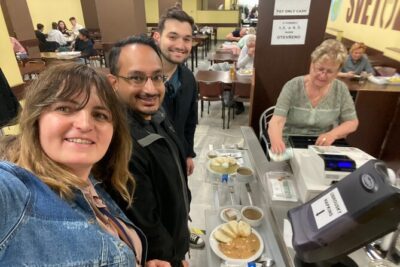
Communism & Nuclear Bunker Tour + 70s Canteen Lunch (own expense)
Read our review →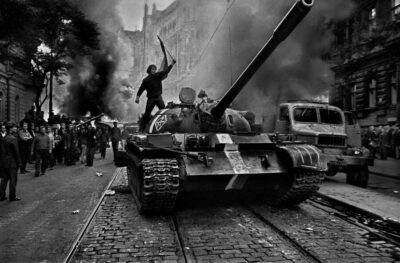
Second World War & Communism (Tip-based 3 hour tour)
Read our review →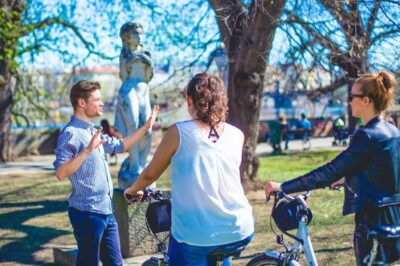
Browse the lists this tour appears in