
Reviewed · ART NOUVEAU TOURS
Prague Art Nouveau Tour
Prague’s Art Nouveau is easy to miss if you hurry between the Old Town and Wenceslas Square. This private tour slows the pace and points out the swirling ironwork, plant-like decoration, and distinctive lettering that give the style its unmistakable look. The route begins at Republic Square and follows Na Příkopě to Wenceslas Square, two useful places to connect Prague’s architecture with its wider story.
I like the private format for up to 25 people, especially when the price is $34 per group rather than per person. I also like the focus on both architecture and general Prague history, with guide Tomas praised for his friendly manner, local perspective, and fun facts. The main consideration is time: two hours gives you a sharp introduction, not a full survey of Prague’s Art Nouveau buildings.
Key points to know before booking
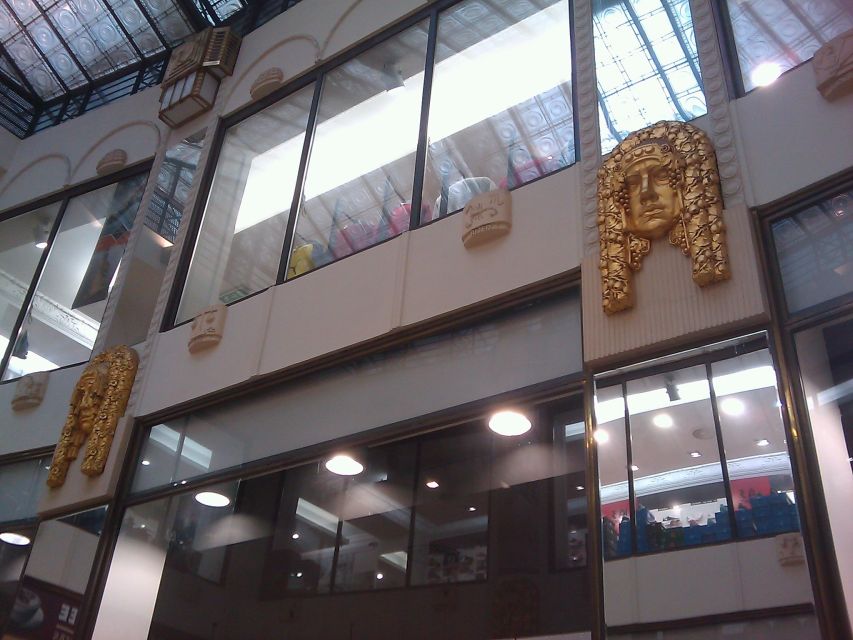
- Republic Square is the starting point, giving you an early look at Prague’s architectural mix before the walk heads toward Wenceslas Square.
- The route follows Na Příkopě, one of central Prague’s key streets, then continues to Wenceslas Square.
- Antonín Balšánek and Osvald Polívka are central names, so the tour has a clear architectural focus rather than being only a general city walk.
- Pickup is included at your hotel, with the guide meeting you at a desk or reception point under the hotel name.
- The guide speaks French, making this a practical choice for French-speaking visitors who want detailed explanations.
- The $34 price covers a private group of up to 25, which can be excellent value for a couple, family, or larger party traveling together.
Why Prague’s Art Nouveau deserves a closer look
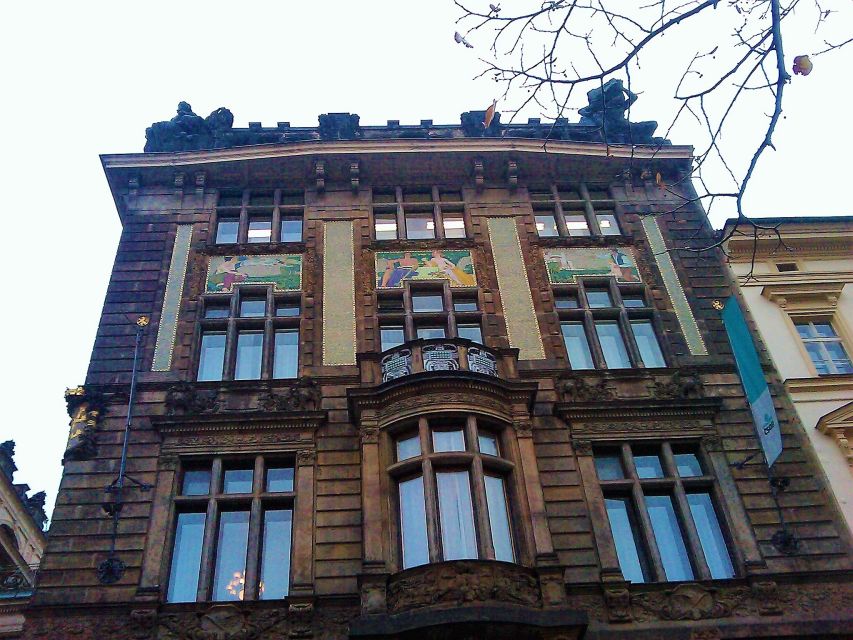
Art Nouveau is not just a decorative label. It changed the look of European cities around the turn of the 20th century, and Prague adopted the style with real enthusiasm.
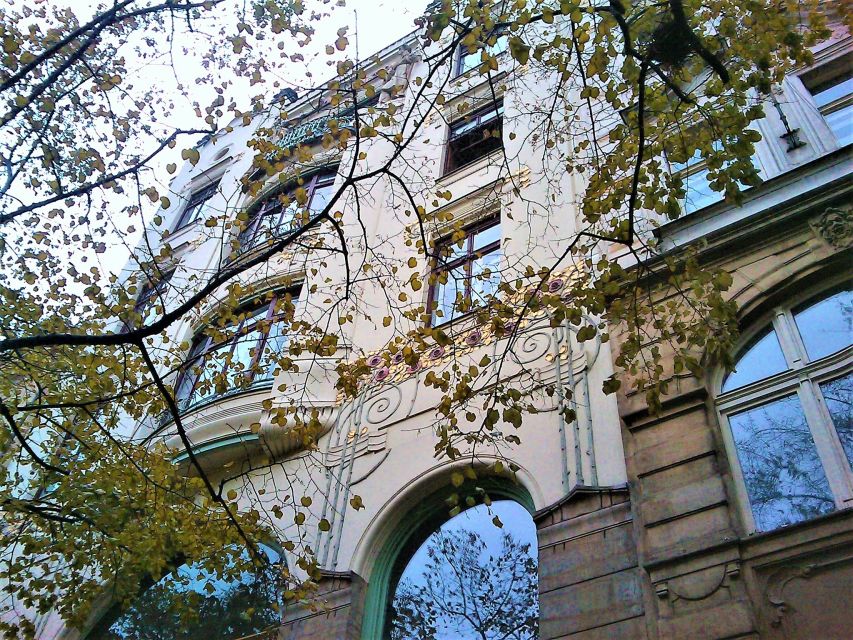
If you have been in Paris, you may recognize the flowing metalwork associated with metro entrances. The forms often resemble vines, flowers, and curling stems. Lettering becomes part of the design instead of sitting apart from it. Facades, doors, balconies, and signs can all work together as one visual composition.
Prague’s version fits into a city already filled with Gothic, Baroque, Renaissance, and 19th-century buildings. That mixture is part of the appeal. A short walk can take you from older stonework to a building where curves, ornaments, and carefully planned details announce a newer age.
I find a guided walk useful here because Art Nouveau rewards looking up and looking close. A building may seem ordinary from across the street, yet its entrance or upper facade can reveal the most interesting work. A guide can also explain how the style fits into Prague’s general development, instead of leaving you with a string of disconnected photo stops.
This tour focuses especially on architects Antonín Balšánek and Osvald Polívka, along with other figures connected to Prague’s Art Nouveau period. You are not simply shown attractive buildings. You are given names and a framework for understanding why the city looks the way it does.
More Art Nouveau in Prague:
- Prague Art Nouveau and Cubism Walking Tour
★ 5.0 · 77 reviews - Private Prague Art Nouveau and Cubism Walking Tour
★ 5.0 · 30 reviews - Prague Art Nouveau and Cubism Walking Tour
★ 5.0 · 29 reviews
Meeting your guide at the hotel
The tour includes pickup from your hotel, which is convenient at the start of a sightseeing day. The guide holds a desk with a name in front of the hotel, so you are not expected to find an obscure street corner or guess where the meeting point is.
The journey from your hotel to the sightseeing route may be on foot, by tram, or by metro. That detail matters because the tour does not promise a single fixed transfer method for every hotel. Prague’s center is compact in places, but your starting point can affect how the visit begins.
I would allow a little extra time in the hotel lobby and keep your phone available in case you need to coordinate the meeting. Once you connect with the guide, the tour moves to Republic Square, where the architectural walk officially begins.
The pickup also helps make this a good choice for visitors who want a private outing without spending time figuring out Prague’s transit system first. The tradeoff is that the tour’s exact opening sequence can vary slightly depending on where your hotel is located.
Republic Square: a strong opening point
Republic Square is a sensible place to begin because it works as a meeting point between several parts of central Prague. It gives the guide room to introduce the city before narrowing the focus to Art Nouveau.
Expect the first part of the visit to establish the main themes: how Art Nouveau spread across Europe, how Prague’s architects worked with the style, and how decorative details reveal the period’s changing taste. This context is useful because it tells you what to notice during the walk.
The square also helps you see that Prague is not organized as a series of isolated architectural periods. The city’s buildings sit close together, so the guide can compare styles as you move. An Art Nouveau doorway makes more sense when you understand what came before it and how it changed the street around it.
Because the supplied information does not identify every building visited, you should not book this expecting a fixed checklist of named interiors or museum entries. This is an outdoor architectural route centered on the city’s public buildings and streetscape. The reward comes from seeing the details in place, not from entering a long list of sites.
Na Příkopě: architecture along a busy central street
From Republic Square, the route continues along Na Příkopě. This street is one of the natural links through central Prague, so it gives the tour a practical rhythm. You walk through an active part of the city while learning to read the facades around you.
Here, the Art Nouveau focus can be especially useful for anyone who tends to notice only large landmarks. The guide can direct your attention to entrances, ironwork, lettering, decorative lines, and other parts of the architecture that are easy to pass without a second look.
Na Příkopě is also a good place to connect design with urban life. These buildings were not created as museum pieces. They form part of a working center, and their decoration was meant to be seen by people moving through the city every day.
The drawback is that a central street can make conversation and close inspection less relaxed than a quiet lane. You may need to stay near the guide and pause carefully when the group stops. A private format helps because the pace can be more responsive than on a large scheduled group tour, but you are still walking in a central urban area.
Wear comfortable shoes. The tour lasts only two hours, yet it combines a transfer from your hotel with a walk through central Prague. Comfortable footwear will make it easier to look up, stop, and keep moving without worrying about your feet.
A few more Prague half-days worth weighing up
- Prague: 50-Minute Sightseeing Evening Cruise
★ 4.2 · 33,780 reviews - Prague: Medieval Dinner with Unlimited Drinks
★ 4.4 · 19,847 reviews - Prague: Skip-the-line Castle Ticket and Optional AudioGuide
★ 4.3 · 11,121 reviews - Prague: Castle Tour with Local Guide and Entry Ticket
★ 4.6 · 10,422 reviews
Wenceslas Square and Prague’s wider story
The route ends at Wenceslas Square, one of Prague’s best-known urban spaces. Reaching this square gives the tour a clear finish and places you in a useful area for continuing your own sightseeing afterward.
The value of ending here is not only the architecture around the square. Wenceslas Square helps the guide connect Art Nouveau to the general history of Prague, which is one of the stated aims of the tour. You get a sense of how the city’s buildings relate to civic life, commerce, movement, and changing periods of Prague’s past.
This broad approach suits you if you want more than a specialist lecture. The tour is designed for people interested in Art Nouveau who also want a basic understanding of Prague as a city. You can expect architectural explanations mixed with general history and some lighter facts.
If your main goal is a highly technical study of individual architects, this may feel too broad. The visit introduces Balšánek, Polívka, and others, but the available details describe a two-hour city walk rather than an academic seminar. Its strength is the balance between looking at buildings and understanding the city around them.
A private tour for one group
The group is private, with a maximum of 25 people. That makes the pricing particularly important.
At $34 per group, the cost is strong for two people, a family, or a larger party traveling together. The more people in your own party, the lower the effective cost per person becomes, assuming you use the full group allowance. You also avoid being mixed into an unknown group.
A private booking can make questions easier. If you want to ask about a particular facade, compare Prague with Paris, or pause for a photograph, the experience is likely to feel more personal than a large public tour. The guide can focus on your interests within the limits of the route.
There is one point to check carefully before booking. The maximum is up to 25 people, but the information does not promise a small group size within that limit. If you are booking for only two or three people, confirm how the private format is arranged and whether the booking is still for your party alone. The description identifies it as a private group, so the intended setup is personal rather than a shared public departure.
The French-language advantage
The live tour guide speaks French. That makes this experience especially practical if you prefer to discuss architecture and history in French rather than rely on short explanations in another language.
The French connection also fits the subject. Visitors familiar with Paris may recognize the plant-like metro design and the wider Art Nouveau vocabulary. The guide can use that familiarity as a starting point, then show how Prague adapted the style through its own architects and buildings.
Guide Tomas is specifically named in the supplied information, and his role appears to go beyond pointing out facades. He is described as friendly, passionate about his city, and good at adding fun facts to the architectural and historical material. You should confirm the guide’s name when booking if having Tomas specifically matters to you, since the activity is operated by TOMAS TOUR but the practical information lists a French-speaking guide rather than guaranteeing a named individual for every departure.
What you will and will not see
This is a focused walking tour, not a full Prague city tour. Its clear route runs from Republic Square along Na Příkopě to Wenceslas Square, with possible transport from your hotel at the beginning.
You can expect:
- Art Nouveau buildings and details in central Prague
- Explanations of the style’s spread and visual traits
- Attention to Antonín Balšánek, Osvald Polívka, and other architects
- General background on Prague
- A few fun facts woven into the guide’s explanations
- A private French-language experience
You should not assume that the tour includes museum admission, interiors, food, or a broad visit to every major Prague landmark. None of those additions are included in the stated activity details. The listed inclusion is a local guide, so the main product is the guided walk and the interpretation that comes with it.
That clarity is helpful. If you are already planning to see Prague’s main historic sights on your own, this tour adds a specific architectural lens rather than repeating a standard sightseeing circuit.
Who will get the most from this walk
I would recommend it most strongly to three kinds of visitors.
First, it suits French-speaking visitors who want a private introduction to Prague’s decorative architecture. A French explanation can make it easier to ask about style, dates, and local context without losing detail.
Second, it works well for first-time visitors who want to understand the city while seeing its buildings. The guide combines Art Nouveau with general Prague history, so you do not need to arrive with a specialist background.
Third, it is a good option for couples, families, and groups who can share the $34 price. The private format gives you more control than a public tour, while the two-hour length fits neatly into a busy day.
You may want something else if you prefer a long architectural lecture, a museum visit, or a tour devoted only to interiors. You may also find the walk too short if you want detailed coverage of every Art Nouveau structure in central Prague. Think of it as a focused introduction that teaches you how to look, not a final word on the subject.
Practical value and booking advice
The two-hour duration is a useful middle ground. You get enough time to move through a meaningful section of central Prague without giving up half a day. It also leaves you at Wenceslas Square, where you can continue sightseeing after the guide departs.
The $34 group price is the strongest practical feature. For a private party, it offers a low-cost way to add specialist guidance to your Prague visit. The value is less about the number of buildings covered and more about having someone explain what you are seeing as you move through the city.
Free cancellation up to 24 hours before the start gives you some flexibility, and you can reserve now and pay later. Those terms are useful when your Prague schedule may change, but they do not alter the central question: do you want a short, French-language introduction to Art Nouveau, or a wider city tour?
Should you book the Prague Art Nouveau Tour?
Book this tour if you like architecture, want a private French-speaking guide, and prefer a focused walk with enough general history to put the buildings in context. The route from Republic Square through Na Příkopě to Wenceslas Square is easy to fit into a central Prague day, and the $34 group price is appealing for parties of two or more.
Skip it if you want entry into specific buildings, a detailed survey of every Art Nouveau site, or a tour lasting most of the day. For everyone else, this is a practical way to see Prague with sharper eyes, especially if you are curious about Antonín Balšánek, Osvald Polívka, and the city’s curling, flower-inspired architectural details.
FAQ
Where does the Prague Art Nouveau Tour begin?
The guided visit starts at Republic Square. The guide can pick you up at your hotel first, with the journey to the starting point made on foot, by tram, or by metro.
How long does the tour last?
The tour lasts two hours. Starting times depend on availability when you book.
What language is the tour in?
The live tour guide speaks French.
Is hotel pickup included?
Yes. Pickup is included, and the guide holds a desk with a name in front of the hotel.
How many people can join the private group?
The private group can include up to 25 people.
What should I bring?
Bring comfortable shoes, since the experience includes walking through central Prague.
Just added around Prague
- WWII and Communism History in Prague’s Old Town Private Tour★ 5.0 · 4 reviews
- World War II 4WD Tour from Prague with Lunch★ 4.4 · 3 reviews
- Wroclaw to Prague: 2-in-1 (Private Transfer + Country Tour)★ 5.0 · 4 reviews
- Prague: Historical Walking Tour with Focus on World War 2★ 4.3 · 12 reviews
- Walking tour of Prague in french: Old Town & Charles Bridge★ 4.9 · 62 reviews
- Ultimate Unlimited Beer Pong with Czech Beer★ 4.6 · 5 reviews
- Walking tour of Prague in French : Nové Město★ 4.9 · 16 reviews
- Prague: Modern Private Spa with Jacuzzi and Sauna★ 4.8 · 62 reviews