
Reviewed · ART NOUVEAU TOURS
Prague: Private Prague Art Nouveau and Cubism Tour
Prague’s Art Nouveau and Cubist buildings tell a sharper story than their pretty façades first suggest. This private walk connects the 1909 Central Station, Jubilee Synagogue, Municipal House, House of the Black Madonna, Wenceslas Square, and daring Cubist houses below Vyšehrad. You see how Prague’s architects moved from ornate 19th-century design toward the clean, restless shapes of modern life.
I like the clear historical thread, which explains not only what you are looking at, but why Art Nouveau was such a break from earlier styles and why Cubism pushed back against it. I also like the small private format, especially with guides such as Max and Eva, who can answer questions in English or German and adjust the conversation to your interests.
The main caution is the length. You cover a lot of ground, and one participant found the final section too long. Comfortable shoes are not optional, and anyone hoping for a relaxed café-style outing may prefer a shorter architecture walk.
Key points to know before booking
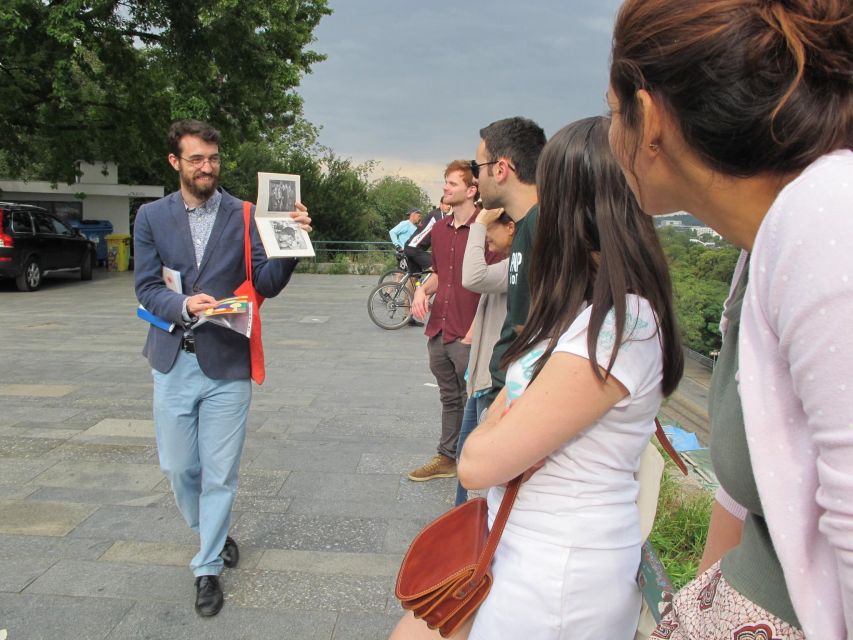
- The route begins on Platform 1 at Prague Main Station, where your guide carries a red folder.
- You see both major landmarks and easy-to-miss buildings, including several tucked-away examples outside the usual Old Town route.
- The architectural story moves from Art Nouveau to Cubism, with World War I marking the end of both styles’ golden period.
- The last section reaches the area beneath Vyšehrad, where three Cubist houses and other bold designs reward the extra tram ride.
- Public transportation is included, with tram rides connecting central Prague to the final neighborhood.
- Plan on roughly 3.5 hours, mostly walking, and note that the tour is not intended for children under 12.
Why this Prague architecture tour feels different
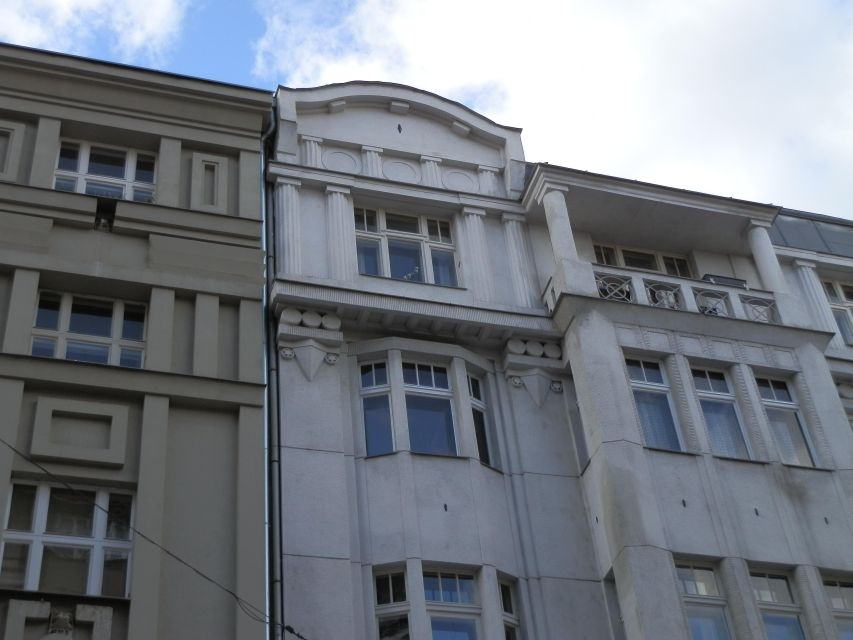
Most first visits to Prague focus on medieval lanes, Baroque churches, the Charles Bridge, and the castle. Those sights deserve their place, but this tour shifts your attention to the city’s early 20th-century ambitions. Prague was not simply preserving old buildings. It was also testing new ideas about decoration, structure, national identity, and urban life.
The tour’s strongest feature is its connection between style and history. Art Nouveau did not appear out of nowhere. Your guide explains how it grew from 19th-century design, then broke away from heavy historical imitation with flowing lines, plant forms, new decorative methods, and a desire to make modern life look modern.
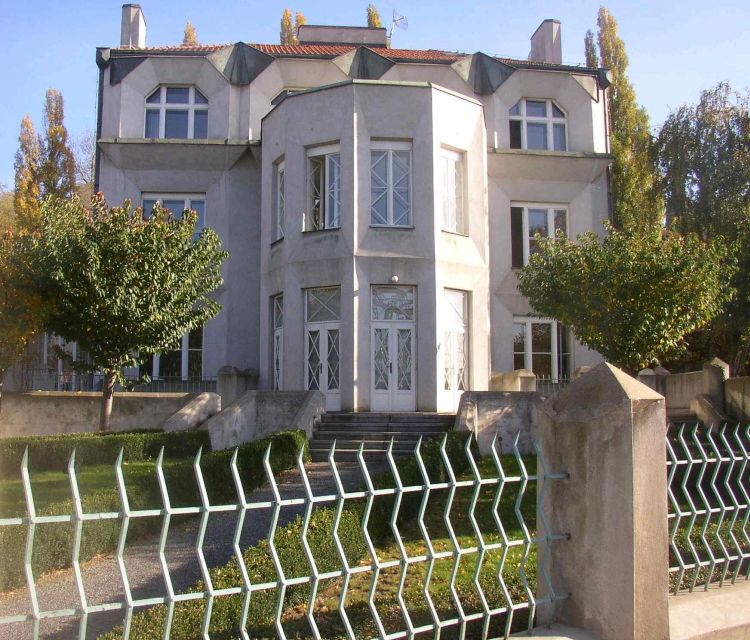
Cubism brings a sharper change. In Prague, it was not only a painting style. Architects applied fractured shapes and geometric tension to houses and interiors. The result can seem strange beside Prague’s Gothic towers and Baroque façades, which is exactly why the comparison works.
I find this approach more useful than a parade of famous buildings. You learn to look for the details that reveal a building’s age and purpose: a decorative entrance, a patterned surface, a geometric façade, or a design that refuses to blend quietly into its surroundings.
More Private Tours in Prague
- Prague Old Town: Private Tour
★ 5.0 · 1,223 reviews - Prague Airport Private Arrival Transfer
★ 4.5 · 991 reviews - Prague Airport Private Departure Transfer
★ 4.5 · 780 reviews
Starting at Prague Main Station in 1909
Meet in the middle of Platform No. 1 at Prague’s Central Train Station. Look for the guide carrying a red folder. The meeting point is beside a UniCredit Bank ATM, a practical detail worth noting because a large railway station can be confusing when you are watching the clock.
The station was built in 1909, placing you at the right starting point for a tour about Prague’s turn toward modern design. You begin with a short guided look at the station before walking into New Town. That opening helps set up the larger story: Prague was still surrounded by old architectural traditions, but its public buildings and streets were changing fast.
This is also a useful meeting place if you are arriving by train or staying near the main station. If you are coming from another part of Prague, allow time to find Platform 1 rather than assuming the guide will meet you in the main concourse.
Jubilee Synagogue and the early Art Nouveau mood
The first walk is short, and the Jubilee Synagogue gives you an early look at how Prague combined decorative traditions with newer design ideas. The stop is brief, about five minutes, so do not expect a long interior visit or a detailed religious tour. Its value is as part of the visual sequence.
Here, your guide can show how Art Nouveau developed within a city already filled with strong architectural identities. Prague’s designers did not wipe away the past. They borrowed, adapted, and sometimes challenged it.
The next two stops are described as lesser-known architectural examples. They help you shift from famous monuments to buildings you might pass without a second glance. This is one of the pleasures of a private architecture tour: you can pause over a doorway, façade, or unusual detail that would receive no attention on a standard sightseeing route.
Municipal House and the public face of Art Nouveau
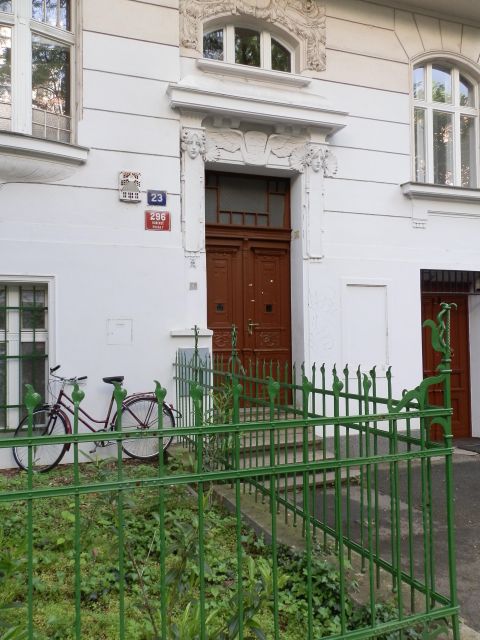
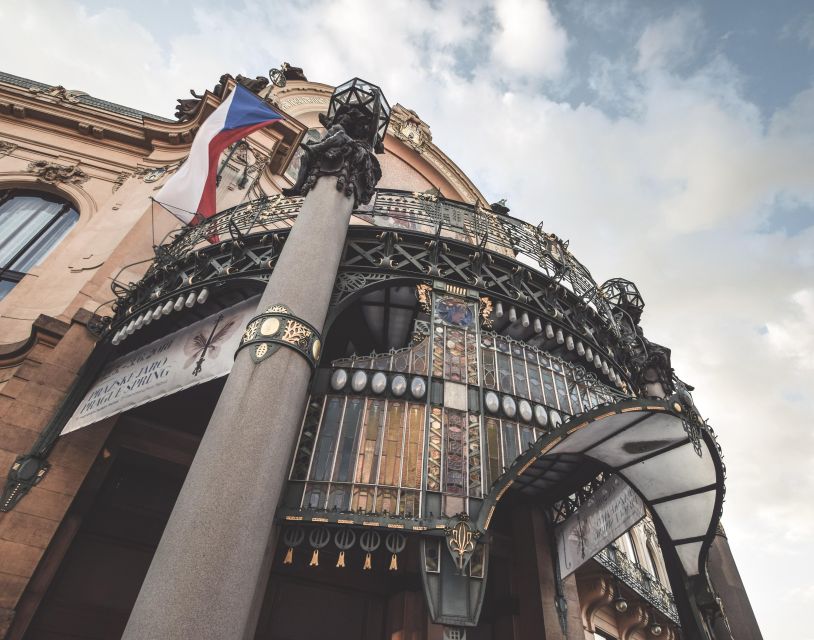
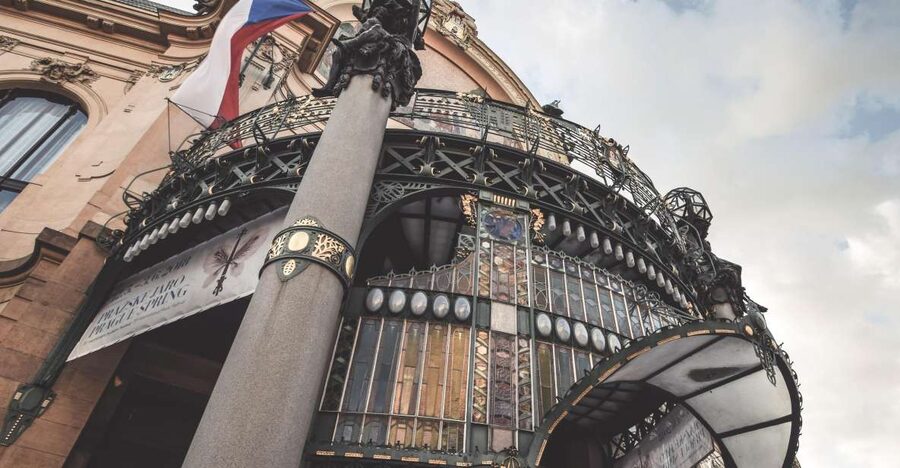
Municipal House receives a longer stop of about ten minutes. It is one of the clearest opportunities to see Art Nouveau used on a grand civic scale.
The building shows how the style could work as a complete visual language rather than a small decorative flourish. Look for the relationship between architecture and ornament. The point is not simply that the building is attractive. It shows how Prague’s cultural life, public pride, and modern taste were presented through design.
A guide with a strong grasp of art history can make this stop much more rewarding. Max, one of the named guides, has been praised for explaining the rise and spread of Art Nouveau in a clear way, while Eva has been noted for explaining Prague’s different architectural styles in detail. The experience depends heavily on your guide, and those comments suggest that the interpretive side is a major reason to book.
Municipal House is also a good reminder that Art Nouveau was not confined to private homes. It shaped cafés, public institutions, theaters, stations, and other places where a city presented itself to residents and visitors.
More Art Nouveau in Prague:
- Prague Art Nouveau and Cubism Walking Tour
★ 5.0 · 77 reviews - Private Prague Art Nouveau and Cubism Walking Tour
★ 5.0 · 30 reviews - Prague Art Nouveau and Cubism Walking Tour
★ 5.0 · 29 reviews - Prague: Private Cubism & Art Nouveau Walking Tour
★ 5.0 · 15 reviews
House of the Black Madonna and Prague Cubism
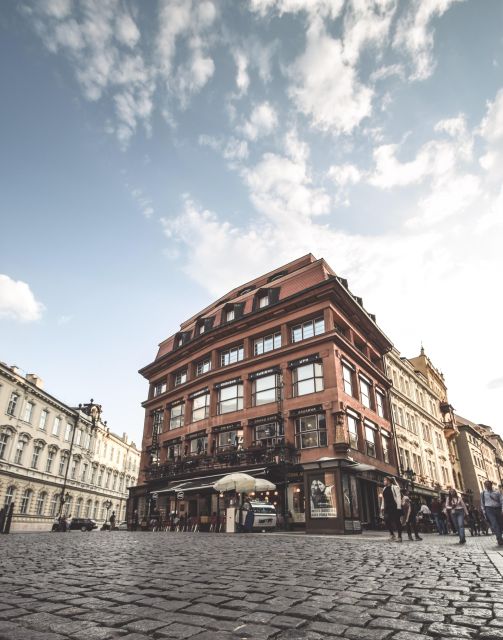
The House of the Black Madonna is the tour’s key bridge from Art Nouveau to Cubism. You spend about ten minutes here, enough time to discuss why Cubism emerged as a reaction against the dominant decorative style.
The building is particularly useful because it makes the debate visible. Art Nouveau favored flowing movement and organic decoration. Cubism favored sharper geometry, broken planes, and a more forceful visual rhythm. Neither approach was simply a matter of taste. Each reflected a different idea about what modern architecture should be.
This is where the tour’s historical context becomes important. You are not just memorizing two labels. You are seeing a creative argument played out in stone, glass, and ornament. The guide explains how these styles were linked to the wider changes of the early 20th century, and how World War I disrupted the conditions that had allowed both to flourish.
The route continues through several more central examples before reaching Wenceslas Square. These short stops keep the walk moving, but they also mean you should expect a broad survey rather than long visits inside individual buildings.
Wenceslas Square and the city in motion
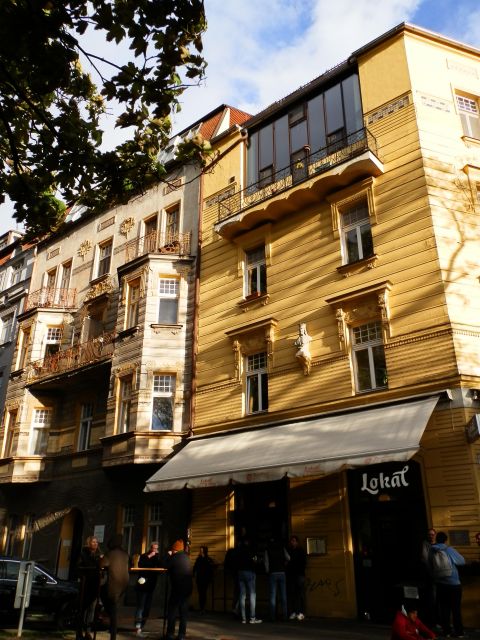
The tour allows around twenty minutes at Wenceslas Square, the longest central-city stop. That extra time makes sense. The square is not a single building but a major urban space where architecture, commerce, public life, and political events meet.
Your guide uses the square to show how modern Prague was shaped around movement and public activity. This is where the tour’s focus on the 20th century becomes easier to understand. Buildings are not isolated works of art. They form the setting for daily life and major changes in the city.
I would pay close attention here to the contrast between the square’s scale and the smaller details introduced earlier. After seeing decorative entrances and carefully shaped façades, you can start to read the square as a collection of competing styles rather than one unified scene.
Another lesser-known stop follows, then the group boards a tram for about five minutes. The tram is not a nuisance or a break from the tour. It is part of the point. You leave the central streets and see how Prague’s architectural story continues beyond the heavily visited core.
Taking the tram beneath Vyšehrad
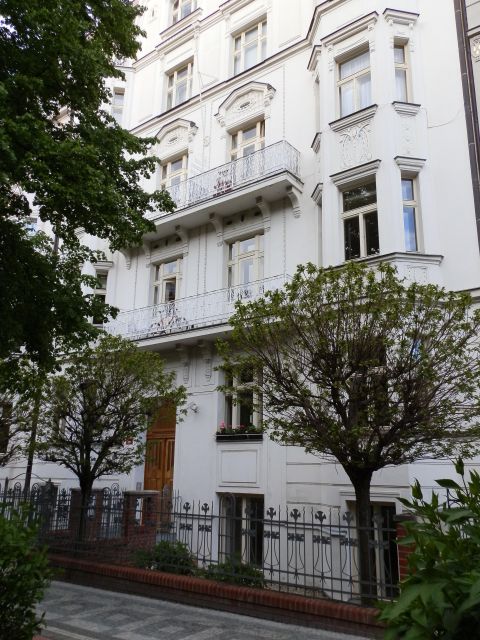
The public transportation section is included in the $84 price, which makes the route easier to manage. You do not need to work out separate tickets while moving between the city center and the Vyšehrad area.
The ride also gives the tour a useful change of pace. The central portion is compact and walkable, while the final section reaches a more remote area below the Vyšehrad fortress. This is where the tour shows its most daring Cubist work.
You should not book this experience expecting every stop to be a long indoor visit. Several viewing points last about five minutes, and the guide’s explanation is what gives them weight. The buildings are the evidence, but the story links them together.
Three Cubist Houses and Kovařovicova Villa
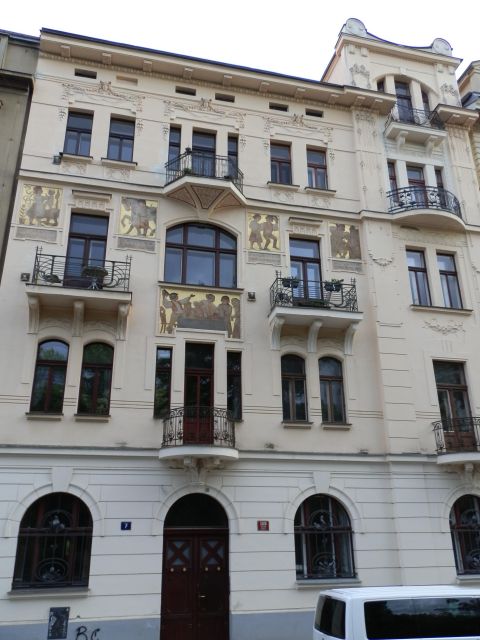
The final neighborhood is the most distinctive part of the route. The Three Cubist Houses offer a concentrated look at Prague’s bold architectural experiments. Their forms are less soft and decorative than Art Nouveau, and they can look almost argumentative beside more familiar historic buildings.
Kovařovicova Villa follows after another short walk. The tour then continues to Cubist House Vyšehrad No. 98. These stops show that Cubism in Prague was not limited to one famous central building. It also appeared in residential architecture, where owners and architects could take greater risks with shape and façade design.
This section rewards patience. The buildings are farther from the usual sightseeing circuit, so you are trading a little convenience for a more unusual view of Prague. You also get a better sense of how a style can change when it moves from a major public building to private homes.
At the end, a tram stop is nearby, making it easy to return toward downtown. The tour does not leave you stranded in an unfamiliar neighborhood, and the included transport tickets cover the ride there and back.
How much walking and time should you expect?
The route includes many short walks of three to five minutes, but they add up. The central portion moves through Prague’s New Town, Wenceslas Square, and nearby streets before the tram section. The final area beneath Vyšehrad adds more walking between the houses.
The practical duration is about 3.5 hours, despite the activity being valid for one day. One person felt the final part could be shortened to around 2.5 or 3 hours. I would take that as useful planning advice, especially if you have a packed schedule or limited energy.
Comfortable shoes are essential. This is not a hop-on, hop-off outing, and the value comes from seeing a series of buildings in sequence. The tour is wheelchair accessible, but the route includes walking and public transportation, so it is sensible to confirm any specific mobility needs when booking.
Children under 12 are not suitable for this activity. Older children or teenagers with an interest in architecture may find the subject engaging, but the tour is clearly aimed at adults and mature students of the city.
Is $84 per person good value?
At $84 per person, this is not the cheapest way to spend a morning in Prague. It is a private tour, though, and that changes the calculation. You are paying for a dedicated guide, a carefully linked route, specialist subject knowledge, and public transportation between areas that would be awkward to connect on your own.
The price makes the most sense for two kinds of visitors. First, it suits people who have already covered Prague’s major landmarks and want a different angle. Second, it works for anyone staying in the city for several days who wants to understand how Prague became a center of modern architectural experimentation.
The value depends on your interest. If you mainly want interiors, long stops, or free time for photographs, the brief viewing periods may feel rushed. If you like asking questions and comparing styles as you walk, the private format is much more useful.
A private group also lets you ask why a building matters, how Art Nouveau differs from Cubism, or how modern architects worked beside older Prague traditions. That conversation is harder to get on a large group tour.
Which guide and language should you choose?
The tour is offered in English or German. Max has guided in both English and polished German, while Eva has been praised for explaining the city’s different architectural styles with care. Guide assignments can vary, so you should not assume a specific person unless the booking confirms it.
The guide is central to the experience. Several stops last only five minutes, so a strong explanation must quickly point out what matters. The best moments are likely to come when you ask questions about a detail that catches your eye.
I would choose this tour only if you enjoy learning while walking. The buildings are the subject, but the conversation gives them meaning. Without that interest, the route can feel like a long list of façades.
Who should book this Prague Art Nouveau and Cubism tour?
I recommend it for repeat visitors, architecture fans, design students, and anyone curious about Prague beyond the castle and Charles Bridge. It is also a good choice if you want a private guide who can connect visual details to politics, culture, and the changes brought by World War I.
It is less suitable if you want a short, easy stroll, a child-friendly activity, or a tour centered on entering many buildings. The final tram ride and outlying Cubist houses are rewarding, but they lengthen the day.
Free cancellation up to 24 hours before the activity and the option to reserve now and pay later make planning easier. The tour is valid for one day, with start times based on availability.
Should you book it?
Book this tour if you want Prague to make more sense as a modern city, not just a preserved medieval one. The route gives you a clear progression from the 1909 station and Art Nouveau decoration to Cubist houses beneath Vyšehrad, with enough historical explanation to connect the pieces.
Skip it if your schedule is tight or you dislike extended walking. For everyone else, the combination of a private guide, unusual buildings, included tram tickets, and a thoughtful Art Nouveau to Cubism story offers strong value at $84, especially after you have seen Prague’s main sights.
FAQ
Where does the tour meet?
The meeting point is in the middle of Platform No. 1 at Prague Main Railway Station. The guide carries a red folder, and the location is near a UniCredit Bank ATM.
What languages are available?
The tour is offered in English and German.
How long does the tour take?
The route takes about 3.5 hours according to the stated schedule, though the activity is valid for one day. One section of the route includes short tram rides.
Is public transportation included?
Yes. Tickets for the public transportation used during the tour, including the tram rides, are included.
Is the tour private?
Yes. It is offered for a private group rather than as a shared group experience.
Is the tour wheelchair accessible?
Yes, the activity is listed as wheelchair accessible.
Are children allowed to join?
The tour is not suitable for children under 12.
What should I bring?
Bring comfortable shoes because the route includes substantial walking between architectural stops.
Just added around Prague
- WWII and Communism History in Prague’s Old Town Private Tour★ 5.0 · 4 reviews
- World War II 4WD Tour from Prague with Lunch★ 4.4 · 3 reviews
- Wroclaw to Prague: 2-in-1 (Private Transfer + Country Tour)★ 5.0 · 4 reviews
- Prague: Historical Walking Tour with Focus on World War 2★ 4.3 · 12 reviews
- Walking tour of Prague in french: Old Town & Charles Bridge★ 4.9 · 62 reviews
- Ultimate Unlimited Beer Pong with Czech Beer★ 4.6 · 5 reviews
- Walking tour of Prague in French : Nové Město★ 4.9 · 16 reviews
- Prague: Modern Private Spa with Jacuzzi and Sauna★ 4.8 · 62 reviews