
Reviewed · WALKING TOURS
Walking Tour in Prague with Local Historian
Prague’s best stories are not all on Old Town Square. This 2.5-hour walk with local historian Ivitsa Manovski starts in New Town, slips through quieter corners of the Old Town, and finishes across Charles Bridge at the John Lennon Wall. Along the way, you get Czech history, modern art, Mozart, Kafka, and a few places most quick city tours skip.
I like the small maximum of 10 people, which makes it easier to ask questions and pause for photos. I also like the route itself: the rotating Franz Kafka head, a secret Renaissance passage, an old Jewish cemetery site, and a Franciscan garden give the walk a more personal feel than a postcard-only tour.
The main consideration is the amount of walking. The route lasts about two and a half hours, includes uneven historic streets, and requires a minimum of two people to operate. It also depends on good weather, so keep some flexibility in your plans.
Key Points Before You Book
- A different route through Prague: New Town and lesser-seen Old Town corners receive as much attention as Charles Bridge.
- Ivitsa Manovski leads the walk: Expect clear explanations, humor, local tips, and plenty of time for questions.
- Small-group setting: The tour allows up to 10 people, rather than placing you in a large crowd.
- Art and history together: You see the rotating Kafka head, an upside-down horse statue, Art Nouveau details, street art, and medieval buildings.
- A strong first-day choice: The walk gives you useful context and recommendations for the rest of your time in Prague.
- The finish is scenic: Charles Bridge provides views toward Prague Castle before the tour ends near the Lennon Wall.
Why This Walk Shows More Than Prague’s Postcard Center
Many first visits to Prague center on the astronomical clock, Old Town Square, Prague Castle, and Charles Bridge. Those places matter, but this route takes a smarter approach. It includes Charles Bridge while giving you time in New Town and side streets that are easy to miss if you follow only the standard circuit.
I like that balance. You still see major names such as St. Wenceslas and Charles IV, but you also hear about student resistance, Mozart’s Prague connections, Jan Hus, Johannes Kepler, Franz Kafka, and the city’s changing art scene.
Ivitsa’s role is important here. This is not simply a walk between monuments. The route depends on explanation, connection, and the ability to answer questions. The supplied details describe him as a historian with a warm manner, clear English, humor, and useful advice about food and things to do after the tour.
That makes the walk especially useful near the start of your stay. You can ask about the parts of Prague that interest you, then use his suggestions to shape the rest of your visit. Several people who took the tour also received follow-up tips by text, though that should be viewed as an added courtesy rather than a guaranteed feature.
More Walking Tours in Prague:
- Prague: 3-Hour Walking Tour of Old Town & Prague Castle
★ 4.7 · 5,696 reviews - Prague: Ghost Walking Tour Where Legends Come To Life
★ 4.4 · 5,253 reviews - Prague: Jewish Quarter Walking Tour with Admission Tickets
★ 4.7 · 3,729 reviews
New Town: St. Wenceslas, Art Nouveau, and a Turning Kafka Head
The tour begins at Václavské náměstí 68, near the National Museum in New Town. This opening section lasts about an hour and sets up Prague through national history, public memory, and art rather than rushing straight toward the Old Town Square.
The National Museum provides the first major backdrop. Ivitsa discusses its history and the student resistance connected with the site. That subject gives the grand building a more human meaning. You are not just looking at a formal museum facade. You are hearing how a public place can become part of the country’s political and social story.
From there, the walk moves to the statue of St. Wenceslas. He is one of the central figures in Czech identity, and the monument anchors the long square. A brief explanation here helps you understand why St. Wenceslas appears so often in Czech public life.
The route then deliberately avoids Old Town Square, where many standard walks spend a large part of their time. That choice is one of the tour’s strongest features. You trade a familiar central view for a route that may feel less predictable and more connected to everyday Prague.
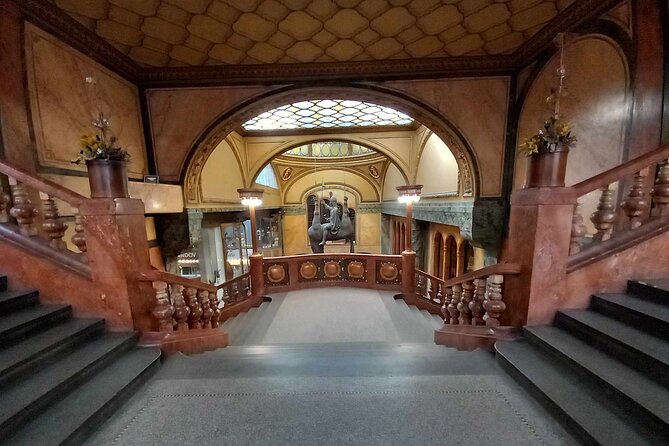
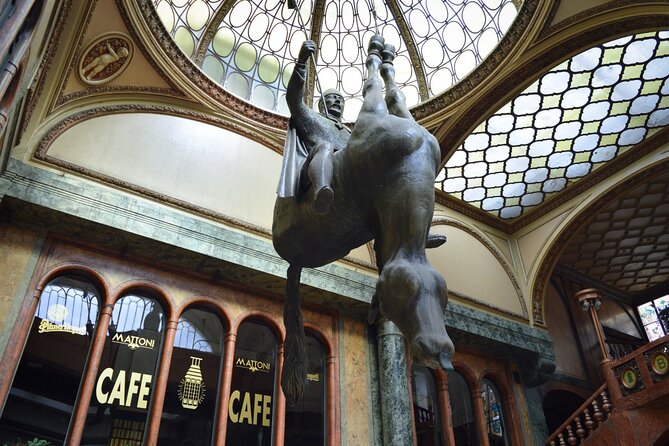
One stop is an Art Nouveau palace with an upside-down horse statue. It is a memorable example of Prague’s fondness for mixing serious history with sly humor. The statue gives you a quick lesson in how modern Czech art can comment on older national symbols.
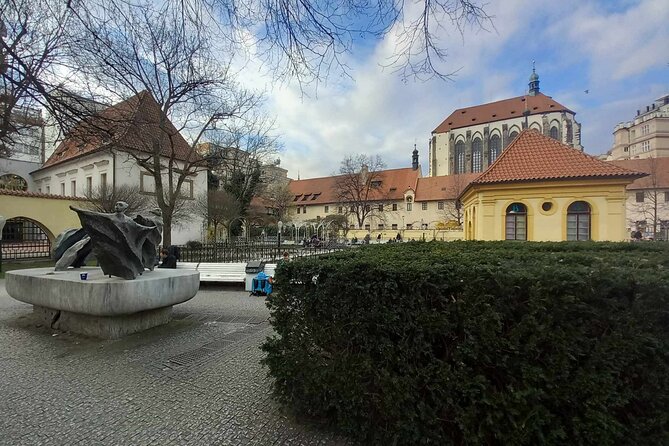
Next comes the Franciscan garden. A quiet garden in the middle of a major capital can change the pace of a walking tour. It offers a calmer setting after the busy streets and gives Ivitsa space to explain the area without competing with a major square.
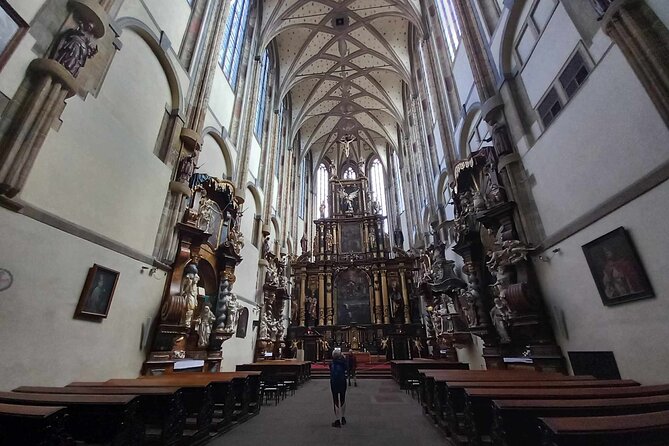
The route also enters a beautiful medieval church. The supplied details do not identify the church by name, so you should treat this as a stop to appreciate in context rather than arrive expecting a particular famous interior. The value is in seeing how religious buildings fit into the city’s older street pattern.
You then pass the site of what was once Prague’s oldest Jewish cemetery. This is an important reminder that the city’s Jewish story reaches beyond the better-known sites associated with the Jewish Quarter. Since this is a historic location rather than a promise of a full museum visit, listen closely to Ivitsa’s explanation and ask questions if this part of Prague interests you.
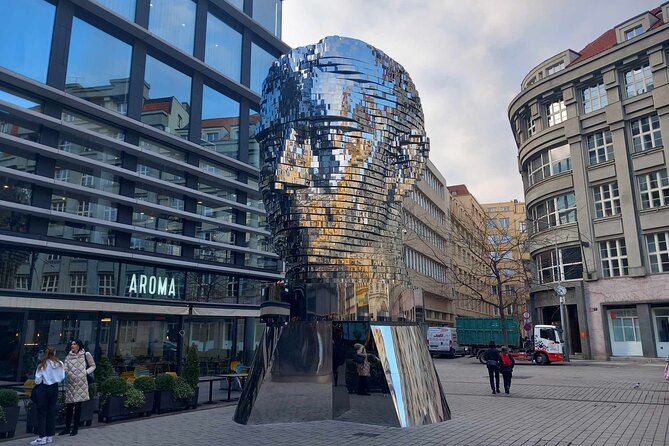
The New Town section finishes with the rotating head of Franz Kafka. The sculpture is one of Prague’s clearest examples of modern public art, and its moving form suits Kafka’s themes of uncertainty and shifting identity. It is also an easy place to pause for photographs.
This first hour is a good fit if you want Prague to make sense as a living city, not just a collection of old buildings. It is less suitable if your only goal is to enter major interiors or spend a long time at the most famous square. Admission is listed as free for the stops, so the price goes toward the guided experience rather than entrance tickets.
Old Town: Mozart, Jan Hus, and a Renaissance Passage
The second section lasts about an hour and moves into Staré Město, Prague’s Old Town. Instead of beginning with the busiest square, the walk starts near where the city’s first defensive walls once stood, beside one of the Old Town’s oldest churches.
That opening gives you a useful sense of Prague’s growth. The city was not built all at once. Walls, churches, residences, palaces, and commercial streets accumulated over time, and the route lets you read those layers on foot.
The walk then reaches the house where Mozart lived and the opera house where he premiered Don Giovanni. This is one of the more distinctive stops because it links Prague to a major composer through a specific local event. It also shows why Prague cannot be understood only through medieval architecture. Music and performance are central to the city’s identity.
Bethlehem Chapel follows, along with discussion of Jan Hus. These names carry weight in Czech religious and national history. The chapel and Jan Hus provide a chance to ask how religious reform, public memory, and Czech identity connect. Ivitsa’s historical background is particularly useful here because the significance is not always obvious from the exterior alone.
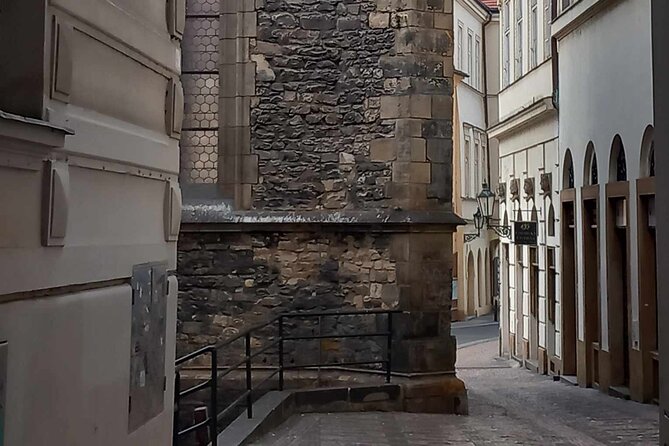
The route then winds through the Old Town’s smaller streets and includes some street art installations. That contrast is part of the appeal. You move from medieval religious history to newer creative work without leaving the same compact city center.
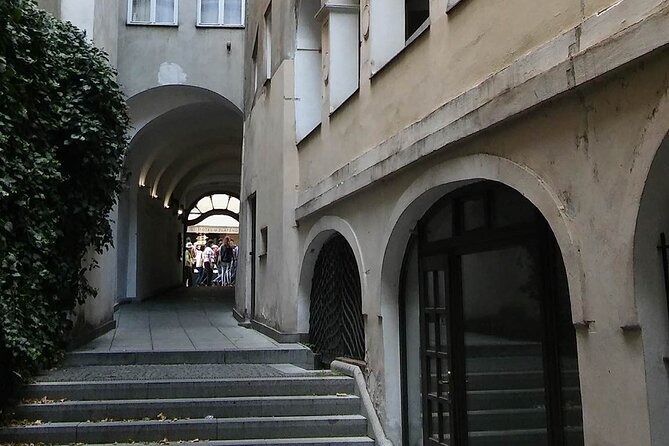
A secret Renaissance passage leads to a Baroque palace. This is the kind of transition that makes a walking tour worthwhile. On your own, you might pass a doorway without noticing what lies beyond it. With Ivitsa guiding the way, the passage becomes part of the story of how Prague’s buildings and streets fit together.
The section also includes the house where Johannes Kepler lived. That stop adds science to the tour’s mix of politics, religion, music, and art. It is another example of how the route avoids reducing Prague to one period or one famous set of monuments.
The Old Town segment rewards curiosity. You should be ready to listen while moving, stop in narrow spaces, and accept that not every point has a grand facade. The payback is a more detailed understanding of the city’s structure and the people who shaped it.
Charles Bridge: Statues, Castle Views, and the Lennon Wall
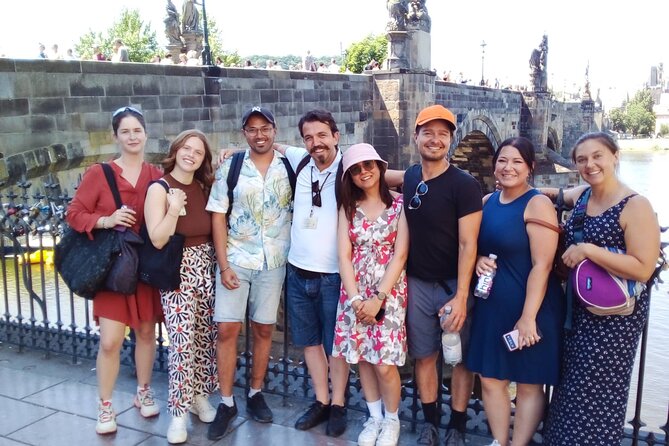
The final 30 minutes focus on Charles Bridge. The group stops first at the statue of King Charles IV, described as the most important Czech figure. That gives the crossing a historical starting point before you step onto the bridge itself.
Charles Bridge is one of Prague’s essential views, and the tour uses it well. As you walk, Ivitsa explains the statues, the bridge’s history, and the panorama toward Prague Castle. You should have several chances to take photographs, but the bridge can be busy, so keep your belongings secure and stay aware of the group.
The bridge is more than a scenic walkway. Its statues and views connect the two sides of the city, and the crossing makes a natural final chapter after New Town and Old Town. By this point, you have moved through political history, art, religion, music, science, and public memory. The bridge ties those subjects to Prague’s physical setting.
The tour ends at the John Lennon Wall in Malá Strana, near Velkopřevorské náměstí. This is a fitting finish because the wall represents a more recent and expressive side of Prague. The ending also leaves you in a useful part of the city for continuing on foot.
The tour does not include a return transfer. That is not a problem for most people who want to keep exploring, but you should plan your next stop from the Lennon Wall rather than assume you will finish back near the National Museum.
A few more Prague half-days worth weighing up
- Prague: 50-Minute Sightseeing Evening Cruise
★ 4.2 · 33,780 reviews - Prague: Medieval Dinner with Unlimited Drinks
★ 4.4 · 19,847 reviews - Prague: Skip-the-line Castle Ticket and Optional AudioGuide
★ 4.3 · 11,121 reviews - Prague: Castle Tour with Local Guide and Entry Ticket
★ 4.6 · 10,422 reviews
How the $25 Price Works in Practice
At $25 per person, this is a reasonable price for a 2.5-hour guided walk, particularly because the route covers three distinct areas and includes a local historian rather than a simple orientation stroll.
There are no paid admission tickets built into the listed stops. That means you are paying for Ivitsa’s time, explanations, route planning, and ability to connect less obvious places. If you prefer museums and interiors with formal entry, this may feel limited. If you want context while walking through the city, the price offers good value.
The small group matters as much as the cost. With a maximum of 10 people, you have a better chance to hear the guide, ask about a building, and request a photo stop without holding up a large crowd. The minimum is two people, so solo bookings depend on another participant joining.
The tour is offered in English and comes with a mobile ticket. It is near public transportation, and most people can take part. Service animals are allowed. Still, plan for sustained walking and historic streets rather than a seated sightseeing experience.
The tour is often booked about 27 days ahead. That suggests you should reserve early if your Prague dates are fixed, especially if you want a particular day near the start of your stay.
Who Will Get the Most From This Prague Walk
I would choose this tour if you want a broad introduction with unusual stops and a guide who welcomes questions. It suits first-time visitors who want help understanding Prague before exploring on their own.
It is also a good match for people interested in several subjects at once:
- Czech political and national history
- Medieval churches and old city defenses
- Mozart and Prague’s musical past
- Jan Hus and religious history
- Franz Kafka and modern sculpture
- Art Nouveau, Baroque, Renaissance, and street art
- Charles Bridge and views toward Prague Castle
Families and mixed-interest groups may appreciate the variety. The route does not focus on one narrow period, and the guide can respond to questions about history, art, food, and later activities.
You may want another option if you dislike walking, need a fully accessible route, or want extended time inside museums and monuments. The information provided says most people can participate, but it does not promise a step-free path or detail every surface along the way.
The weather policy also matters. The experience requires good weather. If poor weather forces cancellation, you are offered another date or a full refund. You can cancel for a full refund up to 24 hours before the start time, but late cancellations and changes are not refunded or accepted.
Should You Book It?
Book this walk if you want to see Prague beyond the usual Old Town Square checklist. The strongest reasons are the small group, Ivitsa’s personal explanations, the less familiar route through New Town and Old Town, and the combination of major views with places you might otherwise walk past.
I would schedule it early in your visit. The route gives you a useful map of Prague’s stories, and the guide’s recommendations can help shape later meals, walks, and sightseeing.
Skip it if you want a relaxed ride, a short monument transfer, or a tour built mainly around ticketed interiors. For an active visitor who values local context, questions, and a route that mixes famous sights with overlooked corners, $25 is a fair price.
FAQ
Where does the tour begin?
The tour begins at Václavské nám. 68, 110 00 Praha 1-Nové Město, Czechia, near the National Museum area.
Where does the tour end?
It ends near the John Lennon Wall at Velkopřevorské náměstí in Malá Strana.
How long does the walking tour last?
The experience lasts approximately 2 hours and 30 minutes.
What language is the tour offered in?
The tour is offered in English.
How many people can join?
The maximum group size is 10 people.
Is there a minimum number of participants?
Yes. At least two people are required for the tour to operate.
What major sights are included?
The route includes the National Museum area, St. Wenceslas statue, Charles Bridge, the statue of Charles IV, and the John Lennon Wall.
What less familiar places are included?
The route includes an Art Nouveau palace with an upside-down horse statue, the Franciscan garden, the site of Prague’s oldest Jewish cemetery, a Renaissance passage, a Baroque palace, and the house where Johannes Kepler lived.
Is the tour suitable for most people?
Most people can participate, and service animals are allowed. You should be prepared for a walking tour lasting about two and a half hours.
Can I cancel for a refund?
Yes. You can cancel at least 24 hours before the local start time for a full refund. Cancellations or changes made less than 24 hours before the start time are not refunded or accepted.
Just added around Prague
- WWII and Communism History in Prague’s Old Town Private Tour★ 5.0 · 4 reviews
- World War II 4WD Tour from Prague with Lunch★ 4.4 · 3 reviews
- Wroclaw to Prague: 2-in-1 (Private Transfer + Country Tour)★ 5.0 · 4 reviews
- Prague: Historical Walking Tour with Focus on World War 2★ 4.3 · 12 reviews
- Walking tour of Prague in french: Old Town & Charles Bridge★ 4.9 · 62 reviews
- Ultimate Unlimited Beer Pong with Czech Beer★ 4.6 · 5 reviews
- Walking tour of Prague in French : Nové Město★ 4.9 · 16 reviews
- Unique salt cave in Prague★ 4.9 · 10 reviews
Walking Tours, compared.
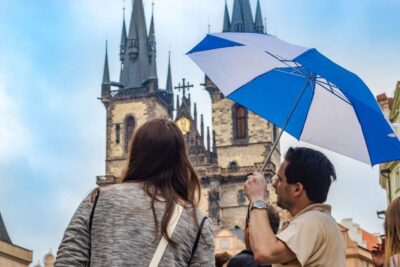
3-Hour Walking Tour of Old Town & Prague Castle
Read our review →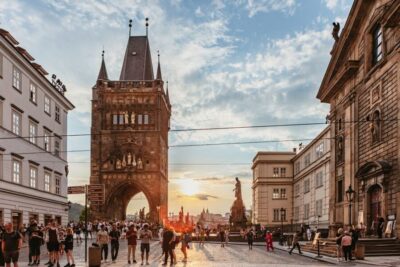
Ghost Walking Tour Where Legends Come To Life
Read our review →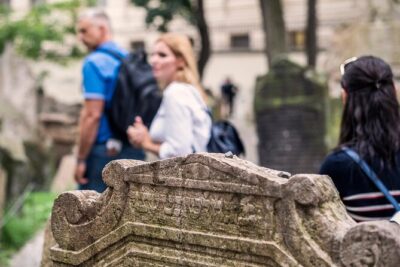
Jewish Quarter Walking Tour with Admission Tickets
Read our review →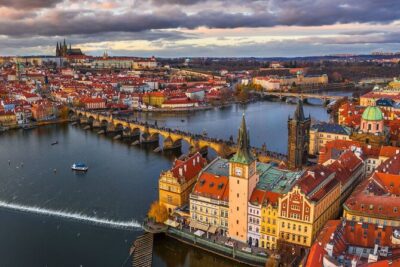
Prague Guided Walking Tour and Cruise with Authentic Czech Lunch
Read our review →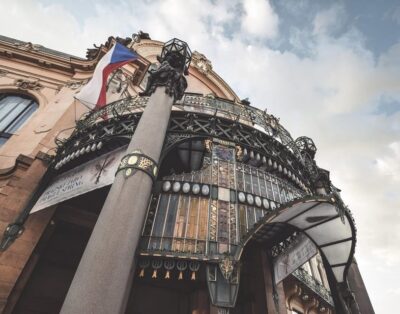
Old Town and Jewish Quarter Guided Walking Tour
Read our review →
Prague Ghost and Legend of Old Town Walking Tour
Read our review →
Prague 3-hour Afternoon Walking Tour including Prague Castle
Read our review →
Ghosts and Legends Nighttime Guided Walking Tour
Read our review →Browse the lists this tour appears in