
Reviewed · HISTORICAL TOURS
The Ultimate Prague History Tour
Prague reveals itself best in layers, and this private tour moves through many of them in one long day. You begin in the nearly empty lanes of Nový Svět, then pass Loreta, Prague Castle, Lesser Town, Kampa, the Vltava, and Old Town. Guide Günther shapes the route around your interests rather than delivering the same speech to every group.
I especially like the effort to avoid the worst crowds and the way architecture is tied to politics, religion, and daily life. I also like the flexible pace, which can include lesser-seen corners, coffee advice, and help with practical problems. The tradeoff is clear: seven hours of mostly walking, hills, cobbles, and several optional admissions make this a serious day out, not a light sightseeing stroll.
Key points to know before booking
- A private, seven-hour route: Only your group takes part, so Günther can adjust the pace and subject matter.
- A smart arrival at Prague Castle: You get off the tram beyond the castle and approach through quiet Nový Svět instead of joining the main crowd.
- History tied to architecture: Gothic design, religious conflict, Czech independence, Art Nouveau, and modern politics all have a place.
- Several optional costs: Entrance to Loreta and Museum Kampa is not included, and any dinner is your responsibility.
- A walking day with hills: You need moderate fitness and comfortable shoes for streets, slopes, and uneven paving.
- Flexible local help: Günther is also known for practical advice on food, coffee, transport, shops, and unexpected problems.
Why this Prague history tour feels different
Many Prague sightseeing walks stay on the standard route between the Castle and Charles Bridge. This one uses those landmarks as a framework, then takes you into quieter streets and less familiar stories.
The day is led by Günther, a multilingual guide associated with KulturCaféPrag. His approach is strongly historical, but not limited to dates and royal names. He connects buildings to religious disputes, national identity, art, diplomacy, and the political pressures that shaped Prague.
That matters because Prague can look like a perfect collection of handsome façades without an explanation of how the city developed. Günther’s aim is to show how medieval villages grew into a city, why important buildings were placed where they are, and how Czech society changed over time.
The route is private, which is a major advantage here. You can ask about architecture, twentieth-century events, restaurants, churches, or something you noticed five minutes ago. If you want more art and less political history, or more Old Town and less museum time, the day can be adjusted.
The experience has earned a 4.9 rating from 29 reviews, with 97 percent of customers recommending it. That is a strong signal, though the enthusiasm also points to the tour’s main strength: it suits people who enjoy a guide with a clear point of view and a lot to say.
More history walks in Prague:
- Prague: Oldtown, Medieval Underground & Dungeon History Tour
★ 4.2 · 8,244 reviews - Prague Old Town, Medieval Underground and Dungeon Historical Tour
★ 4.5 · 3,227 reviews - Prague: Communism History and Nuclear Bunker Guided Tour
★ 4.7 · 2,417 reviews
Nový Svět: the quiet way to Prague Castle
The day begins with a tram ride and a stop beyond Prague Castle. Instead of approaching with the largest wave of visitors, you walk through Nový Svět, or New World, a small quarter known for picturesque lanes and a remarkably calm feel.
This is a clever opening. You get a gentle introduction to Prague before reaching its most famous sight. The narrow streets and modest houses give you a sense of the city as a lived-in place, not only a grand postcard.
Plan on about 30 minutes here. There is no admission charge, and the walk is easy to appreciate even if you have already seen the Castle from a distance. Günther uses the setting to establish the larger story of Prague’s neighborhoods and its relationship to the castle above them.
Loreta and the religious imagination of Prague
Loreta Praha is scheduled for about an hour. The sanctuary has a monastery-like setting, an ornate church, and a treasury. Its appeal is not only visual. It also opens the door to the religious beliefs and legends that influenced Prague’s public life.
The admission fee is not included, so you should allow for that extra cost if you want to enter. The schedule describes the interior as a major part of the stop, but the exact decision to go inside should be clarified when you book.
This is one of the places where a guide adds real value. Without context, a treasury can become a room of glittering objects. With explanation, you can better understand why religious art, relics, ritual, and legend mattered so much in Central European culture.
Prague Castle and the story behind Gothic design
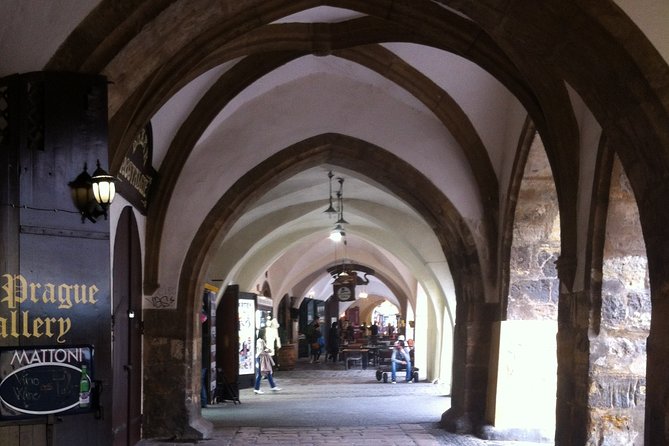
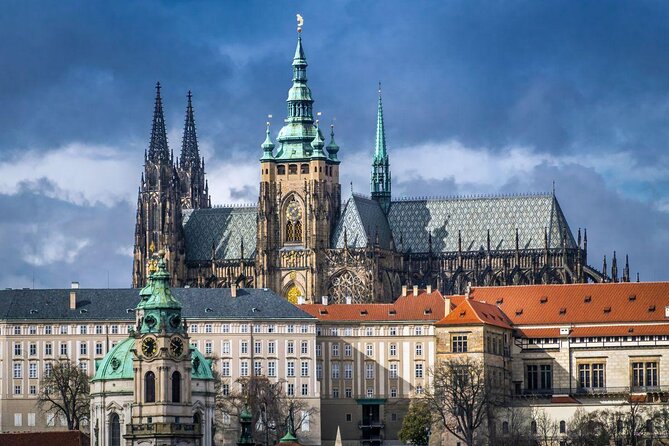
Prague Castle is the day’s largest landmark and usually its busiest. The route allows a decision on the spot about how much time to spend walking through the complex. That flexibility is useful because crowd levels can change, and you may prefer to spend more time in quieter areas.
The main architectural focus is the cathedral. Günther pays special attention to its unusual location and explains both its religious and political purpose. He also gives a detailed account of how Gothic architecture developed.
This is more useful than simply being told that a building is Gothic. You learn to look at the style as a product of new engineering ideas, religious ambition, political power, and competition among rulers and institutions.
The planned visit lasts about 90 minutes. The itinerary marks admission as free, but it does not promise entry to every interior or paid section. Ask what is included on your chosen date so you are not surprised by extra charges.
A few more Prague half-days worth weighing up
- Prague: 50-Minute Sightseeing Evening Cruise
★ 4.2 · 33,780 reviews - Prague: Medieval Dinner with Unlimited Drinks
★ 4.4 · 19,847 reviews - Prague: Skip-the-line Castle Ticket and Optional AudioGuide
★ 4.3 · 11,121 reviews - Prague: Castle Tour with Local Guide and Entry Ticket
★ 4.6 · 10,422 reviews
Nerudova and St. John’s Hill
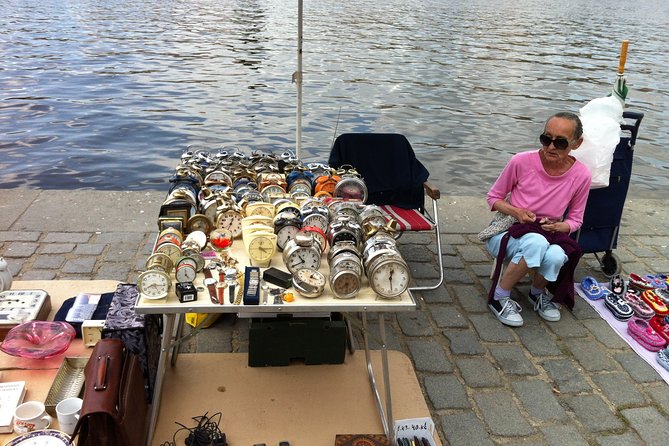
From the Castle area, the route continues toward Nerudova, one of Prague’s most attractive and heavily visited streets. Its façades and slope make it a popular walk, but the tour does not linger only on the obvious route.
Günther turns toward St. John’s Hill, a quieter neighborhood once associated with Italian artists. The story here links art, religion, and politics, giving you a chance to see how immigrant communities and cultural life shaped Lesser Town.
The stop is scheduled for an hour. Some admission may not be included, so confirm whether the planned visit is primarily an outdoor walk or includes an interior. Either way, this section gives the day a welcome change of pace after the Castle’s grand scale.
You should expect hills and uneven streets. Prague is not difficult for anyone with moderate fitness, but this is not a flat route. Wear shoes that can handle cobblestones, and do not save your least comfortable pair for this day.
Lesser Town’s squares, churches, and political stories
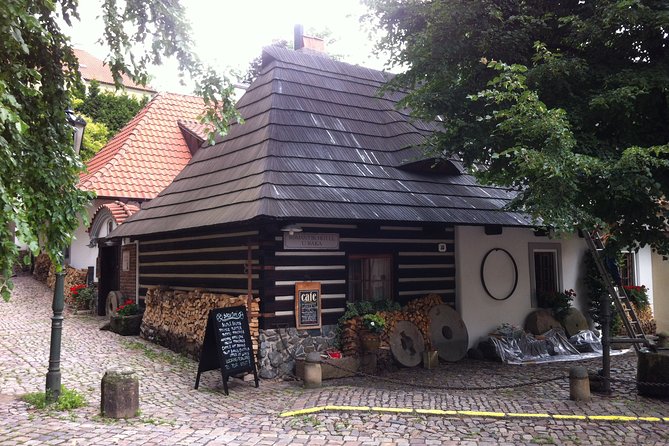
Malostranské náměstí is the central square of Lesser Town. The planned visit lasts about 30 minutes, but the square carries enough history for a much longer discussion.
Here the focus shifts to architecture, religious upheaval, Baroque decoration, and espionage stories connected to the First World War. This mix is typical of the tour. A church is not treated only as an art object, and a square is not treated only as a photo stop.
You may find that the historical connections are more interesting than the buildings themselves. Prague’s religious conflicts affected public spaces, artistic choices, and political loyalties. The square becomes a way to understand how power operated at street level.
Maltese Square, the Lennon Wall, and Kampa Island
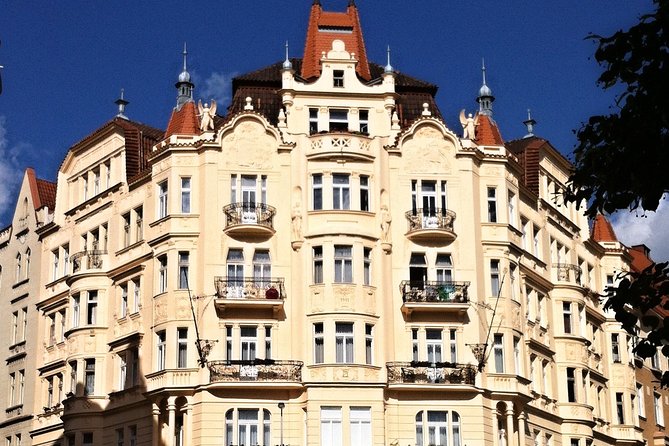
At Maltézské náměstí, the route moves closer to the Vltava. You see the church and embassy of the Knights of Malta, then continue toward the French embassy, the Lennon Wall, and Kampa Island.
The Maltese presence gives this small square an international layer. The route also touches Prague’s modern cultural memory at the Lennon Wall. The description is candid: the wall is now only a sad remnant of what it once was. That honesty is useful. You are not promised a perfect counterculture spectacle.
Kampa Island provides a greener, calmer stretch and several points of interest. This portion of the day helps balance churches, palaces, and political history with open space and contemporary Prague.
Museum Kampa and František Kupka
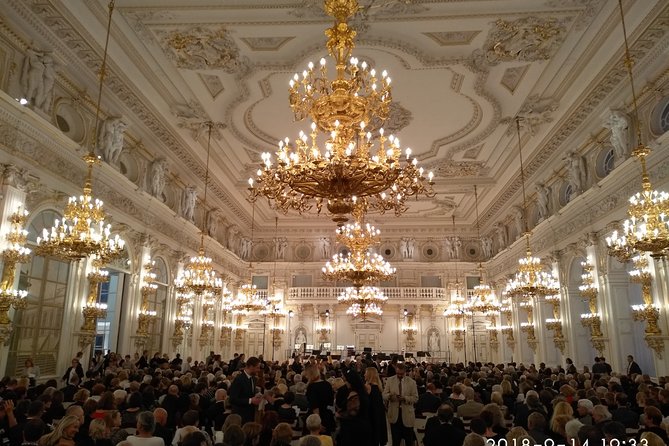
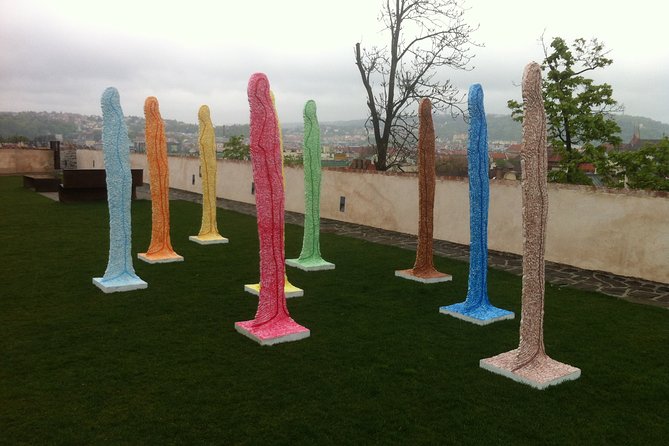
Museum Kampa is a small contemporary art museum in a former mill. It holds the largest collection of works by František Kupka, an important pioneer of abstract painting.
The scheduled visit lasts about 30 minutes, and admission is not included. That short time is enough for an introduction, but not for a slow museum visit if you want to study every room. If modern art is high on your list, tell Günther early so the timing can reflect that interest.
The museum also provides a personal story about the woman who initiated it, a figure connected with Prague’s recent cultural history. That kind of background gives the museum more meaning than a quick stop for photographs.
I like the contrast here. After a morning centered on medieval and religious Prague, you get art that looks forward rather than backward. It also shows that the city’s cultural life did not end with its historic architecture.
Crossing the Vltava on Legions’ Bridge
If Charles Bridge is too crowded, the tour may cross the Vltava on Most Legií, or Legions’ Bridge. This is not simply a backup crossing. It leads toward the National Theatre, which played an important role in the Czech struggle for independence during the nineteenth century.
The stop is scheduled for about 30 minutes. You get a different river view and a chance to discuss the role of culture in national politics.
The National Theatre story is especially fitting for this tour because it shows how architecture can express a political goal. The building was tied to Czech national identity at a time when language, culture, and public institutions carried great political weight.
Do not expect a fixed promise that you will cross this bridge every time. The route depends on crowd conditions and the day’s priorities. That flexibility is one of the benefits of booking a private experience.
Old Town beyond the standard postcard stops
In Staré Město, or Old Town, Günther walks across several areas rather than limiting the visit to one famous square. The plan is adjusted according to what you have already seen, with an emphasis on less familiar sights.
The goal is to explain how medieval settlements became cities and how much of that early structure can still be read in Prague. Streets, blocks, churches, and public spaces become evidence of that growth.
This is where the tour can feel especially useful if you have already visited Prague once. You are less likely to get another basic introduction to the Astronomical Clock and more likely to hear why a particular lane, building, or neighborhood matters.
The Old Town portion is listed at 30 minutes, though the route can change depending on the rest of the day. It may feel brief if you want a full museum or church visit, but the tour is designed to give you a connected citywide story rather than a single-site study.
Municipal House and a possible coffee finish
If there is enough time, the day finishes at Prague’s Municipal House. This Art Nouveau building includes a concert hall, exhibition space, restaurants, and an ornate café.
A coffee here gives Günther a chance to explain the origins of Art Nouveau and how the style reached Prague. It is a pleasant way to end a long walking day, though the coffee or meal is not included.
The stop is listed as about 30 minutes and depends on timing. If you care about seeing the interior, mention it at the start. The building is worth attention even if you do not stay for food, but the itinerary does not guarantee a full interior visit or a reserved table.
What the $216.25 price gives you
At $216.25 per person, this is not a budget group walk. It is a private experience, so the value depends heavily on the size of your party. A couple or family may find the price reasonable for seven hours of personal guiding, while a solo visitor will feel the cost more sharply.
You are paying for time, flexibility, and interpretation rather than a long list of included tickets. Bottled water is provided. Dinner is not, and admissions for Loreta and Museum Kampa are extra. Depending on what you choose at Prague Castle and other stops, you should budget beyond the headline price.
The strongest value comes if you want a connected explanation of Prague, have many questions, or dislike being tied to a large group. It is less compelling if you prefer to move quickly, enter every attraction independently, or spend most of the day on your own.
Günther also offers practical help beyond the formal route. His past service has included finding a pharmacy, helping communicate with staff, assisting with police and embassy procedures, and offering restaurant and shop suggestions. You should not book a tour expecting an emergency service, but this level of personal attention can matter when a trip takes an unexpected turn.
Pace, language, and practical planning
The tour is offered in English, with pickup available within the defined area. It runs daily from 10:00 a.m. to 5:00 p.m. during the stated operating period, June 15, 2020 through February 27, 2027.
Only your group participates. That means you can ask for more time at a church, shorten a stop that does not interest you, or focus on art, politics, architecture, or modern Czech history. One important point is to discuss your interests clearly before the day begins. The route naturally gives strong attention to medieval through eighteenth-century Prague, so visitors most interested in the twentieth century should say so in advance.
The tour requires moderate physical fitness and good weather. Service animals are allowed, and the route stays near public transportation. Comfortable walking shoes are essential.
Free cancellation is available up to 24 hours before the start time. Changes or cancellations inside that window are not accepted for a refund, and poor weather may lead to a different date or a full refund.
Who should book this tour?
I would choose this for a first or second visit to Prague if I wanted the city to make sense, not simply to collect photographs. It is particularly well suited to people who enjoy architecture, religious history, art, national politics, and long conversations with a guide.
Families and small groups may appreciate the private format and the ability to adjust the pace. Solo visitors should weigh the per-person price carefully. Anyone with limited mobility should ask detailed questions before booking, because the day includes hills, cobbles, and extensive walking.
I would be cautious about booking it if you want a short orientation, dislike historical discussion, or hope to spend most of the day inside museums. The itinerary covers a lot of ground, and some stops may be brief.
Should you book the Ultimate Prague History Tour?
Book it if you want Prague explained through its streets, churches, bridges, galleries, and political struggles, and if you value a private guide who can adapt the day. The Nový Svět arrival, quieter Lesser Town detours, Gothic architecture lesson, and flexible bridge crossing make the route more thoughtful than a standard Castle-to-Old-Town walk.
Before paying, tell Günther what period interests you most, ask which interiors will be entered, and set aside money for Loreta, Museum Kampa, coffee, and food. With comfortable shoes and realistic expectations about the walking, this is a strong choice for an intellectually curious visitor who wants one long, connected day in Prague.
FAQ
How long does the Ultimate Prague History Tour last?
The tour lasts approximately seven hours, generally operating from 10:00 a.m. to 5:00 p.m.
Is this a private tour?
Yes. Only your group participates, so the guide can adjust the route and pace to your interests.
Is pickup available?
Yes. Personal pickup is offered anywhere within the defined pickup area.
What language is the tour offered in?
The experience is offered in English.
Are attraction admissions included?
Not all admissions are included. Loreta and Museum Kampa list admission as not included. Prague Castle is described as a flexible stop, so you should confirm which areas you will enter and whether any charges apply.
Is food included?
Bottled water is included. Dinner, coffee, and other food are not included.
How physically demanding is the tour?
You should have a moderate level of physical fitness. The day includes extensive walking, hills, and cobbled streets.
Can service animals join the tour?
Yes. Service animals are allowed.
What happens if the weather is poor?
The experience requires good weather. If it is canceled because of poor weather, you will be offered another date or a full refund.
Just added around Prague
- WWII and Communism History in Prague’s Old Town Private Tour★ 5.0 · 4 reviews
- World War II 4WD Tour from Prague with Lunch★ 4.4 · 3 reviews
- Wroclaw to Prague: 2-in-1 (Private Transfer + Country Tour)★ 5.0 · 4 reviews
- Prague: Historical Walking Tour with Focus on World War 2★ 4.3 · 12 reviews
- Walking tour of Prague in french: Old Town & Charles Bridge★ 4.9 · 62 reviews
- Ultimate Unlimited Beer Pong with Czech Beer★ 4.6 · 5 reviews
- Walking tour of Prague in French : Nové Město★ 4.9 · 16 reviews
- Prague: Modern Private Spa with Jacuzzi and Sauna★ 4.8 · 62 reviews
Historical Tours, compared.
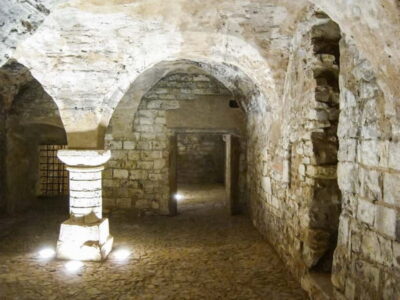
Oldtown, Medieval Underground & Dungeon History Tour
Read our review →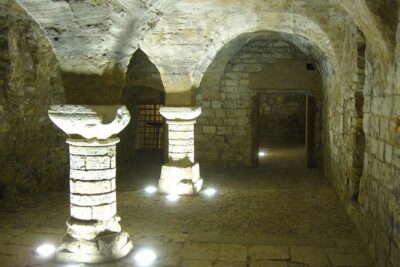
Prague Old Town, Medieval Underground and Dungeon Historical Tour
Read our review →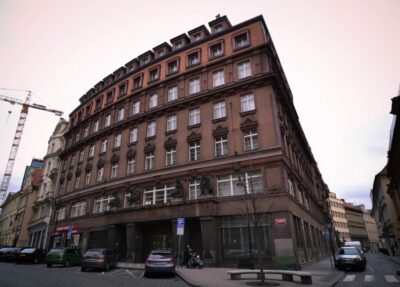
Communism History and Nuclear Bunker Guided Tour
Read our review →
Historic City Center Bus Tour with Top Sights
Read our review →
Prague Historic Pub Tour with Drinks Included
Read our review →
Hop-on Hop-Off Historical Tram Ticket for Line 42
Read our review →
Browse the lists this tour appears in