Reviewed · TOURS
Prague Through the Eyes of Franz Kafka 2.5-Hour Tour
Kafka’s Prague is not a collection of grand monuments with neat labels. It is a city of family apartments, school routes, cafés, synagogues, salons, and old neighborhoods that helped shape one of modern literature’s strangest voices. This 2.5-hour walking tour connects those places to Kafka’s life, work, and uneasy relationship with Prague.
I like the way the tour puts Josefov and Old Town at the center, rather than treating Kafka as an isolated literary figure. I also like the included café stop, which gives you time to rest, talk through the stories, and consider Kafka’s writing away from the pavement. The main drawback is that much of the experience is viewed from outside, so you should come for the guide’s interpretation rather than a long list of indoor attractions.
Key points at a glance
- Kafka’s family world: Walk near apartments connected with Kafka’s family and places tied to his childhood and adult life.
- Prague beyond the author: Learn how the city’s Jewish community, politics, languages, and social divisions shaped Kafka’s world.
- Old Town and Josefov on foot: The tour covers two central districts with a clear connection to Kafka’s education, relationships, and writing.
- A café pause included: Coffee or tea is part of the experience, with the stop sometimes connected to a traditional or Cubist café.
- Strong guide-led storytelling: Guides including Peter, Martina, and Argel have been praised for linking Kafka’s work with Prague’s wider past.
- Good value at $40: For 150 minutes of guiding and a drink, the price is fair, especially if Kafka is a major reason for your visit.
Why Kafka makes a good guide to Prague
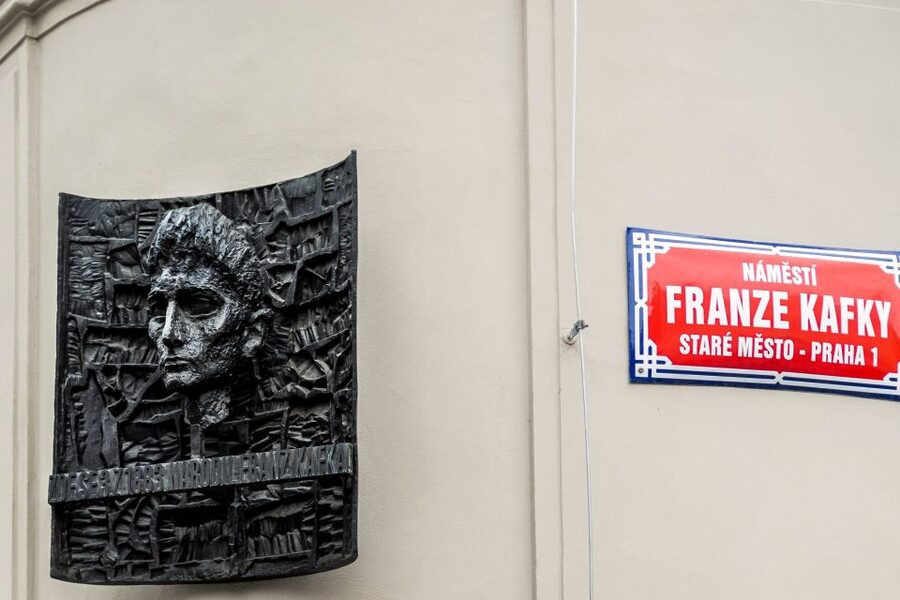
Franz Kafka is often presented as a solitary figure, sealed inside the strange worlds of The Metamorphosis, The Trial, and The Castle. This tour gives you a more grounded picture. Kafka was a Prague resident, a son, a student, a worker, a friend, and a man negotiating several identities in a city shaped by German, Czech, and Jewish cultures.
That setting matters. Kafka spent much of his life in and around Josefov, Prague’s former Jewish Quarter, and wrote many of his works in the city. His relationship with Prague was not simple or sentimental. The tour uses that tension to explain how the city’s streets, institutions, families, and social pressures entered his imagination.
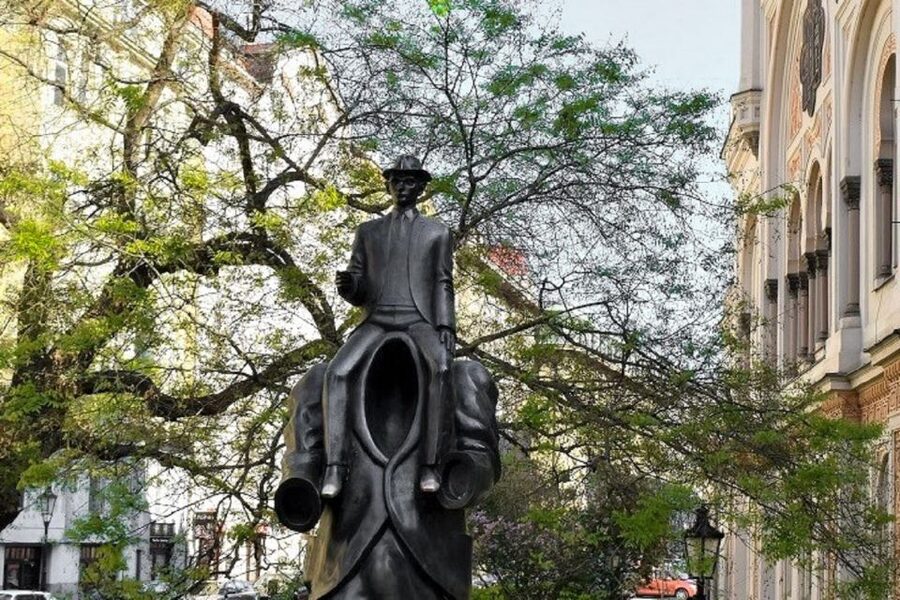
I find this approach more useful than simply pointing at a statue and repeating a few famous facts. You begin to see Kafka as someone formed by a particular place and period. The literary discussion is tied to actual streets, schools, residences, cafés, and meeting places.
You do not need to have read all of Kafka before booking. The tour can work as an introduction, since the guide explains the major books and the man behind them. If you already know his work, you will get more from the connections between his life and the city around him.
A few more Prague half-days worth weighing up
- Prague: 50-Minute Sightseeing Evening Cruise
★ 4.2 · 33,780 reviews - Prague: Medieval Dinner with Unlimited Drinks
★ 4.4 · 19,847 reviews - Prague: Skip-the-line Castle Ticket and Optional AudioGuide
★ 4.3 · 11,121 reviews
Starting at Maiselova 5 in Old Town
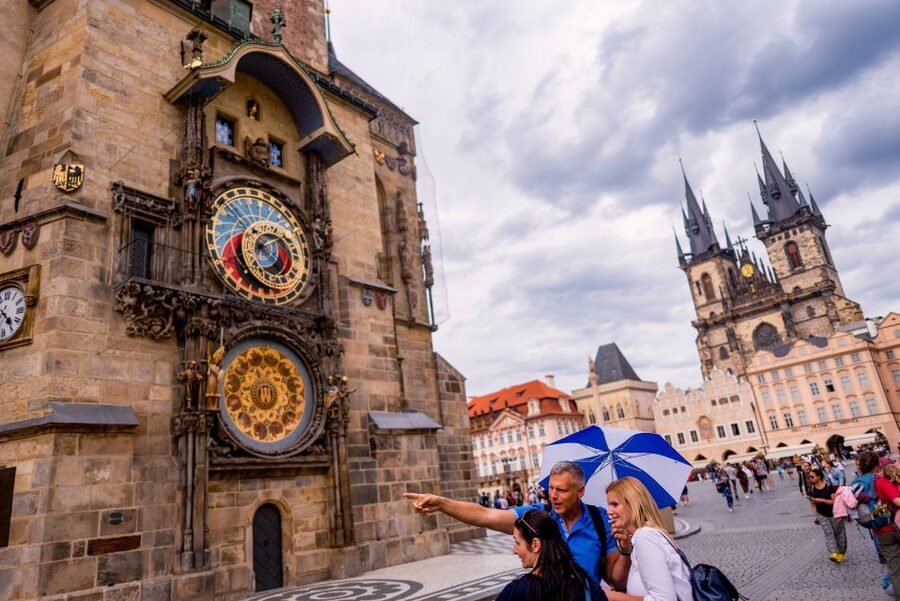
The meeting point is the Get Prague Guide office at Maiselova 5, near Old Town Square. From there, the tour begins on foot, so wear shoes that can handle about two and a half hours of city walking. The tour operates in all weather, which makes a rain jacket or warm layer a sensible part of your Prague packing list.
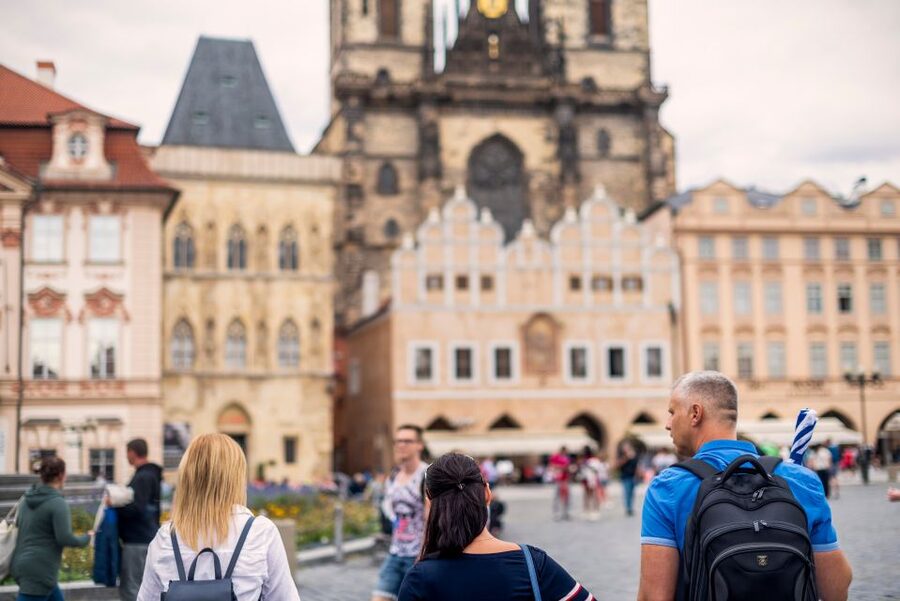
The opening section takes place in Old Town and lasts about an hour. The guide introduces Kafka’s Prague through the streets where his family lived, where he went to school, and where he studied at university. You will also walk near the house where he met his fiancée, Felice Bauer.
These details give the first hour a personal shape. Kafka is not just a name attached to a literary museum. You follow the routes of his family and education, then connect those everyday places with the pressures and interests that appear in his writing.
The tour does not promise entry into every building connected with Kafka. That is important to understand before you book. You will generally be looking at locations from the street and listening to the guide explain what happened there. For many people, that is enough. The value is in the links between the places, not in the buildings alone.
Old Town through Kafka’s family and education
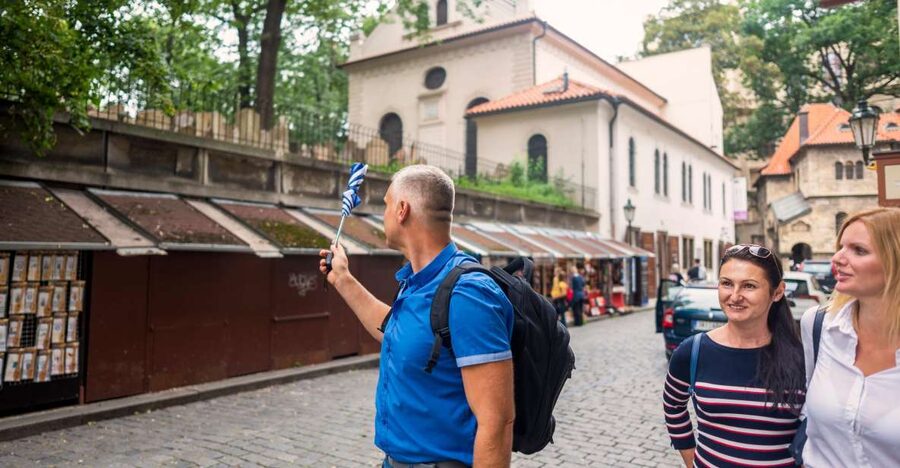
The Old Town portion is especially useful if you want a first orientation to Prague. Several people who booked the tour also appreciated the broader explanation of the city, including its politics, society, architecture, and economic background. The Kafka material becomes a doorway into Prague itself.
The guide discusses apartments connected with Kafka’s family and places related to his schooling and university years. These stops help explain the difference between a literary biography and a tourist checklist. You are not only hearing where Kafka lived. You are hearing how family expectations, education, language, and the city’s social divisions affected him.
Guide style matters here. Peter has been praised for adding historical context beyond Kafka, while Martina has been described as telling the story without piling on too many facts. Argel has been singled out for his detailed grasp of Kafka’s letters, novels, fragments, family life, romances, and difficulties. The particular guide assigned to your group can vary, but the experience depends heavily on this personal storytelling.
One useful feature is the chance to ask questions. The guides are expected to handle Kafka’s work as well as Prague’s history, and past tour descriptions point to detailed answers about both. If you want to discuss a difficult passage from The Trial or ask how Kafka fit into Prague’s German-speaking Jewish community, this is the kind of tour where those questions have a place.
Josefov and the city’s Jewish past
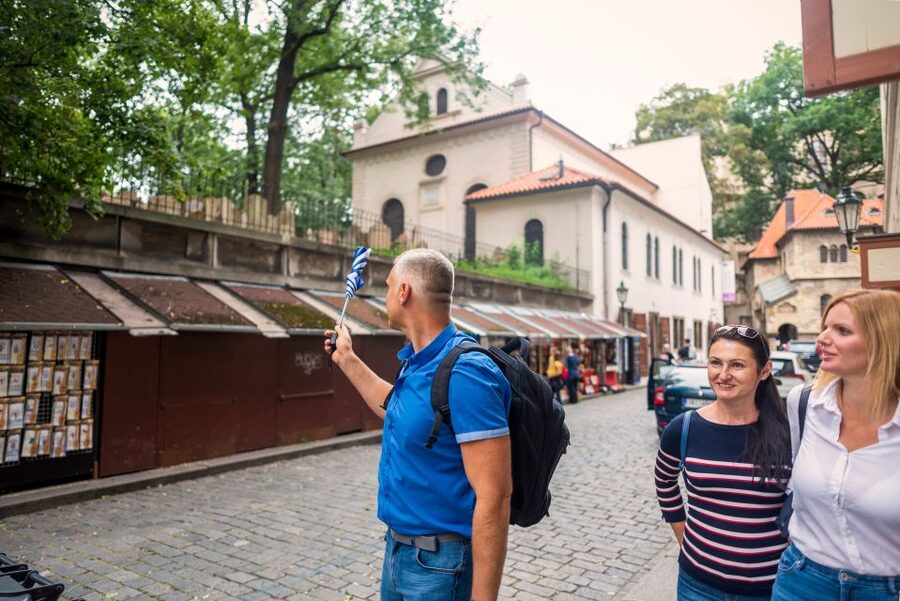
The second main section moves into Josefov, the former Jewish Ghetto. This is where the tour’s cultural setting becomes especially important. The guide discusses the fate of Prague’s Jewish community and explains the wider multicultural history of the city.
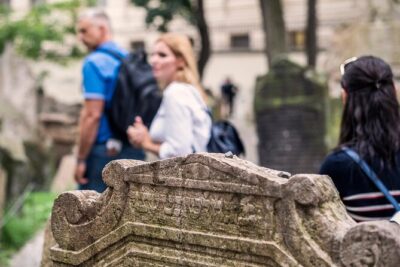
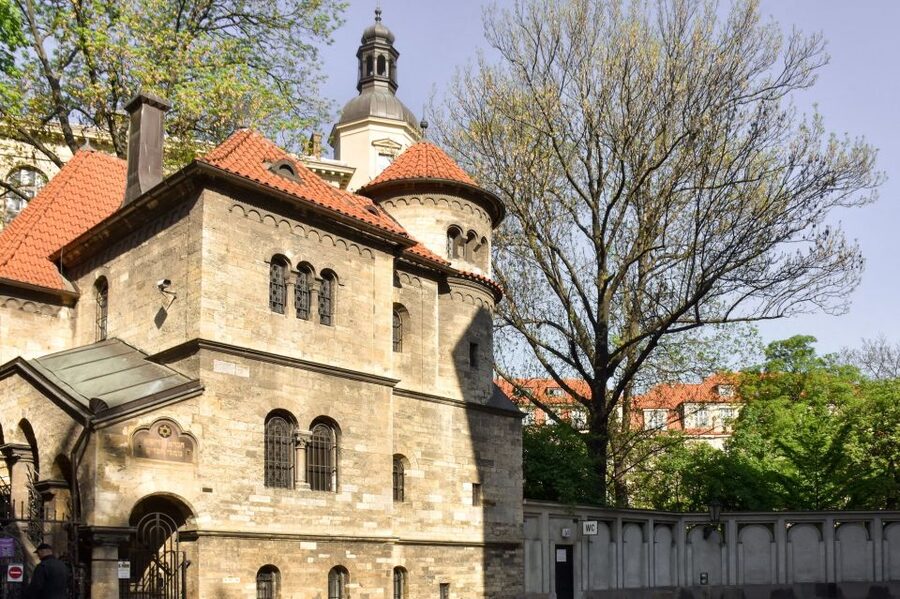
You will pass near synagogues, salons, and other places connected with Kafka’s world. The stops are not presented only as literary scenery. They help show the community and institutions surrounding Kafka during a period of major social and political change.
I value this part because it keeps Kafka from being reduced to a gloomy genius in a black coat. His writing came from a real city with competing languages, communities, loyalties, and pressures. Learning about that city makes his sense of bureaucracy, alienation, family duty, and uncertain belonging easier to place.
The Josefov section also gives you a better understanding of why a Kafka tour can appeal to someone who is not a committed Kafka reader. You are learning about Prague’s Jewish history and the city’s changing identity at the same time. One past participant even described the tour as a way to understand Prague as a real city rather than only a beautiful sightseeing stop.
A practical note: Josefov contains several major museums and synagogues, but admission tickets are not included in this tour. If you want to enter those sites, plan a separate visit and budget for their tickets. This walking experience is about Kafka-related places and the guide’s explanations, not a substitute for the Jewish Museum complex.
A completely different way to spend a day in the same part of the country:
- Prague: Castle Tour with Local Guide and Entry Ticket
★ 4.6 · 10,422 reviews - Prague Castle 2.5-Hour Tour Including Admission Ticket
★ 4.7 · 8,927 reviews - Prague: Oldtown, Medieval Underground & Dungeon History Tour
★ 4.2 · 8,244 reviews - Prague: Vltava River Night Cruise with Buffet
★ 4.3 · 7,338 reviews
The Kafka family, Felice Bauer, and literary inspiration
Kafka’s personal relationships give the walk an emotional thread. You will hear about his family apartments and walk near the place where he met Felice Bauer, his fiancée. The guide also discusses Kafka’s difficult relationships, which helps explain the tension between his private life and his writing.
The tour includes places connected with his education and the salons and synagogues that shaped his thoughts about society, faith, identity, and art. Some of these sites may look ordinary today. That is part of the point. Kafka’s imagination grew from streets and rooms that did not announce their importance.
You should not expect a dramatic physical reconstruction of Kafka’s life. The buildings and streets do not automatically explain themselves. The guide supplies the connection, and that means the quality of the storytelling is central. A strong guide can make a plain façade meaningful. Without that explanation, the same stop could feel like a standard city walk.
The most praised guides have been described as passionate, friendly, and able to hold attention with anecdotes and humor. One guide even used a short Kafka text during the café break. That kind of reading is not listed as a guaranteed part of every departure, so treat it as a possible bonus rather than a promise.
Coffee, tea, and a thoughtful pause
After the walking sections, the tour stops at a local café for coffee or tea, included in the price. The break lasts about 30 minutes and gives you a chance to sit down, ask follow-up questions, and let the city walk settle.
This is a small feature, but it improves the rhythm of the tour. Two and a half hours on Prague’s streets can feel long if every minute is spent standing. A café pause turns the final part into a conversation rather than another rapid succession of facts.
The café itself adds local atmosphere. Past descriptions identify the stop as a traditional and famous coffee house, and one account refers to a Cubist café. The exact location may depend on the guide or departure, so I would not book this expecting one particular interior. You should expect a local café setting and an included hot drink.
For me, this is also where Kafka’s relationship with cafés becomes more tangible. Prague’s cafés were important places for conversation, reading, and literary life. Sitting with a coffee while discussing a short text or a point from Kafka’s biography fits the subject better than rushing straight back to the starting office.
What the $40 price really buys you
At $40 per person, this tour is fairly priced for 150 minutes with a live licensed guide and coffee or tea. You are paying for a focused literary walk, not for admission to museums or historic interiors. That distinction makes the value easier to judge.
The price works well if you would otherwise spend time trying to locate Kafka-related addresses and piece together his biography from guidebooks. A good guide saves you that effort and adds context that is difficult to get from plaques or a self-guided map.
The tour is less useful if you want a long list of indoor sights included in one ticket. Admission is not included, and the experience is mainly outdoors. You might prefer a museum visit if your priority is manuscripts, photographs, or original objects. This tour gives you place, context, and conversation instead.
The reserve-now-and-pay-later option is helpful if your Prague schedule is still changing. You can cancel up to 24 hours in advance for a full refund. Starting times vary, so check the available departure before planning another attraction immediately afterward.
Which guide style may suit you best
The company uses English and German-speaking guides. Names that have received particularly strong praise include Peter, Martina, and Argel, although your guide is assigned according to the departure you choose.
Peter has been praised for his command of Prague’s history beyond Kafka and for keeping teenagers engaged. Martina has been described as clear, warm, and good at telling Kafka’s story without overloading the group. Argel has been noted for detailed knowledge of Kafka’s life, family, letters, novels, fragments, and relationships.
These descriptions suggest a tour that can adjust to different audiences. A literature student can ask about texts and biography. A first-time visitor can focus on Prague’s social and religious history. Families with older children or teenagers may find the storytelling more approachable than a formal lecture.
Still, this is a guide-led walking experience, so your enjoyment will depend partly on how much you like listening and asking questions. If you want a fast, highly visual sightseeing tour, the pace may feel slow. If you enjoy ideas, stories, and place-based history, the format should suit you.
Practical advice before you go
Plan for outdoor conditions. The tour runs in rain, cold, and other weather, so dress for the forecast and bring comfortable walking shoes. The café stop provides a rest, but it does not turn the experience into a mostly seated activity.
Arrive at the Get Prague Guide office on Maiselova 5, Prague 1. Because the tour begins and ends there, you can use it as a convenient Old Town activity early in your stay. Several past accounts found it useful as an introduction to Prague, since it combines city orientation with Kafka’s biography.
You should also decide how much Kafka preparation you want. Reading one short story, a few pages of The Metamorphosis, or a short biography beforehand will give the stops more meaning. But you can also arrive with little background and still follow the main story.
If you plan to visit Prague’s Jewish Museum, do not assume this tour covers its interiors or admission. Treat the Kafka walk as a companion to those sites, not as a replacement.
Should you book the Kafka tour?
Book it if you want to understand Kafka as a Prague writer, not just visit a statue or buy a museum ticket. The strongest part is the connection between his family life, education, relationships, writing, and the Jewish and multicultural history of the city.
It is also a good choice if you are traveling with someone who is not a Kafka expert. The guides bring in enough Prague history to keep the walk useful beyond literature, and the café break makes the two and a half hours feel more relaxed.
Skip it if you want a major indoor attraction, original manuscripts, or guaranteed entry to historic buildings. But for $40, a live guide, a drink, and a focused route through Old Town and Josefov, this is a thoughtful way to see Prague through one of its most complicated writers.
FAQ
How long does the Kafka tour last?
The tour lasts 150 minutes, or two and a half hours. The planned route includes about one hour in Old Town, about one hour in Josefov, and about 30 minutes at a local café.
Where does the tour meet?
Meet at the Get Prague Guide office at Maiselova 5, 110 00 Prague 1, near Old Town Square. The tour also returns to this office.
Which languages are available?
The tour is offered in English and German with a live licensed guide.
Is coffee or tea included?
Yes. Coffee or tea at the local café is included in the tour price.
Are admission tickets included?
No. Admission tickets are not included. The experience focuses on walking near Kafka-related places and hearing the guide’s explanations.
Can I cancel the booking?
You can cancel up to 24 hours in advance for a full refund. The reserve-now-and-pay-later option lets you hold a place without paying immediately.
Just added around Prague
- WWII and Communism History in Prague’s Old Town Private Tour★ 5.0 · 4 reviews
- World War II 4WD Tour from Prague with Lunch★ 4.4 · 3 reviews
- Wroclaw to Prague: 2-in-1 (Private Transfer + Country Tour)★ 5.0 · 4 reviews
- Prague: Historical Walking Tour with Focus on World War 2★ 4.3 · 12 reviews
- Walking tour of Prague in french: Old Town & Charles Bridge★ 4.9 · 62 reviews
- Ultimate Unlimited Beer Pong with Czech Beer★ 4.6 · 5 reviews
- Walking tour of Prague in French : Nové Město★ 4.9 · 16 reviews
- Prague: Modern Private Spa with Jacuzzi and Sauna★ 4.8 · 62 reviews
Tours, compared.
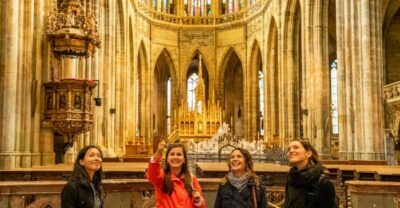
Castle Tour with Local Guide and Entry Ticket
Read our review →
Prague Castle 2.5-Hour Tour Including Admission Ticket
Read our review →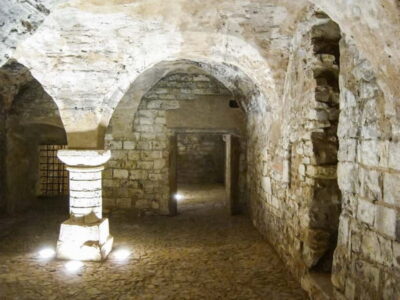
Oldtown, Medieval Underground & Dungeon History Tour
Read our review →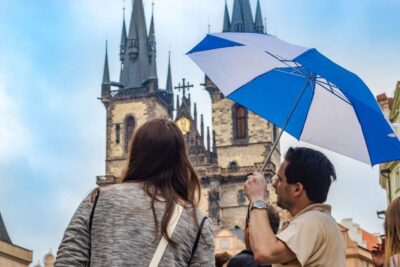
3-Hour Walking Tour of Old Town & Prague Castle
Read our review →
Ghost Walking Tour Where Legends Come To Life
Read our review →
Ghosts, Legends, Medieval Underground & Dungeon Tour
Read our review →
Klementinum Library & Astronomical Tower Guided Tour
Read our review →