
Reviewed · OLD TOWN TOURS
Prague: Plague Doctor Old Town History Walking Tour
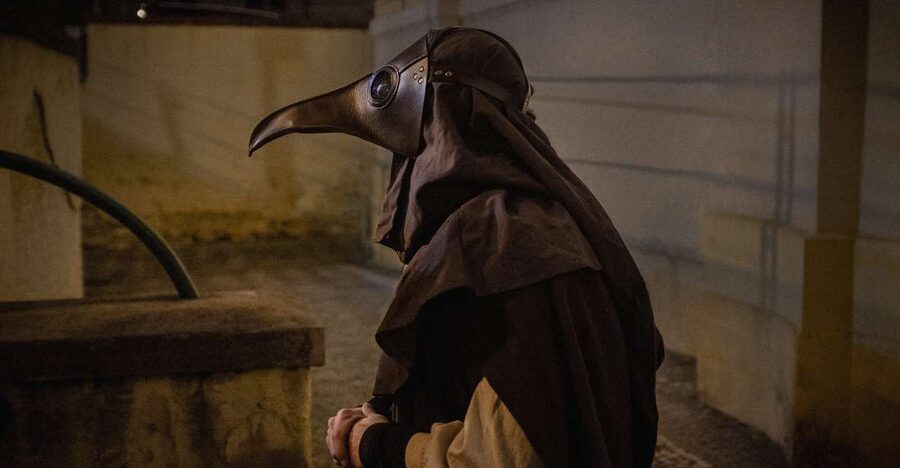
The most striking part of this Prague walk is the guide himself: a licensed plague doctor dressed in clothing based on the year 1713. You follow him through Old Town as he explains disease, fear, medicine, faith, and daily survival. I like the way the costume gives the subject a clear visual hook, and I like that the walk reaches places many first-time visitors pass without understanding, including Na Františku Hospital and the Convent of St Agnes.
The tone is theatrical but not just silly. Guides such as David, Thomas, Óscar, and Tomaš use humor, questions, pictures, and hands-on details to keep the group involved. The main consideration is the theme: this is a tour about death and illness, so it may not suit very young children or anyone wanting a light sightseeing stroll. It also runs rain or shine, and a hot summer evening can make the full costume less comfortable.
Key points to know before you book
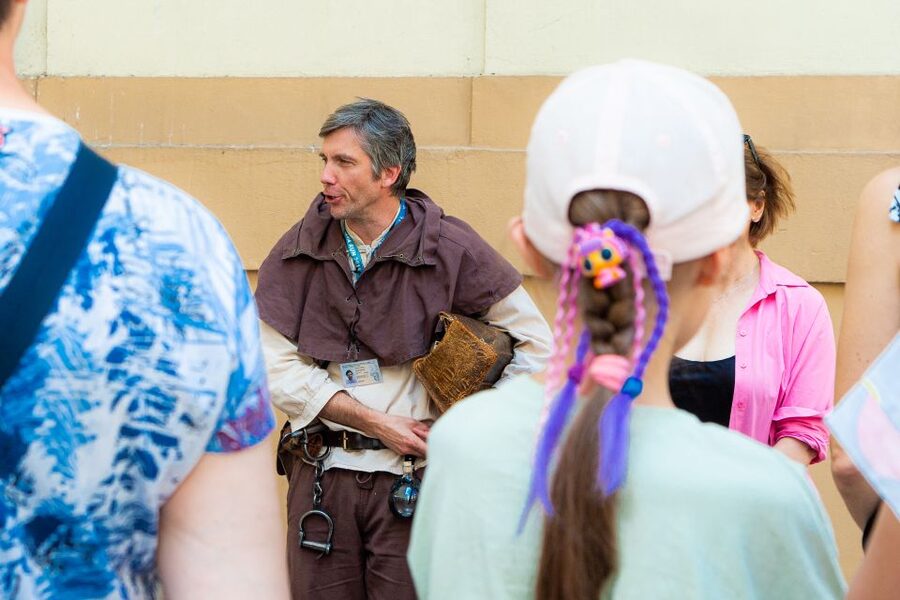
- A plague doctor leads the walk: Your guide wears period-style clothing and stays in character while explaining the medical beliefs and protective gear of the time.
- The route links major sights with quieter corners: You see the Clementinum, Old Town Square, Josefov, the Kafka Monument, Na Františku Hospital, and St Agnes Convent.
- A. Schamsky gets his due: The tour introduces this largely forgotten 18th-century figure and his role in Prague during the plague of 1713.
- It is theatrical, but still historical: Expect storytelling, questions, visual aids, sensory details, and an anti-plague pill in the form of candy.
- Ninety minutes is a useful length: You get a focused evening activity without giving up half a day of sightseeing.
- The best fit is curious history fans: It suits adults, older children, and anyone who wants Prague explained through an unusual theme.
Why this plague walk works in Prague
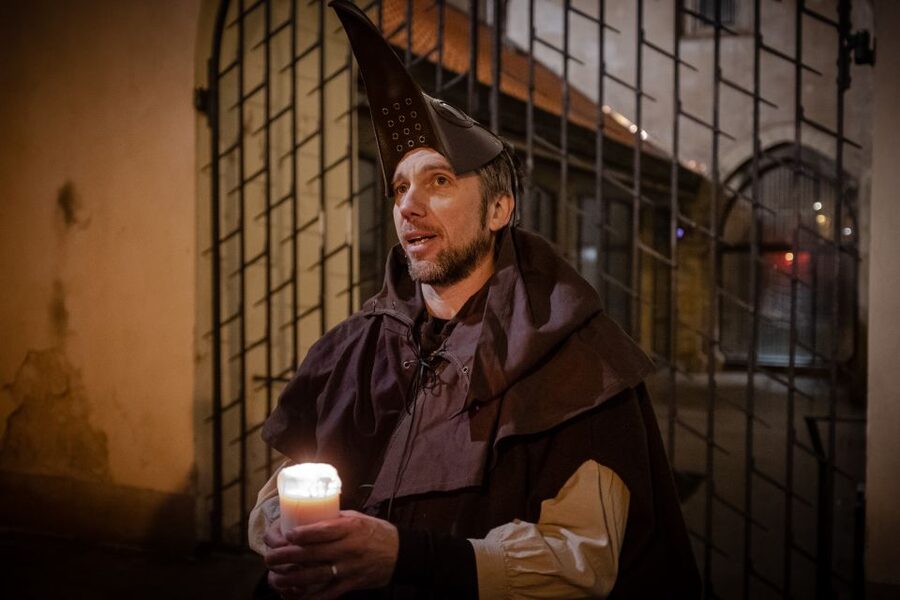
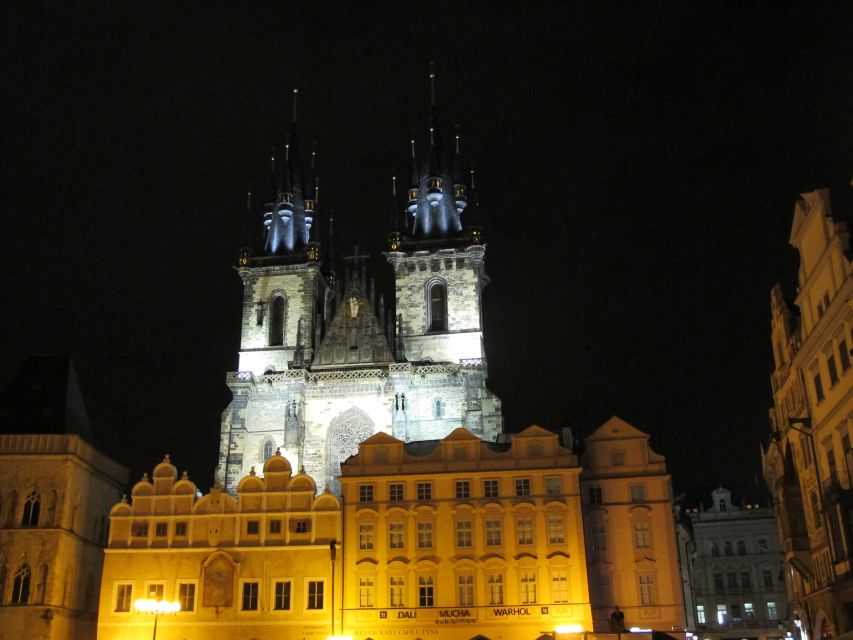
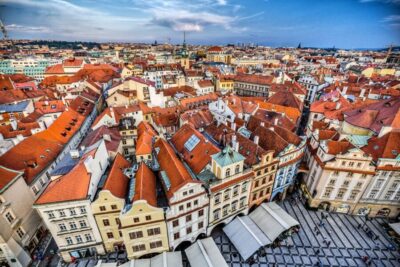
Prague’s Old Town can feel like a polished outdoor museum if you only move from the astronomical clock to Charles Bridge and take photographs. This walk changes the focus. Instead of treating the streets as a backdrop, it asks you to think about what these same streets meant when illness could empty a neighborhood, medical treatment was limited, and religious belief shaped public life.
The plague doctor character helps organize a difficult subject. You are not simply handed a list of dates and symptoms. You follow a figure who represents the medical world of the period, then stop at locations connected with care, faith, public memory, and urban life.
I also like the balance between famous sights and lesser-seen places. Old Town Square gives you a familiar Prague setting, while the stops around Na Františku and St Agnes offer a quieter side of the center. You get sightseeing value without pretending this is a standard city highlights tour.
The guides are central to the experience. David is often praised for using pictures, objects, questions, and sensory details. Thomas is noted for comic timing and for bringing people into the group by learning names. Óscar is known for an energetic, funny presentation, while Tomaš has been praised for involving everyone and offering local restaurant and bar suggestions.
That range matters because the subject could easily become grim or dry. The strongest guides keep the jokes connected to the history and treat the victims and the fear of the period with care.
More Old Town walks in Prague:
- Prague: Old Town Hall Tower Entry Ticket
★ 4.5 · 6,749 reviews - Prague: 3-Hour Walking Tour of Old Town & Prague Castle
★ 4.7 · 5,696 reviews - Prague: 3-Hour Old Town and Prague Castle Tour in German
★ 4.8 · 5,671 reviews
Starting at Seminářská and meeting your doctor
The meeting point is at Seminářská 175/2 in Staré Město, Prague 1. Look for the guide in plague doctor clothing. Since this is a central Old Town departure, give yourself enough time to find the starting point without rushing through the narrow streets.
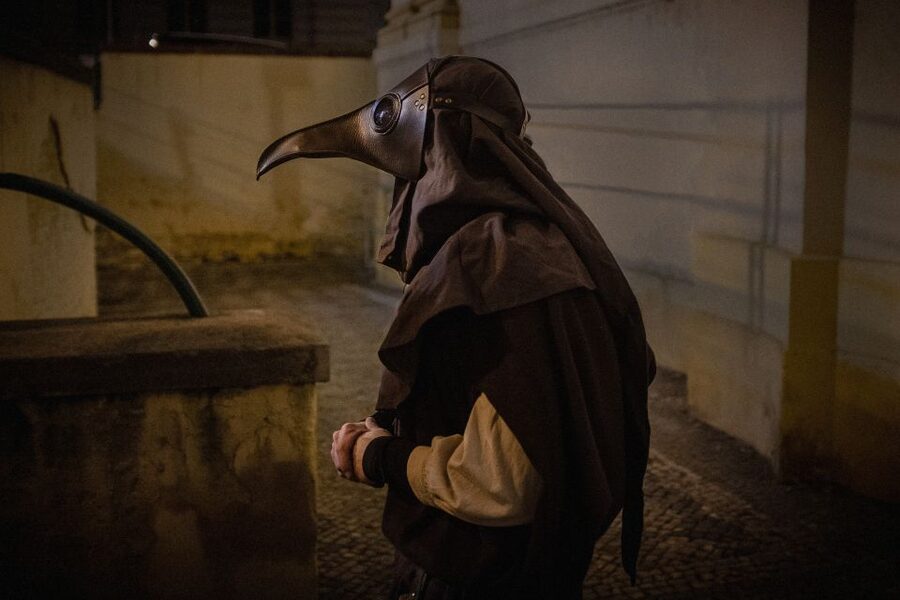
The costume is more than a photo opportunity. It gives you an immediate sense of how medical workers were presented in the popular imagination, especially the familiar mask and protective clothing linked with plague doctors. One useful part of the tour is learning what this clothing was meant to do, what people believed it protected against, and how much of it reflected the medical ideas of the time.
You receive an anti-plague pill, which is candy. That small prop sets the tone well: the activity can discuss frightening material without becoming oppressive. Do not expect modern medical instruction or a reenactment with elaborate scenes. This is a guided walking lesson with a strong character element.
Clementinum: a grand opening with a darker subject
The first sightseeing stop is the Clementinum, where the guide spends about ten minutes setting the wider scene. It is a useful place to begin because the building and surrounding streets show Prague at its most impressive, while the subject turns your attention to less comfortable questions about health and public life.
Here you begin to connect the plague with the city rather than with a distant textbook. The guide explains the period, the fears surrounding the disease, and the ways people tried to respond before modern medicine. You can ask questions as the walk goes on, so this is a good time to mention anything you especially want covered.
The stop is short, which is sensible. The Clementinum is a major sight in its own right, but this tour is not an interior visit or a full architectural explanation.
Mariánské náměstí and the people behind the story
At Mariánské náměstí, the guide continues the historical background and brings in the human side of the epidemic. The tour is particularly interested in how ordinary people dealt with illness in daily life, not only in the actions of doctors or officials.
This is also where the guide’s style matters. The best presentations use questions and conversation rather than talking nonstop. You may be asked to consider what survival required when treatment was uncertain, information was limited, and religious customs were closely tied to illness and death.
The stop lasts roughly ten minutes. It is long enough to build the story, but short enough to keep the group moving through the city.
More history walks in Prague:
- Prague: Oldtown, Medieval Underground & Dungeon History Tour
★ 4.2 · 8,244 reviews - Prague Old Town, Medieval Underground and Dungeon Historical Tour
★ 4.5 · 3,227 reviews - Prague: Communism History and Nuclear Bunker Guided Tour
★ 4.7 · 2,417 reviews - Prague: Historic City Center Bus Tour with Top Sights
★ 4.4 · 2,360 reviews
Old Town Square: famous Prague, seen through plague years
Old Town Square needs little introduction, but the plague theme gives it a different purpose. The square is usually associated with grand façades, the astronomical clock, and crowded sightseeing routes. Here, you look at it as a public space in a city that faced repeated outbreaks and intense social anxiety.
This part works especially well in the evening. Several guides have been praised for making the walk feel atmospheric after dark, though the exact mood depends on the season and starting time. In summer, it may still be light for much of the tour, and the square can be crowded. If you want the most shadowy, period-feeling atmosphere, autumn, winter, or spring may suit you better.
Still, summer has practical advantages. You may find the walk easier in warm weather if you dress lightly, though one past participant noted that the guide could not comfortably wear the full costume in high heat. The tour goes ahead in all weather, so check the forecast and wear suitable clothing.
Josefov and the Kafka Monument
The route then moves through Josefov for about five minutes before reaching the Franz Kafka Monument. These are brief stops, but they widen the tour beyond plague facts.
Josefov adds another layer to the Old Town story, showing how different parts of Prague carried their own histories and associations. The Kafka Monument gives the guide a chance to connect the walk with one of Prague’s most recognizable cultural figures and the city’s habit of blending serious history with strange, memorable imagery.
Do not expect a full Jewish Quarter tour or a detailed Kafka biography. These points support the main story rather than replace it. Their value is in showing you more of central Prague while helping the guide create a sense of place.
Na Františku Hospital: the route’s strongest historical stop
The most directly relevant stop is Na Františku Hospital, where the group spends about fifteen minutes. This is the longest stop on the route, and it makes sense. A hospital gives the subject a physical connection to care, sickness, and the difficult work of helping people during an outbreak.
The guide discusses how plague doctors operated, what medical workers thought they were doing, and the protective equipment associated with them. The tour also brings in the limits of that equipment and the medical thinking of the period. This is where the costume becomes useful rather than decorative.
The hospital stop also helps separate historical fact from the popular image of the plague doctor. The famous mask and coat are memorable, but the real story includes uncertainty, poor explanations of disease, and enormous pressure on those who tried to respond. The guides aim to make those details understandable without turning the stop into a lecture.
A fifteen-minute pause is long enough for questions. If you are especially interested in medicine, ask about the clothing, the anti-plague ideas, and how daily life changed for people trying to avoid infection.
St Agnes Convent and A. Schamsky’s story
The Convent of St Agnes is one of the route’s more peaceful stops, with around ten minutes of sightseeing. Its religious setting helps explain the role of saints, prayer, charity, and religious institutions during plague years.
This is also where the story of A. Schamsky becomes important. The tour presents him as a largely forgotten 18th-century hero connected with Prague’s fight against the plague in 1713. That focus gives the walk a personal thread. Instead of hearing only about a vast epidemic, you meet a named figure whose work can be remembered and discussed.
The stop is valuable for another reason: it takes you away from the busiest postcard route. You still remain in central Prague, but the setting feels more reflective than Old Town Square. If you have already seen the city’s main churches and squares, this section gives you a fresh reason to slow down.
St Castulus Church: a compact ending
The walk finishes at St Castulus Church after a final ten-minute sightseeing stop. The church provides a fitting place to end a tour about saints, sickness, and public memory.
By this point, you have covered the basic medical story, the role of plague doctors, the clothing and protective equipment of the period, and the way Prague’s streets and institutions fit into that story. The church also gives the guide room to answer final questions and close the narrative without stretching the tour past its useful length.
The ending is practical for evening plans. You remain in the Old Town area, so you can continue to dinner or drinks nearby. Tomaš has sometimes offered recommendations for local bars and restaurants, though those suggestions depend on the guide and the evening.
What you actually get for $23
At $23 per person, this is good value if you want more than a standard stroll through Prague. The price includes a licensed guide, the walking tour, the plague doctor costume, and the candy anti-plague pill. You are paying mainly for the guide’s research, storytelling, and ability to turn several central locations into one connected experience.
It is not the right value comparison for a museum visit or a long architectural tour. You do not get hotel pickup, food, or drinks, and there is no suggestion that major interiors are included. The benefit is the focused format: ninety minutes, several stops, and a theme that gives familiar streets a new purpose.
The tour has received a 4.9 rating from 204 reviews, with repeated praise for the guides’ humor, clear explanations, inclusion of the whole group, and strong storytelling. The most consistent strength is not the costume alone. It is the way guides such as David, Thomas, Óscar, and Tomaš make the group feel involved.
Pace, weather, and access
The advertised duration is ninety minutes, with about ten to fifteen minutes at several stops and shorter pauses at others. This creates a moderate amount of walking and standing rather than a nonstop march. One useful feature is that the route is often described as the right length for an evening activity.
The walk takes place rain or shine. Wear weather-appropriate clothing and comfortable shoes. A cold night may actually suit the costume and subject, while a hot summer evening can make the guide’s clothing less practical and reduce the eerie atmosphere.
The activity is listed as wheelchair accessible. A private group is also available if you want a more personal format or have a specific group arrangement. The available languages are English and Czech.
The experience can work for families, but use your judgment. One guide kept ten-year-old twins engaged, yet the topic includes death, disease, fear, and historic medical practices. Older children who enjoy history may have a great time. Very young children may focus more on the mask than on the story.
Who should book this Prague walk?
I would choose this tour if you enjoy social history, unusual city walks, or guided experiences built around one strong idea. It is especially useful early in your Prague visit because it introduces major sights while giving you a reason to notice streets and buildings you might otherwise pass.
It also suits people who already know the basic plague story. The stop sequence adds Prague-specific details, named figures, saints, hospitals, and local settings rather than repeating only a general account of the Black Death.
You may want a different activity if you prefer quiet, self-guided sightseeing, detailed architecture, or a strictly serious academic presentation. The humor is part of the design. Most of the time it helps, but the tone can vary with the guide and the group.
Should you book the Plague Doctor Old Town History Walking Tour?
Book it if you want a short, affordable evening activity that combines Prague sightseeing with medical and social history. The strongest reasons are the costumed guide, the unusual route, the attention to A. Schamsky and the 1713 outbreak, and the interactive presentation style associated with guides such as David, Thomas, Óscar, and Tomaš.
Skip it if plague history feels too grim or if you are looking for a full tour of Prague’s interiors. For most curious visitors, though, the ninety-minute format is a smart use of time. You see famous places, reach quieter corners, and leave with a better sense of how frightening life in the city could once be.
FAQ
Where does the Prague plague doctor tour start?
The tour starts at Seminářská 175/2 in Prague’s Old Town, listed as Staré Město, Prague 1. Look for the guide dressed as a plague doctor.
Where does the tour finish?
The walk finishes at the Church of St Castulus.
How long does the tour last?
The walking tour lasts 90 minutes. Starting times vary, so check availability when booking.
What language is the tour in?
The live guide speaks English or Czech. Select the available language when choosing your tour.
Is the tour suitable for wheelchair users?
The activity is listed as wheelchair accessible.
What is included in the price?
The price includes the licensed guide in plague doctor dress, the walking tour, and an anti-plague pill, which is provided as candy.
Does the tour run in bad weather?
Yes. The tour takes place rain or shine, so bring clothing suited to the forecast.
More Walking Tours in Prague
- Prague: Ghost Walking Tour Where Legends Come To Life
★ 4.4 · 5,253 reviews - Prague: Jewish Quarter Walking Tour with Admission Tickets
★ 4.7 · 3,729 reviews - Prague Guided Walking Tour and Cruise with Authentic Czech Lunch
★ 5.0 · 3,627 reviews - Prague: Old Town and Jewish Quarter Guided Walking Tour
★ 4.6 · 2,847 reviews
Just added around Prague
- WWII and Communism History in Prague’s Old Town Private Tour★ 5.0 · 4 reviews
- Wroclaw to Prague: 2-in-1 (Private Transfer + Country Tour)★ 5.0 · 4 reviews
- World War II 4WD Tour from Prague with Lunch★ 4.4 · 3 reviews
- Prague: Historical Walking Tour with Focus on World War 2★ 4.3 · 12 reviews
- Walking tour of Prague in french: Old Town & Charles Bridge★ 4.9 · 62 reviews
- Ultimate Unlimited Beer Pong with Czech Beer★ 4.6 · 5 reviews
- Walking tour of Prague in French : Nové Město★ 4.9 · 16 reviews
- Prague: Modern Private Spa with Jacuzzi and Sauna★ 4.8 · 62 reviews
Old Town Tours, compared.
3-Hour Walking Tour of Old Town & Prague Castle
Read our review →
Prague Old Town, Medieval Underground and Dungeon Historical Tour
Read our review →
Old Town and Jewish Quarter Guided Tour in German
Read our review →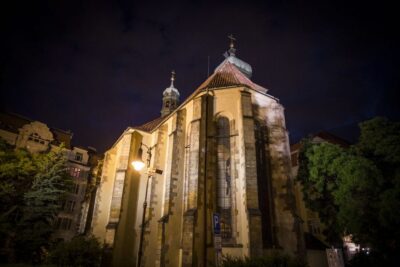
Ghosts and Legends of the Old Town Evening Tour
Read our review →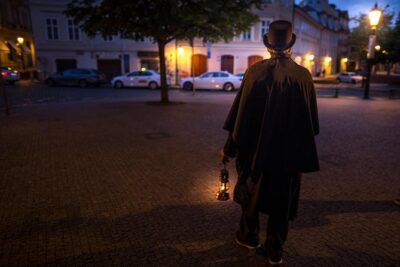
Prague Ghost and Legend of Old Town Walking Tour
Read our review →
Old Town, Astronomical Clock and Underground Tour
Read our review →Browse the lists this tour appears in