
Reviewed · CLASSICAL CONCERTS
Prague: Classical Music Concert at Rudolfinum
Prague’s Rudolfinum gives this concert a setting that matters almost as much as the music. In the intimate Suk Hall, you’ll hear familiar works by Vivaldi, Mozart, Beethoven, Bach, Smetana, and others, performed by leading Czech musicians. I especially like the 65-minute length, which fits neatly into an evening, and the chance to hear violinist Vlastimil Kobrle and mezzo-soprano Stanislava Jirků on scheduled performances.
The program is built around popular classics, including Vivaldi’s Four Seasons, Beethoven’s Fifth, Bizet’s Carmen, and Smetana’s Vltava. That makes it a friendly choice if you want an introduction to classical music without committing to a long symphony concert. The main consideration is that the program and soloists can change by date, so check the schedule carefully before booking.
Key points to know before you book
- Suk Hall keeps the concert intimate: The smaller Rudolfinum hall brings the musicians close and gives the evening a more personal feel than a vast concert auditorium.
- The 65-minute program is packed with familiar music: You’ll hear selections from Vivaldi, Handel, Pachelbel, Mozart, Bizet, Ravel, Beethoven, and Smetana.
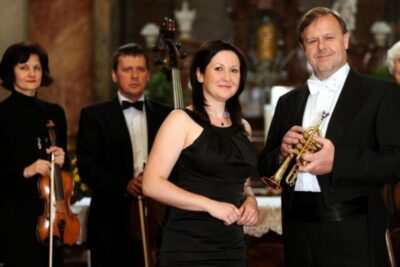
- Featured Czech performers add local character: Scheduled appearances include mezzo-soprano Stanislava Jirků and violinists Vlastimil Kobrle or Petr Zdvihal.
- The price is $39 per person: That is a reasonable fee for a concert in one of Prague’s best-known music buildings, especially if you value a short, central evening activity.
- The entrance is on the left side of Rudolfinum: Go to the building’s left-side entrance rather than wandering around the front looking for a separate meeting point.
- Soloists vary on some dates: The September 19, September 20, and September 22, 2024 performances had different listed musicians, while October performances listed Petr Zdvihal on violin.
Why Rudolfinum makes a difference
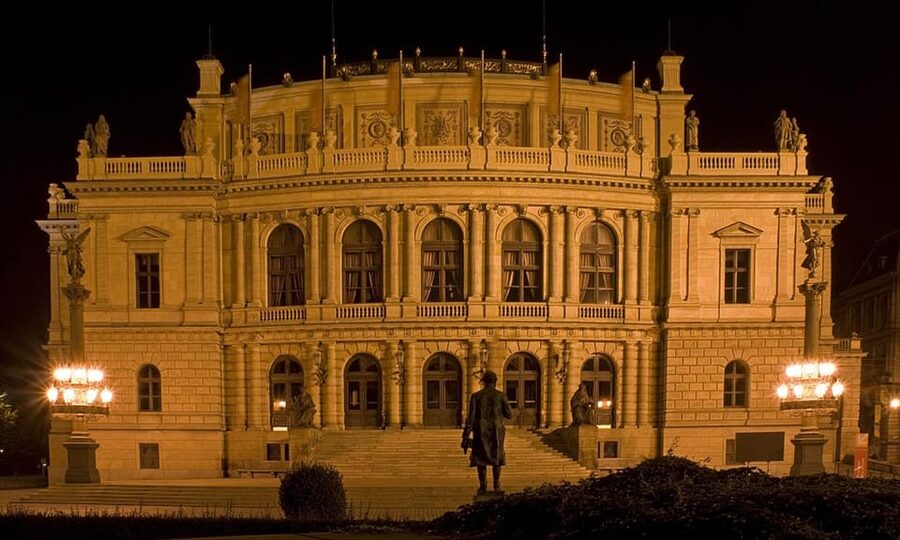
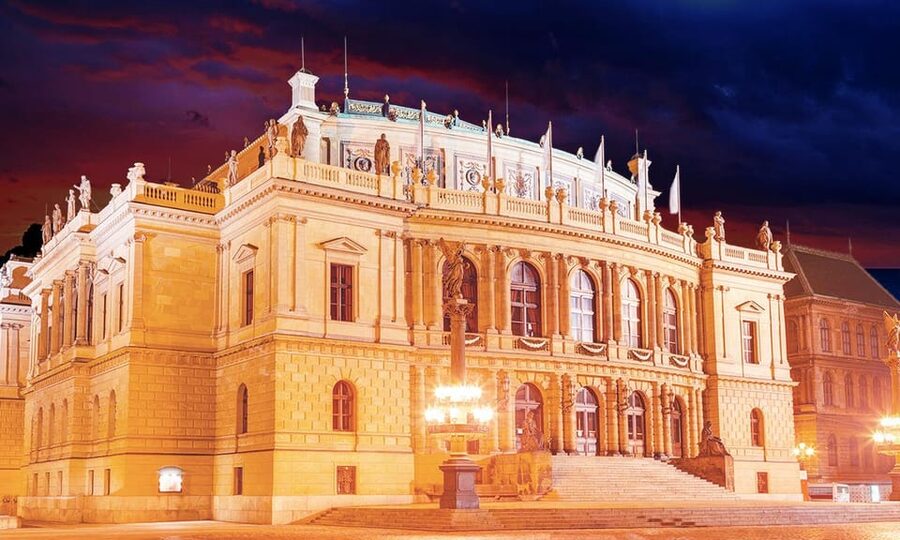
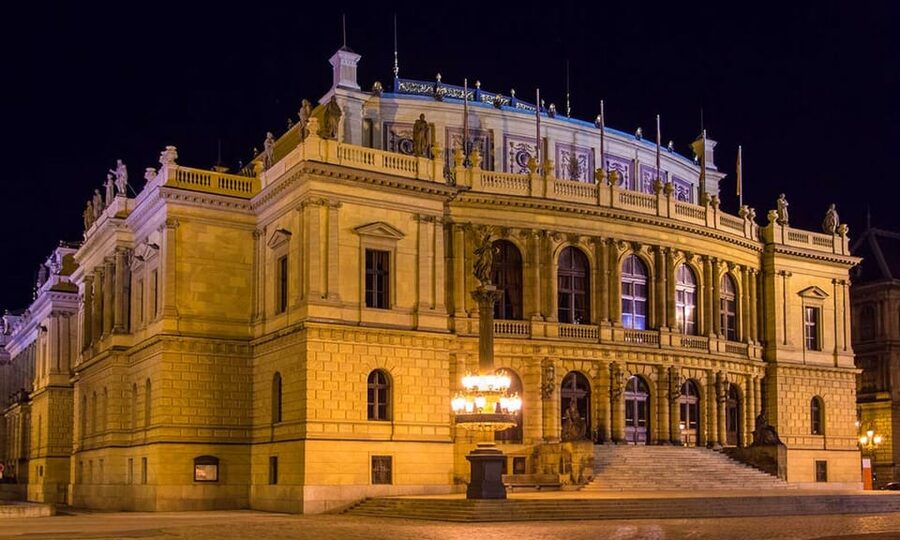
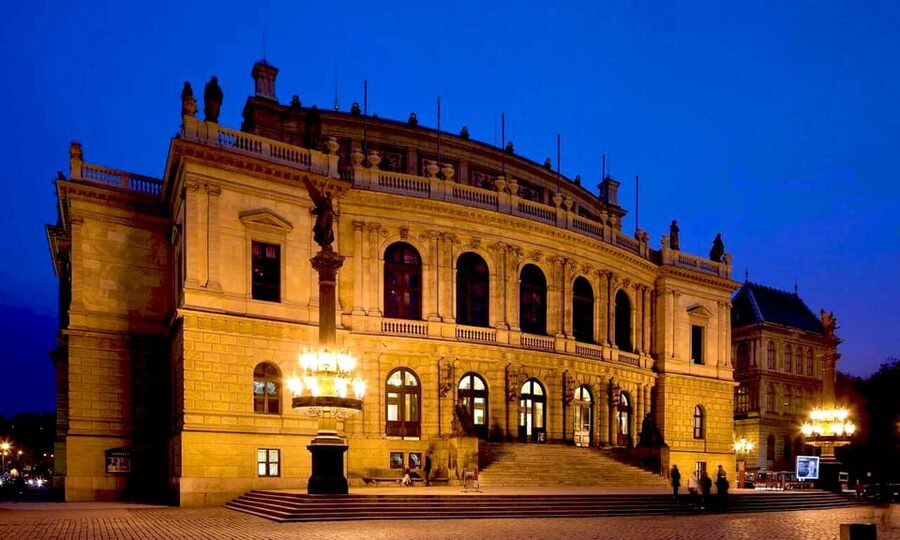
Rudolfinum is one of Prague’s defining cultural buildings. It sits in the center of the city and has hosted artistic events for more than a century. You are not simply entering a generic concert room for an hour. The building gives the performance a strong sense of place.
The concert takes place in Suk Hall, named for Czech composer Josef Suk. Its intimate scale is an important part of the experience. In a smaller room, the music feels closer and more immediate, especially during a solo violin passage or a quiet vocal section.
I like this setup for a first classical concert in Prague. You can enjoy the architecture and atmosphere without needing to understand every technical detail of the music. The room, the Czech performers, and the printed program do much of the work.
The venue also makes this easy to pair with other plans in central Prague. The concert lasts 65 minutes, so you do not need to give up an entire evening. You can fit it before dinner, after a day of sightseeing, or between other activities, depending on the performance time available when you book.
More classical concerts in Prague:
- Prague: Entry Ticket Classical Concert at the Mirror Chapel
★ 4.7 · 4,636 reviews - Prague: A. Vivaldi Four Seasons at St. Salvator Church
★ 4.4 · 1,951 reviews - Prague: Mozart Ballroom Concert Ticket with 3-Course Dinner
★ 4.8 · 1,200 reviews
The program: famous melodies in a compact format
The music covers a wide range of periods and styles. That variety keeps the concert moving, but it also means you should expect a highlights program rather than one complete large-scale work.
The opening portion includes Antonio Vivaldi’s The Four Seasons, Spring and Summer. These are among the most recognizable pieces in the classical repertoire. You’ll hear Vivaldi’s sharp contrasts, from lively movement to more delicate passages, with the violin placed at the center of the performance.
The Vivaldi selection is especially useful for listeners who want a familiar starting point. You already know the general sound, even if you do not know the names of the individual movements. The violin solo gives the piece its focus, and the smaller hall should help you follow that musical conversation.
Next comes Handel’s Largo from Xerxes. After the energy of Vivaldi, this piece offers a slower and more reflective change of pace. Its broad melody is simple to appreciate, even if you are new to baroque music.
Pachelbel’s Canon and Gigue in D follows. The Canon is one of those melodies you may recognize without knowing its title. It gives the program another calm, orderly section before the music moves into Mozart.
The Mozart selection is Salzburg Symphony K 136, Allegro. This is a bright, quick movement with the clean lines and balance associated with Mozart. It is shorter and lighter in character than Beethoven’s Fifth, so it helps the program shift from early classical elegance to later drama.
From Carmen to Bolero
The vocal element comes through in Bizet’s Habanera from Carmen. On dates featuring mezzo-soprano Stanislava Jirků, this is one of the program’s key moments. Jirků is a soloist from the Czech National Theatre and has performed with the BBC Symphony Orchestra, the Czech Philharmonic, and the Prague Philharmonic Orchestra.
That background matters because Carmen needs more than accurate notes. The music has a strong character and theatrical edge. A mezzo-soprano brings a darker vocal color than a typical high soprano, which suits the role and gives the program a welcome change from instrumental works.
The listed program also includes Ravel’s Boléro. The piece is famous for its repeated rhythm and gradual build. It begins with restraint, then adds layers until the music feels much larger than its basic melody suggests.
In a 65-minute concert, a piece like Boléro can work well as a big central or closing statement. It gives you a clear musical shape and a memorable finish. The tradeoff is that listeners who prefer constant change may find its repetition deliberate and slow.
Beethoven, Smetana, and the final stretch
Beethoven’s Symphony No. 5, Allegro brings the most instantly recognizable dramatic opening in the program. The famous four-note motif needs no introduction, but hearing it performed live gives it more force than a quick clip or background recording.
The selection is only the Allegro movement, not the full symphony. That is worth understanding before you buy. You get the main musical impact without spending nearly an hour on Beethoven alone, but anyone hoping for a complete symphony will find this format abbreviated.
The program closes with Bedřich Smetana’s Vltava. This is a particularly fitting choice in Prague. Smetana’s tone poem follows the course of the Vltava River through music, and the river is central to the city’s identity.
You may recognize the sweeping melody from other recordings or public performances. Here, its value is less about novelty and more about connection. After hearing music from Italy, Germany, Austria, France, and Spain, the final Smetana selection brings the concert back to Czech culture.
A few more Prague half-days worth weighing up
- Prague: Concert at Reduta Jazz Club
★ 4.5 · 2,170 reviews - Prague: Jazz Boat Cruise with Live Concert and Optional Meal
★ 4.6 · 1,682 reviews - Prague Castle: Midday Classical Concert at Lobkowicz Palace
★ 4.6 · 1,106 reviews - Prague: Classical Concert in the Spanish Synagogue
★ 4.7 · 1,104 reviews
The musicians and date changes
The best-known named performers are Stanislava Jirků on mezzo-soprano and Vlastimil Kobrle on violin. Kobrle is the concertmaster of the Symphony Orchestra of Czech Radio and is noted for his solo playing.
A concertmaster leads the first violins and has an important musical role within an orchestra. For you, the practical point is simple: the violin solo is not just an extra detail in the program. It is one of the evening’s main features.
The listed September and October 2024 schedule included several changes:
- September 19: Petr Zdvihal on violin and Stanislava Jirků on mezzo-soprano
- September 20: Petr Zdvihal on violin and Stanislava Jirků on mezzo-soprano
- September 22: Petr Zdvihal on violin and Veronika Hajnová on mezzo-soprano
- October performances: Petr Zdvihal on violin
These changes show why you should check the exact date rather than assuming every performance has the same lineup. If you are choosing this concert mainly for Jirků or Kobrle, confirm the scheduled performers before paying.
The provider is ClassicsInternational, and the ticket includes the entry ticket plus a printed concert program. There is no guide or walking tour attached to this activity, so you should think of it as a focused concert outing rather than a broader cultural tour.
Is $39 good value for a 65-minute concert?
At $39 per person, this is not the cheapest music option you might find in Prague. Still, price alone does not tell the whole story. You are paying for a performance in Rudolfinum, a central venue with a long connection to Prague’s cultural life, along with professional Czech musicians and an established program of popular works.
The compact length improves the value for many people. A 65-minute concert is long enough to feel like a real event, but short enough to fit around dinner or evening sightseeing. If you are unsure how much classical music you want, this is less of a commitment than a full-length orchestral program.
The program also reduces the risk of paying for music you do not recognize. You get a sequence of well-known pieces rather than a single unfamiliar contemporary work. Vivaldi, Mozart, Beethoven, Bizet, Ravel, and Smetana give you plenty of familiar entry points.
The limitation is that the ticket covers only the concert and printed program. Transportation, food, and any other Prague activities are separate. You also should not expect a full-length performance of The Four Seasons, Beethoven’s Fifth, or Boléro. The format is a series of selected movements and highlights.
For me, the price makes the most sense if you care about venue, live performance, and convenience. It is less compelling if you only want the cheapest possible classical music ticket or require a full symphony in one sitting.
Practical arrival advice for Rudolfinum
The meeting point is the building itself. To attend, use the entrance on the left side of Rudolfinum. This sounds minor, but large historic buildings often have several doors, and knowing which side to use saves time before the music begins.
The activity ends back at the same meeting point. There is no transfer, city tour, or second location to arrange afterward. That makes planning simple, particularly if you are meeting friends for dinner nearby.
Starting times vary, so check availability for the date you want. The 65-minute duration gives you a useful planning block, but you should leave enough room around it for entering the building and finding your seat.
The concert is wheelchair accessible. Unaccompanied minors are not allowed, so children must attend with an accompanying adult. The data provided does not specify age limits for children who are accompanied, seating categories, or a dress code, so check the booking details if any of those points matter to you.
You can cancel up to 24 hours in advance for a full refund, and the reserve-now, pay-later option lets you hold a place without paying immediately. Those policies are helpful if your Prague schedule is still shifting.
Who will enjoy this concert most?
I would recommend this concert to you if you want an easy introduction to classical music with recognizable melodies. The variety helps keep the hour moving, and the familiar works make it easier to relax rather than worry about following a complex program.
It also suits couples and solo visitors who want a polished evening activity without a long time commitment. The setting gives the night some ceremony, while the short duration keeps it from taking over your schedule.
The concert is a good fit for music lovers who want to hear Czech performers in a notable Prague hall. Smetana’s Vltava and the appearance of Czech soloists add a local connection that you would miss with a generic recording at home.
I would be more cautious if you want a full orchestral concert, a detailed introduction from a music expert, or a single composer’s complete work. This is a fast-moving program of well-known selections. Its appeal comes from range and access, not from a deep study of one piece.
Should you book the Rudolfinum concert?
Book it if you want popular classical works in an elegant Prague setting, especially if the 65-minute format fits your schedule. The strongest reasons to go are the intimate Suk Hall, the familiar program, the Czech performers, and the chance to hear musicians such as Stanislava Jirků, Vlastimil Kobrle, or Petr Zdvihal, depending on the date.
Before booking, check the exact soloists and program details for your chosen performance. If you accept that this is a compact selection of musical highlights rather than a full symphony evening, $39 is a fair price for a central cultural experience.
FAQ
Where does the concert take place?
The concert takes place in Suk Hall inside Rudolfinum in central Prague.
How long does the concert last?
The concert lasts 65 minutes.
What music is included?
The program includes selections by Vivaldi, Handel, Pachelbel, Mozart, Bizet, Ravel, Beethoven, and Smetana. Listed works include parts of Vivaldi’s The Four Seasons, Handel’s Largo from Xerxes, Pachelbel’s Canon and Gigue in D, Mozart’s Salzburg Symphony K 136, Bizet’s Carmen Habanera, Ravel’s Boléro, Beethoven’s Fifth Symphony, and Smetana’s Vltava.
Who performs at the concert?
Scheduled performers include mezzo-soprano Stanislava Jirků, violinist Vlastimil Kobrle, violinist Petr Zdvihal, and mezzo-soprano Veronika Hajnová, depending on the date.
Does the lineup change by date?
Yes. The soloists change on some September and October 2024 dates, so check the schedule for your chosen performance.
What is included in the ticket?
The ticket includes entry to the concert and a printed concert program.
Where should I enter Rudolfinum?
Use the entrance on the left side of the building.
Is the concert wheelchair accessible?
Yes, the activity is wheelchair accessible.
Just added around Prague
- WWII and Communism History in Prague’s Old Town Private Tour★ 5.0 · 4 reviews
- World War II 4WD Tour from Prague with Lunch★ 4.4 · 3 reviews
- Wroclaw to Prague: 2-in-1 (Private Transfer + Country Tour)★ 5.0 · 4 reviews
- Prague: Historical Walking Tour with Focus on World War 2★ 4.3 · 12 reviews
- Walking tour of Prague in french: Old Town & Charles Bridge★ 4.9 · 62 reviews
- Ultimate Unlimited Beer Pong with Czech Beer★ 4.6 · 5 reviews
- Walking tour of Prague in French : Nové Město★ 4.9 · 16 reviews
- Prague: Modern Private Spa with Jacuzzi and Sauna★ 4.8 · 62 reviews
Classical Concerts, compared.
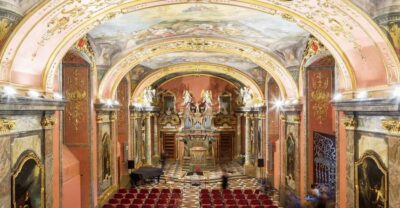
Entry Ticket Classical Concert at the Mirror Chapel
Read our review →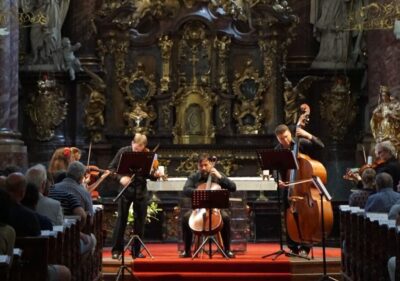
A. Vivaldi Four Seasons at St. Salvator Church
Read our review →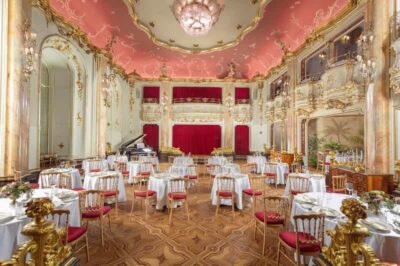
Mozart Ballroom Concert Ticket with 3-Course Dinner
Read our review →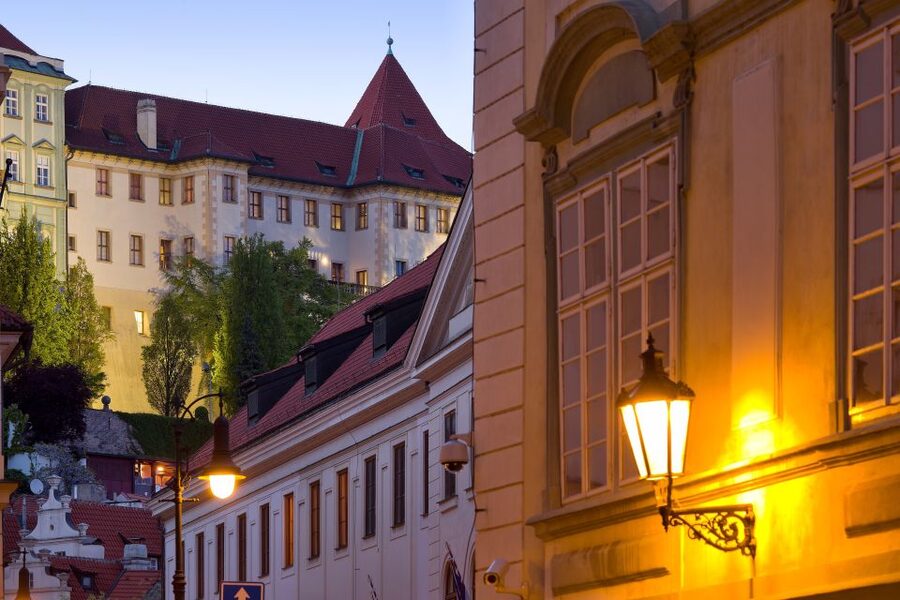
Prague Castle: Midday Classical Concert at Lobkowicz Palace
Read our review →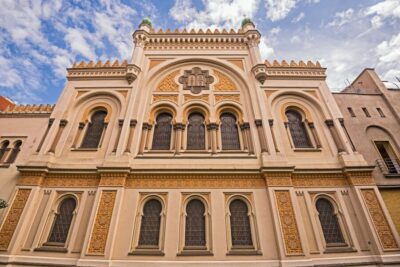
Klementinum Mirror Chapel Classical Music Concert
Read our review →Browse the lists this tour appears in