
Reviewed · WALKING TOURS
Prague Renaissance and Baroque Gardens Walking Tour
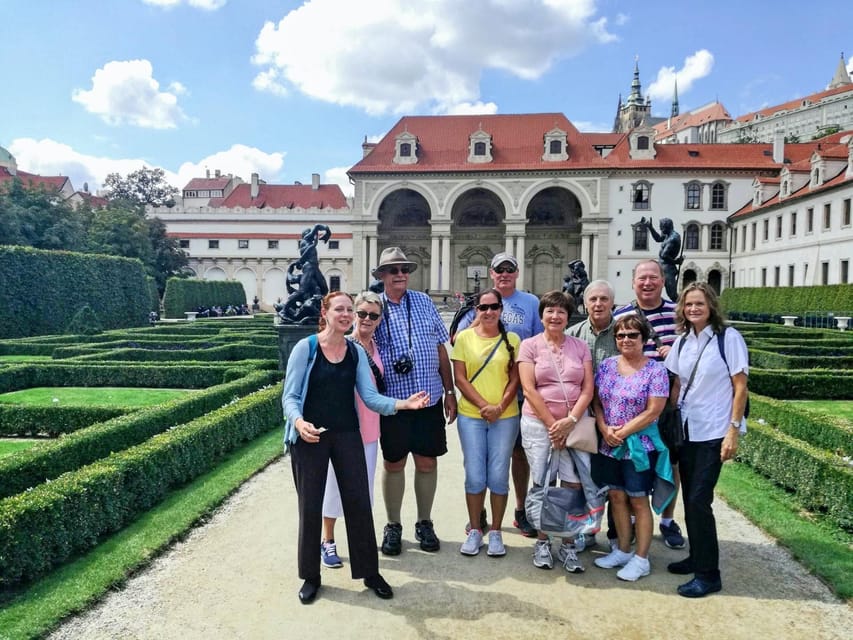
Prague’s grandest gardens tell a surprisingly lively story. On this three-hour walk, you follow the city’s shift from medieval herb plots to the Italian-inspired gardens of Emperor Ferdinand I, then into the theatrical Baroque world of Albrecht von Wallenstein. The Singing Fountain, albino peacocks, grotto walls, and high views over Prague give the history plenty of visual help.
I like the way this tour links art, politics, gardening, and royal ambition instead of treating each garden as a pretty stop. I also like the chance to visit the Fig House and Orangery, where Mediterranean fruit growing took root north of the Alps. The main drawback is the route: steep and narrow stairs are part of the experience, and admission to the Castle Gardens and Vrtba Garden costs extra.
Key points to know before you book
- Italian ideas in Prague: Learn how Emperor Ferdinand I brought Italian gardeners and architects north of the Alps.
- A rare look at garden buildings: Visit the Fig House, Orangery, Belvedere Summer Palace, and its small Giardinetto.
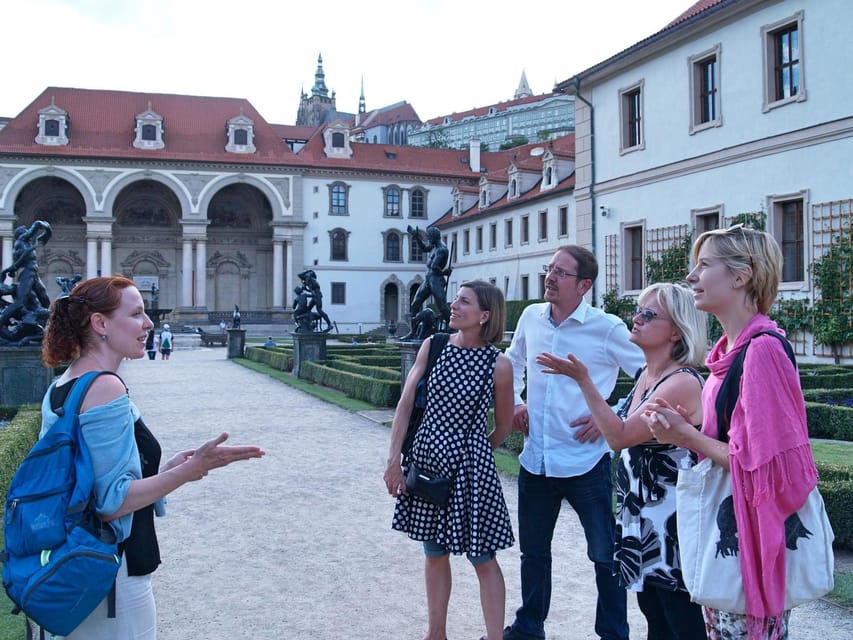
- A strong story at Wallenstein Garden: See albino peacocks, Mannerist statues, mythical fountains, and a grotto wall.
- Vrtba Garden’s city views: Climb through this Baroque walled garden to its marine-themed grotto and upper courtyard.
- A stair-heavy route: The walk includes narrow or steep stairs, including the Bull Stairs below Prague Castle.
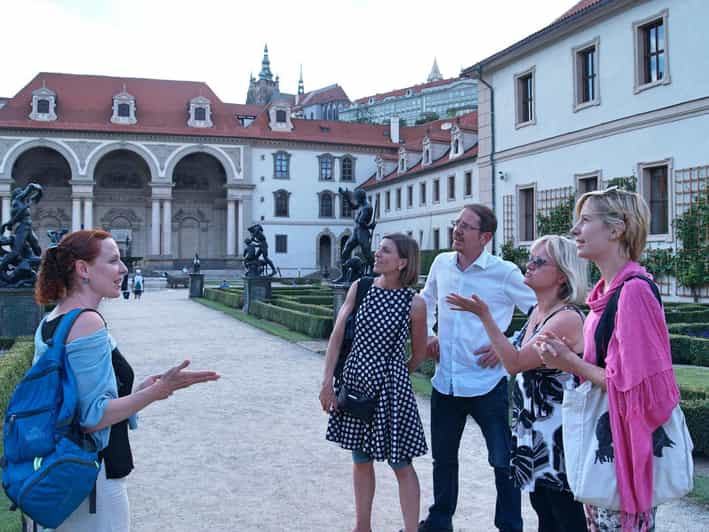
- Historian-led and flexible: The tour is in English, with private and small-group options. Guide Miriam received especially warm praise for her informative, relaxed manner.
Why Prague’s gardens tell a better story than a palace room
A palace can show you how rulers lived. A garden often shows you what they wanted the world to think about them.
Medieval gardens around Prague were practical places for growing medicinal and cooking herbs. Vineyards on the hills around the city go back even earlier, before the reign of Charles IV. The idea of a large palace garden arrived later, in the 1500s, when Emperor Ferdinand I wanted something grander and more fashionable.
Ferdinand admired the formal gardens of the Italian Renaissance. He brought Italian gardeners and architects to Bohemia, helping introduce classic Renaissance design north of the Alps. You see that influence in ordered paths, pleasure pavilions, fountains, terraces, and carefully managed views.
I find that context useful because it turns a garden from decoration into evidence. Every straight path and grand terrace says something about power, taste, science, and money. The tour also shows how those ideas changed. Renaissance gardens favored balance and classical order, while Baroque gardens aimed for drama, movement, surprise, and spectacle.
The three-hour format gives you enough time to connect these changes without turning the walk into a full-day commitment. It is still a walking tour, not a leisurely garden visit with long pauses at every bench, so wear comfortable shoes and expect a steady route.
More Parks & Gardens in Prague
- Prague: Evening Folklore Garden Party with Traditional Menu
★ 4.6 · 179 reviews - Prague: Aquapalace Indoor/Outdoor Water Park Ticket
★ 4.7 · 141 reviews - PRIVATE: Prague Castle for the Curious – Kings, Legends & Gardens
★ 5.0 · 70 reviews
Starting at Prague Castle’s Royal Gardens
The meeting point is at the door of Bagel Lounge Malostranska. From there, the route heads toward the gardens associated with Prague Castle and Emperor Ferdinand I.
The Royal Gardens are an important starting point because they show the first major burst of Renaissance garden design in Prague. Ferdinand’s ambitions were not modest. He wanted a Mediterranean-style setting that would match the status of the Habsburg court and place Prague within the cultural world of Renaissance Europe.
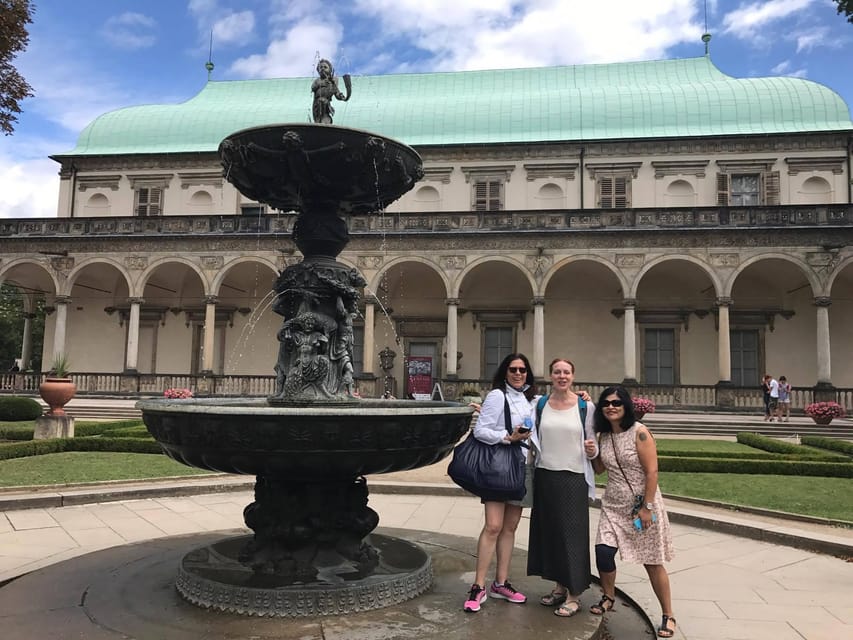
The most famous building here is the Belvedere Summer Palace, commissioned by Ferdinand as a gift for his wife, Queen Anne. She died before it was completed, which gives the building an unusually personal story beneath its polished Renaissance design.
The palace was designed by the Italian architect Paolo della Stella and is often described as the finest Renaissance structure outside Italy. You do not just pass it as a photo stop. The guide explains how its purpose, decoration, and placement fit the larger garden plan.
One relief shows Ferdinand presenting his wife with a flower from the Royal Gardens. That small detail says a lot about the building’s original role. This was not simply a residence. It was a carefully staged expression of affection, dynastic power, and refined taste.
Listening for the Singing Fountain
In front of the Belvedere is a small garden area called a Giardinetto. Here you find the Singing Fountain, cast in 1564 from bell bronze.
The name is not poetic fluff. Water falling into the bowl creates a resonant sound, so the fountain appears to sing. It is one of those details that can be easy to miss if you visit alone. You may see the fountain, take a picture, and move on without understanding why it was made that way.
This is where a guide adds real value. The fountain connects engineering, sound, sculpture, and courtly entertainment. Renaissance gardens were designed to surprise you. A fountain that produces music turns a quiet corner into a small mechanical performance.
The area around the Belvedere also helps you understand how gardens were used by rulers. These were places for pleasure, display, and controlled access. The carefully arranged views were part of the experience, just as important as the flowers or trees.
The Fig House and Orangery
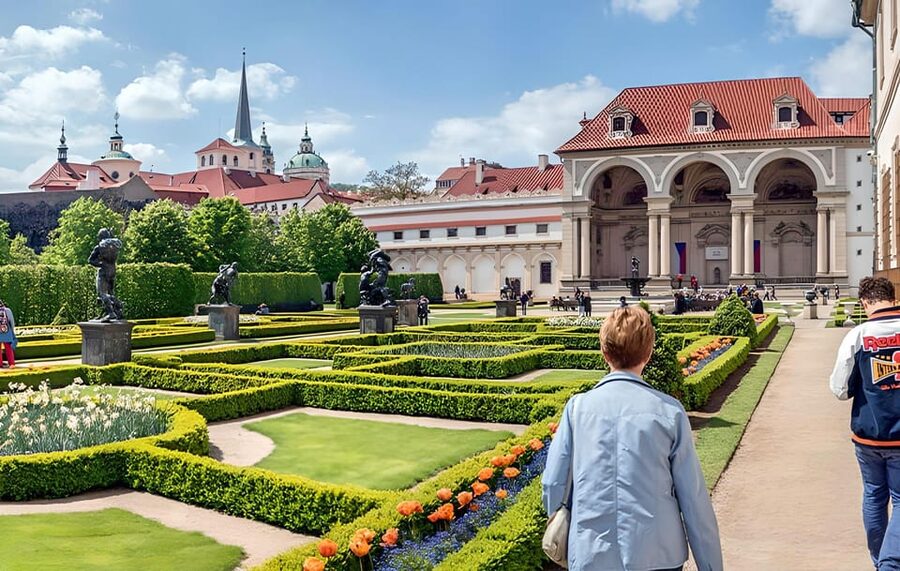
The walk continues to the Fig House and Orangery, two buildings tied to the court’s interest in plants from warmer parts of the world.
Figs, almonds, oranges, and lemons were grown here for the first time in Central Europe. That fact gives the garden a practical side. The Renaissance was not only about statues and symmetry. It was also a period of experimentation, collecting, and finding ways to grow unfamiliar plants in a cooler climate.
An orangery required heat, shelter, and skilled care. It was an expensive statement, but it also served a real purpose. Exotic fruit showed that the court could control nature, import new ideas, and support specialists with the tools to make difficult crops possible.
The Fig House and Orangery are especially worthwhile if you enjoy the behind-the-scenes side of historic estates. They show how noble gardens functioned, not just how they looked when finished.
The route also touches on the arrival of tulips in Europe. Tulips were unknown in Europe before they were introduced as an exotic gift from the Sultan of Constantinople to the Royal Gardens. That story adds another layer to the garden: plants moved through diplomacy, trade, and royal connections long before modern garden centers made international plants ordinary.
A completely different way to spend a day in the same part of the country:
- Prague: 50-Minute Sightseeing Evening Cruise
★ 4.2 · 33,780 reviews - Prague: Medieval Dinner with Unlimited Drinks
★ 4.4 · 19,847 reviews - Prague: Skip-the-line Castle Ticket and Optional AudioGuide
★ 4.3 · 11,121 reviews - Prague: Castle Tour with Local Guide and Entry Ticket
★ 4.6 · 10,422 reviews
Crossing the Stag Moat and descending the Bull Stairs
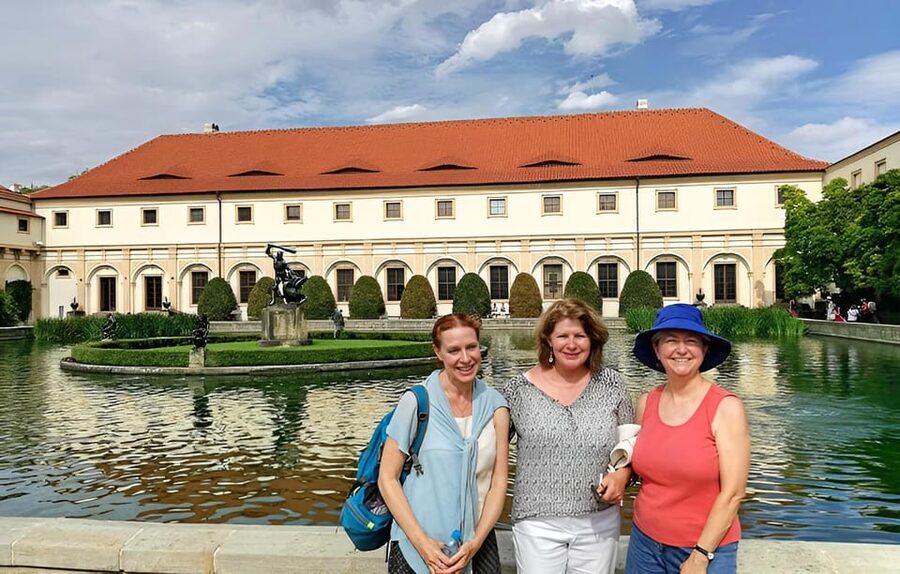
After the Royal Gardens, you admire the stag moat before crossing through a castle courtyard. The route then descends the Bull Stairs toward the southern gardens.
This is one of the points where the physical character of the tour matters. The walk is not flat. Some stairs are narrow or steep, and the Bull Stairs are part of a route that drops from the castle area toward the lower parts of Prague.
The descent is also part of the historical experience. You move from the elevated royal complex into a chain of terraces and gardens below the castle. Along the way, the guide covers the Garden of Paradise and the Garden on the Bulwark.
These names reflect the old habit of giving gardens symbolic meaning. A garden could suggest paradise, order, retreat, or controlled nature. The spaces below the castle are smaller and more varied than the formal Royal Gardens, but together they show how the hillside was shaped for both beauty and access.
If you have knee, balance, or stair difficulties, take this seriously. The regular route includes up and down movement, sometimes through tight passages. A private tour is the better choice if you need the guide to adjust the pace or leave out certain stops. The route can then focus on the gardens that suit your limits.
Wallenstein Garden and the theater of Baroque power
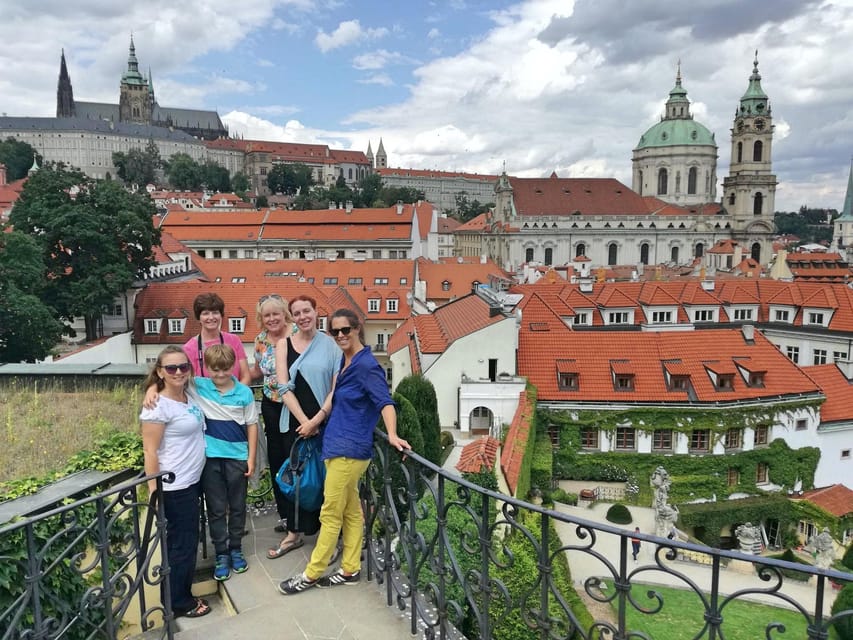
At the bottom of the hill, the mood changes at Wallenstein Garden. This is the grandest section of the walk, and it makes a strong contrast with the more restrained Renaissance spaces.
The garden was commissioned by Albrecht von Wallenstein, a powerful military commander and nobleman with an equally dramatic life. His garden was designed to announce status. Its scale, decorations, fountains, statues, and grotto wall all turn the grounds into a display of ambition.
You will see Mannerist statues, mythical fountains, and a wall made to suggest a natural grotto. The effect is deliberately theatrical. Renaissance classicism favored proportion and clear references to the ancient world. Baroque design pushed harder for surprise, movement, illusion, and emotional impact.
The albino peacocks add an almost comic touch to such a serious setting. They are memorable, but the garden’s value is not limited to unusual birds. They fit the atmosphere of spectacle, where nature itself became part of the owner’s display.
The grotto wall deserves attention. Instead of hiding every irregular surface, it uses rough textures and invented caves to create an artificial wilderness. Baroque gardens often played with that tension between controlled design and the appearance of untamed nature.
The fountains continue the theme. Mythical figures and moving water make the garden feel active rather than static. I like this stop because the garden is easy to read even if you know little about art history. You can see the shift from calm Renaissance order to Baroque drama with your own eyes.
The story of Wallenstein also gives the site more weight. This was not simply a pleasant retreat. It reflected the wealth and political reach of its commissioner. The garden’s scale makes more sense once you understand the kind of man who ordered it.
Vrtba Garden, Prague’s Baroque hillside surprise
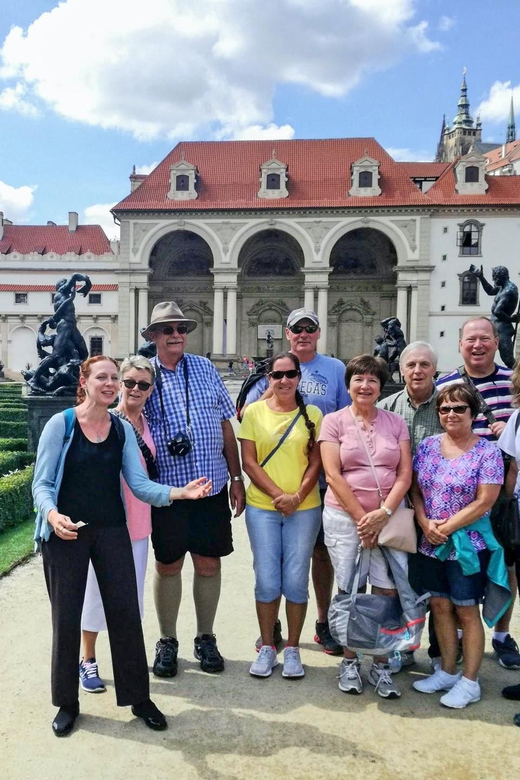
The final major stop is Vrtba Garden in Mala Strana, one of Prague’s most distinctive small gardens.
Dating from 1720, Vrtba is a walled Baroque garden built for noble life in the 18th century. It is not vast, and that is part of its appeal. The space is arranged in rising terraces, so the garden feels more like a carefully composed climb than a broad park.
You pass through the garden and climb toward the upper courtyard. At the top is a marine-themed grotto, along with views across Prague’s rooftops and city center.
Those views are one of the best reasons to include Vrtba. The garden does not only ask you to look at statues, walls, and planting beds. It frames the city beyond, turning Prague itself into part of the composition.
The garden also gives you a useful contrast with Wallenstein. Wallenstein is expansive and forceful. Vrtba is enclosed, vertical, and intimate. Both are Baroque, but they use space differently. One displays power across a broad setting. The other creates a series of controlled moments as you climb.
There is a practical catch: Vrtba Garden has its own admission fee, and that cost is not included in the tour price. The same is true of the gardens under Prague Castle. You should budget for both before deciding if the $123 price feels right.
Is $123 a good value?
At $123 per person, this is not a bargain-priced sightseeing walk. The value depends on how much you want the historical explanation and how much time you have in Prague.
You are paying for three hours with a historian guide, not simply entrance to a garden. The route brings together several sites that would be easy to visit as disconnected stops. The guide explains why Italian design appeared in Prague, how exotic plants reached Central Europe, why Wallenstein’s garden feels so theatrical, and how Vrtba fits into 18th-century noble life.
The price is easier to justify if you are interested in architecture, garden design, royal history, or the lesser-seen corners of Prague. It is less compelling if you only want a casual stroll through flowers or if you plan to visit the gardens on your own and read a short guidebook.
Remember to add the admission fees for the Castle Gardens and Vrtba Garden. The exact total cost therefore depends on those entrance prices, which are separate from the tour.
Private and small-group options are available. A private tour may offer better value if you need a slower pace or a route adjusted around stairs. For other people, a small group provides the structure of a guided walk without the cost of a fully private experience.
What the guide adds
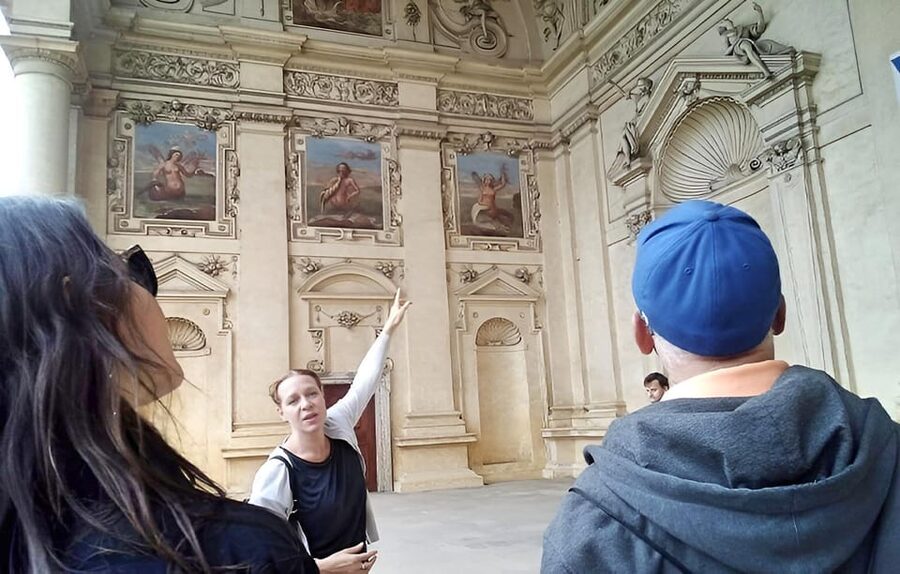
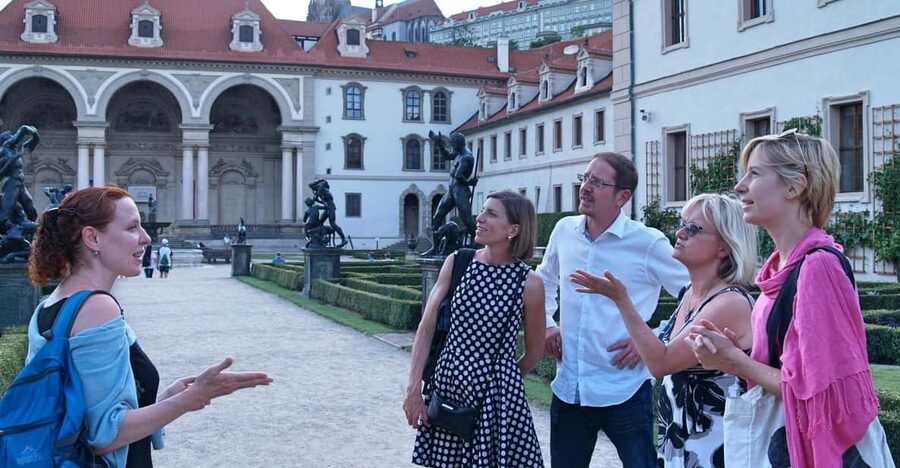
This tour works best when the guide keeps the history clear and connected to what you are seeing. Miriam received especially strong praise for being informative while keeping the mood relaxed, which is a useful combination for a three-hour walk.
You do not need a lecture at every fountain. You need someone to point out why the Belvedere matters, explain how the Singing Fountain works, connect tulips to diplomacy, and make Wallenstein’s ambitions understandable. The guide’s job is to help you see the garden’s design choices rather than pile on dates.
The tour is conducted in English. Previous guide feedback also names Bonita Rhoads as an excellent guide, though guide assignment can vary by date.
Who should book this garden walk?
I would choose this tour if you have already seen Prague’s major church interiors and want a different way to understand the city. It suits anyone who enjoys architecture, court life, horticulture, sculpture, or views earned by a climb.
It is also a good fit for a first visit if you want to connect Prague Castle with Mala Strana in one organized route. The walk gives you a clear path downhill through several distinct garden styles.
I would hesitate if stairs are a serious problem, if you dislike paying separate entrance fees, or if you want a slow botanical tour with plenty of time to sit. The route is active and historically focused.
Book a private version if mobility is a concern. The guide can adjust the route, skip selected sites, and set a pace that works better for you.
Should you book it?
Book this walk if you want Prague’s gardens explained as works of art and statements of power, not just photographed as pleasant green spaces. The strongest moments are the Singing Fountain, the practical story of the Fig House and Orangery, Wallenstein’s theatrical garden, and the high views from Vrtba.
Skip it if you want a flat route, a low-cost outing, or a simple independent garden visit. For the right audience, though, the $123 fee buys something useful: a connected story across Prague’s Renaissance and Baroque gardens, led in English by a historian and delivered in a manageable three hours.
FAQ
How long is the Prague Renaissance and Baroque Gardens Walking Tour?
The tour lasts three hours.
What language is the tour conducted in?
The tour is conducted in English with a live guide.
Where does the tour meet?
Meet at the door of Bagel Lounge Malostranska.
Are entrance fees included in the tour price?
No. Admission to the gardens under Prague Castle and admission to Vrtba Garden are not included.
Is this tour suitable for people with mobility issues?
The regular route includes stairs that can be narrow or steep. If you may have difficulty, a private tour is recommended so the guide can adjust the route, pace, and number of sites.
Is the tour private or shared?
Private and small-group options are available.
Can I cancel the tour for a full refund?
You can cancel up to 24 hours in advance for a full refund. A reserve-now, pay-later option is also available.
More Walking Tours in Prague
- Prague: 3-Hour Walking Tour of Old Town & Prague Castle
★ 4.7 · 5,696 reviews - Prague: Ghost Walking Tour Where Legends Come To Life
★ 4.4 · 5,253 reviews - Prague: Jewish Quarter Walking Tour with Admission Tickets
★ 4.7 · 3,729 reviews - Prague Guided Walking Tour and Cruise with Authentic Czech Lunch
★ 5.0 · 3,627 reviews
Just added around Prague
- WWII and Communism History in Prague’s Old Town Private Tour★ 5.0 · 4 reviews
- World War II 4WD Tour from Prague with Lunch★ 4.4 · 3 reviews
- Wroclaw to Prague: 2-in-1 (Private Transfer + Country Tour)★ 5.0 · 4 reviews
- Prague: Historical Walking Tour with Focus on World War 2★ 4.3 · 12 reviews
- Walking tour of Prague in french: Old Town & Charles Bridge★ 4.9 · 62 reviews
- Ultimate Unlimited Beer Pong with Czech Beer★ 4.6 · 5 reviews
- Walking tour of Prague in French : Nové Město★ 4.9 · 16 reviews
- Prague: Modern Private Spa with Jacuzzi and Sauna★ 4.8 · 62 reviews
Walking Tours, compared.

3-Hour Walking Tour of Old Town & Prague Castle
Read our review →
Ghost Walking Tour Where Legends Come To Life
Read our review →
Jewish Quarter Walking Tour with Admission Tickets
Read our review →
Prague Guided Walking Tour and Cruise with Authentic Czech Lunch
Read our review →
Old Town and Jewish Quarter Guided Walking Tour
Read our review →
Prague Ghost and Legend of Old Town Walking Tour
Read our review →
Prague 3-hour Afternoon Walking Tour including Prague Castle
Read our review →
Ghosts and Legends Nighttime Guided Walking Tour
Read our review →Browse the lists this tour appears in