Reviewed · GUIDED
Prague: Modern Architecture and Design Guided Tour
Prague’s modern side can be easy to miss behind its famous old streets. This two-hour walk takes you to 10 points tied to modern design, from socialist realism and brutalism to experimental art installations, and explains how the city changed during the 20th and 21st centuries. I like the focus on places with stories, not just the prettiest façades. I also like the intimate feel: one recent outing had only three people, and another was private. The trade-off is that you should not expect a neat, textbook tour of Prague’s architectural periods.
I especially like the guide’s personal approach. Michael has offered practical city tips, answered questions after the walk, and pointed out art installations you might otherwise pass without noticing. At $35, the tour is a fair buy if modern Prague interests you, but less so if you want only postcard views or a systematic architectural course.
Key points at a glance
- Ten modern Prague sites: The route covers 10 points of interest in two hours, giving you a compact look at the city’s recent design story.
- Socialist realism and brutalism: You get context on styles that shaped urban life in the 20th century, including buildings that may not win beauty contests.
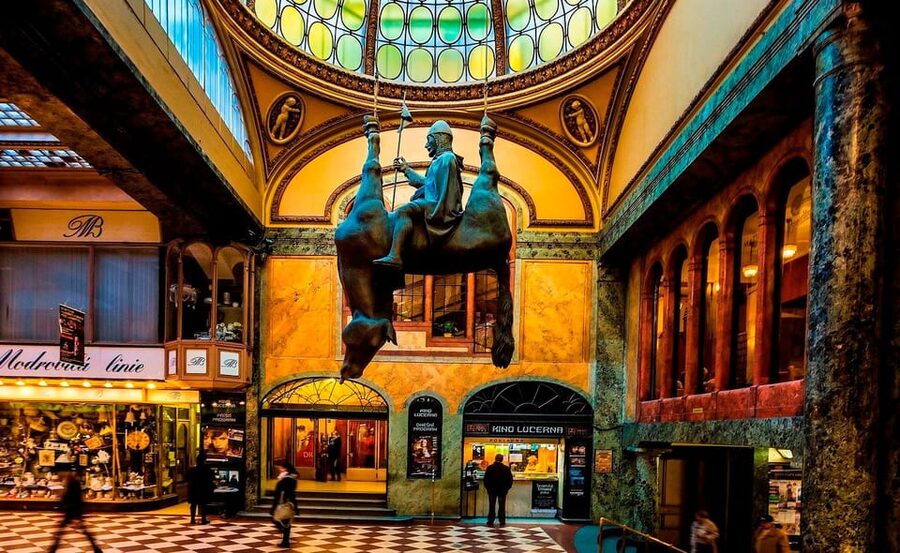
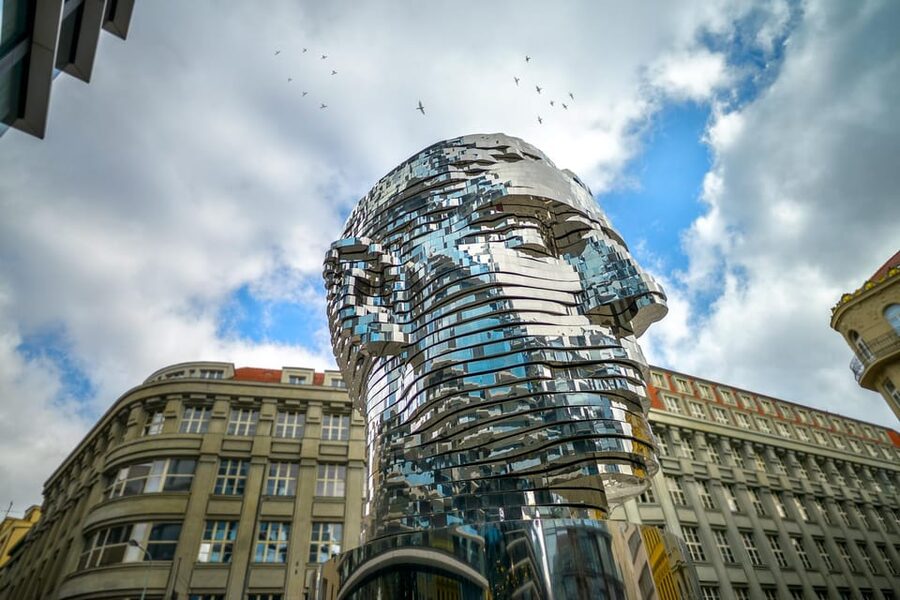
- Art installations you could miss: The tour brings attention to public works and artists that are easy to overlook on your own.
- Small-group feel: Recent departures have been very intimate, including a private tour and a group of only three people.
- English-speaking live guide: Michael has led the walk with detailed explanations and useful Prague advice.
- Wheelchair accessible: The activity is listed as wheelchair accessible, though the exact route details should still be checked before booking.
Why modern Prague deserves two hours
Most first-time visitors come for Prague’s old architecture. That makes sense. The historic center has the castles, churches, bridges, and ornate streets that fill the guidebooks.
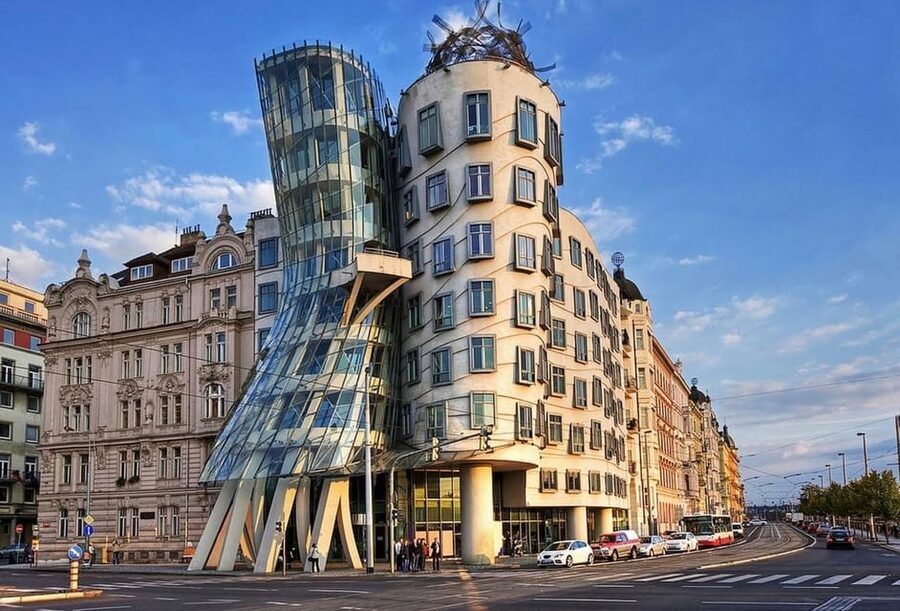
But a city is not frozen in the century that looks best in photographs. Prague continued to change through socialism, postwar rebuilding, new public art, and recent experiments in urban design. This tour gives those changes a place in the story.
The useful idea here is contrast. You are not simply looking at newer buildings and labeling them modern. You are learning how politics, technology, public life, and changing ideas about cities shaped what was built. Socialist realism carries one set of values. Brutalism carries another. Experimental installations ask different questions about how people use shared space.
That makes the walk worthwhile even when a building is not conventionally beautiful. One of the tour’s strengths is its willingness to discuss structures for their ideas and history, not just their appearance. You may come away seeing an awkward concrete block with more curiosity than you had before.
A few more Prague half-days worth weighing up
- Prague: 50-Minute Sightseeing Evening Cruise
★ 4.2 · 33,780 reviews - Prague: Medieval Dinner with Unlimited Drinks
★ 4.4 · 19,847 reviews - Prague: Skip-the-line Castle Ticket and Optional AudioGuide
★ 4.3 · 11,121 reviews
Ten stops, but not a standard architecture lecture
The experience visits 10 points of interest in two hours. That gives you about 12 minutes per stop on average, before allowing for walking between locations. In practice, some stops will get more explanation than others, and the guide may keep the pace moving.
The exact names of all 10 locations are not provided, so I would not book this expecting a published checklist of famous buildings. Instead, think of the route as a guided selection of modern Prague sites. The value lies in the connections between them and in the guide’s explanation of why each place matters.
At one stop, you might focus on a building’s form or materials. At another, the key subject may be the political climate that shaped it. A public art installation could lead to a discussion of its artist and how people pass through the city without noticing the work.
That is also the main limitation. If you want a systematic survey that moves neatly from Art Nouveau to cubism, functionalism, socialist realism, brutalism, and contemporary design, this may feel loose. One participant specifically found that the walk did not provide a full, orderly review of Prague’s styles. The route is personal and selective rather than academic.
I see that as a useful distinction. This is a city walk with architectural content, not a university lecture conducted outdoors.
Socialist realism: architecture with a political message
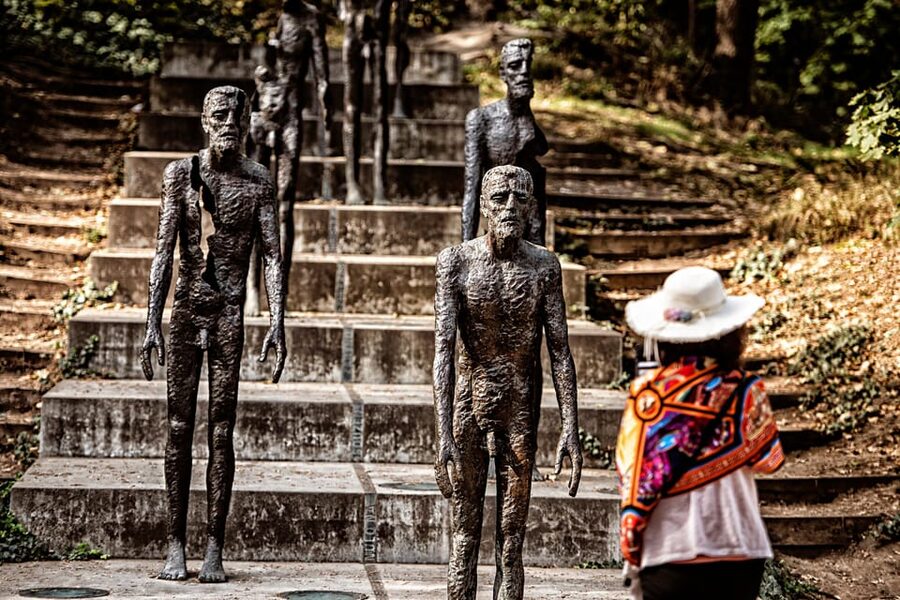
Socialist realism is one of the tour’s stated themes. The style is worth discussing because architecture can reveal the values a government wanted to project.
Buildings in this tradition were not designed only to solve practical problems. Their scale, decoration, and formal appearance could suggest order, strength, and collective purpose. The city became a place where public design carried political meaning.
You may find these sites less immediately attractive than Prague’s older landmarks. That is part of the point. The tour encourages you to ask who a building was meant to impress, what kind of public life it supported, and how its design reflected the period in which it appeared.
For you, the benefit is context. A self-guided walk might reduce a building to a date and an architectural label. A guide can connect it to wider changes in urban living and explain why the structure looks the way it does.
Do not expect every stop to be a visual knockout. This tour asks you to look with a wider lens, including at buildings that are plain, imposing, or divisive.
Brutalism and the case for concrete
Brutalism is another major subject. Its heavy forms and exposed materials can divide opinion, even among architecture fans. Some people see force and honesty in the design. Others see coldness and visual weight.
A good guide can help you get past the quick reaction. The question is not simply, do I like this building? You can also ask how it handles public space, how people move through it, and what its materials say about the period.
The tour’s compact format works well here. You get an introduction to brutalist ideas without spending half a day on a specialist route. If you are new to the style, two hours is enough to give you a working vocabulary and a few examples to notice later.
Still, the route cannot cover everything. Ten stops across a changing city will provide snapshots rather than a full catalogue. If your main interest is brutalism alone, check the meeting details and route before paying, because the tour also includes other periods and art installations.
More Guided Tours in Prague:
- Prague: Castle Tour with Local Guide and Entry Ticket
★ 4.6 · 10,422 reviews - Prague: Klementinum Library & Astronomical Tower Guided Tour
★ 4.5 · 5,050 reviews - Prague Guided Walking Tour and Cruise with Authentic Czech Lunch
★ 5.0 · 3,627 reviews - Prague: Old Town and Jewish Quarter Guided Tour in German
★ 4.8 · 3,143 reviews
Art installations hiding in plain sight
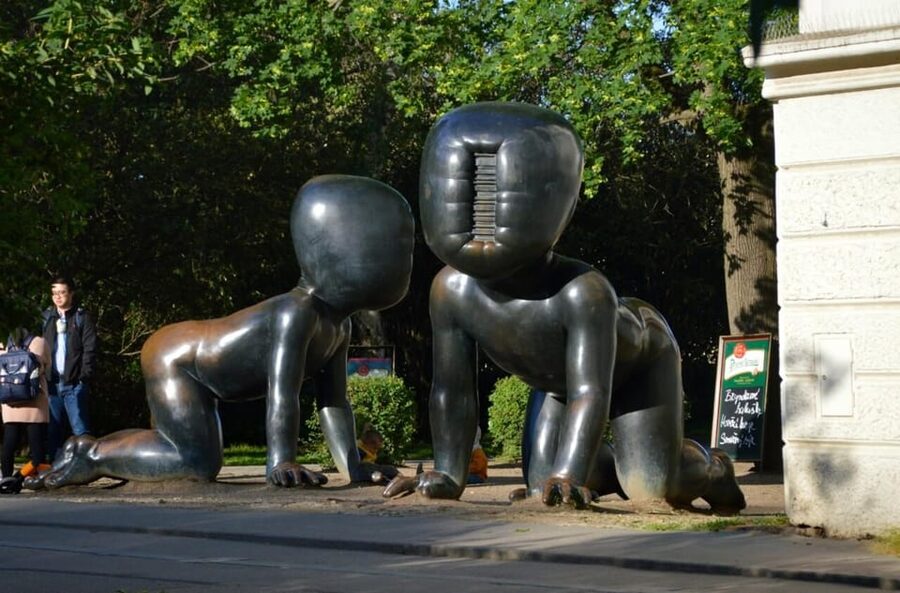
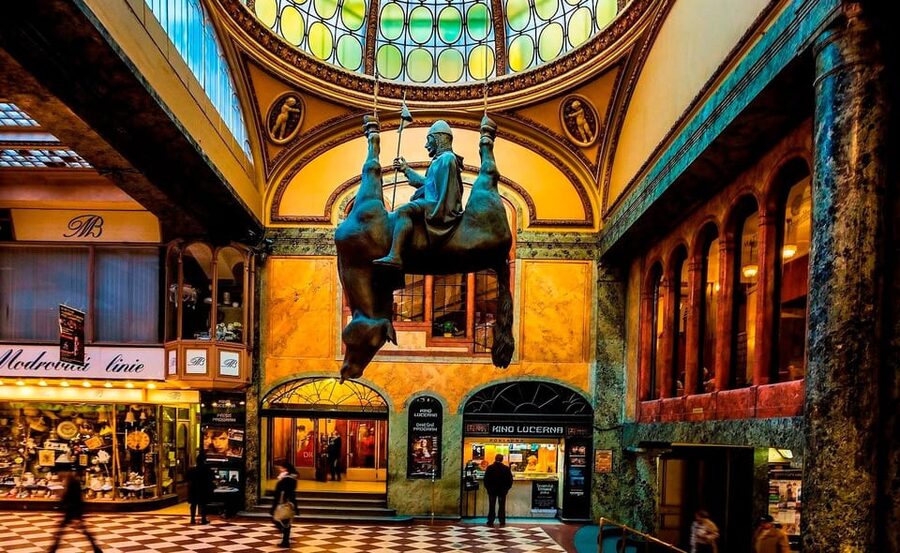
The most distinctive part of this walk may be its attention to public art. Recent tours have included installations that were easy to miss without a guide, along with explanations of the artists behind them.
This changes how you move through Prague. Instead of looking only at façades, you start scanning corners, open spaces, and ordinary routes for deliberate interventions. An installation may not announce itself with a large sign. Without context, you could walk past it and never know what you saw.
I like this feature because it gives you something practical for the rest of your stay. Once you learn to notice one overlooked work, you may begin seeing other pieces on your own. The guide’s comments can also help you understand why a work belongs in its setting rather than treating it as decoration.
The drawback is that public art is personal. If you want a tour centered on major buildings, installations may feel like a detour. If you enjoy small discoveries and stories about artists, they may be the most memorable part.
Michael’s personal guiding style
Michael has led the tour in a friendly, informal way. The small groups reported on recent departures made the experience feel close to a private walk, with plenty of room for questions.
That matters in an architecture tour. You may want to ask why a structure was built, how a style differs from another, or what else to see in Prague. In a large group, those questions can be hard to fit in. A small group gives the guide more freedom to adjust the explanation.
Michael has also offered extra Prague advice after the tour. That can be useful if this is one of your first activities in the city and you want help deciding what to see next.
At the same time, group size is not guaranteed. The recent intimate outings may reflect the day rather than a permanent maximum. You should enjoy the personal format if it happens, but do not book solely on the promise of a private experience.
The language is English, and the tour includes a live guide rather than an audio recording or self-guided map.
What two hours feels like on foot
Two hours is short enough to fit into a busy Prague schedule. You can place it between larger sightseeing plans without giving up a full morning or afternoon.
The pace should be active but manageable. Ten points in 120 minutes means the experience combines short explanations with movement through the city. Wear comfortable shoes and keep your attention on the guide during transitions, since the walk is built around seeing several places rather than lingering at one landmark.
Food and drinks are not included. That is not a serious problem for a two-hour activity, but you should eat beforehand or plan a café stop afterward if you prefer not to walk hungry.
The activity is listed as wheelchair accessible. That is helpful, though I would still confirm the exact route and meeting point if you use a wheelchair, since accessibility can depend on street surfaces, crossings, and the path between stops.
Starting times vary, so check availability for your chosen date. The tour also allows cancellation up to 24 hours in advance for a full refund, and you can reserve now and pay later. Those policies make it easier to fit the walk into a changing city schedule.
Is $35 a fair price?
At $35 per person, the tour is priced as a modest guided city walk. You are paying for two hours of live explanation, route planning, and the chance to notice works you might otherwise miss.
The value depends on your interests. If you are curious about Prague’s recent past, public art, and the reasons behind unusual buildings, $35 is reasonable. The guide can give you a framework that would take time to assemble on your own.
If you only want famous sights, the value is weaker. Many of Prague’s best-known historic monuments are not the focus here, and the tour may take you to buildings you would not choose from a postcard. That is precisely why it can add something new to a standard first visit, but it also means the experience will not satisfy everyone.
The small-group possibility improves the value, especially if you can ask questions and receive personal tips. Just remember that the group size may vary.
Who should book this walk?
I would recommend it to an architecture fan, a design student, a returning Prague visitor, or anyone who wants to understand the city beyond its old center. It also suits curious first-time visitors who can spare two hours and do not mind trading famous sights for less obvious ones.
The tour is particularly useful early in your stay. The guide’s city advice can help shape the rest of your visit, and the new way of looking at public art may make later walks more rewarding.
I would be more cautious if you need a formal timeline of every Prague style, a stop-by-stop list of iconic buildings, or a tour devoted only to beautiful architecture. The route is selective and story-driven. Some stops may be plain, heavy, or controversial, but they are included because they help explain the city’s modern identity.
My take: book it for ideas, not a checklist
This is a good-value choice for seeing Prague as a living city rather than a preserved old town. The strongest features are the modern focus, the attention to overlooked installations, and the chance of a very small group with an engaged guide such as Michael.
Book it if you want stories, context, and a fresh way to read the streets. Skip it if your ideal tour is a polished parade of famous façades or a strict survey of architectural history. At $35 for two hours, the decision is simple: you are buying interpretation and discovery, not a greatest-hits tour.
FAQ
How long does the Prague modern architecture tour last?
The tour lasts two hours.
How many points of interest does the tour visit?
The route includes 10 points of interest.
What architectural subjects does the tour cover?
The tour covers modern Prague, including socialist realism, brutalism, experimental installations, and the cultural influences that shaped 20th and 21st-century urban design.
Is the tour conducted in English?
Yes. The live tour guide speaks English.
Is the tour wheelchair accessible?
Yes, the activity is listed as wheelchair accessible.
Are food and drinks included?
No. Food and drinks are not included in the tour price.
What is included in the tour?
A live guide is included.
Can I cancel the tour for a refund?
Yes. You can cancel up to 24 hours in advance for a full refund.
Do I have to pay when I reserve?
No. The activity offers reserve now and pay later, so you can book your spot without paying immediately.
Just added around Prague
- WWII and Communism History in Prague’s Old Town Private Tour★ 5.0 · 4 reviews
- World War II 4WD Tour from Prague with Lunch★ 4.4 · 3 reviews
- Wroclaw to Prague: 2-in-1 (Private Transfer + Country Tour)★ 5.0 · 4 reviews
- Prague: Historical Walking Tour with Focus on World War 2★ 4.3 · 12 reviews
- Walking tour of Prague in french: Old Town & Charles Bridge★ 4.9 · 62 reviews
- Ultimate Unlimited Beer Pong with Czech Beer★ 4.6 · 5 reviews
- Walking tour of Prague in French : Nové Město★ 4.9 · 16 reviews
- Prague: Modern Private Spa with Jacuzzi and Sauna★ 4.8 · 62 reviews
Guided, compared.
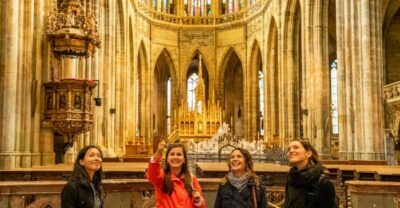
Castle Tour with Local Guide and Entry Ticket
Read our review →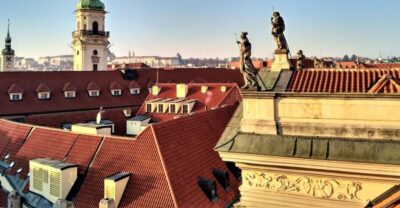
Klementinum Library & Astronomical Tower Guided Tour
Read our review →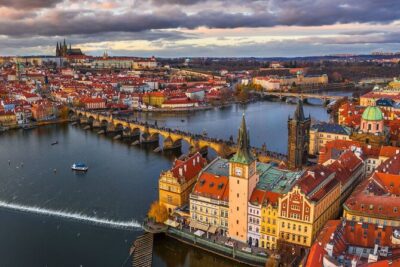
Prague Guided Walking Tour and Cruise with Authentic Czech Lunch
Read our review →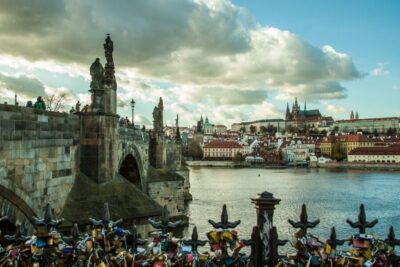
Old Town and Jewish Quarter Guided Tour in German
Read our review →
Communism History and Nuclear Bunker Guided Tour
Read our review →
Terezin Concentration Camp Guided Tour w/ Audio
Read our review →
Ghosts and Legends Nighttime Guided Walking Tour
Read our review →