Reviewed · PRAGUE TOURS
Back In Time: Zážitkové muzeum historie
Prague’s past can feel like a stack of names, dates, kings, and legends. Back In Time turns those subjects into short scenes and hands-on displays, with a time machine and a 5D cinema ride adding some theatrical punch. In about an hour, you move from the city’s legendary beginnings to major moments in its medieval and modern story.
I like the way the museum gives children a reason to care about Prague’s past, and I like the range of subjects, from Libuše and the Golem to Charles IV and the Astronomical Clock. The 5D cinema also offers a change of pace from reading panels and looking at displays.
The main drawback is depth. This is an entertaining introduction, not a full museum study of Prague. If you want long explanations, rare objects, or detailed historical debate, the storytelling may feel light.
Key points to know before you go
- A one-hour introduction: The compact visit works well between major Prague sights or as a rainy-day stop.
- History told through scenes: Medieval life, the Renaissance, city legends, rulers, and the Prague Uprising are presented with modern effects and recreated settings.
- The Golem and Libuše: Two famous Prague stories give younger visitors an easy way into Czech culture.
- Charles IV in a personal setting: The museum aims to show what the famous king’s real life was like, not only list his achievements.
- 5D cinema included: Expect motion and sensory effects designed to make the screen feel closer and more physical.
- Age and height limits matter: Entry is for children aged six and older and people at least 110 centimeters tall.
Starting with Prague’s legends and first foundations
A useful way to begin a Prague visit is with its stories of origin. Back In Time includes the founding of Prague by Libuše, the legendary princess associated with the city’s early beginnings. This is not the same as a conventional archaeological account, but it gives you a quick sense of how Czech identity blends history, folklore, and national memory.
The legend of the Golem adds another famous Prague tale. The Golem is linked with the Jewish quarter and the figure of Rabbi Judah Loew, though the exact form of the legend has grown over time. Here, the story works as an accessible introduction to one of Prague’s best-known myths.
For children, these scenes are likely to be easier to remember than a list of dates. You get a character, a problem, and a strong visual idea. For adults, the value is different: these stories give you a few reference points to notice later as you walk through Prague.
I would treat this first part as a doorway into the city rather than a final explanation. If you later visit Prague Castle, the Old Town, or the Jewish Quarter, the legends may give those places more meaning.
A few more Prague half-days worth weighing up
- Prague: 50-Minute Sightseeing Evening Cruise
★ 4.2 · 33,780 reviews - Prague: Medieval Dinner with Unlimited Drinks
★ 4.4 · 19,847 reviews - Prague: Skip-the-line Castle Ticket and Optional AudioGuide
★ 4.3 · 11,121 reviews
Seeing medieval and Renaissance Prague in short scenes
The museum also covers life in the Middle Ages and the Renaissance. The supplied information does not specify every display or the exact order, so you should expect a sequence of themed scenes rather than a detailed room-by-room historical museum.
That format has a clear benefit. Prague’s early history is easier to grasp when you see how periods differ in mood, clothing, buildings, and daily life. Even a short presentation can help you place the city’s older streets and monuments within a wider timeline.
The trade-off is that a recreated scene cannot explain everything. You may leave with a general impression rather than a precise understanding of political change, religion, social class, or everyday work. I see this as a useful primer for families and school groups, less so for anyone already well versed in Czech history.
The Renaissance section is particularly helpful if you are planning to explore central Prague afterward. It can prompt you to look beyond the postcard views and notice how the city’s architecture reflects several different periods at once.
Charles IV and the making of a royal city
Charles IV receives a dedicated place in the experience. He is one of the key figures in Prague’s story, connected with the city’s growth, royal importance, and major building projects. The museum promises to show what his real life was like, which suggests a more personal angle than a simple list of achievements.
That focus matters because Charles IV can otherwise become just another name attached to the Charles Bridge. A short, human-scale presentation may help you think about the king as a person as well as a ruler.
Still, keep your expectations in check. A one-hour attraction cannot cover his reign in the detail of a specialist museum or historical book. The best use of this section is to prepare you for later sightseeing. Afterward, places connected with Charles IV may feel less isolated from the story of Prague’s development.
The experience also includes a Hall of Fame. The available information does not identify every person represented there, so I would not book this expecting a full list of Czech cultural and political figures. Think of it as another quick way to connect important names with the city’s past.
The Astronomical Clock, beyond the famous figures
Prague’s Astronomical Clock is one of the city’s most recognizable sights. Many visitors see its moving figures, take a photograph, and move on without learning how the clock came to be. Back In Time includes the founding of the clock and what it calls the real story behind it.
That makes this section especially useful before you visit Old Town Square. You may look at the clock with more curiosity once you know it was built as a working instrument as well as a public spectacle.
The wording about the real story should not lead you to expect a long technical lecture. The attraction is designed for a broad audience, with children and school groups clearly in mind. The explanation will likely be more memorable for its visual presentation than for fine mechanical detail.
I like this choice of subject because it connects the museum directly to a sight you can visit on foot in central Prague. The experience becomes more useful when you follow it with actual city exploration.
A completely different way to spend a day in the same part of the country:
- Prague: Castle Tour with Local Guide and Entry Ticket
★ 4.6 · 10,422 reviews - Prague Castle 2.5-Hour Tour Including Admission Ticket
★ 4.7 · 8,927 reviews - Prague: Oldtown, Medieval Underground & Dungeon History Tour
★ 4.2 · 8,244 reviews - Prague: Vltava River Night Cruise with Buffet
★ 4.3 · 7,338 reviews
From royal history to the Prague Uprising
The Prague Uprising gives the museum a more modern and serious chapter. It is an important part of Czech history, and its inclusion prevents the experience from stopping with kings, legends, and medieval scenes.
This section may feel different from the Golem or the time-machine effects. The Prague Uprising belongs to the city’s wartime and modern past, so it can add needed context to Prague’s twentieth-century story. The supplied details do not explain how much space or historical detail the section receives, so I would expect an introduction rather than a full account of the events.
That limitation is worth remembering for school groups. The attraction can spark questions and provide a starting point for a lesson, but a teacher will need other material for dates, causes, people, and consequences.
For families, the shift to a more serious subject can be useful. It shows that Prague’s past is not only castles and legends. The city has also experienced conflict, resistance, and rapid political change.
What the interactive format adds
The central strength here is presentation. You are not simply reading a timeline. The museum uses interactive exhibits, authentic-looking scenes, modern technology, and a time-machine concept to make the periods feel closer.
I find this format most helpful when you are new to Prague. You can gain a basic map of the city’s past without spending half a day in a large institution. The short scenes also give children a task: watch, react, and connect what they see to a person or event.
The word interactive can mean many things, and the supplied information does not explain exactly how visitors operate each display. Do not assume every exhibit is a complex hands-on game. Some parts may rely on effects and set pieces as much as direct participation.
The museum’s high overall rating, listed at 4.9 from 27 reviews, fits its clear purpose: a compact, enjoyable introduction with strong appeal for children. The most enthusiastic comments focus on families, especially children. At the same time, one useful criticism is that the historical story can feel thin and the amount of content limited. I think both points are fair.
The 5D cinema: the loudest part of the visit
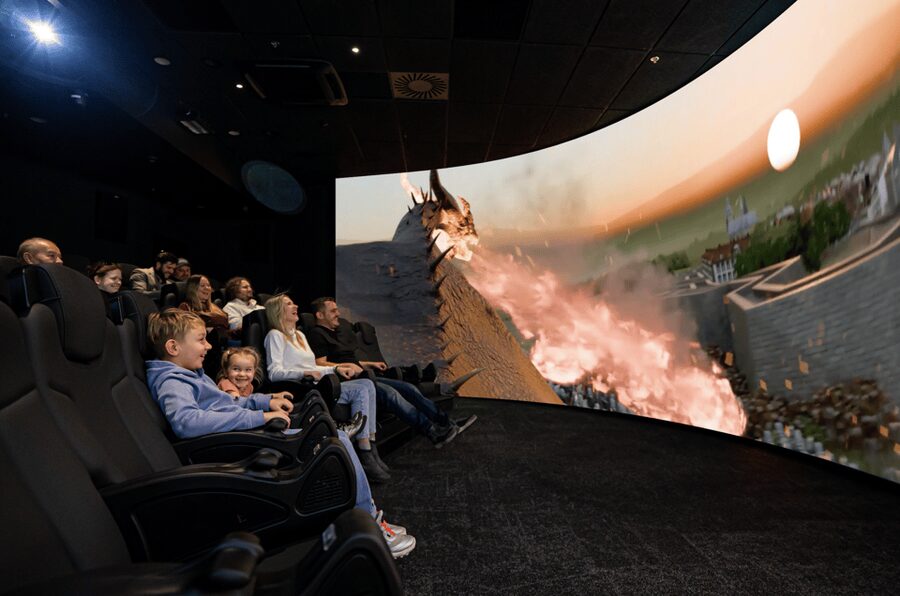
The 5D cinema is the experience’s main adrenaline break. Instead of only watching a film, you are meant to feel closer to the action through added physical effects. The description promises a screen that comes to life and a good dose of excitement.
This can be a highlight for children and anyone who enjoys theme-park-style attractions. It also keeps a short museum visit from feeling like a school lecture. After several historical scenes, a sensory cinema sequence gives the hour a change of rhythm.
There are important limits. The attraction specifically warns against entry for people with epilepsy, claustrophobia, or heart disease. Pregnant women are also listed as unsuitable for the experience. If you are sensitive to enclosed spaces or strong sensory effects, the restrictions should guide your decision.
Because the cinema is part of the ticket rather than an optional extra, you should consider the whole visit as a mix of history and entertainment. Book it for that combination, not for a quiet museum atmosphere.
Is $18 a fair price for one hour?
At $18 per person, this is not the cheapest way to spend an hour in Prague. The value depends on what you want from the visit.
For a family, the price includes the interactive exhibits, time-machine concept, historical scenes, and 5D cinema. You are paying for an organized indoor activity that gives children something to do while introducing them to Czech culture. That can be reasonable, especially when the weather is poor or younger children have reached their limit with churches, castles, and long walking tours.
For a solo adult with a strong interest in history, the value is less certain. You may find the one-hour format too brief and the explanations too basic. The Polish feedback pointing to good organization but limited historical content is a useful warning for serious history fans.
Schools may find the price easier to justify because the attraction combines several teaching subjects: legends, medieval society, architecture, monarchy, national stories, and modern conflict. The experience will work best as a supplement to classroom work, not as the only lesson.
The free cancellation up to 24 hours before the visit and the option to reserve now and pay later reduce the risk of fitting it into a changeable Prague schedule. Those policies do not make the admission cheaper, but they do make planning easier.
Who should book Back In Time Prague?
I would consider it for families with children aged six and up, provided every child meets the 110-centimeter height requirement. The mix of stories, visual scenes, and 5D effects gives children several ways to stay interested.
It also suits first-time visitors who want quick context before exploring the city. You may leave with enough background to understand why Libuše, the Golem, Charles IV, the Astronomical Clock, and the Prague Uprising matter.
Schools and youth groups can use it as a lively opening activity. Teachers should be ready to add fuller explanations afterward, since the attraction favors pace and atmosphere over long historical analysis.
I would be cautious if you are pregnant, have epilepsy, claustrophobia, or heart disease. The same applies if you are looking for a quiet, artifact-heavy museum. The attraction is built around effects and recreated scenes, not a large collection of original objects.
The venue is wheelchair accessible, which makes it a practical option for visitors who need step-free access. The available information does not describe every route or facility, so anyone with specific access needs should confirm the details before booking.
My verdict: a good first taste, not a full history lesson
Book Back In Time if you want a short, indoor, family-friendly introduction to Prague with a strong entertainment element. The best reasons are the clear range of topics, the memorable legends, the Charles IV section, and the 5D cinema.
Skip it if your main goal is detailed history, original artifacts, or a long scholarly explanation. At $18 for one hour, the attraction earns its price through presentation and family appeal rather than depth.
For most families, I would place it early in a Prague visit. Use it to get your bearings, then see the Astronomical Clock, Old Town, Charles Bridge, and other historic places with the stories fresh in your mind.
FAQ
How long does Back In Time Prague last?
The experience lasts about one hour.
How much does admission cost?
The listed price is $18 per person.
What is included in the experience?
Admission includes interactive exhibits, the 5D cinema, a time-machine experience, the legend of the Golem, the founding of Prague by Libuše, Charles IV, a Hall of Fame, the Astronomical Clock, and the Prague Uprising.
Is the experience suitable for children?
Yes, it is intended for families and schools, but children must be at least six years old and at least 110 centimeters tall.
Is Back In Time Prague wheelchair accessible?
Yes, the experience is wheelchair accessible.
Is the 5D cinema included in the ticket?
Yes, the 5D cinema experience is included.
Who should not attend?
The experience is not suitable for children under six, pregnant women, people with claustrophobia, people with epilepsy, people with heart disease, or anyone shorter than 110 centimeters.
Can I cancel for a full refund?
Yes, you can cancel up to 24 hours in advance for a full refund.
Can I reserve now and pay later?
Yes, the booking option allows you to reserve your place and pay later.
Just added around Prague
- WWII and Communism History in Prague’s Old Town Private Tour★ 5.0 · 4 reviews
- World War II 4WD Tour from Prague with Lunch★ 4.4 · 3 reviews
- Wroclaw to Prague: 2-in-1 (Private Transfer + Country Tour)★ 5.0 · 4 reviews
- Prague: Historical Walking Tour with Focus on World War 2★ 4.3 · 12 reviews
- Walking tour of Prague in french: Old Town & Charles Bridge★ 4.9 · 62 reviews
- Ultimate Unlimited Beer Pong with Czech Beer★ 4.6 · 5 reviews
- Walking tour of Prague in French : Nové Město★ 4.9 · 16 reviews
- Prague: Modern Private Spa with Jacuzzi and Sauna★ 4.8 · 62 reviews
Prague Tours, compared.

Skip-the-line Castle Ticket and Optional AudioGuide
Read our review →
Castle Tour with Local Guide and Entry Ticket
Read our review →
Prague Castle 2.5-Hour Tour Including Admission Ticket
Read our review →
Oldtown, Medieval Underground & Dungeon History Tour
Read our review →