
Reviewed · WALKING TOURS
Religious Prague Walking Tour
Prague’s religious story is not confined to one grand cathedral. It runs through Jan Hus, early Protestant worship, Catholic revival, and the modern Czech suspicion of organized religion. This three-hour walk links those threads through five central churches and chapels, with a professional historian guide supplying the context that a quick photo stop cannot.
I like the small maximum of 15 people, which should make it easier to hear the guide and ask questions. I also like the focus on ideas and power, not just architecture, especially with guides such as Peter, a Charles University history graduate who connects old religious struggles with Czech life today. The main consideration is access: on Mondays, several churches may be closed, so you may spend more time viewing buildings from outside.
Key points to know before booking
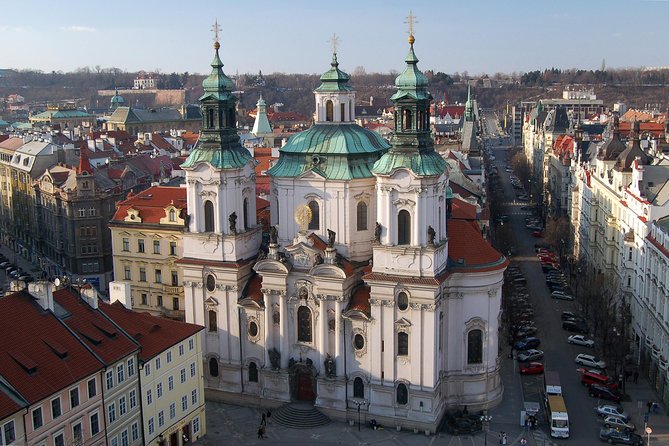
- Five important religious sites: Follow a compact route through St. Martin in the Wall, Our Lady before Týn, Our Lady of the Snows, St. Michael, St. Nicholas, and Bethlehem Chapel.
- Jan Hus is central to the story: Bethlehem Chapel is linked to Hus and the beginnings of the Czech reform tradition.
- A historian leads the walk: Peter is specifically praised for explaining Czech religious history, politics, and modern attitudes toward organized religion.
- Small groups keep the walk personal: The maximum is 15 people, with a private upgrade available.
- The tour runs in all weather: Bring suitable clothing, since rain will not stop the outing.
- Monday needs caution: Several churches may be closed, which can change the balance between interior visits and exterior explanations.
Why Prague’s churches tell a political story
This is not simply a church-hopping walk. It is a lesson in how belief shaped Prague’s public life, and how Prague later turned away from organized religion.
The route moves through Catholic churches, Protestant connections, and places associated with the Czech reform movement. That range matters. If you only visit Prague’s most ornate interiors, you can come away thinking the city’s religious identity was always firmly Catholic. The stops here show a more unsettled past, with arguments over preaching, church authority, reform, and national identity.
I especially like the modern angle. One guide described in the tour information is Peter, a history graduate of Charles University. His approach includes the question of why many Czechs today are skeptical or even hostile toward organized religion. That makes the walk more useful than a list of dates and architectural labels. You get a chance to connect medieval and early modern events with the country you see around you now.
The subject can be serious, but the route is not presented as a formal academic lecture. The best fit is for someone who wants clear explanations while walking through central Prague. If you prefer a tour focused only on pretty facades and famous photo spots, this may feel more demanding.
More Walking Tours in Prague:
- Prague: 3-Hour Walking Tour of Old Town & Prague Castle
★ 4.7 · 5,696 reviews - Prague: Ghost Walking Tour Where Legends Come To Life
★ 4.4 · 5,253 reviews - Prague: Jewish Quarter Walking Tour with Admission Tickets
★ 4.7 · 3,729 reviews
Starting near Na Příkopě
The meeting point is at Na Příkopě 864/28 in Nové Město, Prague 1. The walk ends back at the same meeting point, which is useful if you have another appointment or want to continue exploring from a known location.
The activity lasts about three hours. That is long enough to give the religious story some shape, but short enough to fit into a busy Prague schedule. You should still wear comfortable shoes. Even with short stops, a walking tour requires more energy than a sightseeing bus, and the experience operates in all weather.
The group limit is 15 people. That number is small enough for a guide to explain details without relying only on broad commentary. It also gives you a reasonable chance to ask about a particular church, religious movement, or historical figure.
A private tour upgrade is available if you want more control over the pace or subject matter. That could be especially useful if your interests are specific, such as Jan Hus, Catholic architecture, Protestant history, or the relationship between religion and Czech politics.
St. Martin in the Wall and early Protestant Prague
The first stop is St. Martin in the Wall Church, described as the first Protestant church in the world. Even without a long interior visit, this is an effective starting point because it introduces the religious break from established Catholic practice.
The name also hints at Prague’s layered urban past. A church built into or beside a city wall feels different from a free-standing landmark surrounded by open space. Here, the building becomes part of the story of how the medieval city grew and how religious life occupied practical urban sites.
Expect roughly 10 minutes at this stop. That is enough for the guide to establish the main point and explain why this church matters. Do not expect a long period of quiet interior contemplation. The value comes from the historical framing and from seeing the site as the first chapter in the walk’s Protestant thread.
If the church is not open, the stop can still work as an exterior explanation, but interior access would naturally make it more satisfying. This is one reason to ask about opening conditions when booking, especially if you are visiting on a Monday.
Our Lady before Týn and Prague’s famous skyline
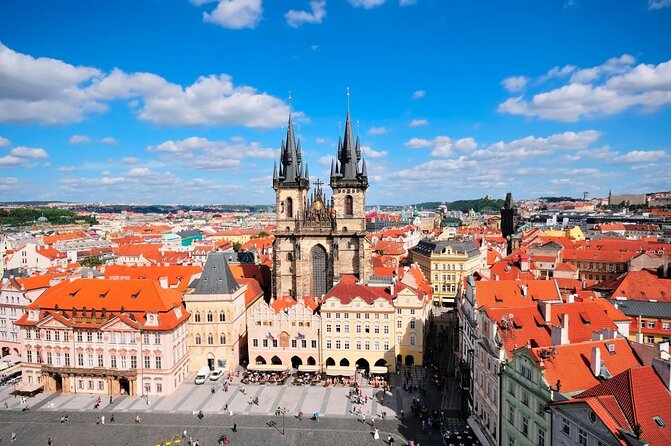
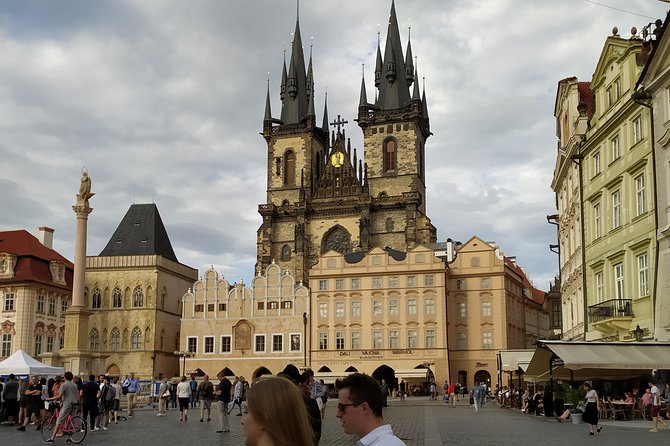
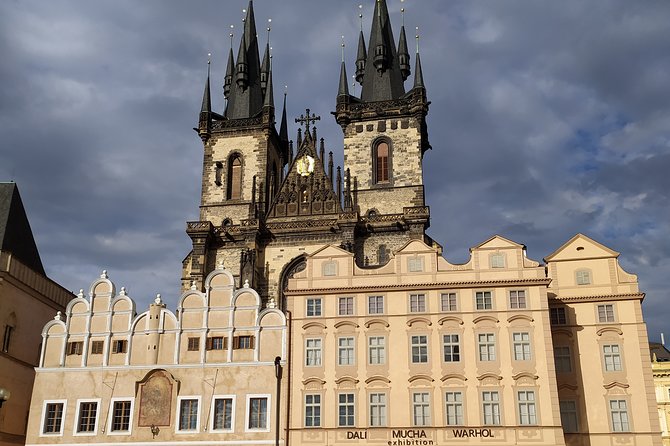
The Church of Our Lady before Týn receives only about five minutes on the planned route, but it is one of Prague’s most recognizable religious buildings. Its dramatic twin towers help define the Old Town skyline, and the guide can place its appearance within the wider religious story of the city.
This is a good example of why a guided stop can help. You may already have photographed the church or seen it from Old Town Square. A historian can add the political and religious setting that a skyline view leaves out.
The short duration suggests that this is mainly a focused explanation rather than a full interior visit. If you want extensive time inside every church, this tour may feel brisk. If you want a connected overview, the quick stop keeps the route moving and leaves room for the more historically specific sites later.
A few more Prague half-days worth weighing up
- Prague: 50-Minute Sightseeing Evening Cruise
★ 4.2 · 33,780 reviews - Prague: Medieval Dinner with Unlimited Drinks
★ 4.4 · 19,847 reviews - Prague: Skip-the-line Castle Ticket and Optional AudioGuide
★ 4.3 · 11,121 reviews - Prague: Castle Tour with Local Guide and Entry Ticket
★ 4.6 · 10,422 reviews
Our Lady of the Snows and the scale of Catholic Prague
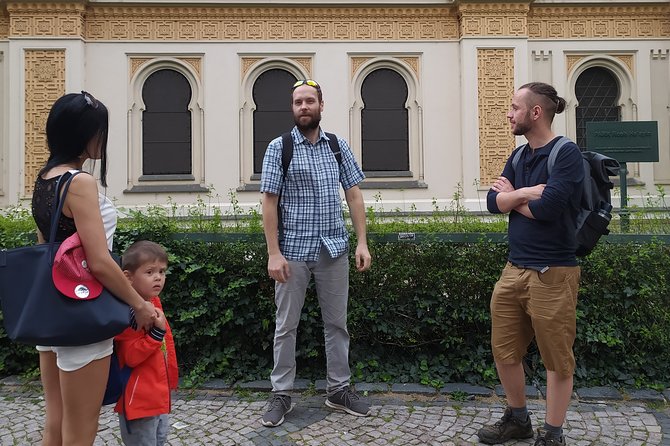
Our Lady of the Snows is scheduled for about 10 minutes and is presented as a magnificent building. The stop helps balance the route, which could otherwise feel weighted toward reform and Protestant history.
You will see how Catholic Prague fits into the same story as Jan Hus and the early Protestant movement. The point is not to treat one tradition as the hero and another as the villain. Instead, the church gives the guide a chance to show how competing religious forces shaped the city.
The description does not promise extended admission or a long architectural study, so keep your expectations measured. You will get a guided look and historical explanation rather than an unhurried art tour. That is a fair trade if your priority is understanding how the buildings fit together.
St. Michael and St. Nicholas in one concentrated stop
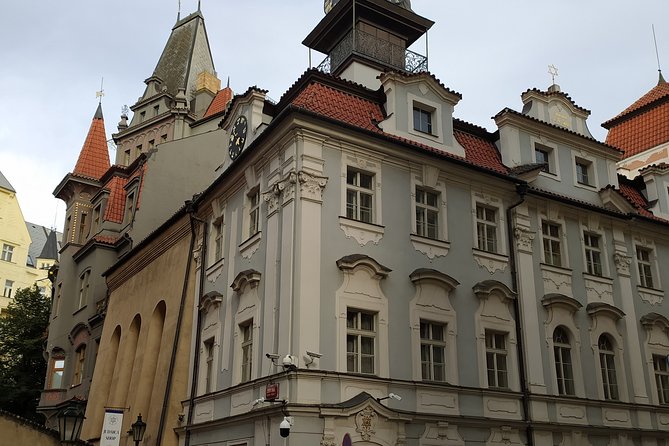
The itinerary groups St. Michael Church Prague with St. Nicholas. Both are described as important and interesting buildings, and together they broaden the architectural and religious range of the walk.
Because this part of the route covers more than one church in about 10 minutes, the pace may be compact. Listen for the distinctions your guide makes rather than trying to memorize every detail. The strength of this stop is comparison: two religious buildings can be understood more clearly when you encounter them close together in the same tour.
This is also where a strong guide matters most. A simple list of construction dates would be easy to forget. A guide such as Peter can instead explain how buildings, religious movements, and political authority affected one another. The tour information also notes that guides may adapt the walk around the interests of the group, which is useful if you want to spend more time on one tradition than another.
Bethlehem Chapel and the voice of Jan Hus
Bethlehem Chapel is the emotional center of the route for anyone interested in Czech reform history. Jan Hus preached here, and the chapel is tied to the beginnings of the Czech reformist tradition.
The planned stop is only about five minutes, so this is not a long lecture at the site. Still, the location gives the story a human focus. Religious reform was not only an abstract dispute among institutions. It was also carried through preaching, public argument, and the influence of a particular voice.
If Jan Hus is your main reason for booking, tell the guide at the start. The tour has some flexibility, and one guide was specifically praised for organizing the walk around an eclectic set of interests. You should not assume the entire three hours will become a dedicated Hus tour, but a clear request may help the guide give this stop more weight.
What the guides add to the buildings
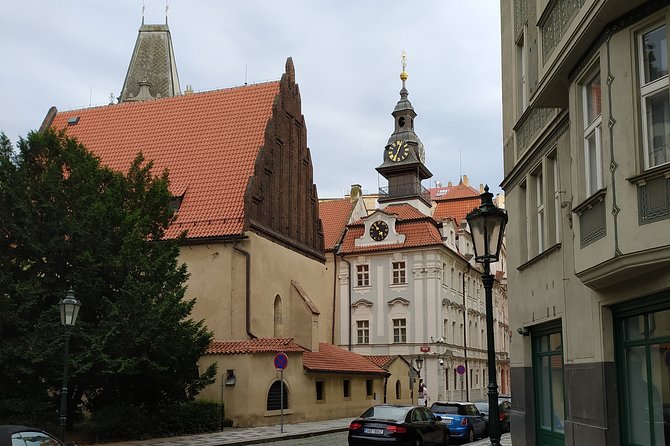
The strongest part of this experience is the guide’s interpretation. The churches are important, but many are easy to pass without understanding why they matter.
Peter is identified as a Charles University history graduate and is described as clear, organized, and willing to connect religion with culture and power. Those are the exact links you need in Prague. The story crosses centuries and traditions, so a guide must keep the thread visible.
The tour also benefits from a modern Czech point of view. One guide discussed the country’s distance from organized religion and shared a personal, somewhat cynical view of how that past relates to present-day life. That may not suit someone seeking a devotional tour, but it can make the experience more honest and intellectually useful.
You should expect interpretation rather than religious instruction. The emphasis is on history, architecture, reform, and social change. The experience suits people of any faith, including those who are mainly interested in politics, art, or Czech identity.
Monday closures and weather planning
The tour operates in all weather, so rain does not automatically cancel the walk. Dress for the forecast and bring footwear that can handle wet streets. A waterproof layer is more useful than an umbrella alone when you are trying to listen and move with a group.
The bigger practical concern is church access. A Monday outing may find several churches closed, as one account of the experience makes clear. The guide can still explain the buildings from outside, but the tour will feel different when you cannot enter.
If interior access matters to you, ask about the planned date before booking. If your main goal is historical context, a Monday may still be worthwhile. Just know that the balance can shift toward facades, streets, and spoken explanation.
Children must be accompanied by an adult. Service animals are allowed, public transportation is nearby, and most people can participate. The activity is offered in English, and a mobile ticket is provided.
Is $47.32 a fair price?
At $47.32 per person, this is not the cheapest way to see Prague’s churches. You are paying for a three-hour guided interpretation, not simply entry to a set of buildings. The listed stops have free admission, so the value rests almost entirely on the guide and the connections between sites.
I think the price makes sense if you want the religious story explained in one organized walk. Hiring separate guides or trying to research five churches on your own would take more time, and you might miss the link between Jan Hus, Protestant beginnings, Catholic institutions, and modern Czech attitudes.
The value is weaker if you are mainly seeking interior access. Several stops are brief, and Monday closures can limit what you see inside. In that case, compare this experience with a self-guided church visit and decide how much spoken context you want.
The small group limit helps justify the cost. With no more than 15 people, the tour should feel more manageable than a large group crossing central Prague. If you want a private pace or have a specialized interest, the private upgrade may offer better value than paying for a general group tour.
Who should book this walking tour?
I would choose this tour if you enjoy history that explains modern life. It is especially suitable for:
- People interested in Jan Hus and Czech reform movements
- Visitors who want more than Prague’s standard castle and Old Town story
- Architecture fans who want context along with photographs
- First-time visitors who prefer a compact central route
- Anyone curious about why Czech society is often distant from organized religion
- Small groups who want a chance to ask questions
I would think twice if you need guaranteed interior access at every stop, dislike walking in rain, or want a purely visual architecture tour. The route is about ideas as much as buildings, and the pace may feel short at several churches.
Should you book it?
Book the Religious Prague Walking Tour if you want a focused explanation of how faith, reform, politics, and Czech identity shaped the city. The strongest reasons are the small group size, the historian-led approach, and the chance to connect Bethlehem Chapel and Jan Hus with the wider religious story.
Before you commit, check the day of the week. If you can avoid Monday and care about entering churches, that may improve the experience. If you are happy with exterior views and strong commentary, the tour can still work in poor weather and on a tighter schedule.
At $47.32, I see it as a fair choice for context, not admission tickets. Choose it for the guide’s insight and the connected story, especially if Peter or another history-focused guide is leading. Choose something else if your priority is unhurried worship spaces, extensive interiors, or a basic sightseeing loop.
FAQ
How long does the Religious Prague Walking Tour last?
The tour lasts approximately three hours.
Where does the tour start and end?
It starts at Na Příkopě 864/28, Nové Město, 110 00 Prague 1, and ends back at the same meeting point.
What language is the tour offered in?
The tour is offered in English.
How many people can join the group?
The tour has a maximum of 15 participants. A private tour upgrade is also available.
Are the churches open during the tour?
Church access can vary. Several churches may be closed on Mondays, so you may view some buildings from outside on that day.
What happens if it rains?
The tour operates in all weather conditions. Dress appropriately for the forecast.
Just added around Prague
- WWII and Communism History in Prague’s Old Town Private Tour★ 5.0 · 4 reviews
- World War II 4WD Tour from Prague with Lunch★ 4.4 · 3 reviews
- Wroclaw to Prague: 2-in-1 (Private Transfer + Country Tour)★ 5.0 · 4 reviews
- Prague: Historical Walking Tour with Focus on World War 2★ 4.3 · 12 reviews
- Walking tour of Prague in french: Old Town & Charles Bridge★ 4.9 · 62 reviews
- Ultimate Unlimited Beer Pong with Czech Beer★ 4.6 · 5 reviews
- Walking tour of Prague in French : Nové Město★ 4.9 · 16 reviews
- Prague: Modern Private Spa with Jacuzzi and Sauna★ 4.8 · 62 reviews
Walking Tours, compared.
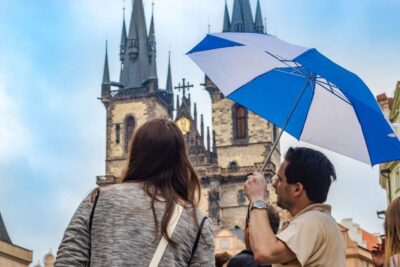
3-Hour Walking Tour of Old Town & Prague Castle
Read our review →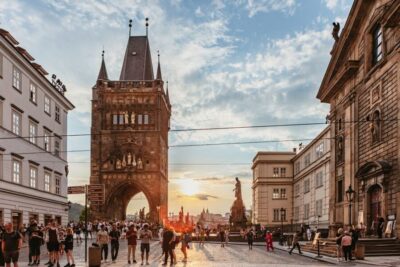
Ghost Walking Tour Where Legends Come To Life
Read our review →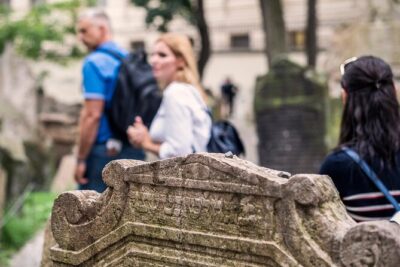
Jewish Quarter Walking Tour with Admission Tickets
Read our review →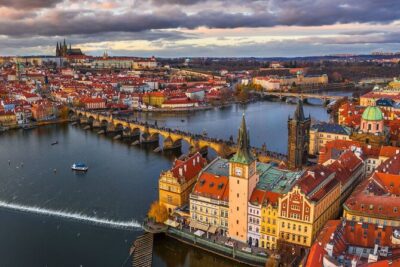
Prague Guided Walking Tour and Cruise with Authentic Czech Lunch
Read our review →
Old Town and Jewish Quarter Guided Walking Tour
Read our review →
Prague Ghost and Legend of Old Town Walking Tour
Read our review →
Prague 3-hour Afternoon Walking Tour including Prague Castle
Read our review →
Ghosts and Legends Nighttime Guided Walking Tour
Read our review →Browse the lists this tour appears in