
Reviewed · JEWISH QUARTER TOURS
Prague Old Town tour and external Jewish Quarter
Prague’s story comes together best when you connect its grand squares with its darker chapters. This private walk moves from Wenceslas Square and the Prague Spring to the Astronomical Clock, Gothic churches, Art Nouveau architecture, and the Jewish Quarter. Alessandro Soggia leads with history, anecdotes, and practical local advice.
I like the private format, which gives your group room to ask questions and adjust the conversation. I also like the wide historical sweep, especially the link between St. Wenceslas, Bohemian kings, Nazi occupation, Terezín, communism, and the Velvet Revolution. The main consideration is that the Jewish Quarter portion focuses on exteriors, so you will not tour the interiors of the synagogues or Jewish Museum sites during this walk.
Key points
- Private group of up to eight: You get a more personal experience than a large walking tour, with space for questions and family conversation.
- A full Prague timeline: The route covers medieval Bohemia, Art Nouveau Prague, Nazi occupation, the Prague Spring, and the Velvet Revolution.
- Jewish Quarter from the outside: You see the main synagogue exteriors, the Jewish cemetery, and Pařížská Street, but interior admission is not part of the experience.
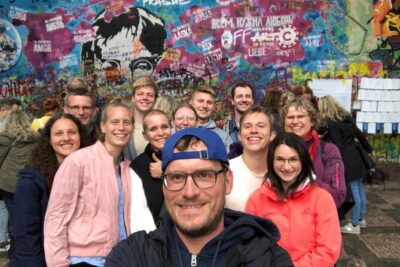
- Strong guide-led storytelling: Alessandro is praised for his punctuality, humor, useful tips, and ability to involve teenagers as well as adults.
- Three hours on foot: The tour packs in ten stops, so comfortable shoes and a steady pace will help.
- Good first-day orientation: The route ends where it begins at Rudolfinum, near the center of Prague’s Old Town.
A three-hour walk through Prague’s turning points
This tour is not just a parade of famous façades. Its strongest idea is continuity. You begin with Wenceslas Square, a place tied to national identity and modern political change, then move into the medieval and Baroque center before reaching the Jewish Quarter.
That broad scope matters because Prague can feel like several cities at once. A Gothic church may sit beside a Baroque building, an Art Nouveau café, or a modern sculpture. Without context, you see pretty streets. With a guide, you can connect those buildings to the Kingdom of Bohemia, religion, music, war, dictatorship, and civic protest.
The walk lasts about three hours and includes ten listed stops. That is an ambitious schedule. You should expect short talks at many locations rather than long visits inside monuments. The payoff is range. You see a great deal of central Prague in a single outing, then you can return later to the places that deserve more time.
The experience is private, priced at $116.29 for up to eight people. For a full group, that works out to a low per-person cost for a private guide. For just two people, it is a more significant expense, but you are paying for flexibility and direct access to the guide rather than joining a standard group.
More walks through the Jewish Quarter:
- Prague: Jewish Quarter Walking Tour with Admission Tickets
★ 4.7 · 3,729 reviews - Prague: Old Town and Jewish Quarter Guided Tour in German
★ 4.8 · 3,143 reviews - Prague: Old Town and Jewish Quarter Guided Walking Tour
★ 4.6 · 2,847 reviews
Wenceslas Square and the politics of modern Prague
The tour begins at the Wenceslas Monument, at the upper end of Wenceslas Square. The stop lasts about 30 minutes, making it the longest single part of the walk.
The square is an excellent place to begin because it looks like a broad urban boulevard, yet it carries some of Prague’s most important modern memories. Here you hear about St. Wenceslas, the patron figure connected with Czech identity, then move into the Nazi invasion and the communist period.
The discussion includes the Prague Spring, the reform movement of 1968, and the Velvet Revolution of 1989. These subjects can sound like textbook headings, but in Prague they are tied to public spaces, demonstrations, fear, hope, and the complicated process of restoring democracy.
I appreciate this opening because it gives you a political key for the rest of the day. You are not simply looking at old buildings. You are learning how Prague’s streets have been used as places of ceremony, control, protest, and national memory.
The 30-minute presentation also sets the tone for Alessandro’s approach. His talks are described as lively and personal, with room for social observations and everyday Prague customs. If you enjoy history with a human angle, this should be one of the most useful sections.
Municipal House and Republic Square’s Art Nouveau details
From Wenceslas Square, the route continues toward Republic Square and the Municipal House, known locally as Obecní dům. About 15 minutes are assigned to the exterior.
Municipal House is one of Prague’s key Art Nouveau buildings. Its decoration offers a sharp contrast with the political material at the opening stop. Instead of medieval towers or Gothic stonework, you see a more modern vision of Prague, shaped by ornament, music, civic pride, and the cultural energy of the early twentieth century.
The exterior is the focus here, so do not expect a full interior tour. Still, a guide can help you notice the details that are easy to miss when you are simply walking past. This is also where the Powder Tower is viewed from the exterior, linking the modern Municipal House with the older ceremonial route into the city.
Republic Square receives about 15 minutes overall. It is a useful transition point between New Town and Old Town, and it helps explain how Prague’s districts fit together. Alessandro is also known for giving practical advice about transport and places to eat, so this central location can be a good moment to ask for suggestions for later in your stay.
Old Town Square and the Astronomical Clock
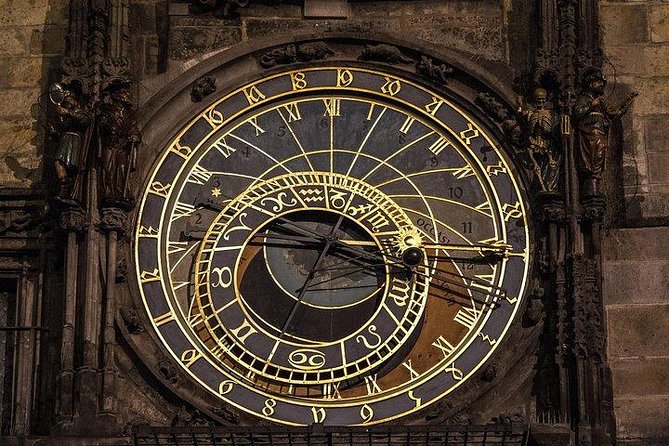
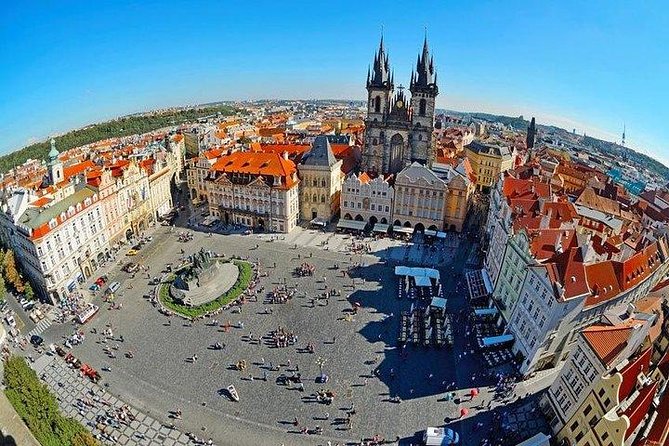
The heart of the route is Old Town Square, called Staroměstské náměstí in Czech. The tour allows roughly 30 minutes here, followed by another short stop at the Old Town Hall and Astronomical Clock.
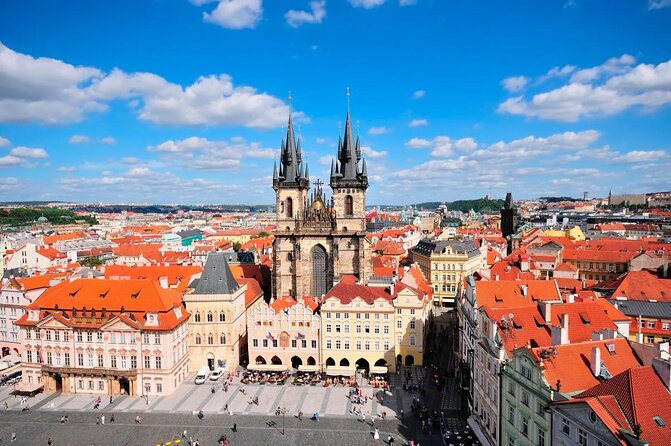
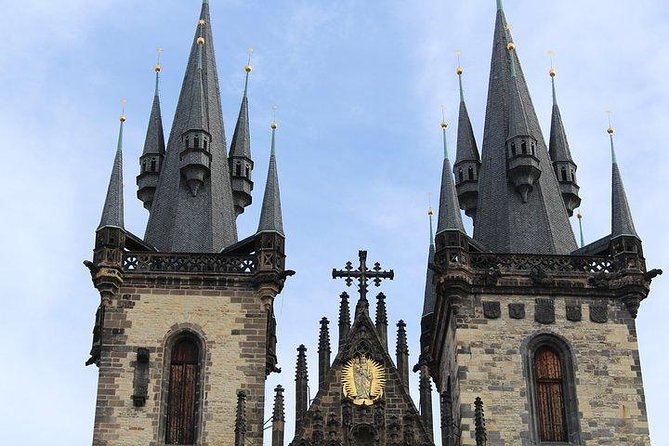
This is Prague’s most theatrical public space. The square gathers Gothic, Baroque, and later architectural styles in one view. The Church of Our Lady before Týn dominates the skyline with its twin Gothic towers, while the Old Town Hall and its clock draw the largest crowds.
The guide’s role is especially useful here. The Astronomical Clock is easy to photograph, but harder to understand. Its moving figures, time displays, and place in Prague’s civic life make more sense when someone explains what you are seeing and why the clock became such a symbol of the city.
The Church of Our Lady before Týn receives a separate ten-minute stop. Its Gothic exterior gives the square much of its character, and the church connects naturally to the discussion of medieval Prague. Admission is listed as free for this stop, but the visit should be understood as a brief stop rather than a guaranteed extended interior visit.
Old Town Square can be crowded, especially around the clock. The private format helps because your guide can keep the group together and adjust the exact stopping point. Still, you should expect plenty of pedestrian traffic and some waiting for a clear view.
More Old Town walks in Prague:
- Prague: Old Town Hall Tower Entry Ticket
★ 4.5 · 6,749 reviews - Prague: 3-Hour Walking Tour of Old Town & Prague Castle
★ 4.7 · 5,696 reviews - Prague: 3-Hour Old Town and Prague Castle Tour in German
★ 4.8 · 5,671 reviews - Prague Old Town, Medieval Underground and Dungeon Historical Tour
★ 4.5 · 3,227 reviews
Celetná Street and the medieval route into town
Celetná Street is one of the most atmospheric portions of the walk. The stop lasts about ten minutes, so it is brief, but the street itself rewards close attention.
This old route links major central sights and passes a mixture of historic façades, shops, and restaurants. It is a good place to see how Prague’s historic center works as a living district rather than a museum set. Look upward as you walk. The decorative details are often above eye level, where rushed visitors rarely notice them.
The short timing means you will not receive a building-by-building architectural lecture. Instead, the guide uses the street to explain movement through the Old Town and the way Prague’s historic core developed. That keeps the walk moving, which matters because the route already includes many stops.
The Jewish Quarter, Pařížská Street, and Terezín
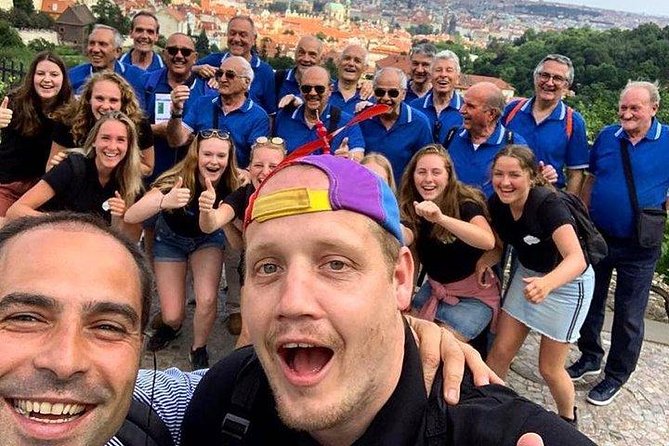
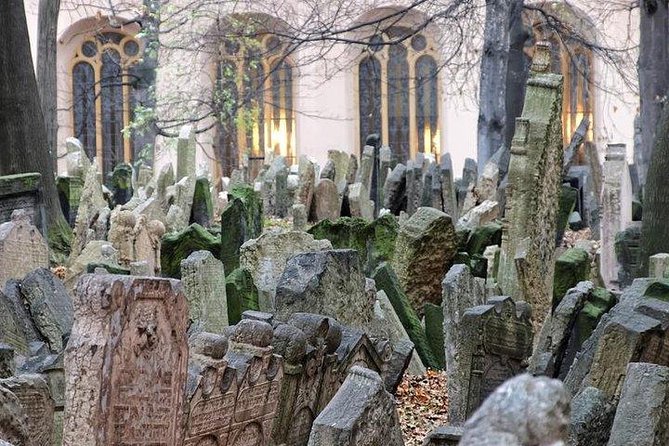
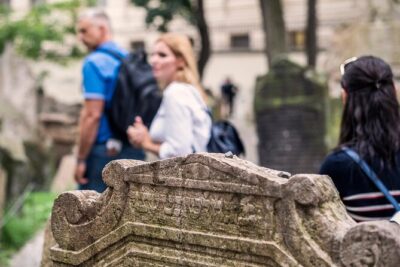
The Jewish Quarter section lasts about 20 minutes and is one of the most important parts of the experience. You view the exteriors of the principal synagogues and the Jewish cemetery, then walk along Pařížská Street.
The subject is handled through the history of Prague’s Jewish community and the connection to Terezín. The tour also addresses the Nazi period, making this section a serious counterpoint to the churches, squares, and decorative buildings seen earlier.
You should be clear about what is included. This is an external visit. You do not enter the synagogues, the Jewish Museum, or the cemetery as part of the three-hour route. The Jewish Museum stop is listed as free, but that refers to the outside viewing described here, not admission to the museum complex.
That limitation may matter if the Jewish Quarter is your main reason for booking. If you want the interiors and museum collections, you will need to arrange a separate visit. If you want an introduction to the district and its place in Prague’s twentieth-century story, this tour gives you a compact starting point.
Pařížská Street adds another layer. Its grand architecture and broad avenue look polished and modern, while the guide’s historical explanation points you toward the lives and losses connected with the Jewish Quarter. The contrast is part of what makes this section worthwhile.
Kafka, churches, and the city’s changing artistic voice
The Franz Kafka Statue receives about ten minutes. This modern work provides a visual break from the older buildings and brings Prague’s literary identity into the route.
Kafka is one of the city’s best-known cultural figures, but the stop is not presented as a long literary lecture. Instead, it helps show that Prague’s character is not limited to castles, clocks, and Gothic towers. The city’s artistic voice also includes modern sculpture, uneasy humor, and creative interpretations of its past.
The Basilica of St. James is included in the wider description of the walk, along with other medieval and Baroque courts. It is not given a separate timed stop in the schedule, so you should treat it as a guided exterior reference or brief pass-by rather than a guaranteed interior visit.
That is a common feature of this experience. The route introduces many places, but not every building receives the same amount of time. You gain breadth, then choose which churches, museums, or interiors to explore independently.
What Alessandro adds to the experience
The guide is a major part of the tour’s appeal. Alessandro Soggia is described as punctual, engaging, and comfortable discussing history, art, local customs, food, and transport. He has also led groups with teenagers and mixed-age adults, using questions and humor to keep younger members involved.
His style appears to favor storytelling rather than a string of dates. You can expect anecdotes, social observations, and small details that make the city easier to read. Several responses also point to useful advice about where to eat and how to move around Prague without overspending.
That practical side is valuable. A history walk can fill your head with information but leave you unsure what to do next. Advice about affordable meals, transport, and other areas to see helps turn the tour into a useful first-day briefing.
Julia is also named in connection with one experience, so the guide may be Alessandro or Julia depending on the booking arrangement. If having a specific guide is important to you, ask when booking.
The private format should suit people who prefer conversation over a fixed script. You can ask about a historical point, switch toward architecture, or request suggestions for the rest of your stay. The tradeoff is that private guiding costs more per person when your group is small.
Timing, walking, and meeting point
The tour begins and ends at Rudolfinum, Alšovo nábřeží 79/12, in Prague’s Old Town. That central meeting point is near public transportation and makes the experience easy to connect with other plans.
Pickup is offered, but the supplied details do not specify the exact pickup area or whether it changes the start time. Confirm that point before booking if you need collection from your hotel.
The route is mainly a city walk. You move through major central districts, squares, streets, and outdoor sites, with several short presentations along the way. Most people can participate, and service animals are allowed.
Wear comfortable shoes. Ten stops in three hours means a steady pace, and the historic center may include uneven paving and crowded areas. The experience requires good weather. If poor weather causes cancellation, you are offered another date or a full refund.
A mobile ticket is provided. Confirmation normally arrives at booking, though reservations made within one day of departure are confirmed as soon as possible, subject to availability.
Who should book this Prague walking tour
I would recommend this tour to a first-time visitor who wants a strong orientation to central Prague and prefers a guide who can connect architecture with politics and daily life.
It also suits families and mixed-age groups. The guide’s conversational style and use of humor can help teenagers stay involved, while adults get a serious look at the Prague Spring, the Velvet Revolution, Nazi occupation, and Terezín.
History-minded visitors should like the range. In one walk, you move from Bohemian rulers and Gothic churches to Art Nouveau civic buildings, modern sculpture, and the Jewish Quarter.
I would be more cautious if your priority is entering monuments. The route emphasizes exteriors and brief stops. You will see the Jewish cemetery and synagogue façades, but you will not receive a full Jewish Museum visit. You also should not expect long interior visits at the churches or Municipal House.
Is the $116.29 group price good value?
For up to eight people, $116.29 is a sensible price for a private three-hour guide. A full group pays less per person than many private city tours, while still receiving a tailored experience and a chance to ask direct questions.
For two people, the cost is harder to justify if you only want a quick introduction. The value improves if you care about the historical narrative, want restaurant and transport advice, or prefer not to share a guide with strangers.
The tour’s value also depends on how you use it. Book it early in your stay, then return to the Old Town Hall, Jewish Museum, churches, or Art Nouveau interiors that catch your interest. The walk gives you a map of priorities rather than trying to replace every museum visit.
Free cancellation is available up to 24 hours before the start time. Within 24 hours, the payment is not refunded, and changes are not accepted. Keep the weather rule in mind when planning.
Should you book it?
Book this tour if you want Prague explained as a connected story, not just a collection of famous views. Alessandro’s mix of history, humor, local customs, and practical advice is the strongest reason to choose it, especially for families or small groups.
Skip it if you mainly want interior access to the Jewish Museum, synagogues, or churches. In that case, arrange dedicated admissions separately and use this walk only if you also want a broad introduction to Prague’s political and architectural past.
For a first visit, the private format, central route, and serious attention to the Prague Spring, Velvet Revolution, and Terezín make this a useful beginning. It gives you enough context to look at the city with sharper eyes for the rest of your stay.
FAQ
How long does the Prague Old Town and Jewish Quarter tour last?
The tour lasts approximately three hours.
What is the price of the tour?
The price is $116.29 per group, with up to eight people included.
Is this a private tour?
Yes. Only your group participates.
Where does the tour begin?
It begins at Rudolfinum, Alšovo nábřeží 79/12, in Prague’s Old Town.
Where does the tour end?
The tour ends at the same Rudolfinum meeting point.
Is hotel pickup available?
Pickup is offered, but the provided details do not specify the exact pickup area. Confirm the arrangements when booking.
Does the tour enter the synagogues or Jewish Museum?
No. The Jewish Quarter portion views the main synagogue exteriors and the Jewish cemetery from outside.
What subjects are covered at Wenceslas Square?
The tour discusses St. Wenceslas, the Nazi invasion, communism, the Prague Spring, and the Velvet Revolution.
Are service animals allowed?
Yes, service animals are allowed.
What is the cancellation policy?
You can cancel at least 24 hours before the start time for a full refund. Cancellations or changes made within 24 hours are not refunded or accepted. If poor weather causes the tour to be canceled, you are offered another date or a full refund.
Just added around Prague
- WWII and Communism History in Prague’s Old Town Private Tour★ 5.0 · 4 reviews
- World War II 4WD Tour from Prague with Lunch★ 4.4 · 3 reviews
- Wroclaw to Prague: 2-in-1 (Private Transfer + Country Tour)★ 5.0 · 4 reviews
- Prague: Historical Walking Tour with Focus on World War 2★ 4.3 · 12 reviews
- Walking tour of Prague in french: Old Town & Charles Bridge★ 4.9 · 62 reviews
- Ultimate Unlimited Beer Pong with Czech Beer★ 4.6 · 5 reviews
- Walking tour of Prague in French : Nové Město★ 4.9 · 16 reviews
- Prague: Modern Private Spa with Jacuzzi and Sauna★ 4.8 · 62 reviews
Jewish Quarter Tours, compared.
Jewish Quarter Walking Tour with Admission Tickets
Read our review →
Old Town and Jewish Quarter Guided Tour in German
Read our review →
Jewish Quarter Ticket with optional Audio Guide
Read our review →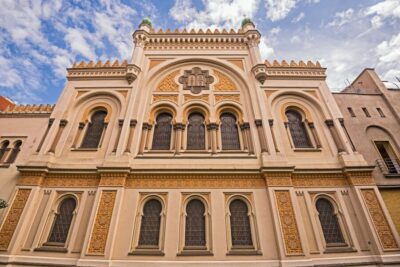
Prague’s TOP Sights – Old Town, Jewish Quarter, Charles Bridge (Tip-based tour)
Read our review →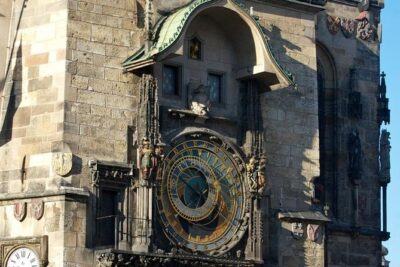
Prague Old Town New Town and Jewish Quarter Morning Tour
Read our review →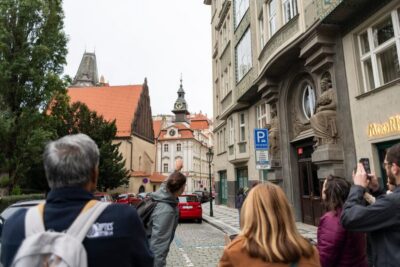
Old Town, Jewish Quarter & Astro Clock Walking Tour
Read our review →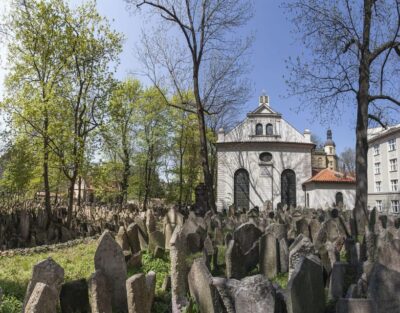
Prague Jewish Town/Skip-the-Line Official Entry Ticket
Read our review →Browse the lists this tour appears in