
Reviewed · PRAGUE CASTLE TOURS
Prague Castle Walking Tour
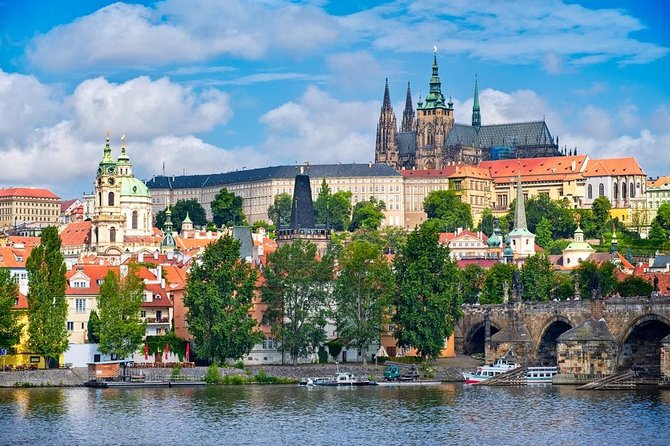
Prague Castle is less a single building than a small historic city on a hill. This three-and-a-half-hour tour gives you a useful route through its major sights, from St. Vitus Cathedral to the tiny cottages of Golden Lane, then carries you downhill to Charles Bridge.
I like two things here: the coach ride saves you the climb to the castle, and the guide provides the historical thread that helps tie the courtyards, churches, palaces, and lanes together. The included interiors are another plus, especially St. Vitus Cathedral and the Old Royal Palace. The main caution is tour organization: some groups have been bilingual, and several people found soft-spoken guides hard to hear without headsets.
Key points to know before booking
- St. Vitus Cathedral is the visual high point: You enter Prague’s largest and most important church, not just view it from outside.
- The Old Royal Palace gets the most time: Plan on about an hour inside this former seat of Czech rulers.
- Golden Lane is small but memorable: Its painted cottages once housed castle workers and now include replica rooms and shops.
- The route is physically active: Expect hills, uneven cobblestones, standing, and little chance to sit.
- The tour ends at Charles Bridge: This is useful for continuing into Old Town, but the bridge visit itself is not included as an admission stop.
- The guide can make or break the day: Past guides named Sofia, John or Johannes, and Michaela received especially warm praise, but guide quality and delivery have not been fully consistent.
Why a guided route helps at Prague Castle
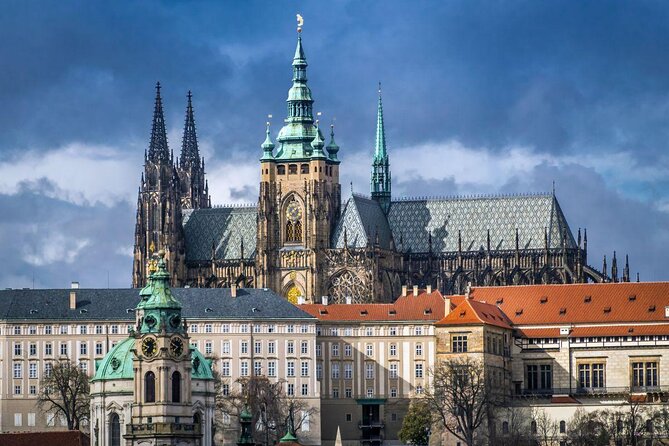
Prague Castle can feel confusing at first. It is a large fortified complex with courtyards, churches, royal rooms, lanes, and changing access points. A map can show you where things are, but it cannot easily explain why the complex grew over so many centuries or how each building fits into Czech history.
That is the strongest reason to book this tour. Your guide explains how the castle began taking shape in the 10th century and developed into a power center for Bohemian kings and Holy Roman Emperors. You are not simply ticking off buildings. You are following the story of a seat of power that changed with the rulers and periods around it.
The coach transfer also matters. The tour begins at Náměstí Republiky 1037/3 in central Prague at 10:30 a.m., then takes you toward the castle by comfortable coach. You avoid making your own way across the city and save some energy for the long walk inside the complex.
The group can include up to 29 people. That is not a tiny private walk, so you need to stay close to the guide, especially in crowded courtyards and church interiors. A few groups have been much smaller, which made questions and conversation easier, but you should plan for a standard group outing rather than personal guiding.
More Castle Tours in Prague
- Prague: Skip-the-line Castle Ticket and Optional AudioGuide
★ 4.3 · 11,121 reviews - Prague: Castle Tour with Local Guide and Entry Ticket
★ 4.6 · 10,422 reviews - Prague Castle 2.5-Hour Tour Including Admission Ticket
★ 4.7 · 8,927 reviews
St. Vitus Cathedral and the first major stop
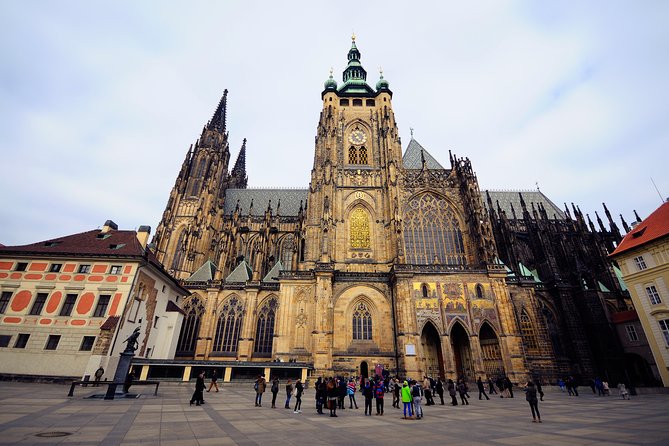
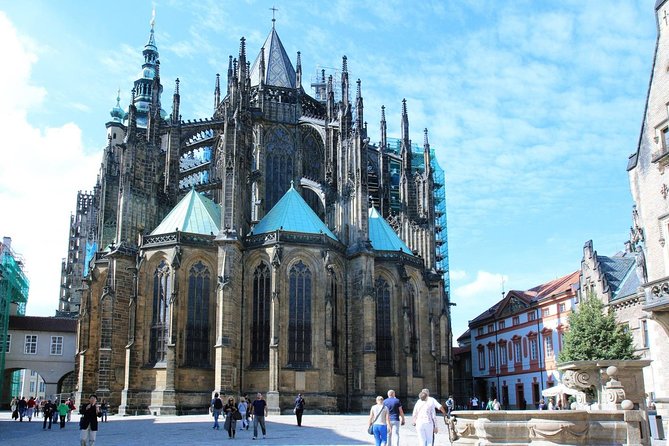
St. Vitus Cathedral is the grandest stop on the route. It is the seat of the Archbishop of Prague and the largest, most important church in the city. The Gothic exterior already makes a strong impression, but going inside gives the visit its real weight.
The guide explains that the cathedral remained unfinished until 1929. That long construction story helps you read the building more carefully. You are seeing a church shaped across centuries, rather than a structure completed in one neat campaign.
The scheduled visit is about 20 minutes. That is enough for an introduction and a look at the main interior, but it is not a leisurely church visit. Crowds can make the space feel tight, and you may have limited time for photographs. The castle does not always provide tour groups with a special queue, so booking a guide does not necessarily mean walking straight past everyone else.
This is also where the need for a clear voice becomes important. The cathedral can be noisy, and the group may spread out. The tour does not include transmitting headsets, and some people have had trouble hearing guides who spoke quietly or had a strong accent. Stay near the front if you want the fullest explanation.
St. George’s Basilica and the older side of the castle
The next stop is St. George’s Basilica, with about 30 minutes set aside for the visit. Its importance comes partly from its age and its connection to one of Prague’s oldest convents.
After the grand Gothic scale of St. Vitus, St. George’s offers a different feel. It helps show that Prague Castle is not one single architectural moment. The complex includes buildings from different periods, with different purposes and styles.
The guide’s historical commentary is especially useful here. On your own, you might see a smaller church and move along quickly. With context, you begin to understand how religious institutions, royal authority, and daily life shared the same hill.
This part can also expose weaknesses in the group format. If the guide has to repeat everything in a second language, the pace slows. If the group stretches across the room, some people miss the explanation. Keep within sight and earshot, and do not wait too long at the back for photographs.
The Old Royal Palace takes about an hour
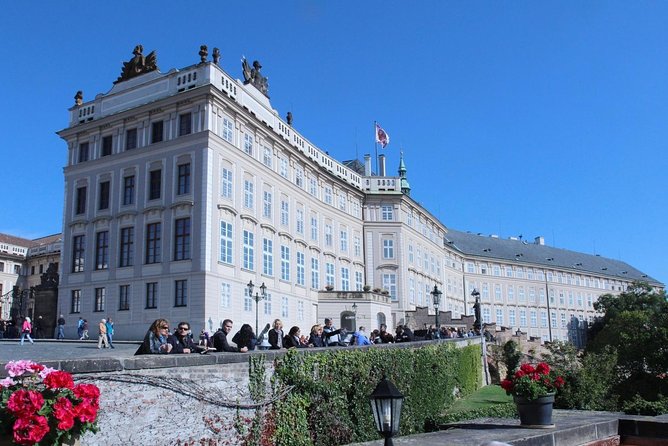
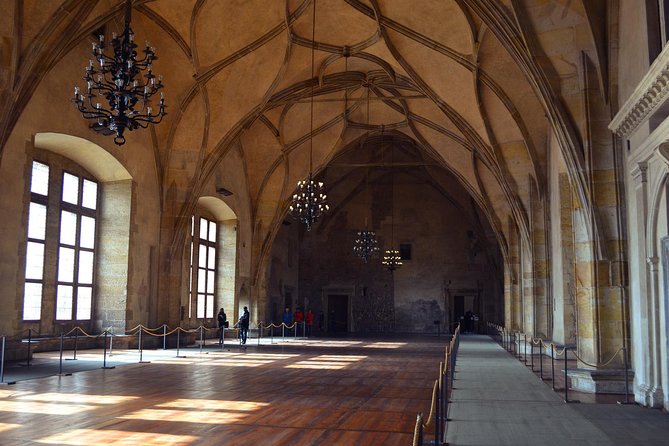
The Old Royal Palace is the longest scheduled stop, with one hour inside. It served as the residence and seat of Bohemian princes and kings for more than 700 years.
I like the extra time here because a royal residence needs explanation. The value is not only in walking through an old interior. It is in understanding how rulers used this part of the castle and how the palace functioned as a center of government and ceremony.
The hour also gives the guide room to answer questions, although the actual pace depends on the group and the guide. One particularly well-organized guide can keep a large group moving while still offering useful detail. A less effective guide may spend too long in one place, repeat information, or move ahead before everyone can hear.
Do not expect a relaxed café-style pause during the route. This is mainly a standing and walking tour. One group had a short coffee break that created time for questions, but a regular refreshment stop is not part of the stated itinerary. Food and drinks are not included, so carry what you need.
More ways to get inside Prague Castle:
- Prague: 3-Hour Walking Tour of Old Town & Prague Castle
★ 4.7 · 5,696 reviews - Prague: 3-Hour Old Town and Prague Castle Tour in German
★ 4.8 · 5,671 reviews - Prague: Prague Castle and Lobkowicz Palace Entry Tickets
★ 4.4 · 5,066 reviews - Prague 3-hour Afternoon Walking Tour including Prague Castle
★ 5.0 · 1,899 reviews
Golden Lane’s tiny cottages
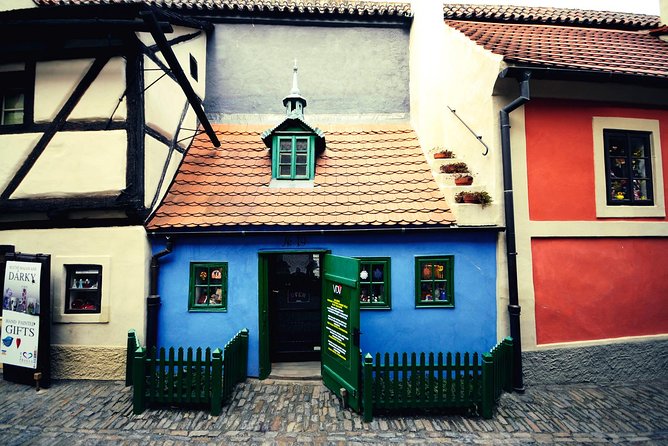
Golden Lane is one of the castle’s most photogenic corners. Its brightly painted cottages sit under the castle walls, creating a narrow cobbled lane that feels very different from the grand courtyards and churches.
The cottages were used by castle artisans, servants, alchemists, and goldsmiths. Inside some of the houses, replica scenes show how people might have lived and worked. Other cottages now hold small artistic shops.
The scheduled visit is about 20 minutes. That is enough to see the lane and some interiors, but not necessarily enough for relaxed shopping. If you want to browse carefully, you may feel rushed. One useful expectation to set is that this is a guided sightseeing route, not a half-day castle visit with unlimited time at each stop.
Golden Lane is also a place where crowding can be frustrating. The lane is narrow, and groups may bunch up around the cottages. Try to listen first, then take photographs when the group pauses. The bright façades are easy to photograph, but the most interesting part is the contrast between the tiny homes and the vast royal complex around them.
The walk downhill to Charles Bridge
After the castle sights, the route leaves the complex and ends at Charles Bridge. The final walk takes about 15 minutes according to the schedule, though the full tour can run longer than the advertised three and a half hours.
Ending at Charles Bridge is practical. You finish in a central part of Prague rather than returning to the original meeting point, and you can continue toward Old Town from there. It also gives the tour a satisfying geographic shape: you begin in central Prague, climb by coach to the castle, explore the hilltop complex, then walk back toward the river.
The bridge itself is not an included admission stop, and no separate entry is needed for the public crossing. You should think of it as the endpoint and orientation point, not as a guided Charles Bridge tour.
Walking demands, crowds, and timing
The physical requirement is moderate, but the wording matters. You will walk uphill and downhill, cross uneven ground, and spend much of the tour standing. Cobblestones can be tiring, especially for older people or anyone with uncertain balance.
Wear shoes with good support. Keep your hands free for railings and balance when needed, and bring water since food and drinks are not supplied. The route is not a good fit if you need frequent seated breaks or find long periods of walking difficult.
Crowds are the larger practical issue. Prague Castle is a major attraction, and the interiors can be packed. You may spend time in lines, move slowly through church spaces, and have less room than you hoped for photographs. A guide helps you navigate the complex, but the tour does not promise private access or priority entry.
The 10:30 a.m. start also means you should not book a tight activity immediately afterward. Some groups have finished later than planned, especially when crowds or bilingual explanations slowed the route. Leave a buffer after the tour.
The guide and language question
The best part of this outing depends heavily on the person leading it. Guides named Sofia, John or Johannes, and Michaela were praised for clear explanations, good pacing, personal stories, and helpful answers. A strong guide can keep children and adults interested while adding detail that an audio guide would not provide.
The weak point is consistency. Some guides have been soft spoken, and no headsets are supplied. Road noise, church acoustics, and crowd noise can make it hard to follow from the rear of the group.
Also confirm the language arrangement before you pay. The advertised language is English, but some groups have combined English with German, French, or Spanish. A bilingual tour can work well with a small group and a skilled guide, but repeated translations reduce the amount of time spent hearing English and can make the route feel slow.
If language clarity is important to you, ask the operator directly if the departure will be English only. This is one of the most useful checks you can make before booking.
Is $75.30 a fair price?
At $75.30 per person, this is not the cheapest way to see Prague Castle. The price includes the professional guide, the coach transfer from central Prague, and admission for the listed castle interiors. You are paying for structure, transport, and interpretation, not just a walk around the grounds.
The value is strongest if you are visiting Prague for the first time and want the main sights organized for you. The castle is large enough that a first visit on your own can become a hunt for entrances and room locations. A good guide also explains the connection between the cathedral, basilica, palace, and lane.
The value is weaker if you want to linger, photograph every room, shop at Golden Lane, or move at your own pace. You may also feel that the price is high if the guide is hard to hear or the tour spends much of its time translating into another language.
Before booking, compare the cost with your priorities. If history and orientation matter, the guided format earns its price. If quiet visits and flexibility matter more, an independent castle visit or audio guide may suit you better.
Who should book this castle walk?
I would recommend it to first-time visitors who want the castle’s key interiors in one organized route. It is also a good match for people who enjoy history but do not want to research the complex before arriving.
You should be comfortable with:
- About three and a half hours of walking and standing
- Hills, stairs, and uneven cobblestones
- Crowded interiors and possible queues
- A group of up to 29 people
- A guide whose speaking volume and language format may vary
Families can enjoy the tour if children are comfortable with a long historical visit. The changing buildings and tiny Golden Lane houses offer variety, but the amount of listening may test younger children.
It is less suitable for anyone who needs a slow pace, regular seating, or guaranteed one-language commentary. It is also a poor choice for a tightly scheduled day because the finish time can slip.
Should you book the Prague Castle Walking Tour?
Book it if you want an efficient introduction to Prague Castle, included access to its major interiors, and a guide to explain the centuries behind what you see. St. Vitus Cathedral, the Old Royal Palace, St. George’s Basilica, and Golden Lane make a solid first visit, and the Charles Bridge finish is convenient.
Book with caution if you need a quiet, highly polished tour. Ask about an English-only departure, arrive ready to stay near the guide, and leave extra time after the scheduled finish. If you can accept the crowds and walking, this is a useful way to make sense of one of Prague’s biggest historic sites.
FAQ
Where does the Prague Castle tour begin?
The tour begins at Náměstí Republiky 1037/3, 110 00 Praha 1-Nové Město, Czechia. The scheduled start time is 10:30 a.m.
How long does the tour last?
The tour lasts approximately three hours and 30 minutes, though some groups have finished later than scheduled.
What sights are included?
The route includes St. Vitus Cathedral, St. George’s Basilica, the Old Royal Palace, and Golden Lane. It ends at Charles Bridge.
Is transportation included?
A coach takes you from central Prague to Prague Castle. Hotel pickup and drop-off are not included.
Is the tour suitable for people with limited mobility?
The tour requires a moderate level of fitness. You will walk on hills and uneven ground and spend much of the experience standing.
Can I cancel for a full refund?
You can cancel at least 24 hours before the start time for a full refund. Cancellations or changes made less than 24 hours before the start time are not refunded.
More Walking Tours in Prague
- Prague: Ghost Walking Tour Where Legends Come To Life
★ 4.4 · 5,253 reviews - Prague: Jewish Quarter Walking Tour with Admission Tickets
★ 4.7 · 3,729 reviews - Prague Guided Walking Tour and Cruise with Authentic Czech Lunch
★ 5.0 · 3,627 reviews - Prague: Old Town and Jewish Quarter Guided Walking Tour
★ 4.6 · 2,847 reviews
Just added around Prague
- WWII and Communism History in Prague’s Old Town Private Tour★ 5.0 · 4 reviews
- World War II 4WD Tour from Prague with Lunch★ 4.4 · 3 reviews
- Wroclaw to Prague: 2-in-1 (Private Transfer + Country Tour)★ 5.0 · 4 reviews
- Prague: Historical Walking Tour with Focus on World War 2★ 4.3 · 12 reviews
- Walking tour of Prague in french: Old Town & Charles Bridge★ 4.9 · 62 reviews
- Ultimate Unlimited Beer Pong with Czech Beer★ 4.6 · 5 reviews
- Walking tour of Prague in French : Nové Město★ 4.9 · 16 reviews
- Prague: Modern Private Spa with Jacuzzi and Sauna★ 4.8 · 62 reviews
Prague Castle Tours, compared.

Prague Castle 2.5-Hour Tour Including Admission Ticket
Read our review →
3-Hour Walking Tour of Old Town & Prague Castle
Read our review →
Prague Castle and Lobkowicz Palace Entry Tickets
Read our review →
Prague 3-hour Afternoon Walking Tour including Prague Castle
Read our review →
Prague Castle: Midday Classical Concert at Lobkowicz Palace
Read our review →
Full-Day Prague Tour with Prague Castle, Lunch and Vltava Cruise
Read our review →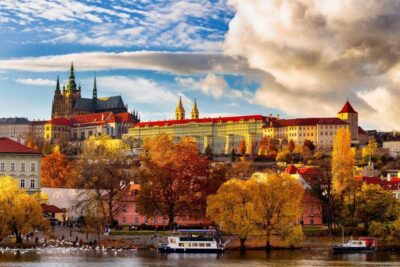
Prague Castle & Castle District: 2-Hour Guided Tour
Read our review →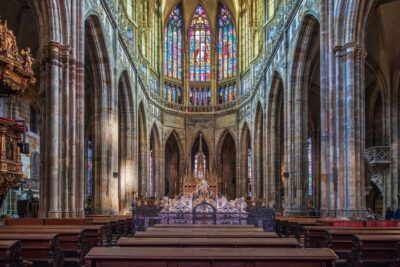
Prague Castle: Small-Group Tour with Visit to Interiors
Read our review →Browse the lists this tour appears in