
Reviewed · HOLOCAUST MEMORIAL TOURS
Private Half-Day Tour To Terezin Concentration Camp
Terezín is not a quick photo stop. It is a place where a military fortress became a Nazi prison, Jewish ghetto, transit point, and killing site. This private five-hour tour gives you time to understand both parts of the memorial, the Small Fortress and the Big Fortress, without trying to piece the story together alone.
I like the door-to-door pickup and the chance to ask questions in a private group. I also like the human detail: guides such as Eva and Peter have been praised for warmth, patience, and clear storytelling. The drawback is the price, $316 per person, which is high for a half-day outing, and the subject matter is painful throughout.
Key points to know before booking
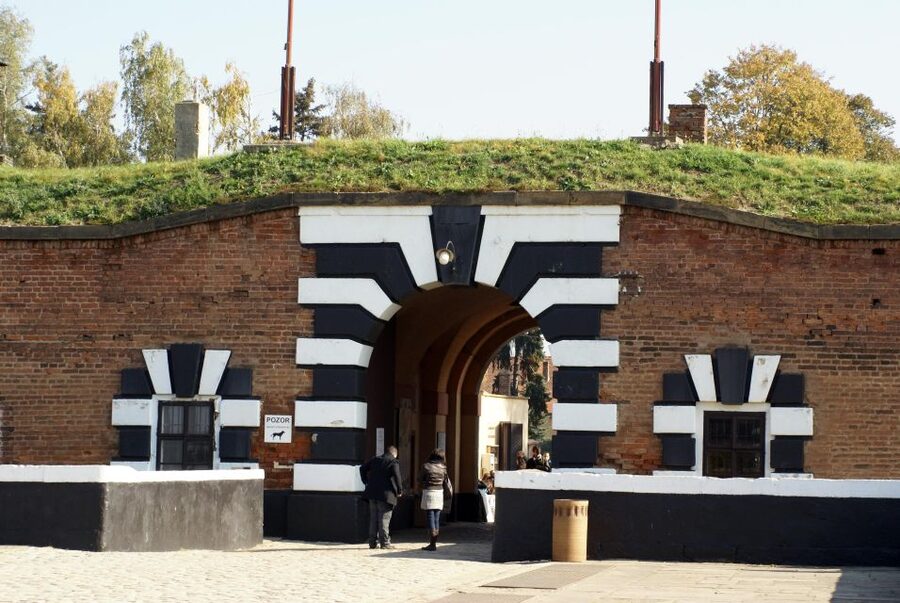
- Two separate sites: The Small Fortress was a Gestapo prison, while the Big Fortress held the Jewish ghetto.
- Private transport from Prague: A driver, car or minivan, guide, and entrance fees are included.
- A guide at the center: You can ask questions and request context as you move through the site.
- The children’s story receives space: The Ghetto Museum includes a full ground-floor section on children who lived and died in Terezín.
- The final stop is the crematorium: A mass graveyard beside it brings the tour to a quiet, sobering end.
- Flexible booking: Pickup can be arranged at a hotel, square, airport, or another suitable place, and cancellation is free up to 24 hours before departure.
Why Terezín is different from a standard memorial visit
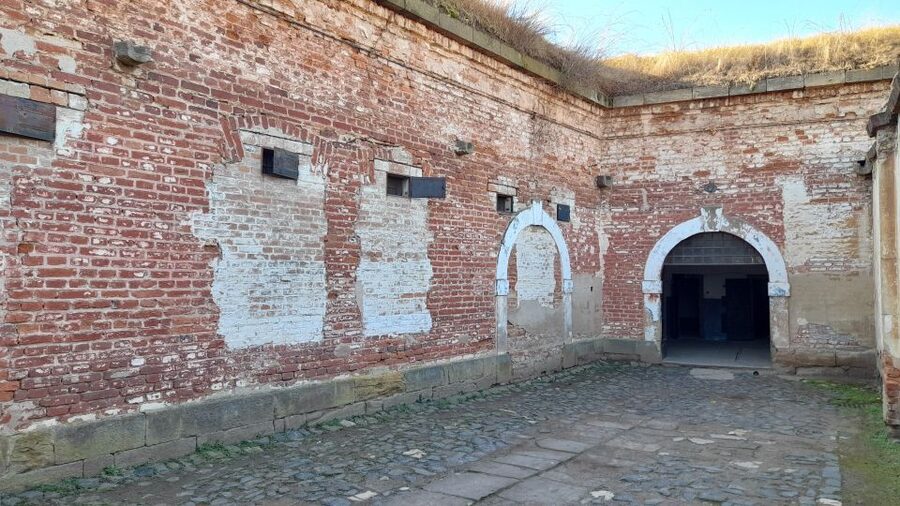
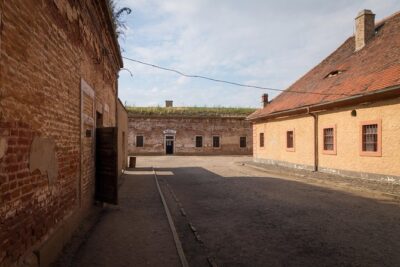
Terezín began as an 18th-century military fortress. During World War II, the Nazis turned its two main sections into places with different roles. The Small Fortress became a Gestapo police prison. The larger fortified town, called the Big Fortress, became a ghetto for Jews.
That distinction matters. You are not seeing one uniform camp complex. You are following two connected but different systems of Nazi imprisonment. The Small Fortress shows the machinery of arrest, interrogation, punishment, and confinement. The Big Fortress shows how an entire town was used to imprison Jewish people before many were sent onward to extermination camps.
I find the private format especially useful here because the site requires mental sorting. A good guide can explain who was held where, why the two sections existed, and how Terezín fit into the wider Holocaust. You are not left with a collection of grim rooms and dates.
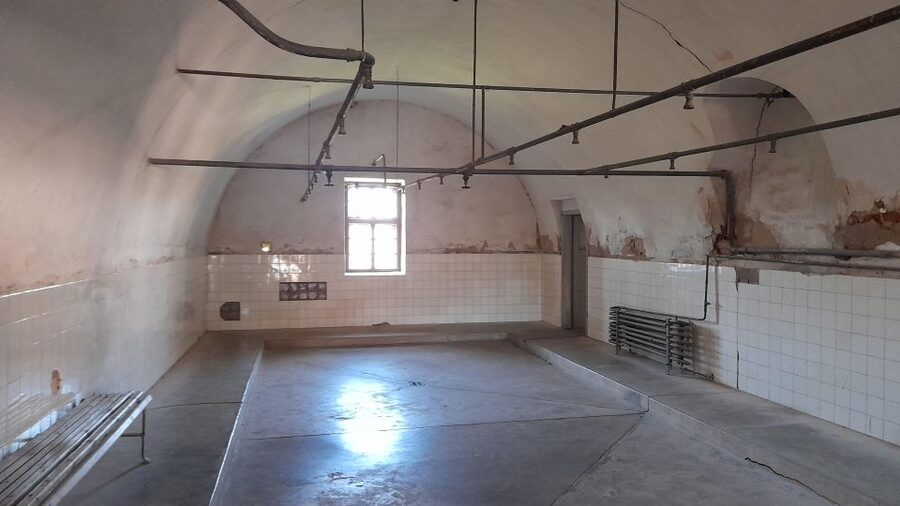
The visit is also emotionally demanding. Terezín is not presented as a polished attraction, and it should not be. Expect prison cells, tunnels, memorial rooms, evidence of hunger and disease, and the crematorium. Give yourself some quiet time afterward if possible.
More Private Tours in Terezin
- Private Half-Day Tour From Prague To Terezín Concentration Camp
★ 5.0 · 78 reviews - From Prague: Terezin Concentration Camp Private Tour
★ 4.9 · 44 reviews - The only full Anthropoid tour with a visit to curve and Lidice, by private car
★ 5.0 · 30 reviews
A private ride from Prague to the fortress
The tour lasts five hours and includes a driver, private car or minivan, guide, and admission to the Terezín Memorial. Pickup is available at a hotel, square, airport, or another suitable location. That flexibility is useful if you are working around a Prague sightseeing schedule or need to leave directly from the airport.
A private vehicle also saves you from arranging separate transport to a site outside central Prague. You can travel with your own group rather than joining a large coach, and you can ask for explanations during the ride and between the two fortress areas.
The five-hour length is efficient, but not generous. You will see a lot in one morning or afternoon, with little room for a long meal or an unplanned detour. If you want to read every museum panel at length, you may feel pressed. If you want a guided introduction to the main memorial sites, the schedule is sensible.
The location is listed in the Ústí nad Labem region, while the excursion is organized as a trip from Prague. Check the exact pickup time when booking, since the start time depends on availability and your chosen pickup point.
Entering the Small Fortress prison
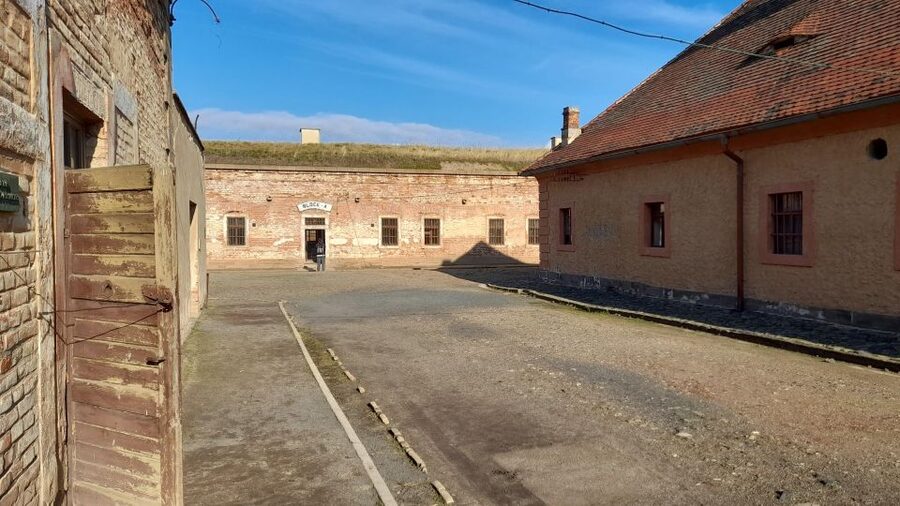
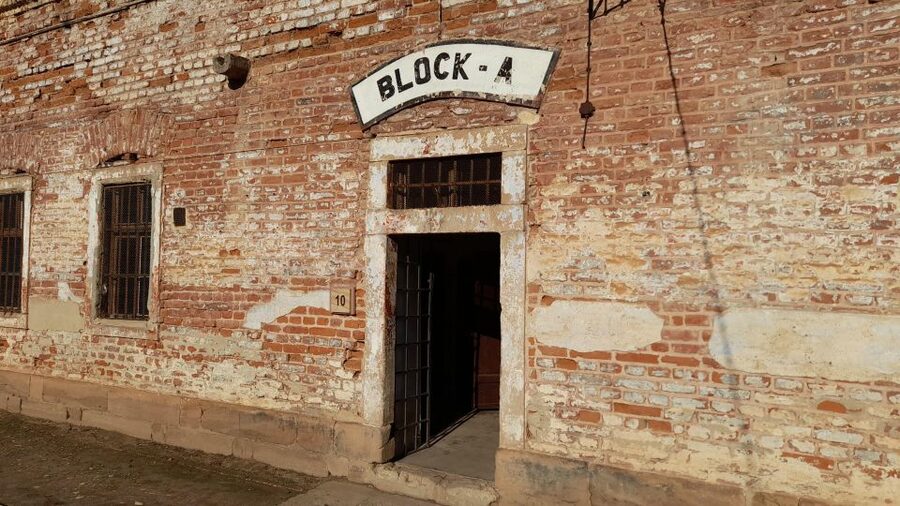
The Small Fortress is the first major part of the visit. It operated as a Gestapo prison from June 1940 until May 8, 1945, after the main Gestapo prison in Prague became overcrowded. About 35,000 people passed through its gates during those five years.
The prisoners included political prisoners, prisoners of war, Jews, Roma, disabled people, and ordinary criminals. That mix is important, but it should not blur the prison’s role in Nazi persecution. The site reveals how political repression and racial persecution operated side by side.
Your guide begins at the administrative court, where prisoners arrived. From there, you see the commander’s office and move through the men’s section. The route includes mass cells, a Jewish cell, and solitary cells. These are not abstract displays. The rooms and narrow corridors make the basic facts of imprisonment easier to grasp.
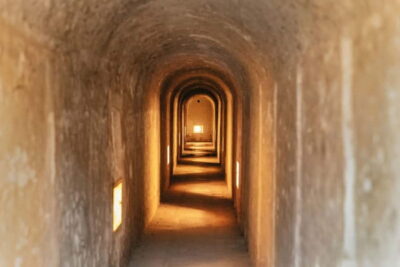
You also walk through the fortress wall tunnels. The tunnels add a physical sense of enclosure that a museum room cannot provide. The route continues to the shooting range and the fourth courtyard, where larger mass cells were added when the prison ran out of space.
One difficult part of the visit is a short, 10-minute propaganda film made by the Nazis for the International Red Cross. It was designed to mislead outside observers about conditions at Terezín. Watching it with a guide helps you understand how the Nazis tried to disguise the truth, but the material may be upsetting.
The Small Fortress is a place where a clear guide matters. Names, dates, prisoner groups, and changing uses can become hard to follow. The private setting lets you pause and ask for an explanation instead of silently moving along with a crowd.
The Big Fortress and the Jewish ghetto
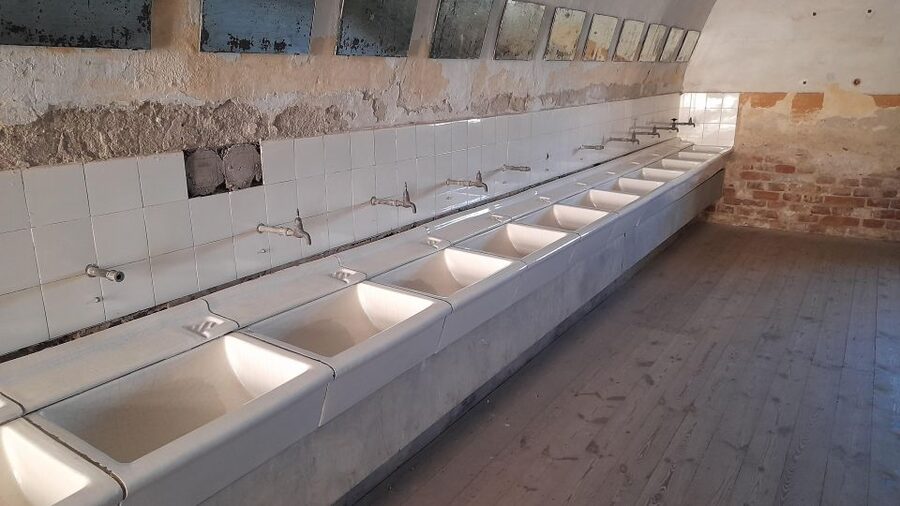
The Big Fortress is about one mile from the Small Fortress. From November 24, it served as a ghetto for Jews for roughly three and a half years. Around 155,000 Jewish people passed through Terezín, and 63 transports left for extermination camps in Poland, carrying about 87,000 prisoners. Only about 3,600 survived the war.
About 35,000 people died inside the ghetto itself, mainly from disease and lack of food. Those numbers can feel overwhelming, so the tour’s value lies in connecting them to particular buildings and spaces. You see where people were held, how the ghetto was presented, and how daily life continued under brutal conditions.
Terezín was not only a holding point. It was also a place where prisoners tried to preserve education, religion, music, art, and human dignity. That does not make the ghetto less horrifying. It shows how people resisted the attempt to reduce them to numbers.
More memorial and ghetto visits near Terezin:
- From Prague: Terezin Concentration Camp Guided Tour w/ Audio
★ 4.5 · 1,959 reviews - From Prague: Tour of Terezin Concentration Camp
★ 4.4 · 1,269 reviews - Terezin Concentration Camp Day Tour from Prague
★ 4.0 · 1,007 reviews - From Prague: Terezin Concentration Camp Tour
★ 3.7 · 573 reviews
The Ghetto Museum and the story of children
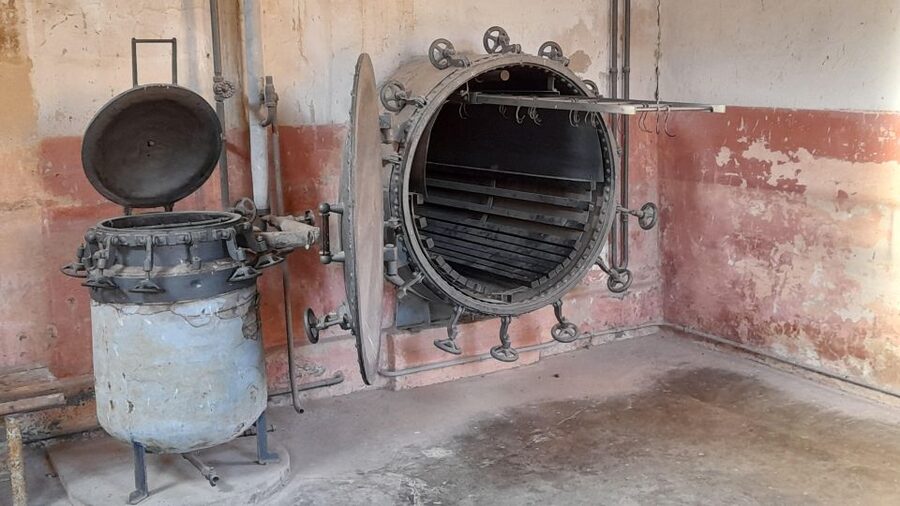
The Ghetto Museum is located in former boys’ barracks. It explains the Holocaust and the life of the ghetto, with a full section on the children who lived and died in Terezín.
This part can be especially hard. Children’s drawings, memories, and educational material make the story personal without turning it into spectacle. You should expect a serious museum visit rather than a quick overview.
One practical point is worth noting: the guide may not accompany you through every upper-floor museum section. A visitor specifically appreciated the guide’s explanations but would have liked help upstairs. If museum interpretation is your main reason for coming, ask at the start how the guided time will be divided.
That said, the private format lets you decide where you need more explanation. You can ask about the children’s section, the transports to Poland, or the difference between the ghetto and the Gestapo prison.
The hidden synagogue and Magdeburg Barracks
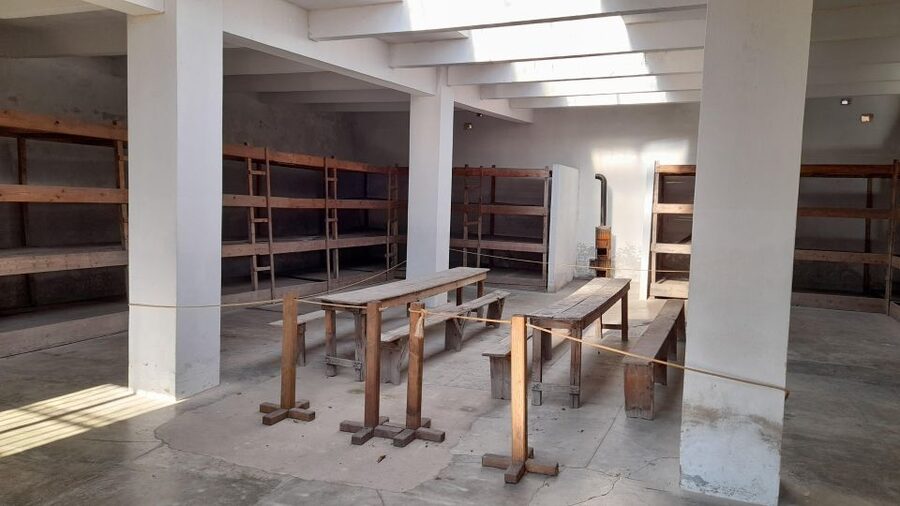
The hidden synagogue is one of the more unusual stops. It occupies a storage room, and its existence was concealed because the Nazis banned visible signs of Jewish religious life. Terezín had six hidden synagogues, and this one offers a small but powerful reminder that religious practice continued despite the restrictions.
The setting is modest. Do not expect a grand sanctuary or a large exhibition. Its importance comes from what the room represents: people maintained a spiritual life in secret, even when nearly every part of their lives was controlled.
The tour then continues to the Magdeburg Barracks. Here you see what dormitory life looked like and learn about cultural activity in the ghetto. Many prisoners were accomplished artists, and cultural work became one way to preserve identity and a sense of community.
This is where the tour moves beyond a simple record of suffering. It shows courage and self-sacrifice, but it does not turn survival into an easy inspirational story. Art and culture existed alongside hunger, disease, fear, and deportation.
The crematorium and mass graveyard
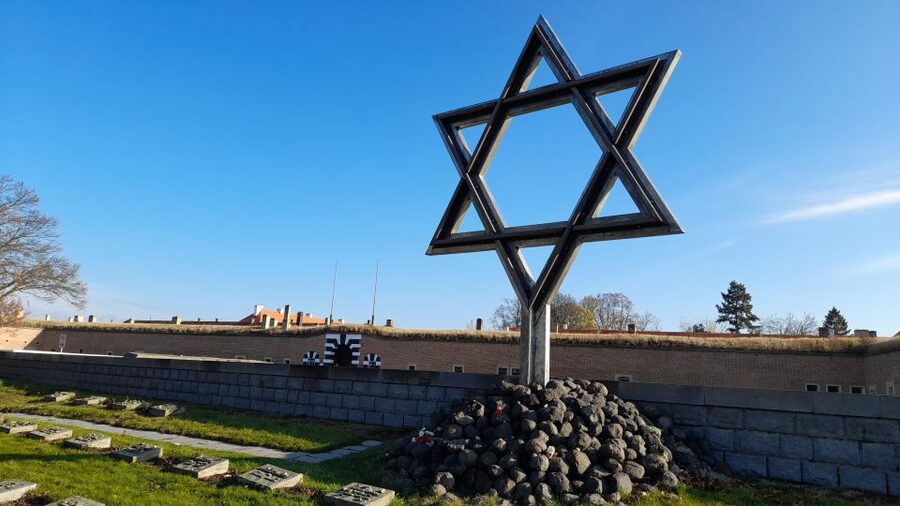
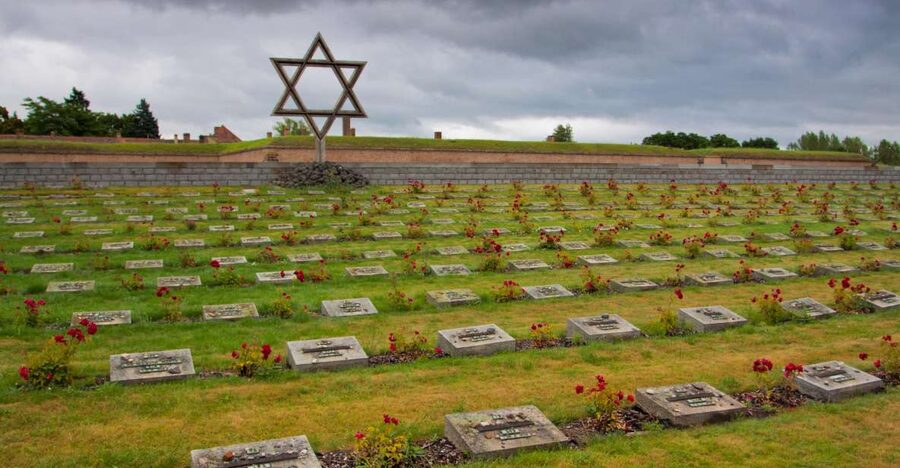
The final stop is the crematorium outside Terezín’s walls. Built in 1942, it was used to cremate the bodies of victims. A mass graveyard lies beside it.
Ending here gives the itinerary a clear and sober shape. You first see the prison system, then the ghetto, then the objects and buildings tied to daily life, and finally the place connected to the dead. It is not a cheerful ending, but an honest one.
You may find this stop less visually elaborate than the museum. Its power comes from its plainness. The crematorium and graveyard make the consequences of disease, starvation, abuse, and deportation impossible to separate from the buildings you have just visited.
What makes the private guide worthwhile
The strongest part of this outing is the guide. A private guide can adjust the pace, explain unfamiliar names, and answer questions without waiting for a scheduled group pause.
Named guides associated with the experience include Eva and Peter, also written as Petr in one account. Eva has been described as warm and personable, while Peter is noted for patience, friendliness, and a strong command of the subject. One particularly unusual benefit was hearing about everyday Czech life before, during, and after the Velvet Revolution. That kind of personal context can connect Terezín to modern Czech history, though it is not guaranteed with every guide.
Guiding styles will vary by language and by person. The tour offers English, Spanish, French, Russian, Italian, Czech, and German. If you have a preferred language, select it at booking and confirm the arrangement.
The private setup is best for people who want conversation rather than a lecture. It also helps families or small groups manage the emotional pace. Someone may need a quiet moment, while another person may want to ask several historical questions. You have more control than you would on a large group excursion.
Is $316 per person good value?
At $316 per person, this is an expensive half-day tour. The price makes more sense if you value convenience and personal attention. It covers the private guide, driver, vehicle, and Terezín Memorial entrance fee, with pickup arranged at a suitable location.
For a solo visitor, the cost may feel hard to justify. For a private group splitting the price, the arrangement becomes more reasonable, especially if you want door-to-door transport and a guide in your own language.
You are paying for more than admission. You are paying to connect the Small Fortress and Big Fortress in one organized visit, avoid arranging transport, and have someone explain a complex and painful subject as you go. Still, you should compare the price with a larger group excursion if budget is your main concern.
The five-hour schedule also adds value because it covers the prison, museum, hidden synagogue, barracks, crematorium, and mass graveyard. The tradeoff is that you will need to keep moving.
Who should book this Terezín tour?
I would choose this tour if you have limited time in Prague and want a serious, guided visit to Terezín. It suits couples, families with older children, and small private groups that prefer questions and discussion over a fixed group script.
It is also a good choice if you need a pickup from an airport or another location rather than central Prague. The wheelchair-accessible booking option may help, though you should confirm the practical details of access at each historic building before departure.
I would think twice if you want a relaxed day in the countryside or a light cultural outing. Terezín is emotionally heavy, and the itinerary contains several stark sites. The short film, prison cells, children’s material, crematorium, and graveyard require attention and respect.
Final verdict: a serious, well-organized half-day
Book this tour if you want Terezín explained by a local guide, with private transport and both fortress sections included. The best reasons are the door-to-door service, the ability to ask questions, and the chance to understand the connection between the Gestapo prison and the Jewish ghetto.
The price is the main barrier. If you are comfortable paying for privacy and convenience, the package offers strong value for a concentrated five-hour visit. If not, compare other transport and group options, but make sure they include both the Small Fortress and the Big Fortress.
This is not an outing to squeeze between two cheerful Prague attractions. Give it your full attention, wear comfortable shoes for the prison route, and leave room afterward to process what you have seen.
FAQ
How long does the Terezín tour last?
The tour lasts five hours.
Where does the tour begin?
Pickup is included from a place that suits you, such as a hotel, square, airport, or another agreed location.
Is transport included?
Yes. A driver and private car or minivan are included.
Is the tour private?
Yes. It is organized for a private group.
What languages are available?
The live guide may speak English, Spanish, French, Russian, Italian, Czech, or German.
Does the tour visit the Small Fortress?
Yes. The route includes the former Gestapo prison, its administrative court, commander’s office, cells, tunnels, shooting range, and fourth courtyard.
Does the tour visit the Big Fortress?
Yes. The Big Fortress portion includes the Ghetto Museum, hidden synagogue, Magdeburg Barracks, crematorium, and mass graveyard.
Is admission included?
Yes. Entrance to the Terezín Memorial is included.
Is the tour wheelchair accessible?
Yes, the activity is listed as wheelchair accessible.
Can I cancel for a full refund?
Yes. You can cancel up to 24 hours in advance for a full refund.
More Half-Day Tours in Terezin
- Terezin: Private Half-Day Tour from Prague
★ 5.0 · 9 reviews - Private Tour: Terezin Half-Day Tour from Prague
★ 5.0 · 9 reviews - From Prague: Half-Day Coach Tour to Kutná Hora
★ 4.4 · 372 reviews - Small-Group Half-Day Prague Walking Tour
★ 4.5 · 99 reviews
Just added around Terezin
- Bus Tour to Terezín from Prague★ 4.5 · 150 reviews
- Private Terezin Nazi camp tour from Prague All-Inclusive★ 5.0 · 7 reviews
- From Prague: Terezin with Admissions★ 4.0 · 146 reviews
- From Prague: Terezin Concentration Camp & Memorial Tour★ 4.0 · 77 reviews
- Terezin Camp & Bohemian Switzerland with Tisa&Bastei From Prague★ 5.0 · 106 reviews
- Terezin: Private Half-Day Tour from Prague★ 5.0 · 9 reviews
- Terezin Concentration Camp – A town of rich and painful history★ 4.0 · 7 reviews
- Terezin Fortress and Concentration Camp Tour from Prague★ 5.0 · 60 reviews
Holocaust Memorial Tours, compared.
Terezin Concentration Camp Guided Tour w/ Audio
Read our review →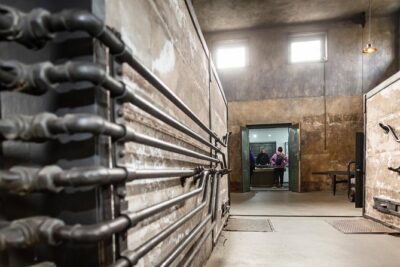
Terezin Concentration Camp Day Tour from Prague
Read our review →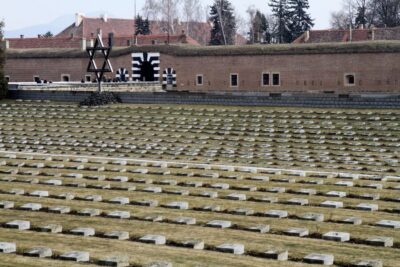
Terezin In-Depth Holocaust Tour From Prague’s Center (max 7 pax)
Read our review →
Private Half-Day Tour From Prague To Terezín Concentration Camp
Read our review →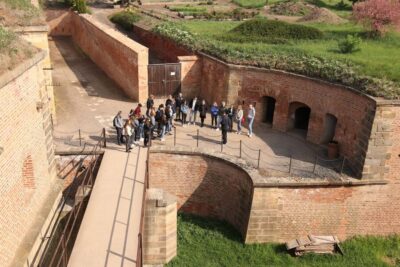
Terezin Memorial: Entry Ticket Combo w. Guided Walking Tour
Read our review →Browse the lists this tour appears in