
Reviewed · HOLOCAUST MEMORIAL TOURS
From Prague: Terezin Concentration Camp & Memorial Tour
Terezín is not a sightseeing stop in the usual sense. It is a place of imprisonment, forced removal, starvation, disease, and death, and the six-hour trip gives you a guided look at several parts of the memorial complex. The most useful feature is the full transport from Prague, since reaching the separate sites on your own takes planning.
I like the chance to see both the Small Fortress and former Jewish ghetto, rather than only one memorial. I also like that guides such as Peter, Petr, Jan, Rosa, and Gustav have been praised for explaining difficult material with care. The main concern is time: some groups feel rushed through museums, and the quality of English can vary when the tour changes from the Prague guide to a local Terezín guide.
Key points to know before booking
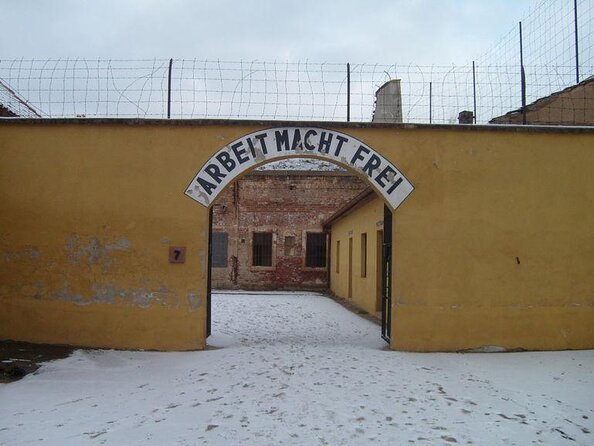
- See several parts of Terezín in one afternoon: The route can include the Small Fortress, former ghetto, museums, cemetery, crematorium, and memorial areas.
- Expect a serious history lesson: This is an emotional visit focused on Nazi occupation, Jewish persecution, imprisonment, and the experiences of victims.
- English is guaranteed: Written commentary in another language may be available locally, while some guides have also spoken French, Czech, German, Russian, or Spanish.
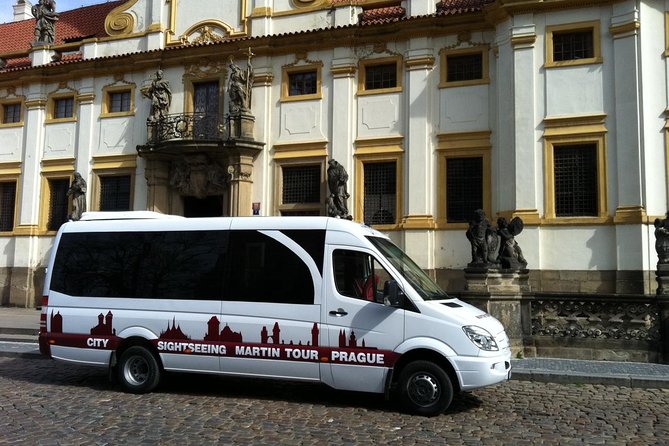
- Transport and admission are included: The price covers the coach, guide, live commentary, and entrance fees, but not food or drinks.
- Allow about six hours: Departure is at noon from Pařížská 1073/1 in Prague, with the tour ending back at the same meeting point.
- Prepare for a group of up to 28: A smaller group can make questions easier, but the site itself may be shared with much larger groups.
Why Terezín deserves a place on your Prague itinerary
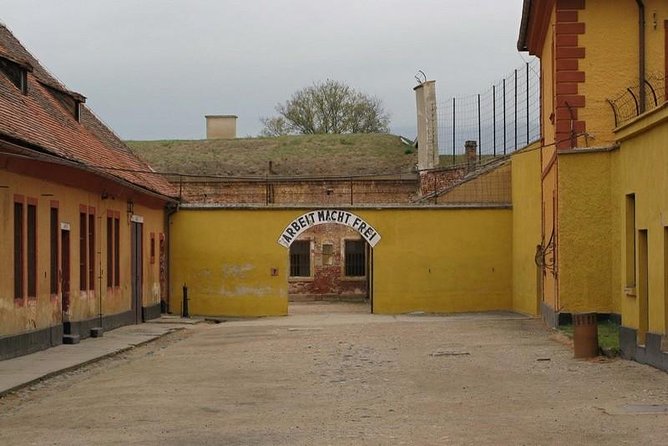
Terezín helps explain a part of Second World War history that is often oversimplified. It was not the same kind of killing center as Auschwitz, and the visit is valuable partly because it shows how Nazi persecution worked through imprisonment, deportation, propaganda, overcrowding, and deliberate neglect.
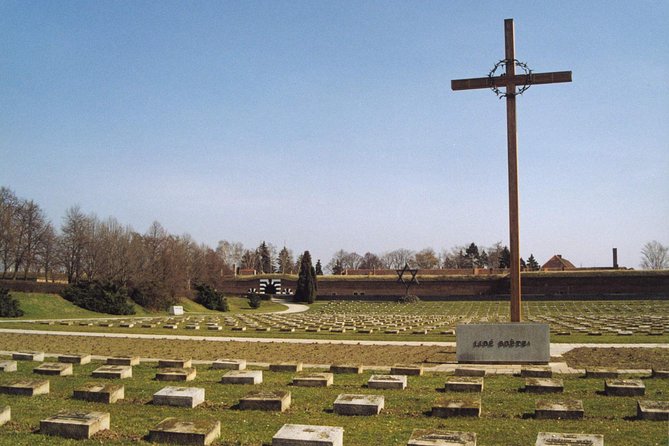
The former ghetto was created inside the town of Terezín. The town still has residents and privately occupied buildings, so you are not walking through a preserved set built only for visitors. That mixture can feel unsettling. Ordinary streets and homes exist beside memorial sites, museums, prison buildings, and places connected with mass suffering.
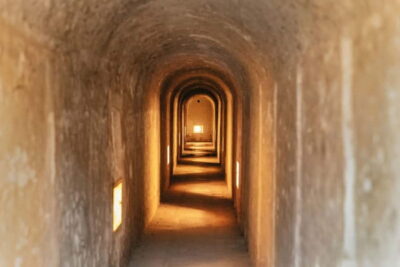
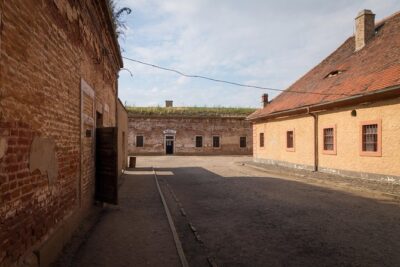
The Small Fortress offers a different experience. It functioned as a prison, including a Gestapo prison, and its rooms and passages make the system of confinement easier to understand. The visit is physical and direct: you move through an actual prison complex rather than looking only at photographs or reading panels.
You should come ready to listen. This is not a light half-day outing, and the subject matter can be painful. Still, the guides generally aim to give the facts plainly, with personal memories and individual stories that keep the history from becoming a list of dates.
More memorial and ghetto visits near Terezin:
- From Prague: Terezin Concentration Camp Guided Tour w/ Audio
★ 4.5 · 1,959 reviews - From Prague: Tour of Terezin Concentration Camp
★ 4.4 · 1,269 reviews - Terezin Concentration Camp Day Tour from Prague
★ 4.0 · 1,007 reviews
The six-hour schedule from Prague
The tour begins at noon at Pařížská 1073/1 in Prague 1, near public transportation. You should arrive early enough to find the meeting point without rushing. The activity ends back there, which makes it easy to plan dinner or an evening walk in the Old Town afterward.
The drive matters more than it may seem. Terezín is outside Prague, and a guided coach removes the need to coordinate public transport, entrance tickets, and the separate memorial locations. Live commentary on the journey can also give you background before you arrive.
That said, the time on the road is part of the tour, not dead space. Some guides have filled it with historical explanation, while others have been criticized for talking too long or wandering into cultural opinions and side topics. I would prefer a clear briefing on the history, the day’s route, and the differences between Terezín and other Nazi camps.
Traffic can affect the schedule. One group reached the site despite a major road accident because the driver followed traffic information and changed the route. That is a useful advantage of organized transport, though delays may reduce time inside the museums.
The listed duration is about six hours, while one account describes a six-and-a-half-hour visit. Treat the timing as approximate. Terezín is too important to judge only by the clock, but you should know that a busy day or traffic delay can make the final stops feel hurried.
The Small Fortress: prison walls and difficult evidence
The Small Fortress is one of the strongest parts of the visit. Here you see a prison complex connected with Nazi rule, including cells, corridors, yards, and the Gestapo prison. The setting helps you understand the physical conditions of incarceration in a way that a city museum cannot.
The local guide usually explains the buildings and their use as you move through them. Some guides have been praised for making the place understandable in clear English. Others have been described as abrupt or difficult to follow, particularly when the main guide hands the group over to a local guide.
That handoff is worth understanding before you book. The Prague guide may lead the journey and part of the visit, then a guide connected with Terezín may take over on site. This can give you useful local detail, but it also means the tone, pace, and clarity may change.
You may find the Small Fortress more powerful than the museum displays because the spaces themselves communicate confinement. At the same time, the visit is not designed for lingering over every panel. If you want to read every document and examine every display, you may need a private visit or a longer stay in Terezín.
The former ghetto and the town of Terezín
The former ghetto is the part of Terezín that gives the visit its wider meaning. The town was used to hold Jewish prisoners, and the buildings, streets, and institutions show how persecution affected an entire community rather than only people inside a single prison.
You will not find a completely untouched historic town. The former ghetto has been renovated in places and is still inhabited. That can make the experience less visually dramatic, but it also makes the history harder to keep at a safe distance. You are seeing a living town built around a painful past.
The former ghetto is also where time pressure can become frustrating. Some people want more time here and less time at the memorial grounds. The town contains more information than can fit comfortably into one short stop, especially if you want to understand daily life, deportations, housing conditions, and the use of propaganda.
I would listen closely to the guide’s explanation of what you are seeing, then make a note of anything you want to investigate later. The tour gives you a framework. It does not provide enough time for every exhibit, street, and document.
A few more Terezin half-days worth weighing up
- From Prague: Terezin Concentration Camp Tour
★ 3.7 · 573 reviews - From Prague: Terezín and Ghetto Museum Guided Tour
★ 4.3 · 571 reviews - Terezin & Bohemian Switzerland from Prague: Bastei, Narnia & Café
★ 5.0 · 445 reviews - Terezin Concentration Camp Day Tour Including Admission From Prague
★ 4.5 · 179 reviews
Museums, cemetery, crematorium, and memorial grounds
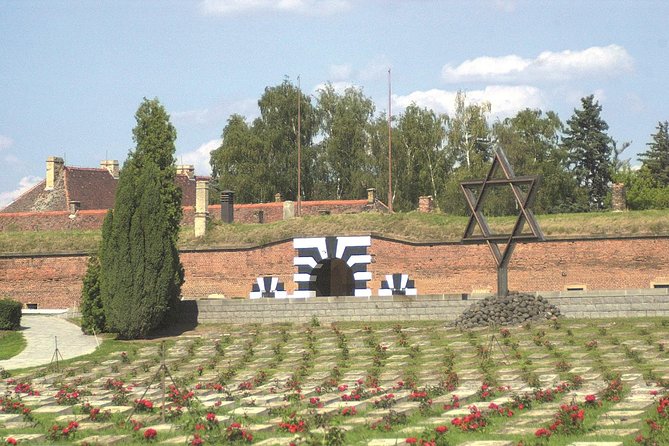
The memorial areas add another emotional layer. Depending on the day’s timing, the route may include the cemetery, crematorium, and small museums. One account describes visiting the crematorium, camp, and Jewish Museum in that order, while another notes that the crematorium is not always included if time is short.
These places are quiet, but they are not easy stops. The cemetery and crematorium connect the broader story of Terezín to the deaths caused by Nazi persecution and the terrible conditions imposed on prisoners. You should expect a solemn atmosphere and a guide who may move quickly to keep the group on schedule.
Museum time is the most common practical weakness. Displays require reading, and a guide-led explanation can take much of the available time. Several accounts describe being rushed or wishing for longer inside the museums. If you are especially interested in artwork, documents, or personal testimony, you may feel that the six-hour format gives you an introduction rather than a complete study.
The value is that you see the main parts in one organized outing. The drawback is that every stop competes with the next one. A self-guided visit would allow more time in the former ghetto or museum, but it would require you to arrange transport and admission yourself.
The guides make or break the day
The strongest part of this experience is the human explanation. Peter and Petr have been singled out for bringing the site to life with clear, empathetic presentations. Jan has handled several language groups, including English, Russian, and German, and made an effort to include a crematorium visit when time allowed.
Rosa, Helen, and Gustav have also received warm praise for their presentation and organization. One guide even explained the material in English, French, and Czech during the same trip. These examples show what the tour can be like when the guide is prepared, patient, and able to answer questions directly.
But you should not assume every guide will offer the same experience. English commentary is guaranteed, yet a few accounts describe local English as hard to understand. Another group found the main guide clear but felt the Terezín guide rushed them. A tour of this subject needs precise language, so uneven delivery matters more here than it would on a casual city excursion.
The best approach is to treat the guide as your interpreter of a complex place, not as a substitute for your own attention. Listen for the distinction between the former ghetto, the Small Fortress, and the wider Nazi camp system. If you have a question, ask it during the coach ride or immediately after a stop, before the group moves on.
Coach comfort, group size, and practical limits
The group maximum is 28 people, which is manageable for a coach tour but not intimate. You may be able to hear the main guide well on the bus, yet walking through narrow prison areas can make the group feel larger.
The coach is described by the operator as air-conditioned, but one account found it hot inside on a very warm day. That is a fair warning rather than a reason to reject the tour. Wear light, practical clothing in summer, and do not count on the interior feeling cool when the bus is full.
Food and drinks are not included. Since the tour lasts about six hours and begins at noon, plan ahead. The supplied details do not specify a meal stop, so you should not expect a full lunch break. Bring what you need if permitted, while remembering that the memorial is a serious site where respectful behavior is essential.
A current valid passport is required on the day of travel. Confirmation is issued at booking, and the tour is offered in English with a mobile ticket. Most people can participate, and the meeting point is near public transportation.
Free cancellation is available if you cancel at least 24 hours before the start time. Changes or cancellations made inside that period are not accepted for a refund.
Is the $58.87 price good value?
At $58.87 per person, the price is reasonable if you want one organized trip from Prague that combines transport, entry fees, and guided interpretation. You are paying for convenience as well as access. The coach takes you to a site outside the city, and the guide helps you understand what you are seeing.
The price is less attractive if your priority is quiet, unhurried museum time. A self-arranged visit may cost less, according to one comparison, with transport and admission estimated at about $25 to $30. That option could offer more freedom, but it would not necessarily give you the same level of explanation or remove the need to coordinate the day.
I would choose the organized tour if this is your first visit to Terezín, you have limited time in Prague, or you want the historical setting explained as you go. I would consider going independently if you already know the subject well and want to spend hours reading exhibits or walking through the former ghetto at your own pace.
Who should book this Terezín tour?
This tour suits you if you want a serious, guided introduction to Czech Second World War history. It works particularly well for first-time visitors, families with older teenagers, and anyone who finds it easier to understand a memorial site with a clear route and spoken context.
It may not suit you if you dislike group schedules, need long periods of quiet reflection, or want to examine every museum display. The destination itself is demanding, and the pace can feel brisk when traffic or a long explanation reduces the time available at the final stops.
I would also think carefully about language. English is guaranteed, but local guide clarity can vary. Written commentary in another language may be available on site, and some guides have handled French, Czech, German, Russian, and Spanish, but you should not book expecting a fully multilingual tour unless that is confirmed for your date.
Should you book it?
Book this trip if you want the practical ease of a coach, admission included, and a guide-led introduction to the Small Fortress, former ghetto, and memorial sites. The strongest guides, including Peter, Petr, Jan, Rosa, and Gustav, can make a difficult subject clear and meaningful.
Skip it in favor of an independent visit if you want to set your own pace, spend longer in the museums, or focus closely on the former ghetto. For most people with only one day available from Prague, however, the organized tour offers a sensible way to reach Terezín and confront its history with proper context.
FAQ
How long does the Terezín tour take?
The tour lasts approximately six hours, though the total time can vary. One account describes a six-and-a-half-hour day.
What time does the tour begin?
The stated departure time is 12:00 pm.
Where does the tour start?
It starts at Pařížská 1073/1, 110 00 Praha 1-Staré Město, Czechia.
Where does the tour end?
The activity ends back at the original meeting point in Prague.
Is English commentary available?
Yes. English commentary is guaranteed. Written commentary in another language may also be available on site.
What is included in the price?
Transport, entrance fees, a local guide, and live commentary on board are included.
Are food and drinks included?
No. Food and drinks are not included.
Is a passport required?
Yes. A current valid passport is required on the day of the tour.
Just added around Terezin
- Bus Tour to Terezín from Prague★ 4.5 · 150 reviews
- Private Terezin Nazi camp tour from Prague All-Inclusive★ 5.0 · 7 reviews
- From Prague: Terezin with Admissions★ 4.0 · 146 reviews
- Terezin Camp & Bohemian Switzerland with Tisa&Bastei From Prague★ 5.0 · 106 reviews
- Terezin: Private Half-Day Tour from Prague★ 5.0 · 9 reviews
- Terezin Concentration Camp – A town of rich and painful history★ 4.0 · 7 reviews
- Terezin Fortress and Concentration Camp Tour from Prague★ 5.0 · 60 reviews
- Private Tour: Terezin Half-Day Tour from Prague★ 5.0 · 9 reviews
Holocaust Memorial Tours, compared.
Terezin Concentration Camp Guided Tour w/ Audio
Read our review →
Terezin Concentration Camp Day Tour from Prague
Read our review →
Terezin In-Depth Holocaust Tour From Prague’s Center (max 7 pax)
Read our review →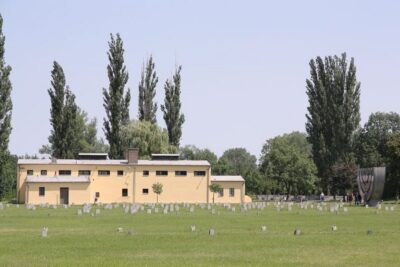
Private Half-Day Tour From Prague To Terezín Concentration Camp
Read our review →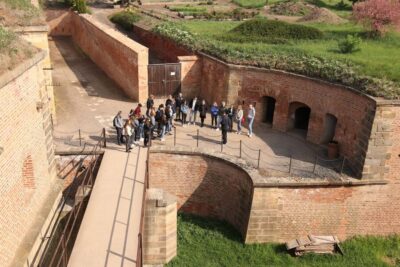
Terezin Memorial: Entry Ticket Combo w. Guided Walking Tour
Read our review →Browse the lists this tour appears in