
Reviewed · CESKY KRUMLOV TOURS
Český Krumlov 20th century tour
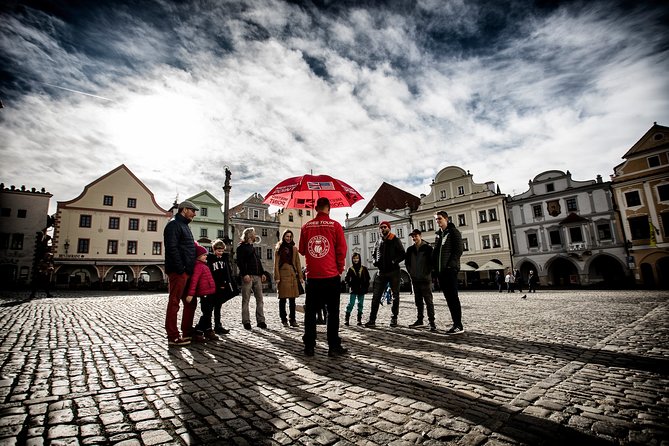
Český Krumlov is famous for its medieval streets and fairy-tale castle, but this private walking tour asks you to look at the town through a harder, more recent lens. You’ll follow stories of Jews, Nazis, nobles, war, and Soviet rule, using old black-and-white photographs to connect today’s postcard views with the events that shaped them. I like the 20th-century focus, which fills a gap left by many traditional sightseeing walks, and I like the way guide Jan uses visual material rather than relying only on dates and speeches.
The tour is also a good value for a group. It costs $90.76 for up to 15 people, so the price works out to about $6 per person if you fill the group. The main consideration is its short, serious format: in about two hours, you cover several difficult subjects, and the tour requires good weather.
Key points to know before you book
- A modern-history walk: The focus is World War II, Jewish life, Adolf Hitler’s visit, the 1938 battle, and the 1968 Soviet invasion.
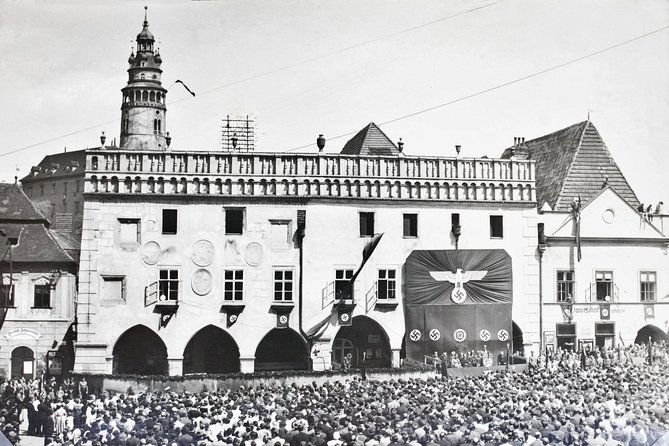
- Guide Jan’s photo-based approach: Black-and-white images help you see how familiar streets and buildings looked during major events.
- A private group experience: Only your own party joins, with space for up to 15 people.
- Five compact stops: The route links the historic center, synagogue, castle area, and Budějovická Gate.
- A strong price for groups: The $90.76 total becomes especially reasonable when shared by several people.
- A one-way walk: You start at Svornosti Square and finish at Budějovická Gate, so you can plan the rest of your afternoon from there.
Why Český Krumlov’s recent past matters
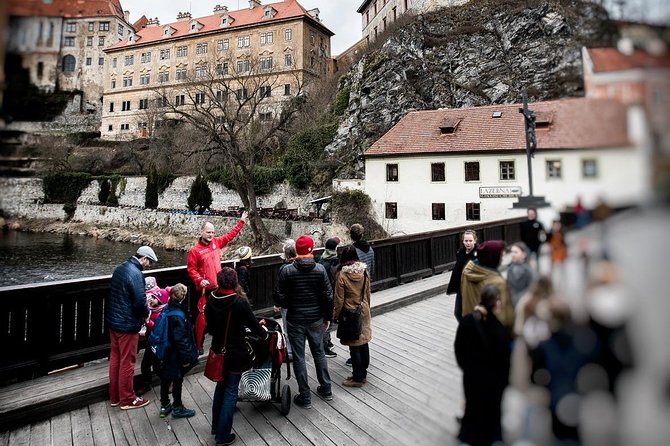
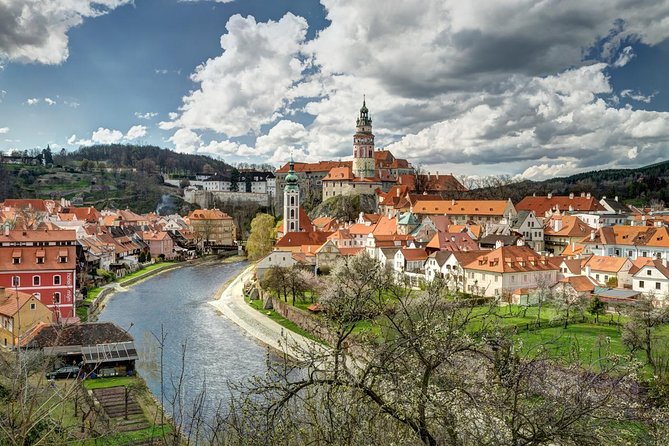
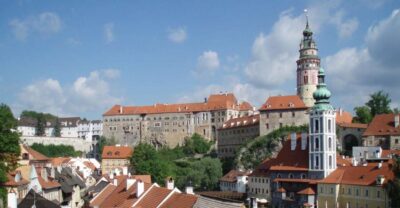
The usual Český Krumlov story begins with medieval rulers, Renaissance buildings, and the great castle above the Vltava River. Those subjects deserve attention, but they can make the town feel frozen in an earlier age. This tour shifts the clock forward and shows you that Český Krumlov also lived through the shocks of the 20th century.
You’ll hear about local Jewish life, Nazi power, the position of the town’s last lord, World War II, and the Soviet invasion of 1968. That range gives the walk a clear purpose. You are not simply looking at old buildings. You are asking who lived there, who controlled the town, and how political events reached a small Czech community.
I find this angle especially useful if you have already seen the castle and historic center on a standard sightseeing tour. The same streets take on a different meaning once you know what happened there during the 1930s, 1940s, and 1960s.
The subject matter is serious, so this is not the best choice if you want only light sightseeing and castle legends. It is better suited to you if you enjoy local stories, wartime history, political change, and the way major events affect ordinary places.
A few more Cesky Krumlov half-days worth weighing up
- From Prague: Full-Day Trip to Český Krumlov
★ 4.6 · 1,172 reviews - Cesky Krumlov Full day tour from Prague and back
★ 4.5 · 902 reviews - From Prague: Český Krumlov and České Budějovice Day Trip
★ 4.0 · 818 reviews
Starting at Svornosti Square
The meeting point is Info Czech Krumlov at náměstí Svornosti 2 in the historic center. This is a practical starting place because you begin among the town’s central streets rather than at a distant transport stop.
The first section lasts about 40 minutes and introduces the modern history of Český Krumlov. This is the longest stop, which makes sense. Before the route reaches the synagogue, castle, and city gate, you need the basic timeline and a sense of how the town changed during the last century.
Expect this part to be mostly a guided walk through the center, with Jan explaining the events connected to the places around you. The supplied photographs are important here. They let you compare the town as it looks today with images from periods of political upheaval.
The tour does not charge separate admission at this stop. It is a walking explanation of the public historic center, not a museum visit.
Jewish life at the Český Krumlov Synagogue
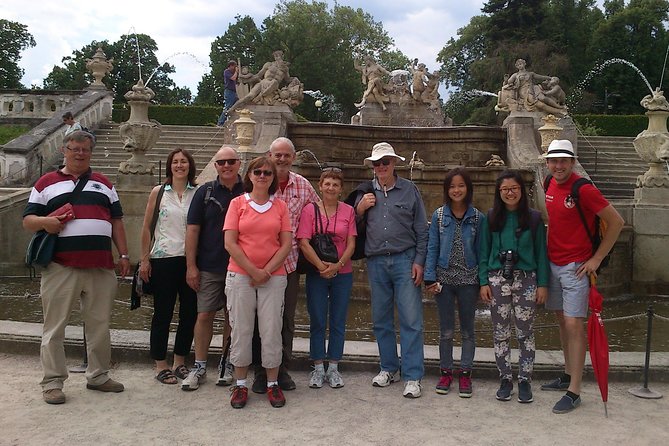
The second stop is the Český Krumlov Synagogue, where you spend about 15 minutes learning about the town’s Jewish population and its place in local history. This is one of the most meaningful stops because it brings the story down to a community level.
A discussion of Jewish life helps prevent the war years from becoming a list of military events. You get a clearer sense that the story includes families, neighbors, religious life, and the destruction of a community under Nazi rule.
The short timing means you should expect an introduction rather than an extended synagogue tour. No admission fee is listed for this stop, and the experience is built around the guide’s explanation and historical material.
I would pay close attention to how Jan connects this stop with the wider story of Český Krumlov. The value is not just the building itself. It is the reminder that the town’s past includes people and traditions that are no longer visible in the same way.
Adolf Hitler’s arrival in Český Krumlov
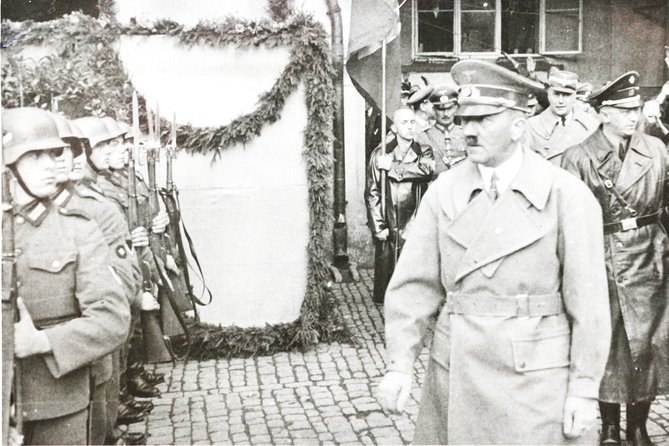
The third stop takes about 10 minutes and covers Adolf Hitler’s arrival in Český Krumlov before World War II. That brief timing tells you something about the route. This is a focused stop within a larger story, not a long lecture devoted only to one political figure.
The subject matters because Hitler’s visit connects the town to the growing pressure and territorial conflict that preceded the war. It also helps explain why the events of 1938 were so important in this part of the Czech lands.
The tour presents this through the local setting rather than treating the visit as an isolated headline. You’ll be standing in the town while hearing how national and international politics reached Český Krumlov.
This is another place where the photographs can help. A historic image can make an event easier to picture than a date alone, especially when today’s streets look calm and carefully preserved.
A completely different way to spend a day in the same part of the country:
- UNESCO Cesky Krumlov from Prague with Guided Tour and Transfer
★ 4.0 · 812 reviews - Český Krumlov: Wooden Raft River Cruise
★ 4.9 · 450 reviews - From Prague: Český Krumlov Full-Day Tour with Pickup
★ 4.7 · 392 reviews - Český Krumlov Free Tour
★ 5.0 · 260 reviews
The castle and the last lord of the town
The castle section lasts about 20 minutes and focuses on the last lord of Český Krumlov and his struggle against the Nazis. The castle is the visual centerpiece of the town, but this part of the tour gives you a political and personal story connected to it.
The emphasis is not simply on architecture. You’ll hear about the responsibilities and pressure faced by the town’s final noble ruler during a dangerous period. That adds a human dimension to the castle’s role in the 20th century.
The description identifies Český Krumlov Castle as the second biggest castle in the Czech Republic. You should not expect this walking experience to replace a full castle visit, since the tour lists no separate castle admission. Instead, think of this stop as a historical explanation around the castle setting.
If you want to tour the castle interiors, you may need a separate ticket and a different visit. This experience is more useful for understanding the castle’s place in the town’s political story.
World War II at Budějovická Gate
The final stop is Budějovická Gate, also called the Budweiser Gate, where the tour spends about 15 minutes on World War II and the battle of Český Krumlov in 1938. This gives the route a clear ending at one of the town’s historic entrances.
A gate is a fitting place to discuss conflict. It helps you picture the town not just as a collection of beautiful streets, but as a place with boundaries, movement, and military importance during a tense period.
The end point is at Latrán 106. Since the route finishes here rather than returning to the square, you can continue your own plans from the northern side of the historic center. The one-way format is useful, but you should know where the walk ends before booking another timed activity.
The total scheduled time adds up to 100 minutes, while the advertised duration is about two hours. That leaves a little room for walking between stops, questions, and the pace of your private group.
Black-and-white photographs that add meaning
The strongest feature of this experience is the visual material. Jan shows photographs of events and of the town as it appeared in earlier decades. That approach gives you something concrete to study while standing in the present-day streets.
A photograph can reveal details that a spoken explanation misses. It may show a crowd, a building façade, a uniform, a damaged area, or a public ceremony. You can then compare the image with what remains today.
The visual method also helps if you are not a serious history reader. You do not need to memorize a long list of dates to understand that the town went through major changes. The photographs provide a direct link between the place in front of you and the event being discussed.
The material is also a good reason to keep your group small, even though the tour allows up to 15 people. A private group gives you more freedom to ask questions and discuss the images without sharing the guide with strangers.
Jan’s role as guide
The guide named in the available information is Jan. He is described as having spent substantial time researching the subject and covering a broad range of topics tied to Český Krumlov’s past. The useful point for you is that this is not a generic orientation walk with a few wartime facts added at the end.
Jan’s approach includes answering questions and explaining why particular places matter. That can make a difference on a subject with many overlapping stories: Jewish life, Nazi rule, noble resistance, wartime events, and Soviet control do not fit neatly into one simple timeline.
The tour’s private format should make it easier to set the pace. You can ask for clarification, request more detail on a topic, or connect the history to what you already know. The experience is offered through Wiseman Free Tour, though the listed price is a set group price rather than a pay-what-you-wish arrangement.
Is $90.76 a fair price?
The total price is $90.76 per group of up to 15 people. For one person, that is not a bargain compared with a large public walk. For a couple, it comes to about $45.38 each. For four people, it is about $22.69 per person, and a full group pays roughly $6.05 per person.
That makes the tour most attractive for families, friends, or a larger private party. You are paying for a dedicated guide, a private setting, a two-hour route, and a subject that is more specific than a standard town walk.
No separate admission fees are listed for the five stops. That keeps the cost predictable, though you should not assume the price includes entry to the castle interior or any separate attraction. The value comes from the guided historical context and the old photographs.
If you are traveling alone, the price may feel high unless this particular subject is a major priority. If you have several people in your group, the cost becomes much easier to justify.
Practical details for planning your walk
You receive confirmation when you book, and the ticket is mobile. The tour is near public transportation, service animals are allowed, and most people can participate.
The experience requires good weather. If poor weather forces a cancellation, you can receive a different date or a full refund. A minimum number of participants is also required, and if that minimum is not met, you can choose another date or experience, or receive a full refund.
You can cancel for a full refund up to 24 hours before the start time. Changes or cancellations made less than 24 hours before the local start time are not accepted for a refund.
Wear comfortable shoes for a roughly two-hour walk. The available details do not specify the surface conditions, seating, or indoor access at each stop, so ask the provider if anyone in your group has mobility concerns.
Who should book this experience?
I would recommend this tour to you if you have already seen the standard medieval sights and want to understand Český Krumlov as a living town shaped by modern Europe. It is also a strong fit if you enjoy World War II history, Jewish heritage, political history, or old photographs.
Families with older children may appreciate the clear route and visual material, although the subjects are serious. The private format gives you room to ask questions at your own level.
I would be less likely to recommend it if your main goal is castle interiors, architectural detail, or a relaxed introduction to the town. This tour does not replace a conventional castle visit, and its focus on Nazi rule, war, and Soviet invasion gives it a sober tone.
Should you book the Český Krumlov 20th Century Tour?
Book it if you want the side of Český Krumlov that postcard sightseeing leaves out. The combination of local Jewish history, Hitler’s arrival, the last lord’s struggle, the 1938 conflict, and 1968 gives the town a stronger human dimension.
The best value comes when you share the private price with several people. Guide Jan’s photograph-led method is another good reason to choose it, especially if you learn best by seeing places compared with their earlier appearance.
Skip it if you only have time for the castle interiors or prefer a light, purely architectural walk. For everyone else, this is a focused way to spend two hours and understand why Český Krumlov is more than a beautiful medieval setting.
FAQ
Where does the tour begin?
The tour begins at Info Czech Krumlov, náměstí Svornosti 2, in Český Krumlov.
Where does the tour end?
The tour ends at Budějovická Gate, also called Budweiser Gate, at Latrán 106.
How long does the tour last?
The tour lasts approximately two hours.
Is this a private tour?
Yes. Only your own group participates, and the group can include up to 15 people.
What historical subjects does the tour cover?
It covers modern Český Krumlov, Jewish life, Adolf Hitler’s arrival, the last lord’s struggle against the Nazis, World War II, the 1938 battle, and the 1968 Soviet invasion.
Are admission tickets included?
The five listed stops have no separate admission ticket shown. The experience does not state that entry to the castle interior is included.
Can I cancel for a refund?
Yes. You can cancel at least 24 hours before the start time for a full refund. Cancellations or changes made less than 24 hours before the start time are not accepted for a refund.
Just added around Cesky Krumlov
- Private Transfer Prague to Salzburg with 2h stop in Krumlov in a Sanitized Car★ 5.0 · 17 reviews
- Private transfer in a Sanitized Car Prague to Vienna with 2h stop Cesky Krumlov★ 5.0 · 27 reviews
- Private Transfer Prague to Passau or Passau to Prague with stop in Cesky Krumlov★ 5.0 · 17 reviews
- Private Prague to Salzburg luxury car via Cesky Krumlov 5* guide★ 5.0 · 4 reviews
- Private tour to Cesky Krumlov★ 5.0 · 4 reviews
- Private Tour to Cesky Krumlov from Prague★ 4.0 · 5 reviews
- Cesky Krumlov medieval UNESCO sites – private tour with PERSONAL PRAGUE GUIDE★ 5.0 · 11 reviews
- Private Tour: Cesky Krumlov Day Trip from Prague★ 5.0 · 5 reviews
Cesky Krumlov Tours, compared.
Cesky Krumlov Full day tour from Prague and back
Read our review →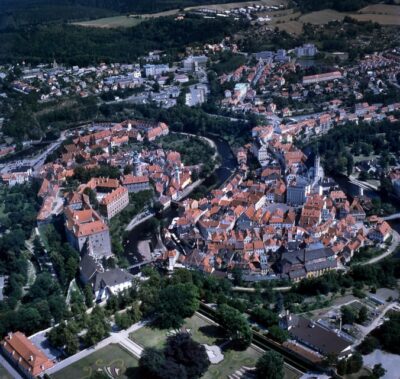
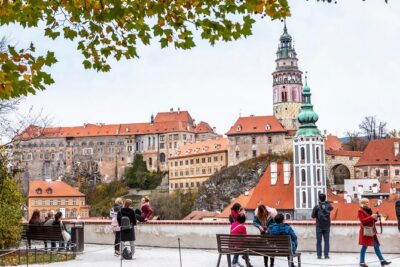
UNESCO Cesky Krumlov from Prague with Guided Tour and Transfer
Read our review →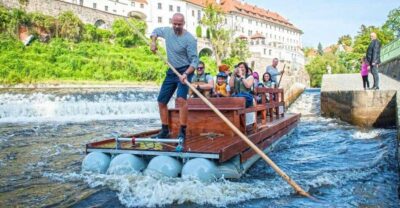
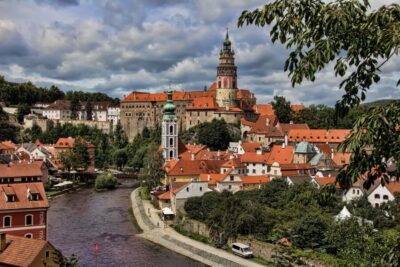
Browse the lists this tour appears in