
Reviewed · SKIP THE LINE
Skip the Line: 10-Z Bunker Entrance Ticket in Brno
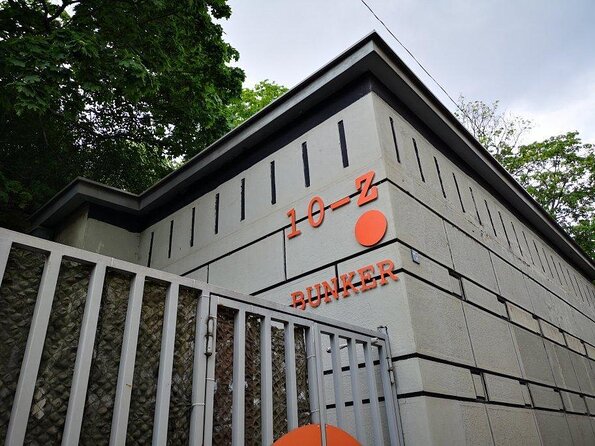
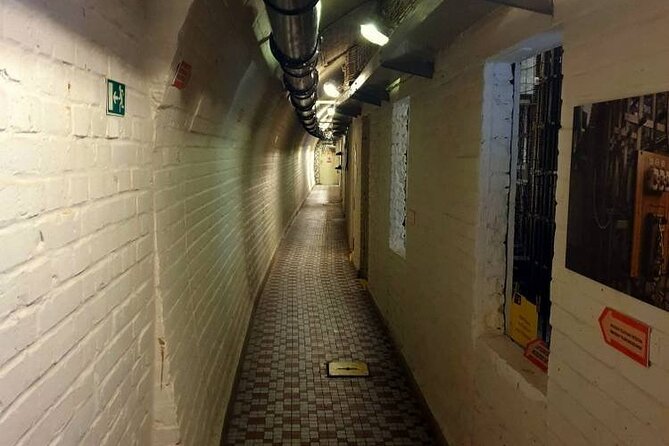
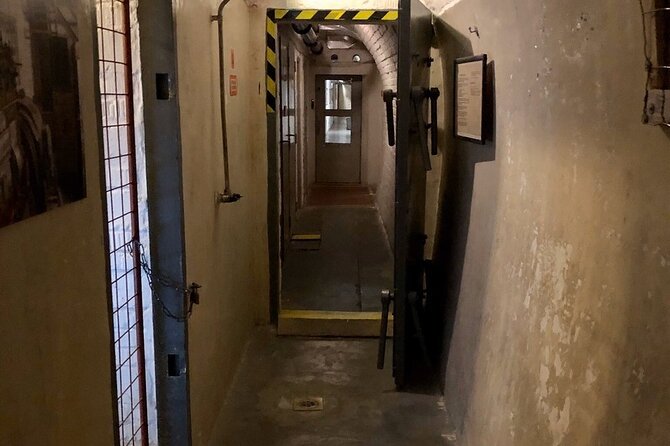
Brno’s 10-Z bunker is not a polished museum with glass cases and long labels. It is a real underground shelter where you use an English map to find your way out, passing through rooms tied to World War II and the Cold War. The route includes a diesel generator, air-filtration room, gas masks, a telephone exchange, and old film screens.
I like the self-guided format, since you can stop at each display instead of being pushed along with a group. I also like the strange, specific objects, especially the Polášek tables once used in Brno’s New Town Hall and the door from the former Cejl prison. The main drawback is that English content is limited, so visitors who need detailed explanations may find the experience thin.
Key points to know before entering
- The map becomes part of the experience: You must find your way out of the bunker using an English map.
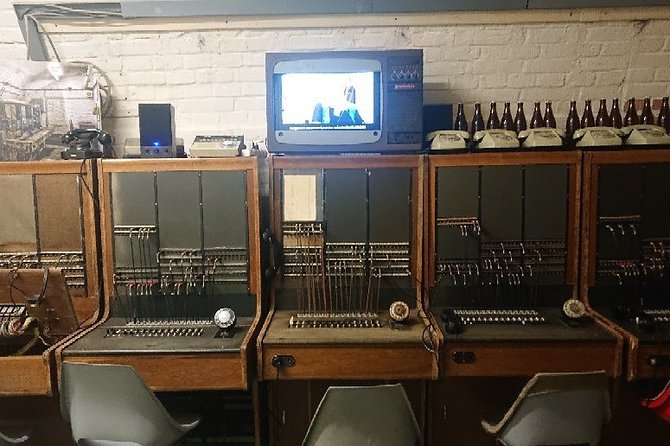
- Cold War machinery is still the star: See the diesel generator, filtration room, and PBX telephone switchboard.
- About 15 screenings include English subtitles: Audiovisual displays add stories and historic footage, but not every detail is explained in English.
- The prison door is a sobering exhibit: Messages were carved into it by people awaiting execution during World War II and Stalinism.
- You can pause at the Milk Bar: The visit ends with a chance to rest and buy drinks at Marcel Ihnačák’s Milk Bar.
- The ticket costs about $12.01: That is fair for a central, self-guided museum visit, especially if you spend close to an hour inside.
What the 10-Z bunker tells you about Brno
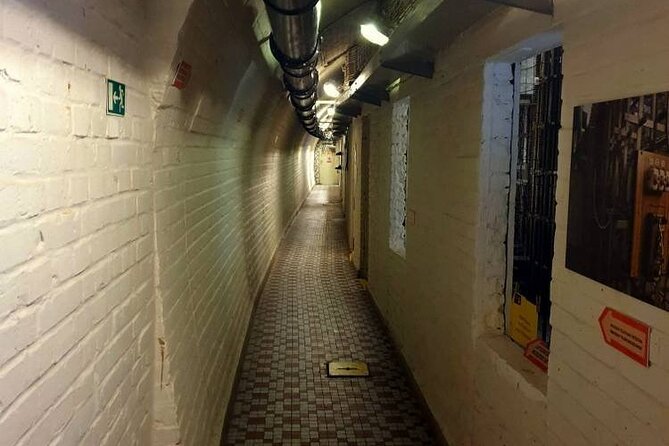
The 10-Z bunker began as a fallout shelter and now works as a museum of Brno’s wartime and communist-era past. Its appeal comes from the setting. You are not simply reading about emergency planning in a bright gallery. You are moving through the kind of enclosed rooms designed for a crisis.
At the entrance, you receive a map of the labyrinth. Your task is to find the exit, but the route is also the structure of the museum. Along the way, photographs, projectors, screens, and objects explain how the shelter fit into the city’s story.
I like this approach because it gives the visit a small sense of purpose. You are not just walking from display one to display two. You are trying to keep your bearings while learning what the bunker was built to do.
Still, this is a self-guided museum, not a guided tour. No guide is included, and the amount of explanation depends on the screens, the map, and the objects in front of you. If you want a full historical lecture about Brno’s occupation, postwar years, or communist government, this ticket will not provide it.
A few more Brno half-days worth weighing up
- Prague: Skip-the-line Castle Ticket and Optional AudioGuide
★ 4.3 · 11,121 reviews - Prague Zoo: Skip-the-Line Entry Ticket
★ 4.8 · 3,440 reviews - Prague Jewish Town/Skip-the-Line Official Entry Ticket
★ 4.3 · 524 reviews
Finding your way through the underground rooms
The visit can last anywhere from about 15 minutes to 1 hour and 30 minutes. That is a wide range, but it makes sense for a museum where you control the pace. A quick visitor can see the main rooms and leave. Someone who watches the screenings and searches for the extra material can spend much longer underground.
The map is in English, which helps you get started. The unusual part is that it is not only a guide to the exhibits. You must use it to find your way out of the shelter. This adds a mild puzzle element without turning the visit into a formal escape game.
The bunker’s Wi-Fi supports hidden QR codes placed around the site. Scan them with your phone to find extra videos and materials. Bring a charged phone if you want to use this feature, although the ticket information does not say that every visitor must scan the codes.
The route includes roughly 15 screenings with English subtitles. These audiovisual pieces show stories connected with the shelter, the city, and the period. They are useful for adding faces, voices, and moving images to rooms that might otherwise feel like empty concrete spaces.
The limitation is clear: subtitles are not the same as a full English-language exhibition. Some subjects receive only a short explanation. If historical context matters most to you, take time with every screen and use the map carefully rather than racing for the exit.
The generator, filters, and telephone switchboard
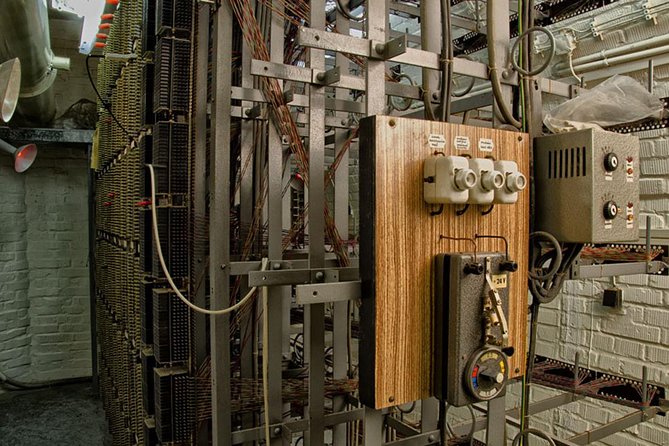
The most effective rooms are the ones that show how the shelter would have worked. The diesel generator gives you a sense of the bunker’s need for its own power source. The filtration room points to the fear behind the design: contaminated air, fallout, and the need to keep people alive underground.
You also see the PBX telephone switchboard. It is a practical object, but it tells an important story about communication. A shelter is only useful if people can receive orders, pass on information, and stay connected when normal systems fail.
These rooms are not presented as a large technical exhibition. Instead, you encounter them as parts of the bunker while following the map. That makes the visit more direct, but it also means you may need to supply some of the wider context yourself.
The bunker can feel dark and serious, which suits the subject. It is not a good match for anyone looking for a light museum visit filled with decorative rooms. It works best for you if machinery, emergency planning, and the physical setting of a shelter hold your attention.
The Polášek tables and Brno’s political past
One of the oddest objects in the bunker is a set of functionalist tables by Polášek. They once belonged to Brno’s New Town Hall but were forgotten in the shelter.
Their story gives the visit a surprising connection to public life. The tables were used by Adolf Hitler and by all communist presidents during visits to Brno Town Hall. That turns ordinary furniture into a record of changing power. You are looking at tables, but also at the officials and political systems that gathered around them.
This is exactly the sort of detail that makes the 10-Z visit more than a walk through an old basement. The bunker contains large themes, such as war, dictatorship, and survival, but it also contains small objects with a very local connection.
The tables are especially useful if you have already seen Brno’s central sights. They link the underground shelter to the town above it, showing that the city’s official spaces and its emergency spaces were part of the same story.
A completely different way to spend a day in the same part of the country:
- Brno: Historic Downtown Walking Tour
★ 3.9 · 278 reviews - 3-Hour Brno Themed Walking Tours
★ 3.9 · 65 reviews - PUNKVA CAVES, ABYSS and PERNSTEJN CASTLE =only from Apr to Sep
★ 5.0 · 25 reviews - Trip to the Austerlitz Battlefield near BRNO in the Czech Republic
★ 5.0 · 20 reviews
The Cejl prison door and its darker message
The exhibition includes the door from the death cell of the former Regional Prison at Cejl in Brno. People sentenced to death during World War II and Stalinism carved messages into it before their executions.
This is the most emotionally difficult object in the bunker. A written label can tell you about political persecution, but marks carved by people facing death make the subject physical. You do not need a large display to understand that the prison was a place of fear.
The exhibit connects two different periods, wartime executions and Stalinist punishment. It also reminds you that the bunker is not only about military equipment or Cold War technology. It is about the people who lived under systems where survival could depend on politics, nationality, or suspicion.
Give yourself time here. The door is easy to pass quickly, especially if you are focused on finding the next room. It deserves a slower look than some of the mechanical exhibits.
Screens, QR codes, and the limits of English
The audiovisual equipment gives the bunker much of its energy. About 15 screenings use English subtitles, and the displays include old footage and stories tied to Brno and the surrounding region.
The screens help with atmosphere, especially in a place where many rooms are plain and functional. They also make the museum easier to follow for visitors who do not speak Czech. You can watch the material at your own pace, then continue when you are ready.
But you should set your expectations correctly. The English material is sufficient to follow the main ideas, yet it does not cover every aspect in great detail. If you read only English, you may find some sections under-explained.
I would plan for a slower visit and use the QR codes when they are available. The extra videos may give you more context than the physical labels alone. The Wi-Fi throughout the 10-Z bunker makes that practical, though the exact amount of content available at each code can vary.
Finishing at Marcel Ihnačák’s Milk Bar
At the end of the exhibit, you can rest at the Milk Bar of Marcel Ihnačák. Drinks are also available at the beginning of the visit, so you do not need to wait until the end if you want something before entering the dark corridors.
This café stop is a small but useful part of the experience. The bunker deals with grim subjects, and having a place to pause gives the visit a gentler finish. It also helps if you spend close to the full 90 minutes inside.
Do not think of the café as the main reason to buy the ticket. The bunker and its objects are the attraction. The Milk Bar is best seen as a practical place to sit after the museum rather than a major dining stop.
Is the $12.01 ticket good value?
At about $12.01 per person, the ticket is reasonably priced for a central Brno museum with a distinctive setting. You receive entry, a mobile ticket, and an English map. You do not receive a guide, so the value depends on how much you enjoy exploring on your own.
For a quick 15-minute visit, the price may feel less convincing. If you follow the displays, watch the screenings, scan the QR codes, and take time with the machinery and prison door, the cost becomes easier to justify.
Booking ahead also helps with planning. The ticket is mobile, and the skip-the-line format is useful when you have a tight schedule. The information does not promise a timed private entry or a guided start, so think of this as a convenient admission ticket rather than a structured tour.
The museum accepts up to 99 people for the activity, but the experience itself can still feel personal when the bunker is quiet. A calm visit lets you watch the screens without being rushed and gives you room to study the map.
Opening hours and practical planning
The listed opening period runs from December 16, 2025, through December 15, 2026. During that period, the bunker is open Tuesday through Sunday from 11:30 a.m. to 7 p.m.
It is closed on Mondays according to the supplied schedule. Check the date shown when you book, since opening periods and hours can change.
You can cancel for a full refund if you do so at least 24 hours before the experience start time. Changes or cancellations made within 24 hours are not accepted for a refund, and the cut-off follows local time.
Most people can take part. No guide is included, and the museum provides an English map rather than a guided route. Since the visit takes place in a bunker, you should be comfortable moving through an underground exhibition at your own pace.
Who will enjoy the 10-Z bunker most?
I would recommend this ticket to you if you like unusual museums, Cold War history, wartime stories, old machinery, or places that preserve the physical feel of an earlier era. It is also a good addition to a Brno day when you want something different from churches, town squares, and grand civic buildings.
Families with older children may enjoy the map and the search for hidden QR codes. The museum has a puzzle-like feature, but the subjects are serious, especially the death-cell door and the stories of political punishment.
You may be less satisfied if you want a long English explanation at every stop. The displays use English subtitles, but the English content is not exhaustive. A guided visit would be better for you if you need a clear timeline and detailed historical commentary.
The central location is another practical plus. The information provided identifies the bunker as centrally located, so it fits well into a walking day in Brno. No separate transport arrangement is included or required by the ticket details.
Should you book the 10-Z bunker ticket?
Book it if you want a short, unusual museum visit with real bunker rooms, Cold War equipment, audiovisual material, and local stories. The price is fair, the mobile ticket is convenient, and the map gives the visit a simple purpose.
Skip it if you need a fully guided experience or detailed English text throughout. The strongest parts are the shelter itself, the working-life objects, the Polášek tables, and the Cejl prison door. Go slowly, watch the screenings, and use the QR codes. That is how you get the most from the ticket.
FAQ
How much does the 10-Z bunker ticket cost?
The ticket costs approximately $12.01 per person.
How long does the visit take?
The visit can take about 15 minutes to 1 hour and 30 minutes, depending on how quickly you move through the bunker and how many screenings and extra materials you view.
Is a guide included?
No. The ticket includes admission only, and you explore the bunker independently with an English map.
Is the ticket available on a mobile phone?
Yes. The experience includes a mobile ticket.
What English-language help is provided?
You receive an English map, and about 15 screenings include English subtitles. Hidden QR codes also provide additional videos and materials, with Wi-Fi available throughout the bunker.
When is the bunker open?
The listed hours from December 16, 2025, through December 15, 2026, are Tuesday through Sunday, 11:30 a.m. to 7 p.m.
Can you cancel for a refund?
Yes. You can receive a full refund if you cancel at least 24 hours before the experience start time. Cancellations or changes made less than 24 hours before the start are not accepted for a refund.
Just added around Brno
- Moravian Carst And Brno Private Tour From Prague★ 5.0 · 5 reviews
- Trip to the Austerlitz Battlefield near BRNO in the Czech Republic★ 5.0 · 20 reviews
- Brno’s Historic Gems: A Private Walking Tour★ 5.0 · 6 reviews
- Brno Historical Walking Tour★ 3.5 · 18 reviews
- Moravian wine trails★ 5.0 · 4 reviews
- Fullday Private Tour in Lednice and Valtice with Castle Visiting★ 5.0 · 6 reviews
- Fullday Private Tour in Lednice & Valtice with Wine Tasting★ 5.0 · 10 reviews
- Brno Food Tasting Tour of Hidden Gems for Small Groups★ 4.5 · 13 reviews
Skip the Line, compared.
Skip-the-line Castle Ticket and Optional AudioGuide
Read our review →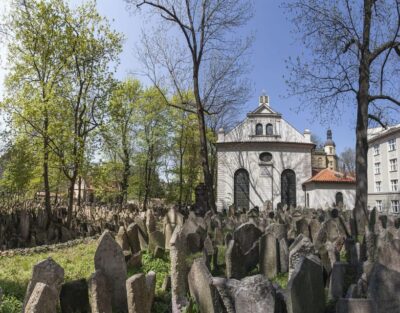
Prague Jewish Town/Skip-the-Line Official Entry Ticket
Read our review →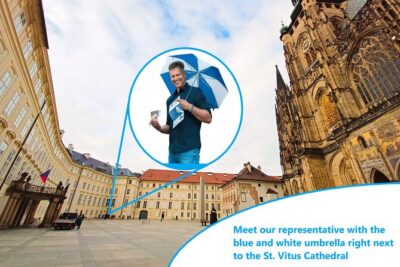
Skip the Line: Prague Castle Ticket and Introductory Overview
Read our review →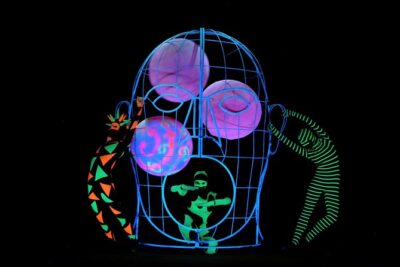
Skip the Line: WOW Show Black Light Theater in Prague Ticket
Read our review →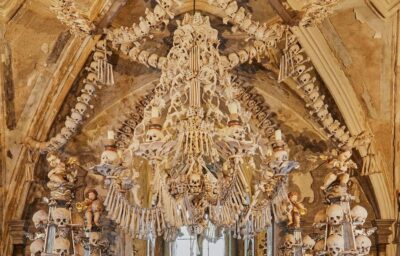
Sedlec Ossuary Skip-the-Line Ticket & Audioguide
Read our review →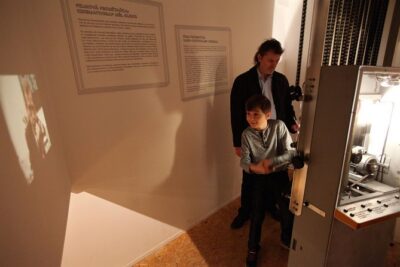
Skip-the-Line Prague National Film Museum Ticket
Read our review →
Skip the Line Access to Museum of Bricks in the Centre of Prague
Read our review →
Browse the lists this tour appears in